10 gulden 1926
About This Note
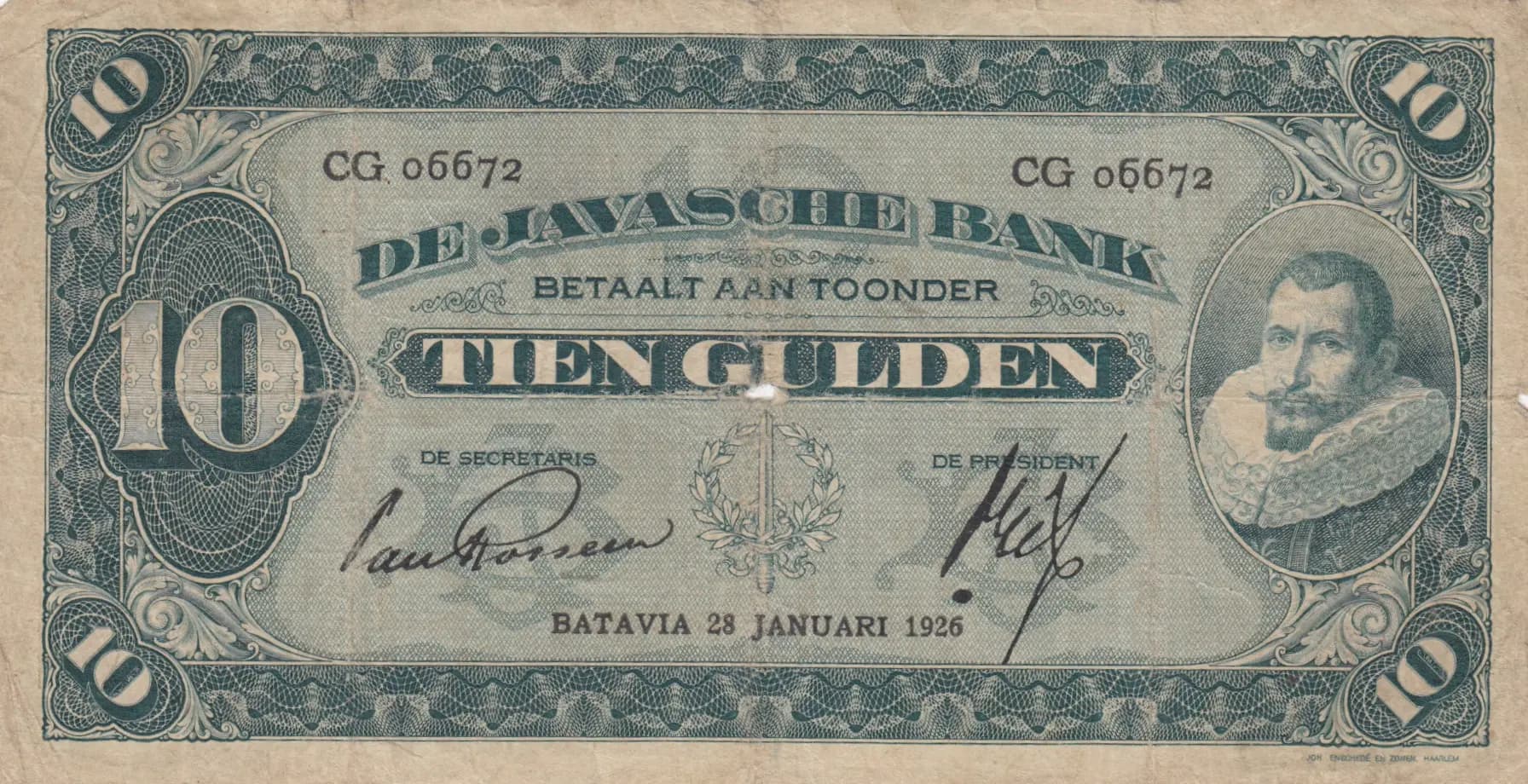
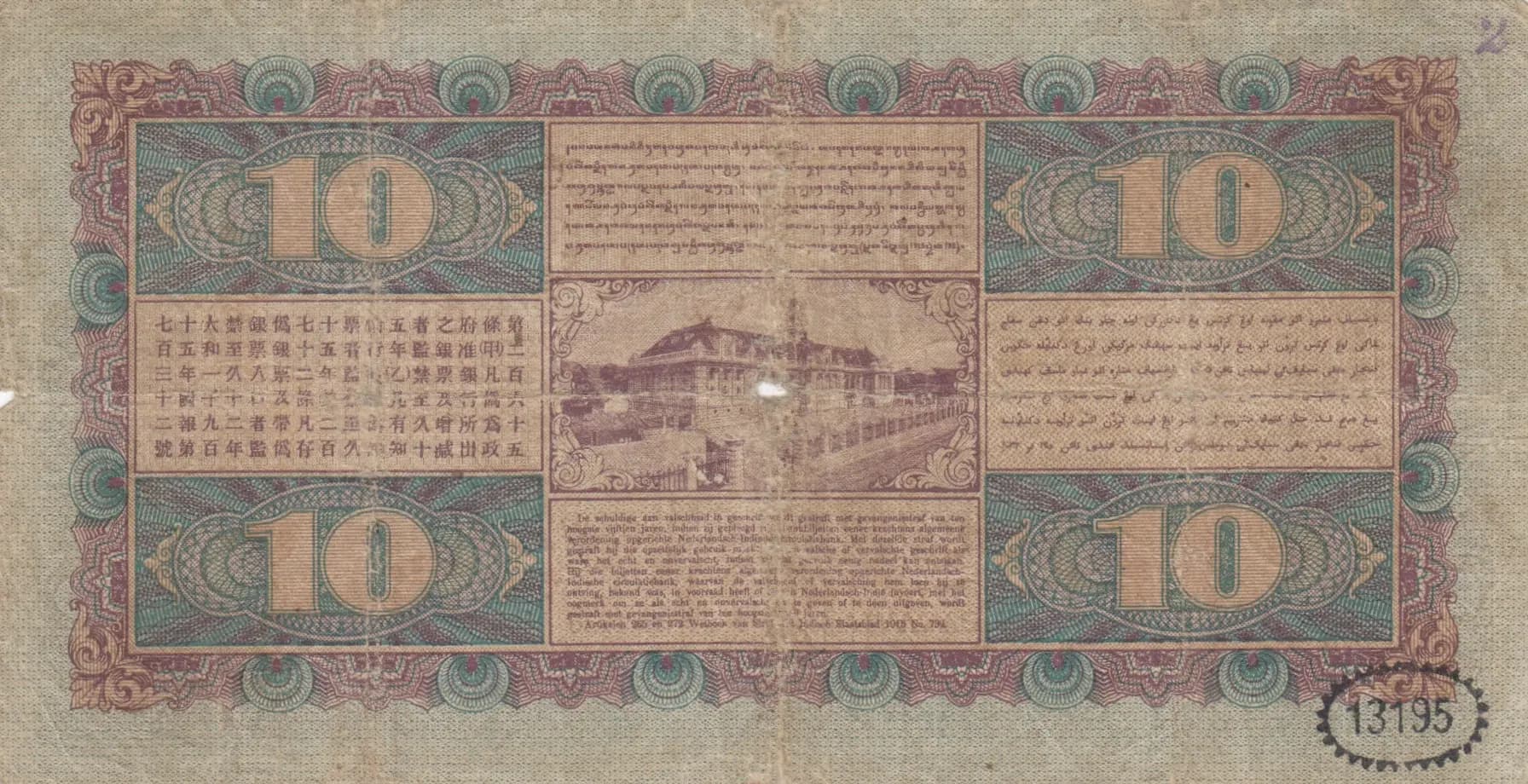
A 10 Gulden banknote issued by De Javasche Bank on January 28, 1926, in Very Good condition showing characteristic age-related wear consistent with early 20th-century circulation. The note features fine line engraving throughout with a bearded male portrait in historical dress on the obverse and a striking central building complex in traditional Asian architecture on the reverse, rendered in purple and green tones. Notable for its multi-language inscriptions reflecting the Dutch East Indies' cosmopolitan character, this Pick 70a represents an important regional currency from the colonial period.
Common. While colonial Netherlands Indies banknotes from this period have historical significance, the 10 Gulden denomination was a standard circulating note with substantial print runs by De Javasche Bank. Pick catalog listings for this series show no indication of limited mintage or rarity status. The VG condition grade is typical for notes from this era that saw active circulation, and such notes remain readily available in the collector market at modest valuations.
Issued during the height of the Dutch colonial period in the Netherlands Indies, this 1926 banknote from De Javasche Bank (established 1828) represents the financial infrastructure of what would later become Indonesia. The architectural prominence on the reverse depicts a significant institutional or commercial building from Batavia (modern-day Jakarta), reflecting the colonial economic center's importance. The presence of Asian script and Arabic text on the reverse demonstrates the multicultural trading networks and diverse population of the Dutch East Indies during this era.
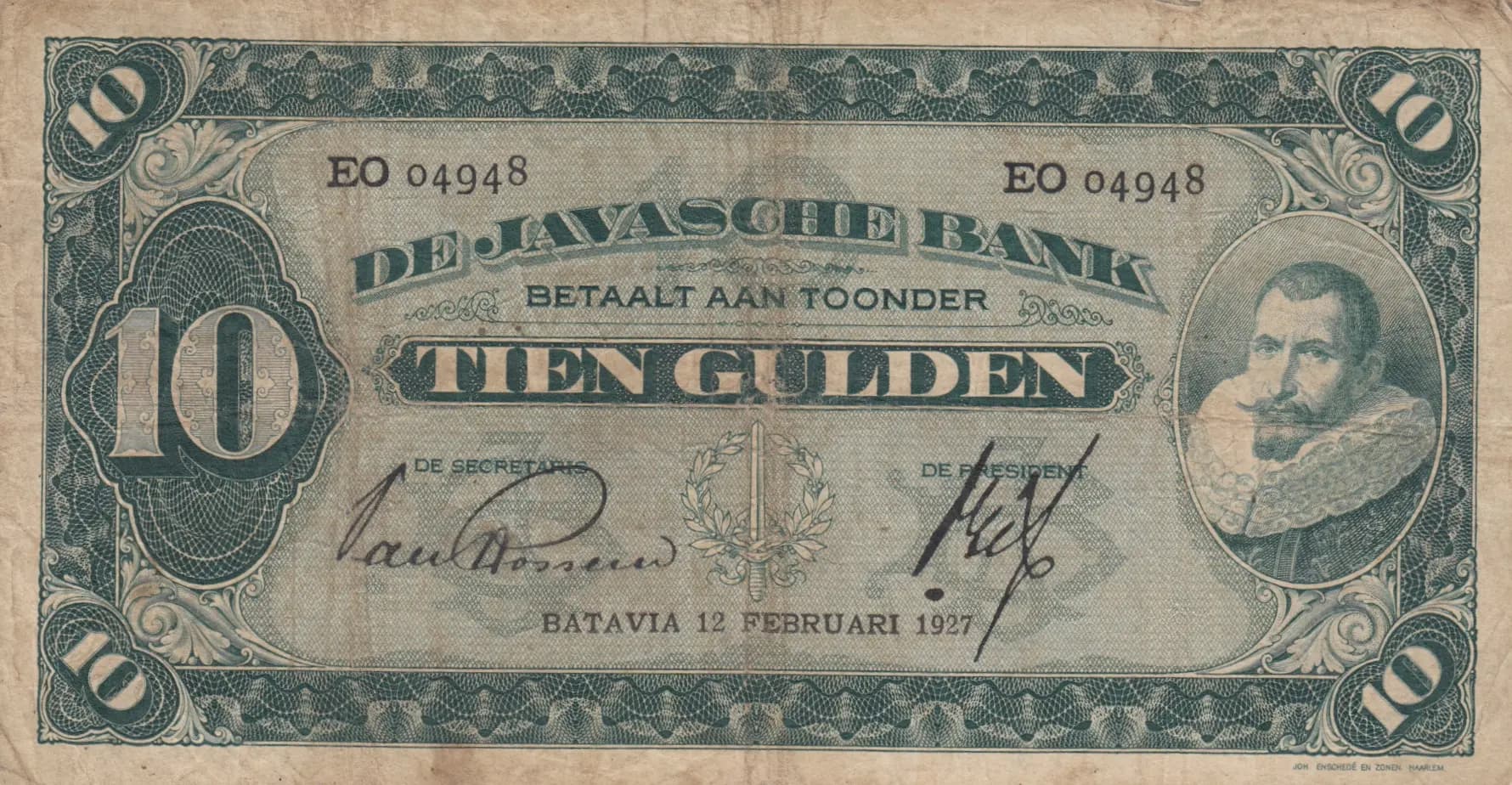
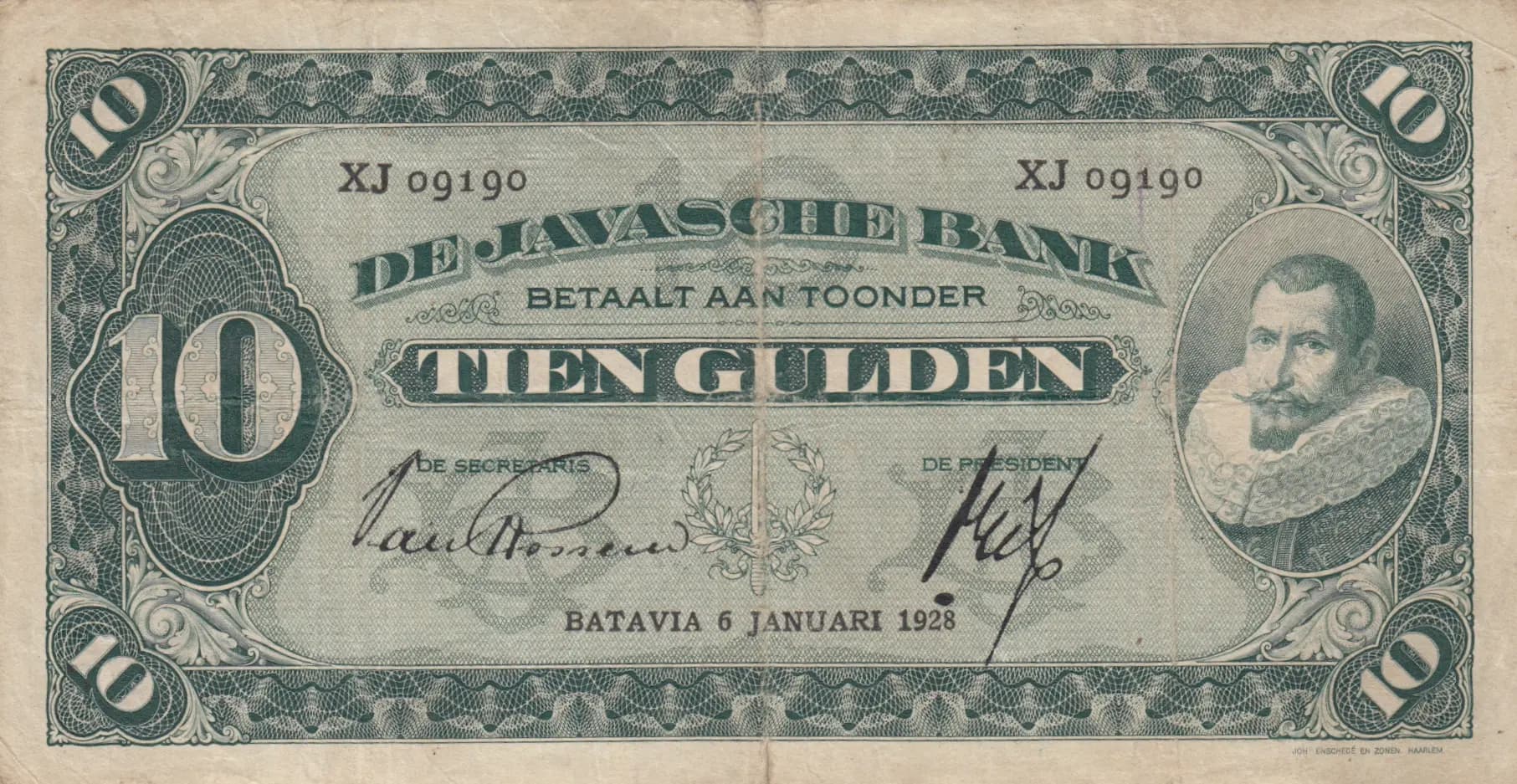
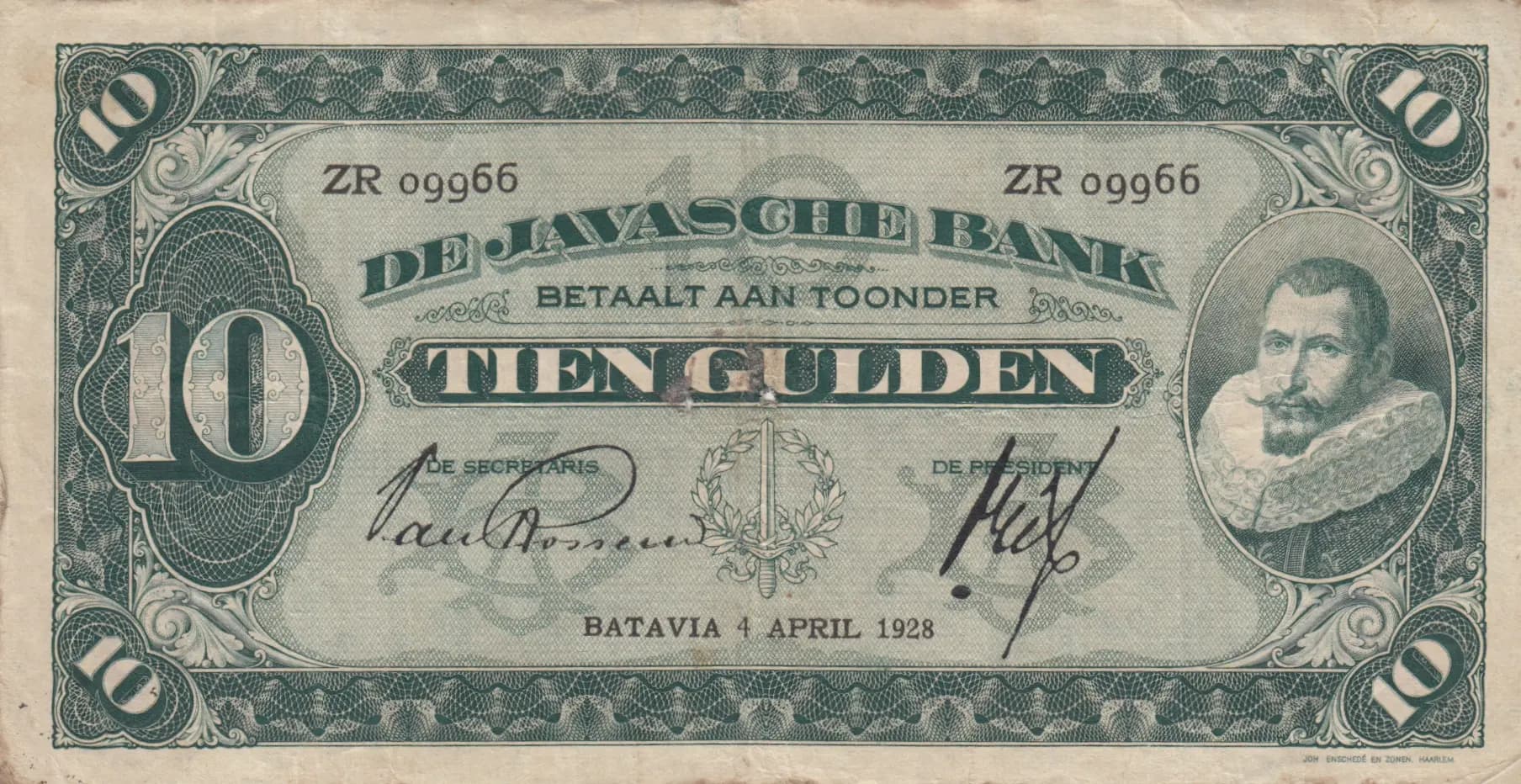
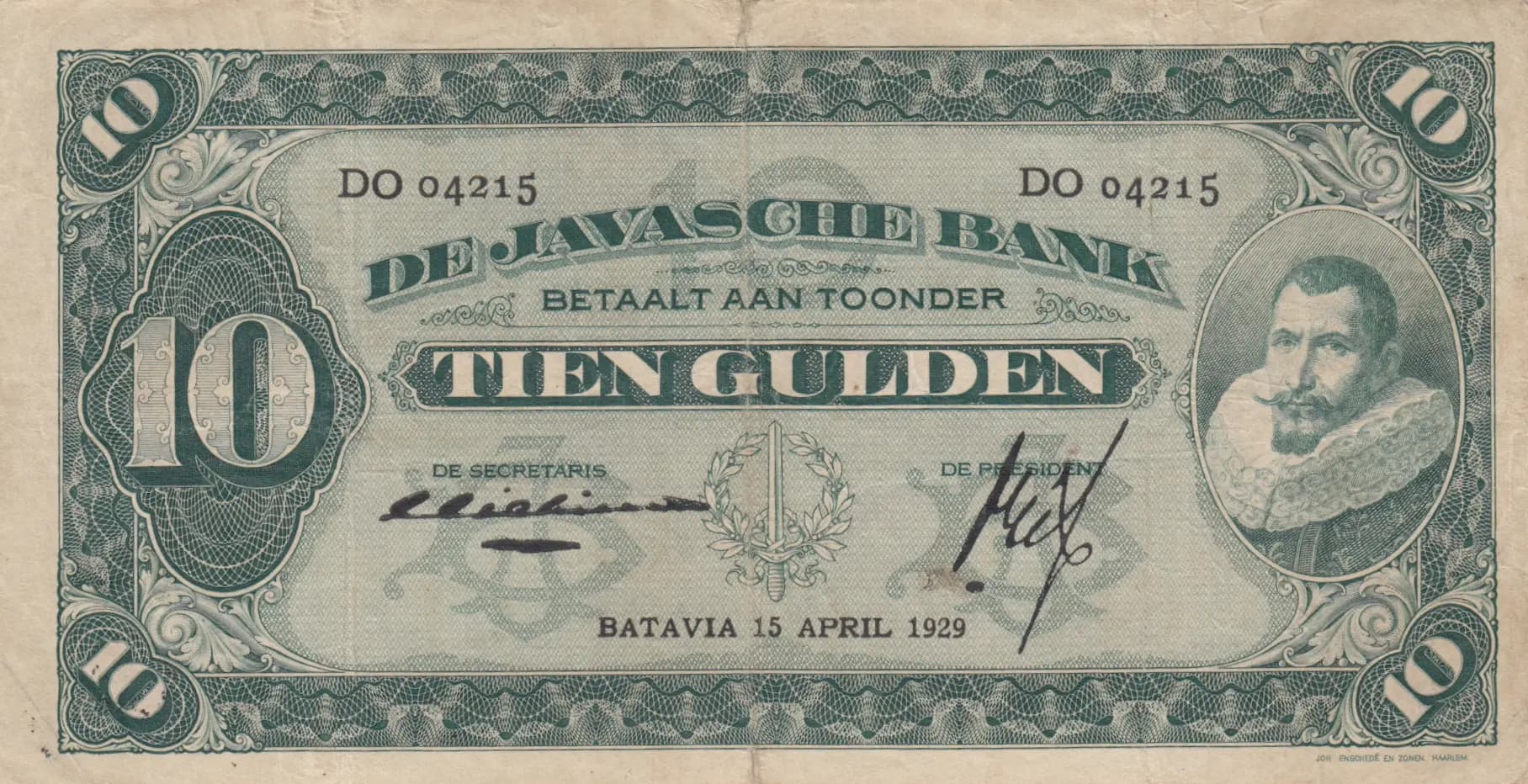
The obverse features a formal portrait of a bearded gentleman in 17th or 18th-century historical dress with white collar, positioned in profile within a circular frame on the right side of the note. The design is framed by ornamental scrollwork and elaborate filigree in all four corners, with a decorative wreath or laurel design centered below the main portrait area. The reverse showcases a detailed architectural engraving of a substantial building complex with multiple structures displaying traditional East Asian design elements, including distinctive roofed pavilions characteristic of Batavian colonial institutional or commercial architecture. Four decorative ovals containing the numeral '10' occupy the corners, with ornamental circular medallions arranged across the top border. The color scheme shifts to purple/mauve and green/teal on the reverse, with cream and brown/sepia tones providing contrast to the complex architectural rendering.
Front side: 'DE JAVASCHE BANK' (The Java Bank), 'BETAALT AAN TOONDER' (Payable to Bearer), 'TIEN GULDEN' (Ten Guilders), 'DE SECRETARIS' (The Secretary), 'DE PRESIDENT' (The President), 'BATAVIA 28 JANUARI 1926' (Batavia, January 28, 1926), Serial number 'CG 06672' (appears twice). Back side: Denomination '10' (displayed in four corner ovals), Serial/identification number '13195' (in circular stamp, bottom right), plus blocks of Chinese/Japanese characters (left side), Arabic script (right side), and Latin script text above and below the central building (describing the building or containing regulatory information, legibility limited in provided images).
Intaglio engraving (line engraving), evidenced by the fine line work, complex geometric patterns in the denomination numerals, and intricate filigree border designs visible throughout both sides. The printing technique showcases the high-security standards typical of early 20th-century colonial banknote production, with multiple layers of fine detail that would be difficult to counterfeit using contemporary methods.
This specific specimen is identified as Pick 70a (the 'a' variant designation indicates the first or primary version of this note design from 1926). The note exhibits serial number CG 06672, which provides individual identification but does not necessarily denote a significant variety. The date 'BATAVIA 28 JANUARI 1926' confirms this as the initial 1926 issue. Known varieties of the 1926 10 Gulden exist with different signature combinations and serial number prefixes; collectors should cross-reference the specific signature lines and serial prefix (CG) against detailed Pick catalog specifications to confirm exact variety status.