10 gulden 1929
About This Note
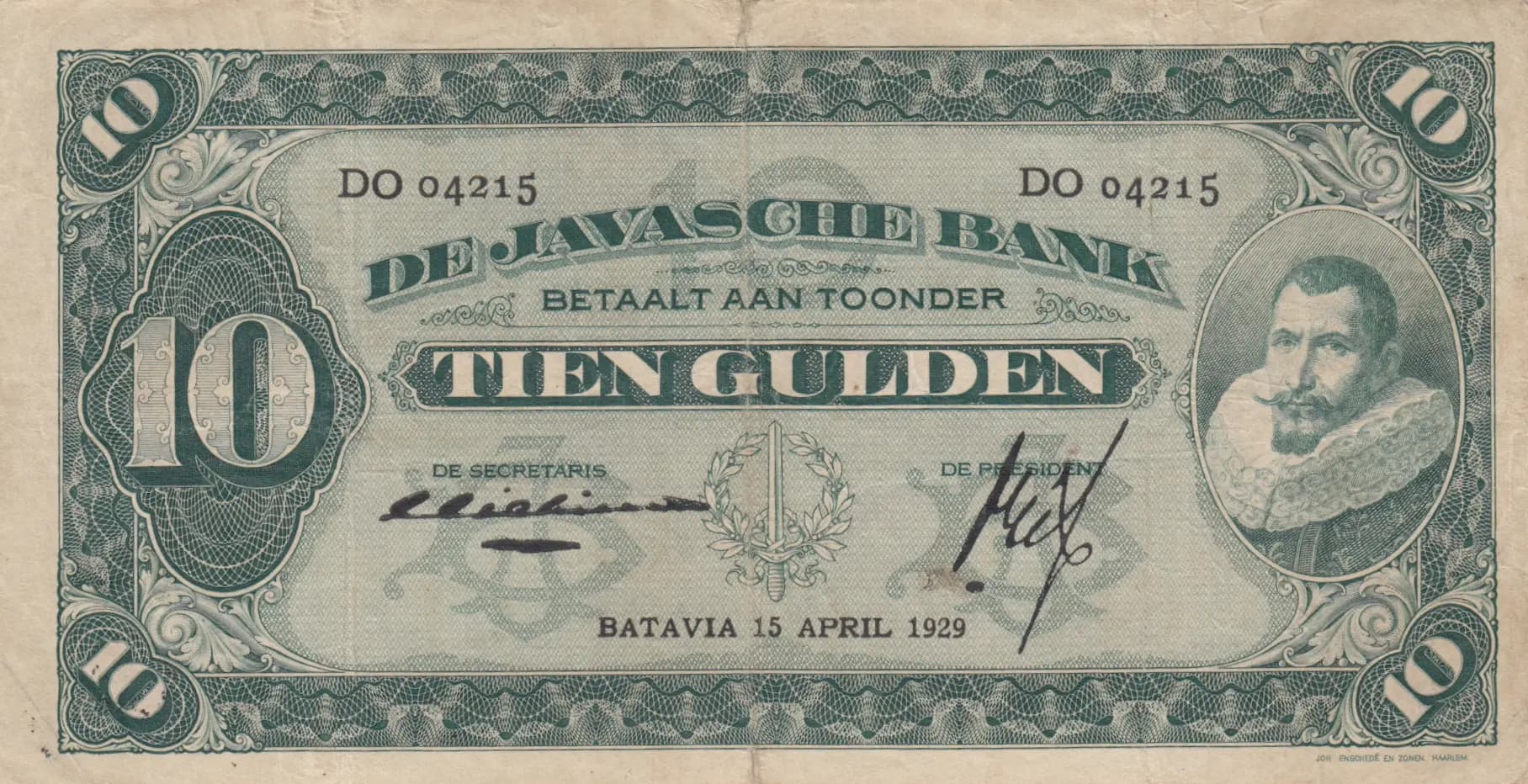
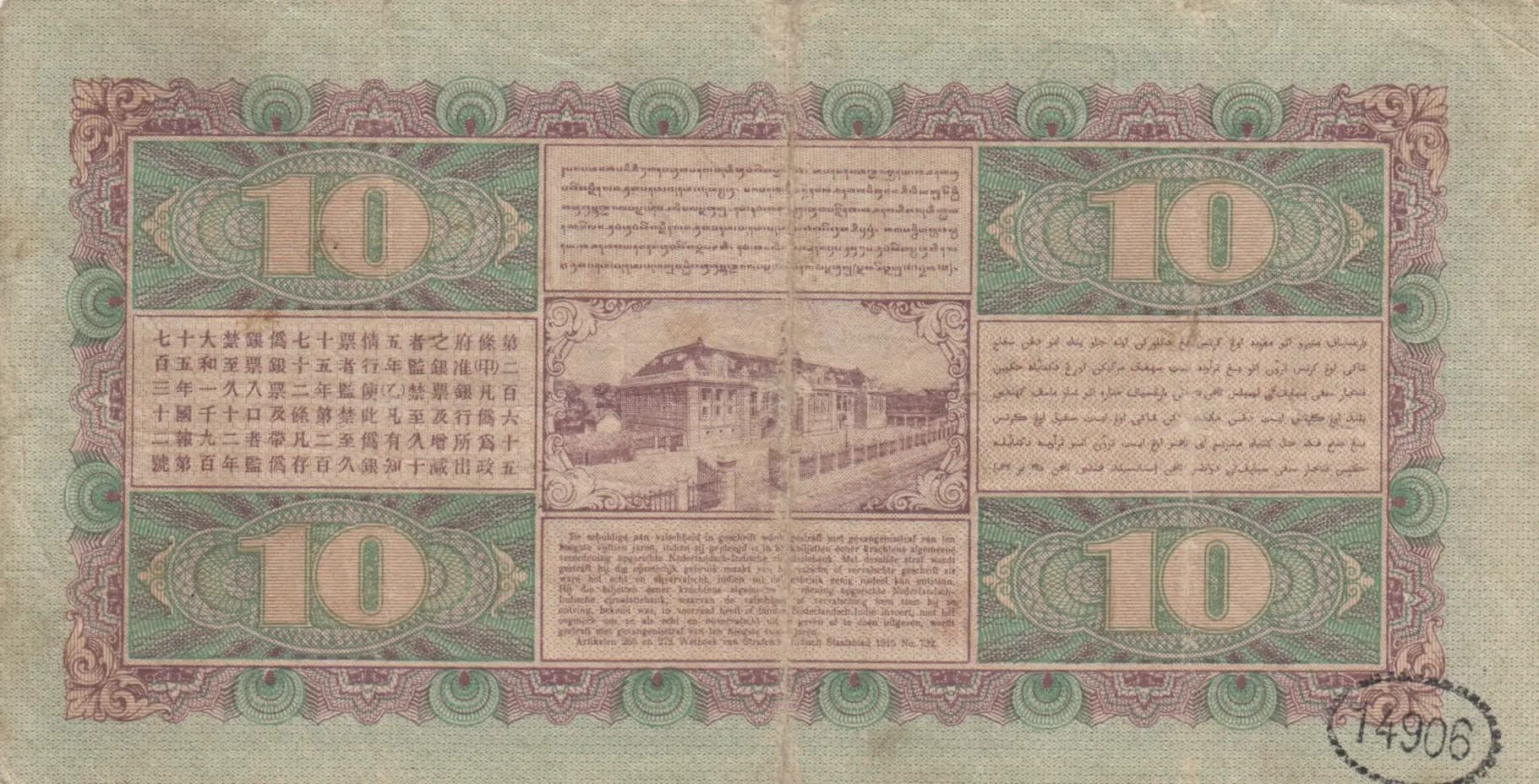
This is a 10 gulden banknote issued by De Javasche Bank on 15 April 1929, representing an important example of colonial-era Dutch East Indies currency. The note exhibits F (Fair) condition with visible creasing, aging, and circulation wear, including a prominent horizontal fold across the middle and foxing throughout the paper. The ornate intaglio engraving and multilingual text (Dutch, Chinese, Arabic) reflect the cosmopolitan nature of the Java Bank's operations in the diverse Dutch East Indies territories.
Common. The 10 gulden denomination from De Javasche Bank's 1929 series (Pick 70b) was issued in substantial quantities to serve the financial needs of the Dutch East Indies' colonial economy. No evidence suggests restricted print runs, early recall, or significant scarcity. Notes from this series and denomination regularly appear in the market and are held in collector hands worldwide. Fair condition examples trade at modest valuations, consistent with common circulation issues.
De Javasche Bank was the central bank of the Dutch East Indies, and this 1929 issue represents the height of colonial financial operations in the region. The multilingual inscriptions in Dutch, Chinese, and Arabic on the reverse reflect the trading communities and diverse population of the Dutch East Indies, particularly the significant Chinese merchant class. The architectural landmark depicted on the reverse likely represents a colonial government or banking institution in Batavia (Jakarta), symbolizing the financial infrastructure of the colonial administration.
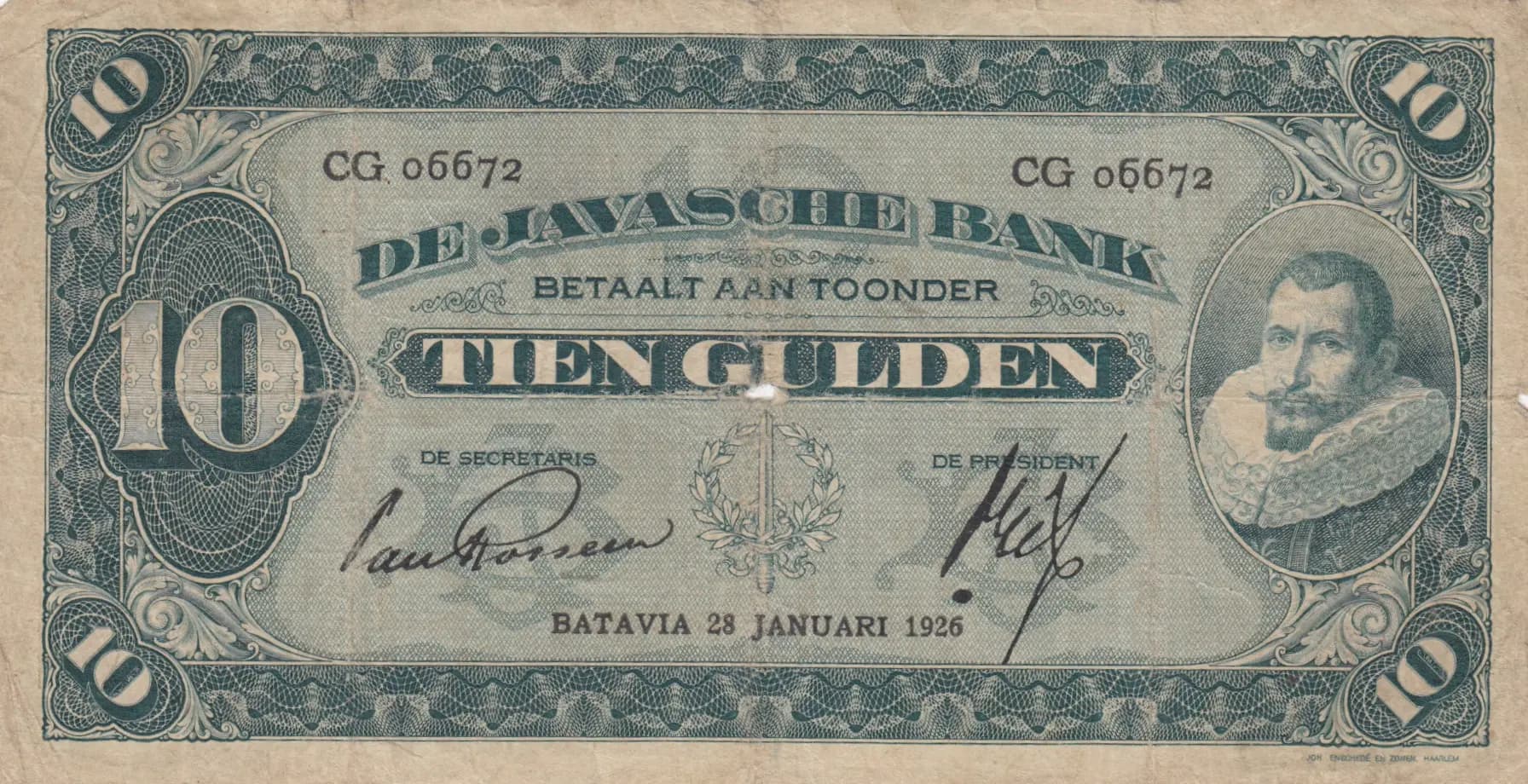
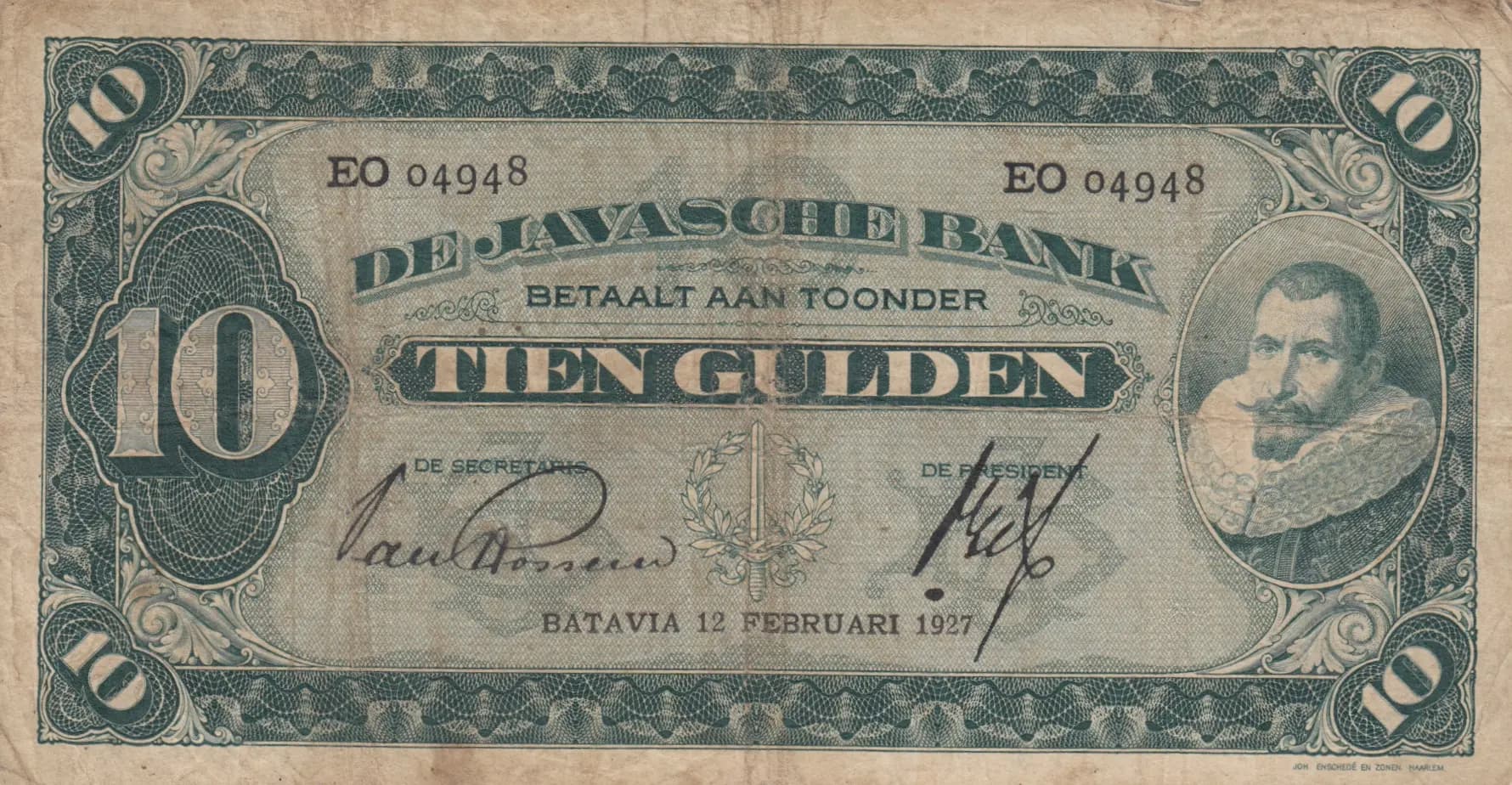
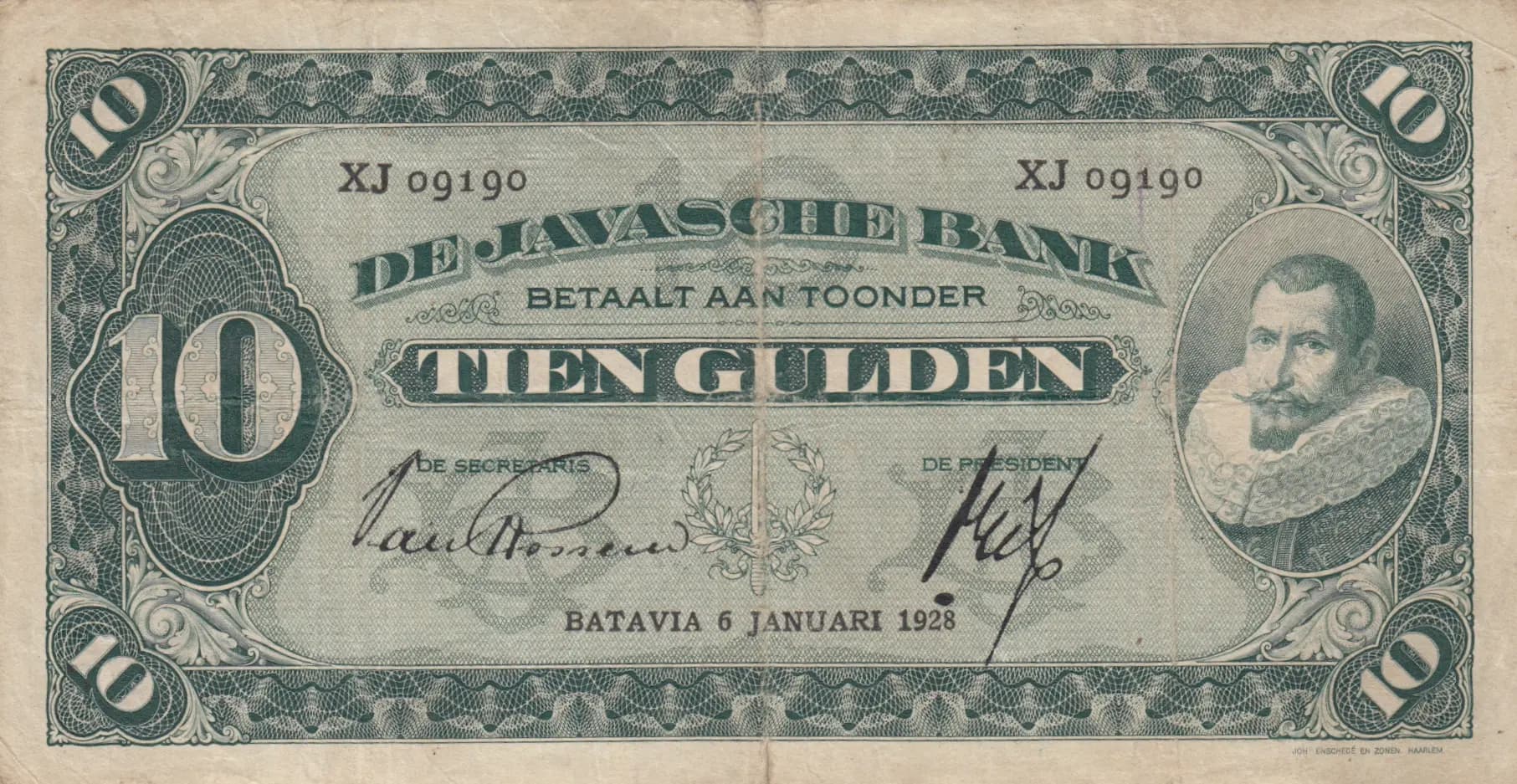
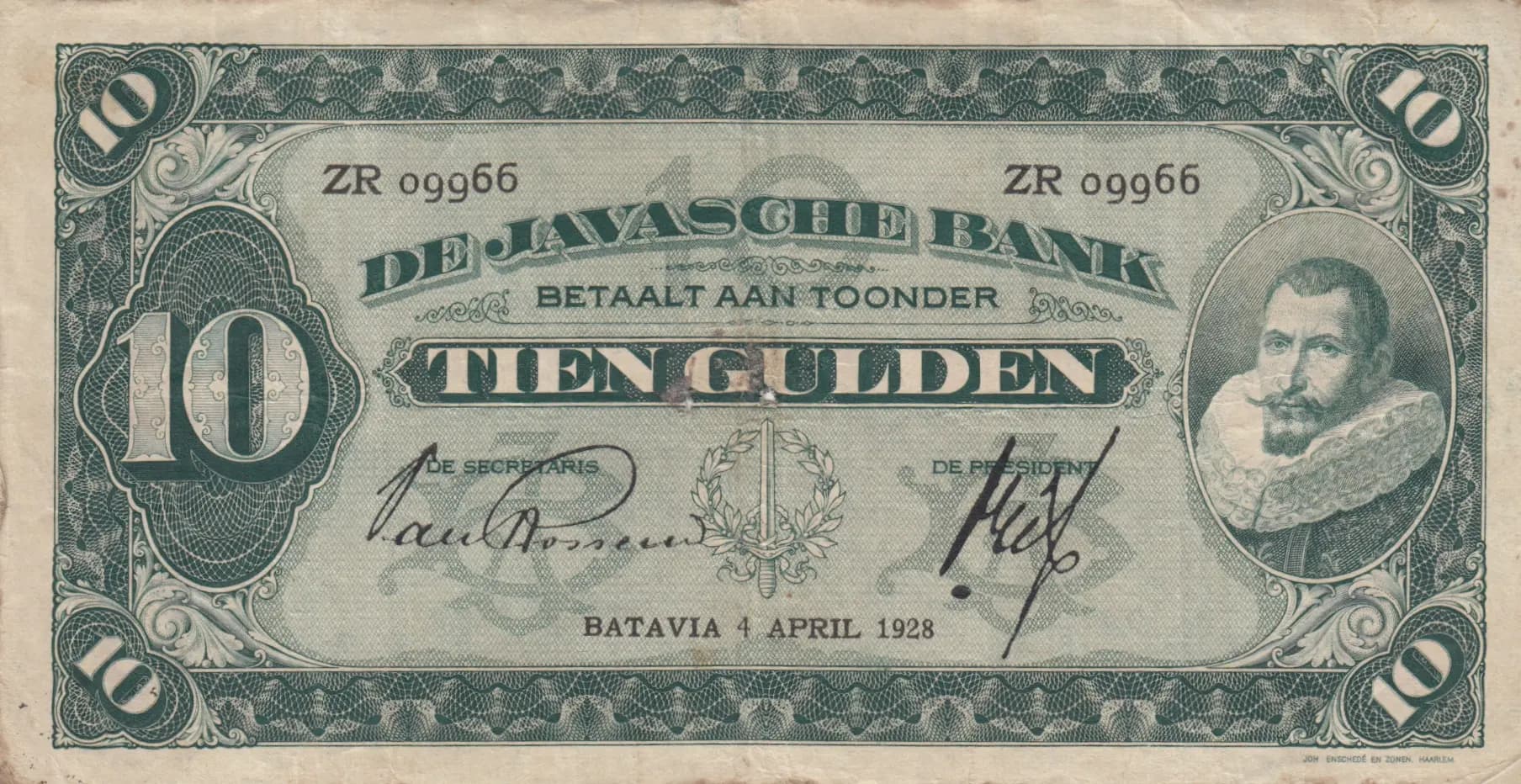
The front features an ornate border with decorative scrollwork in all corners and elaborate cartouches containing the denomination '10'. A portrait of a bearded gentleman in period dress with a ruffled collar occupies the right side, likely representing a notable figure or officer of De Javasche Bank. The center displays the bank's name, denomination, and bearer clause with spaces for signatures of the President and Secretary below, dated Batavia 15 April 1929. The reverse depicts a substantial colonial-era institutional building (likely a government or banking structure in Batavia) as the central design element, framed by large ornate '10' denomination cartouches on left and right. The multilingual text blocks in the corners—in Dutch, Chinese, and Arabic—served both informational and security purposes, reflecting the diverse populations and trading interests within the Dutch East Indies.
FRONT: 'DE JAVASCHE BANK' = The Java Bank; 'BETAALT AAN TOONDER' = Payable to Bearer; 'TIEN GULDEN' = Ten Guilders; 'DE SECRETARIS' = The Secretary; 'DE PRESIDENT' = The President; 'BATAVIA 15 APRIL 1929' = Batavia, 15 April 1929; Serial number 'DO 04215' appears twice. BACK: Large denomination numerals '10' appear in ornate cartouches; Multi-lingual text blocks in Dutch, Chinese, and Arabic appear in all four corners containing legal/regulatory text regarding the note's validity and the bank's obligations; Reference/archive stamp '149908' visible in lower right corner.
Intaglio engraving throughout, as evidenced by the fine line work, complex decorative patterns, ornamental borders, and detailed architectural rendering. The precision of the corner medallions, scrollwork, and denomination numerals, combined with the layered color scheme (green, reddish-brown, cream/beige) suggests professional security printing typical of colonial-era banknotes. While the specific printer for Pick 70b is not definitively confirmed in standard references, Dutch colonial notes of this period were often produced by De Nederlandsche Bank's printing facilities or contracted to international security printers.
This example bears the serial number 'DO 04215' and is dated 15 April 1929 from Batavia. The handwritten signatures of the President and Secretary are present as required. Pick 70b is the standard variety for the 1929 10 gulden issue; variations within the series primarily relate to signature combinations and serial number prefixes. The archive stamp '149908' on the reverse suggests this note may have been handled by institutions or collectors with formal cataloging practices, possibly indicating museum or institutional provenance.