5 gulden 1942
About This Note
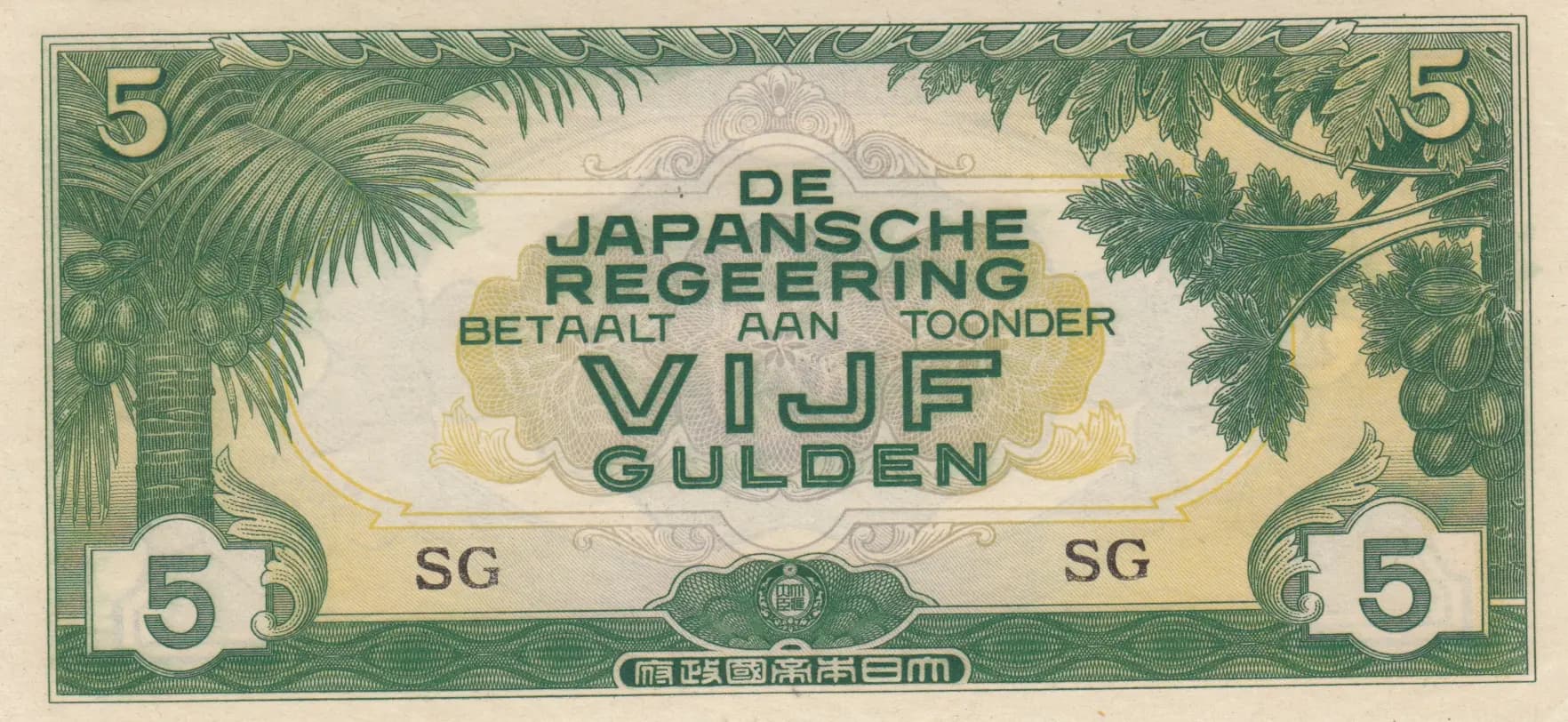
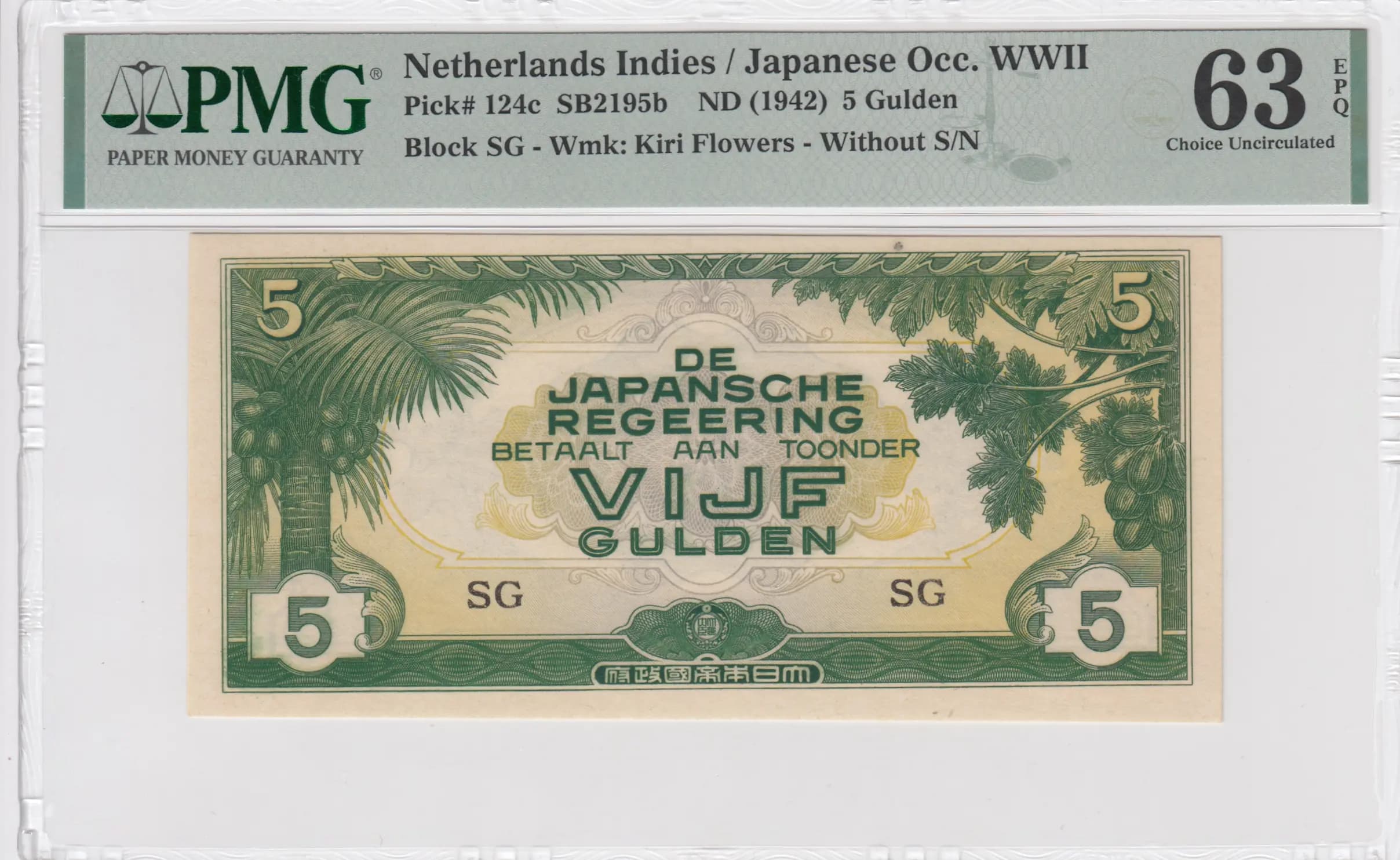
This is an exceptional example of a Netherlands Indies 5 gulden banknote from 1942, issued during the Japanese occupation of the Dutch East Indies in World War II. Graded PMG 63 Choice Uncirculated EPQ, the note displays pristine condition with vibrant green and cream coloring, intricate fine-line engraving, and ornate tropical floral motifs (Kiri flowers) throughout. The note is particularly interesting as a scarce Japanese occupation currency, representing a fascinating and historically significant period in Asian numismatic history.
Uncommon to Scarce. This is a Japanese occupation currency with relatively limited print runs compared to standard currency issues. While not extremely rare, Pick 124c notes in PMG 63 condition are decidedly scarce, as most occupation currency saw circulation and wear. The 'Without S/N' (no serial number) variant, combined with the high grade, makes this a particularly desirable specimen for collectors of Asian occupation currency and WWII-era notes. Original printing quantities for Japanese occupation guilden notes were substantially lower than pre-war Dutch Indies currency, and many notes were destroyed at war's end or heavily circulated.
This banknote was issued by De Japansche Regeering (The Japanese Government) during Japan's occupation of the Netherlands Indies from 1942-1945, when the Dutch colonial administration was supplanted by Japanese military rule. The bilingual inscriptions in Dutch ('BETAALT AAN TOONDER'/'VIJF GULDEN') and Japanese ('南方占領地日本銀行' - Japanese Bank of Southern Occupied Territories) reflect the transitional nature of the occupation currency system. The ornate design with traditional tropical imagery represents Japan's attempt to legitimize its administration while maintaining continuity with the previous Dutch colonial monetary system.
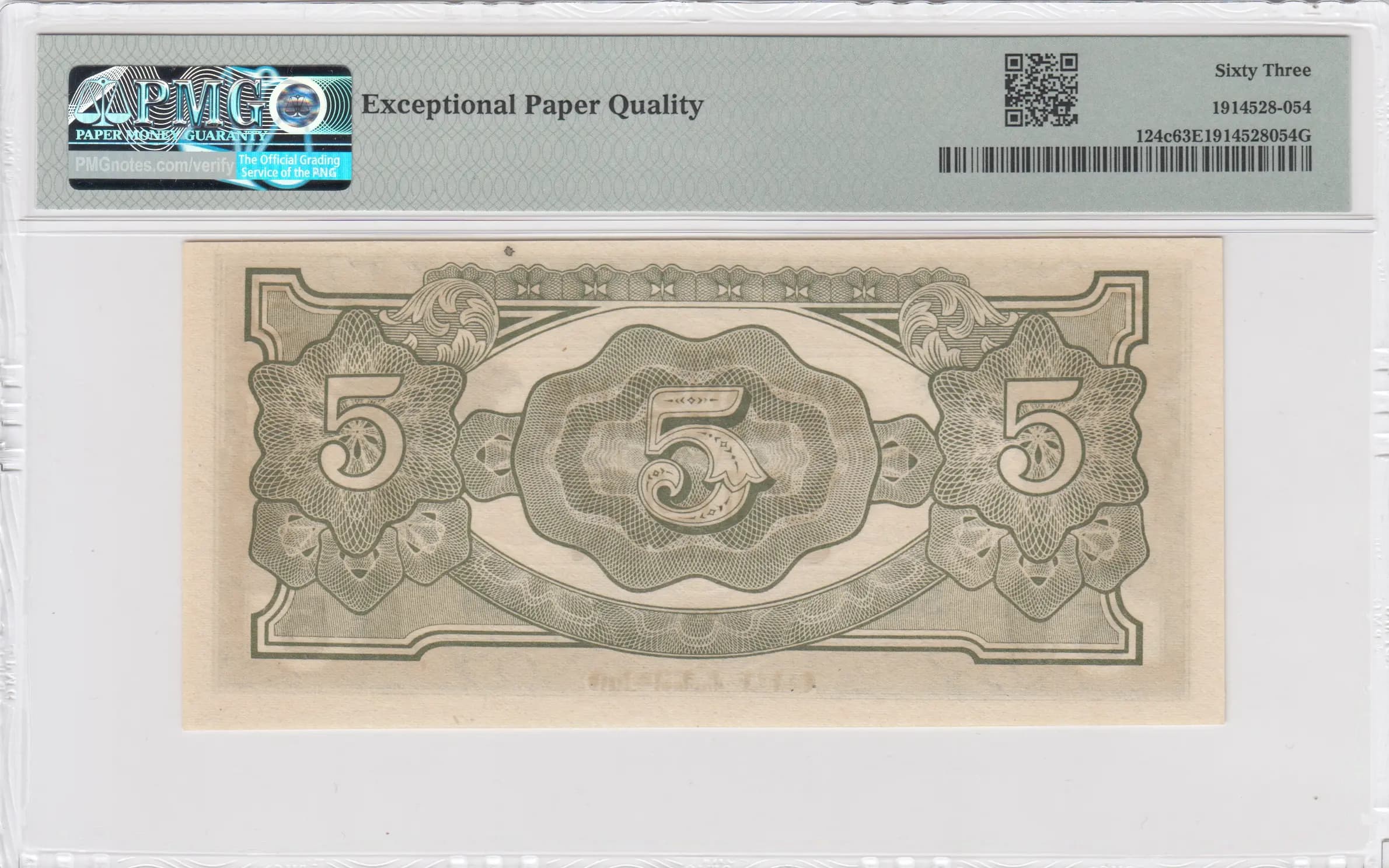
The front of this note features a sophisticated classical design with ornamental borders composed of tropical foliage including palm fronds and grape vines in the corners. The central area contains elaborate scrollwork and decorative cartouches with the Kiri flower (Japanese royal family crest flower) serving as the watermark security element. The back displays a more austere but equally detailed design, with quatrefoil (four-lobed) shaped frames in each corner containing the numeral '5', and a central shield or oval cartouche also bearing the denomination. The coat of arms or emblem visible in the center-bottom area represents Japanese governmental authority. No portraits are depicted on this note, following the Japanese design preference for symbolic rather than figurative imagery.
FRONT: 'DE JAPANSCHE REGEERING' = The Japanese Government; 'BETAALT AAN TOONDER' = Pays to Bearer; 'VIJF GULDEN' = Five Guilders; '南方占領地日本銀行' = Japanese Bank of Southern Occupied Territories; Numeral '5' = denomination indicator; 'SG' = Series/Block designation. BACK: Numeral '5' appears in quatrefoil corner frames and central oval element, serving as security denomination markers.
This banknote was produced using sophisticated intaglio engraving (copperplate printing), evidenced by the fine-line work, detailed cross-hatching, complex geometric patterns, and deep impression visible in both the visual analysis and the exceptional paper quality. The security printing demonstrates high-level craftsmanship typical of De Japansche Regeering's occupation currency production, with multiple layers of fine engraving creating complex security patterns difficult to counterfeit. The watermark featuring Kiri flowers was incorporated during the paper manufacturing stage, representing another security layer.
This specimen is identified as Pick 124c, which represents a specific variety of the Japanese occupation 5 gulden note. The 'c' designation in the Pick catalog indicates a particular printing variation or series. Key identifiers for this variety include: block/series designation 'SG' visible on the note, absence of serial numbers (noted as 'Without S/N'), and the specific design with Kiri flower watermark. The note lacks traditional serial numbering, which is characteristic of certain Japanese occupation issues. No signature variations are visible on this specimen, as Japanese occupation currency typically did not feature handwritten signatures but rather printed designations.