5 gulden 1942
About This Note
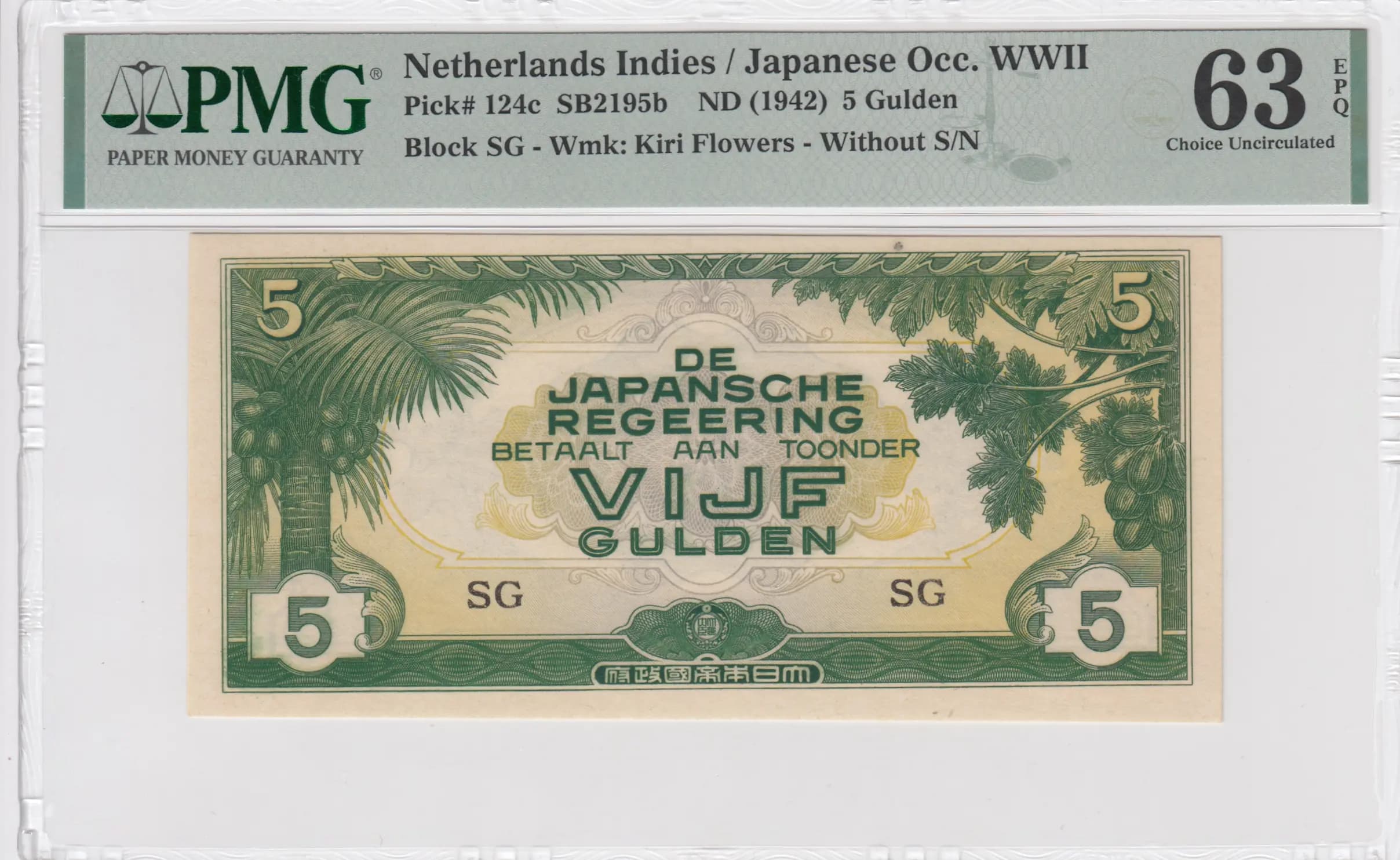
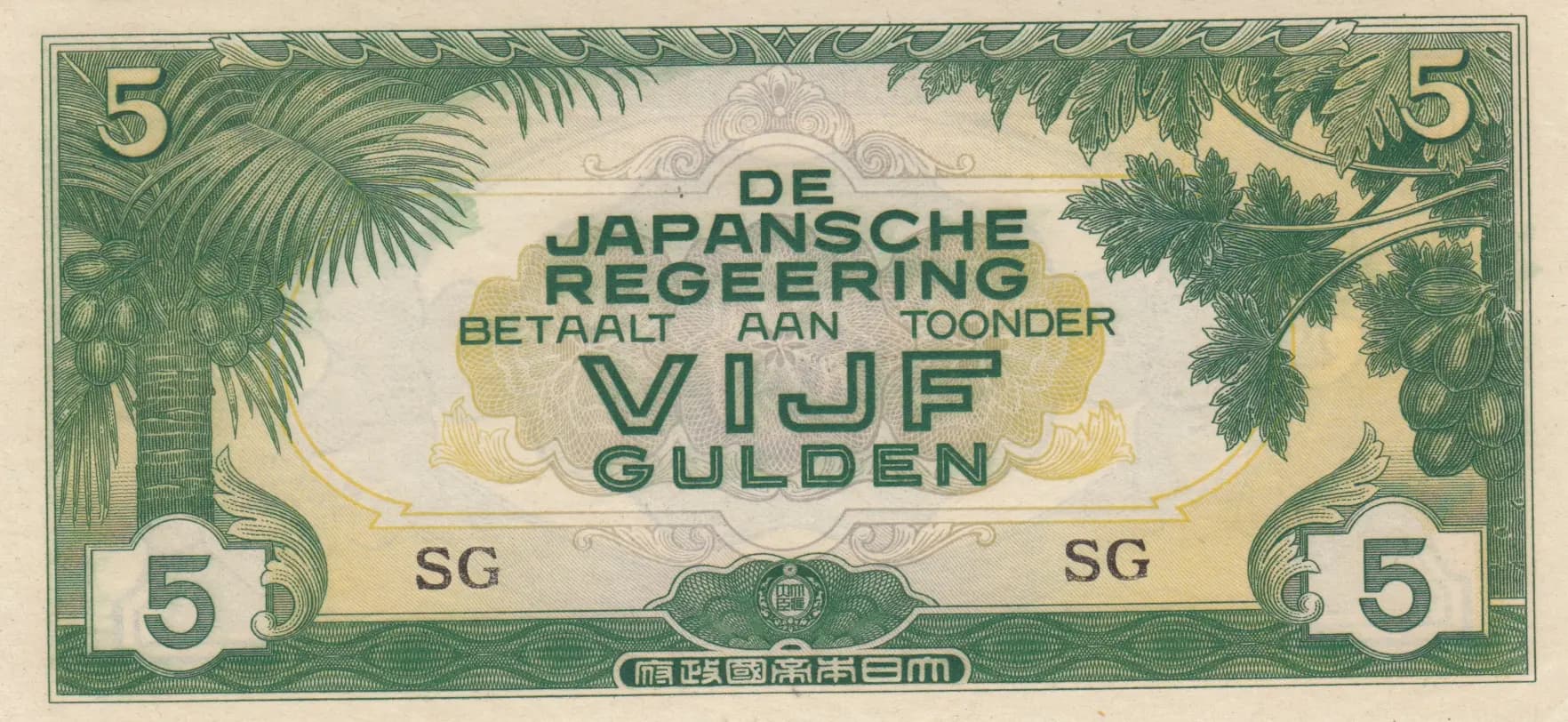
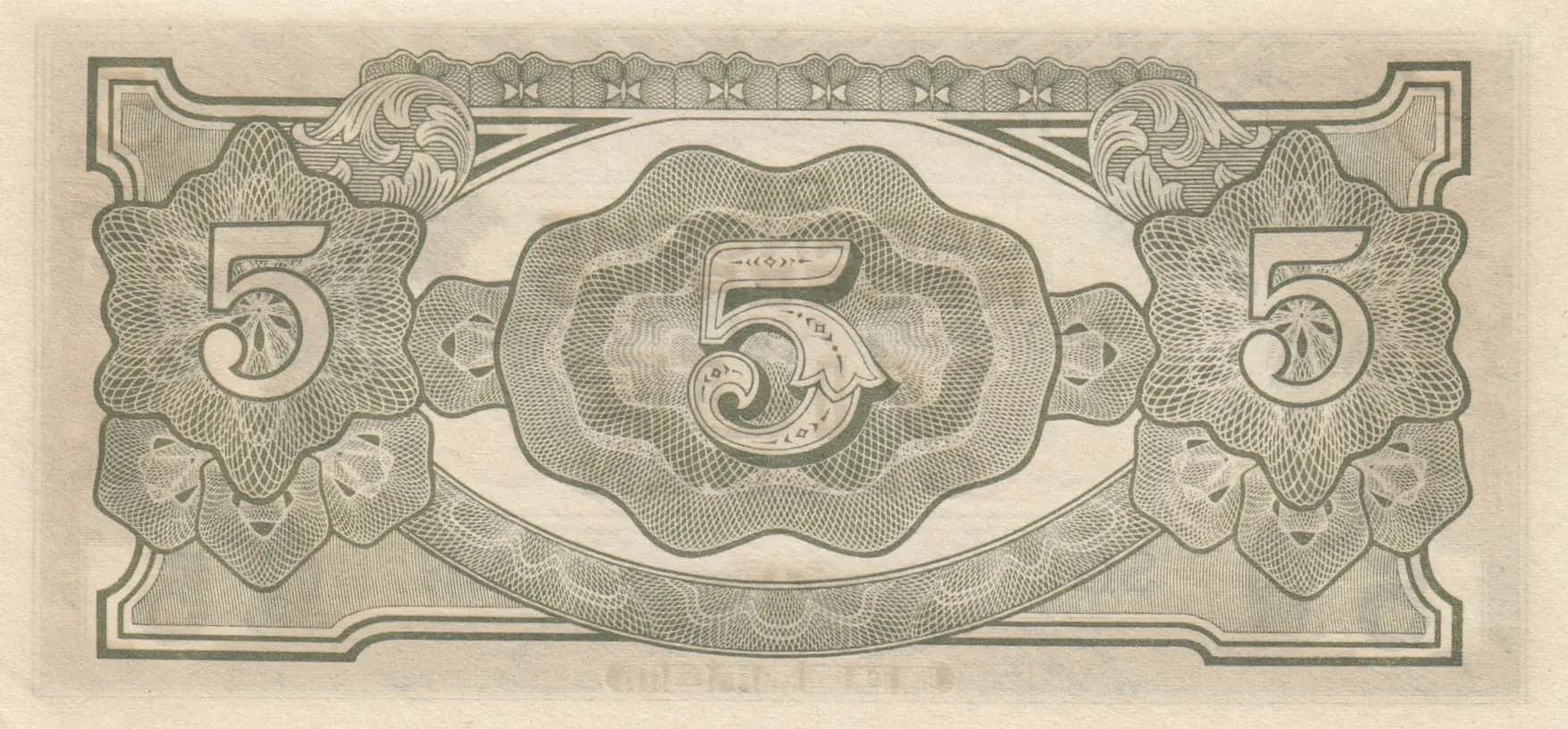
A pristine example of the 1942 Netherlands Indies 5 Gulden issued by De Japansche Regeering (The Japanese Government) during the occupation of the Dutch East Indies in World War II. The note displays exceptional condition with no visible wear, creases, or damage, featuring an ornate front design in green and gold with elaborate tropical foliage motifs and scrollwork, while the reverse presents a minimalist black and gray design centered on a large decorative numeral 5. The intricate engraved patterns and fine line work throughout demonstrate the high-quality security printing typical of this occupation currency.
Common. The Netherlands Indies 5 Gulden 1942 (Pick-124c) was issued in substantial quantities during the Japanese occupation and remains readily available to collectors. No specific evidence suggests an unusually limited print run, early recall, or scarcity in the AU condition grade observed. Occupation currency from this period, while historically significant, generally circulates with adequate frequency in the numismatic market.
This banknote represents the monetary system imposed during Japan's occupation of the Netherlands Indies from 1942-1945, with the front prominently displaying 'DE JAPANSCHE REGEERING' (The Japanese Government) and Japanese characters in the cartouche. The tropical foliage motifs—palm fronds and grape vines depicted in the decorative borders—reflect the colonial economic identity of the Dutch East Indies while the bilingual Dutch-Japanese inscriptions underscore the imposed authority of the occupation. The conservative, ornate design style was typical of occupation currency designed to maintain economic function while asserting political control.
The front features an ornamental design centered around a decorative cartouche containing the denomination and issuer information, flanked by elaborate scrollwork and flourishes rendered in green and gold tones. Tropical botanical elements—specifically stylized palm fronds and grape vine motifs—ornament all four corners and borders, reflecting the colonial heritage of the Netherlands Indies. The ornamental coat of arms or seal positioned in the center-bottom area serves as the primary security and identifying symbol. The back presents a strikingly minimalist composition dominated by a large numeral 5 enclosed in nested quatrefoil and rounded square decorative frames, with ornamental corner designs employing fine geometric and floral elements. The overall design scheme emphasizes intricate engraving with extensive cross-hatching and stippling throughout both sides to provide anti-counterfeiting protection.
FRONT SIDE: 'DE JAPANSCHE REGEERING' = The Japanese Government | 'BETAALT AAN TOONDER' = Pays to Bearer | 'VIJF GULDEN' = Five Guilders | 'SG' = Series Designation | '5' = Denomination numeral | Japanese characters '昭和國庫當番' appearing in bottom center (Showa Treasury designation). BACK SIDE: '5' = Denomination numeral. The note maintains Dutch as the primary language with Japanese characters asserting the occupying authority's legitimacy.
Intaglio engraving (copperplate/steel plate printing), which is evidenced by the fine cross-hatching, detailed line work, ornate borders, and complex geometric patterns visible throughout both sides. The precision of the decorative elements and the depth of the security features are characteristic of high-quality intaglio printing used for occupation currency. The Japanese Government occupation authorities employed skilled security printers to produce this currency, likely using equipment and techniques consistent with pre-war colonial printing standards maintained during the occupation period.
This example corresponds to Pick-124c, indicating it is the third cataloged variety of the 1942 5 Gulden issue. The 'SG' series designation visible on the front is consistent with cataloging for this variety. No overprints, signature variations, or date modifications are apparent in this specimen. The specific series prefix 'SG' should be verified against detailed Pick catalog references to confirm exact variety classification, as Pick numbers often denote distinct printing runs or serial number ranges for occupation currency.