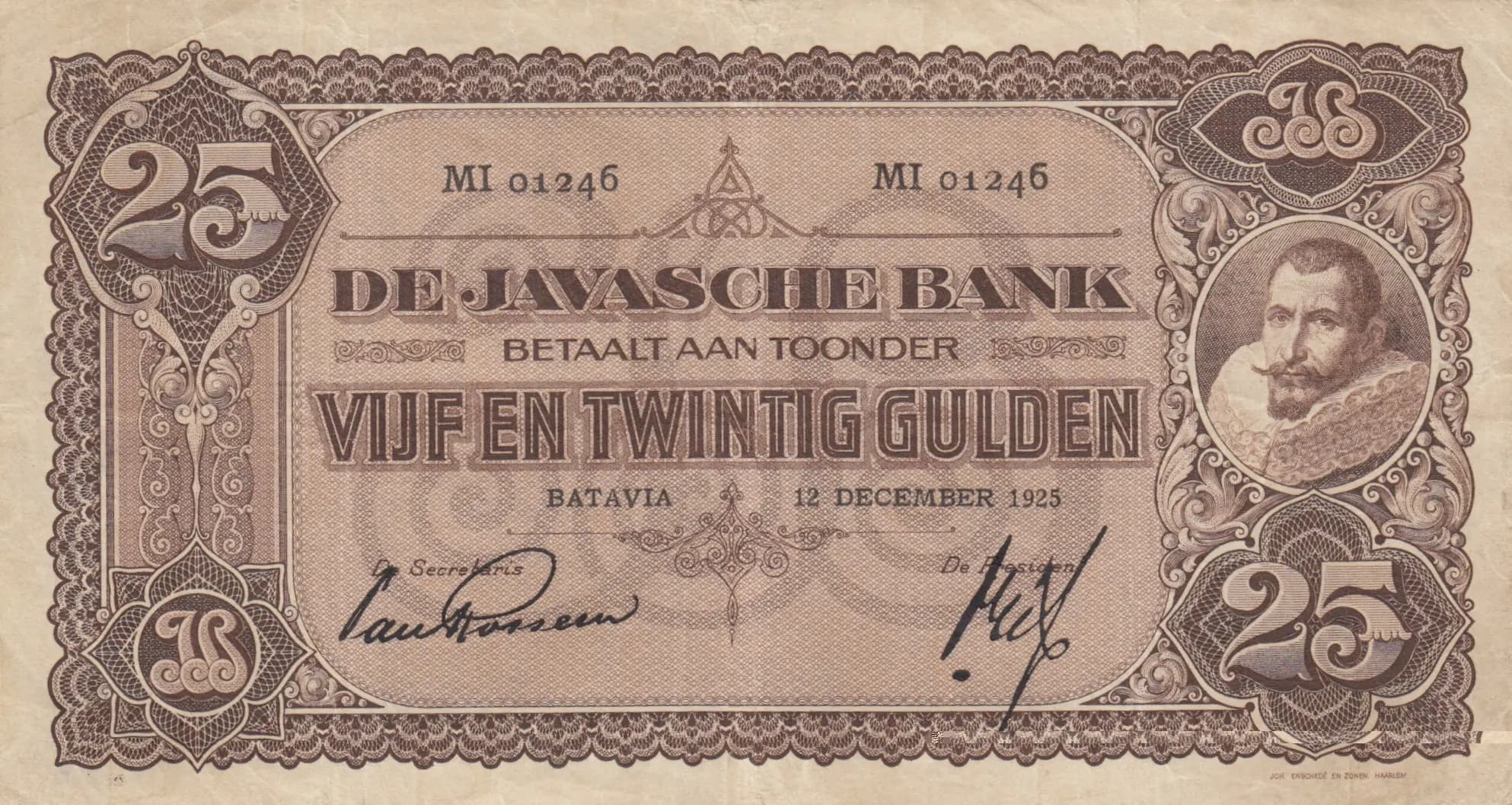
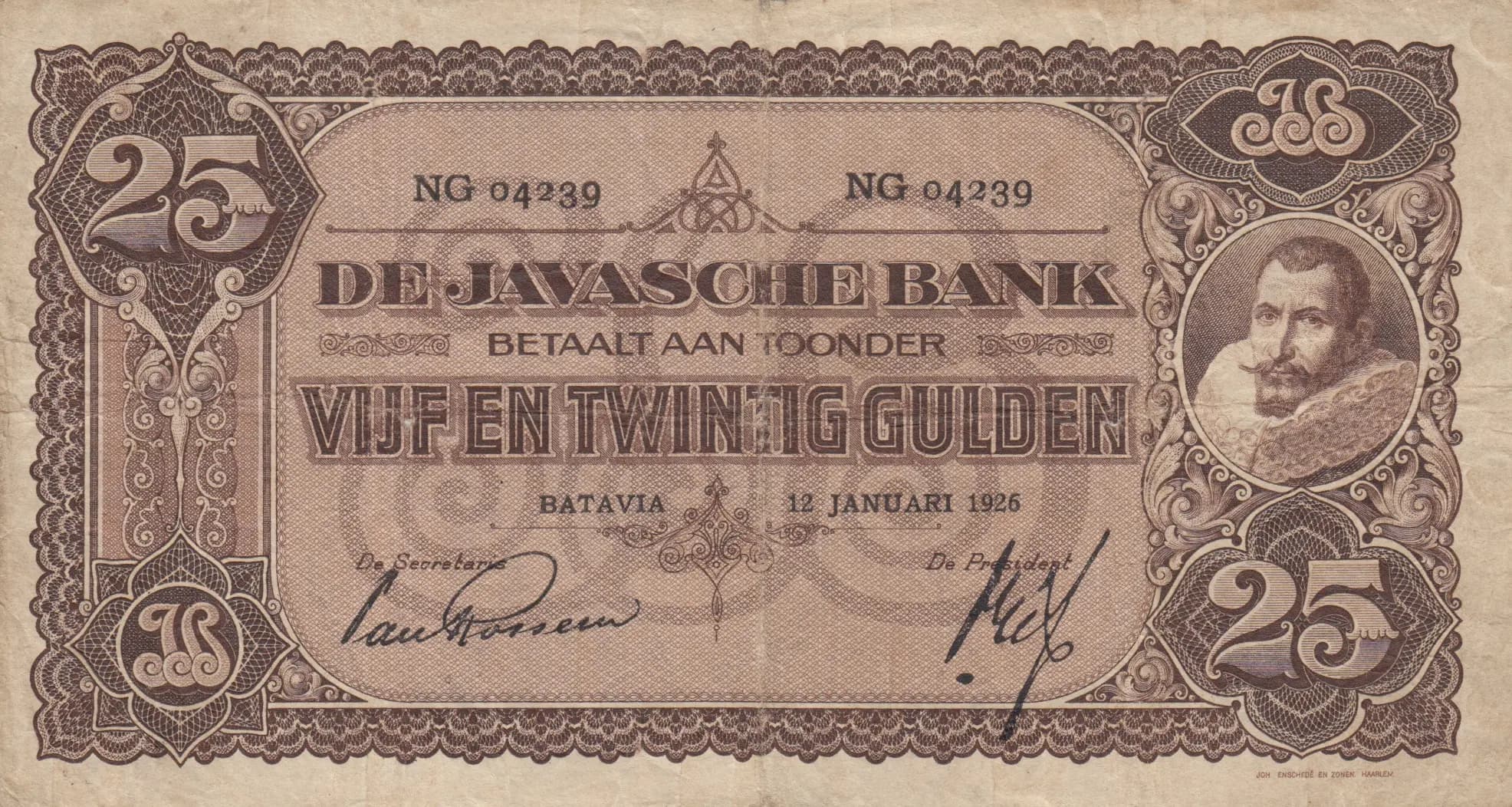
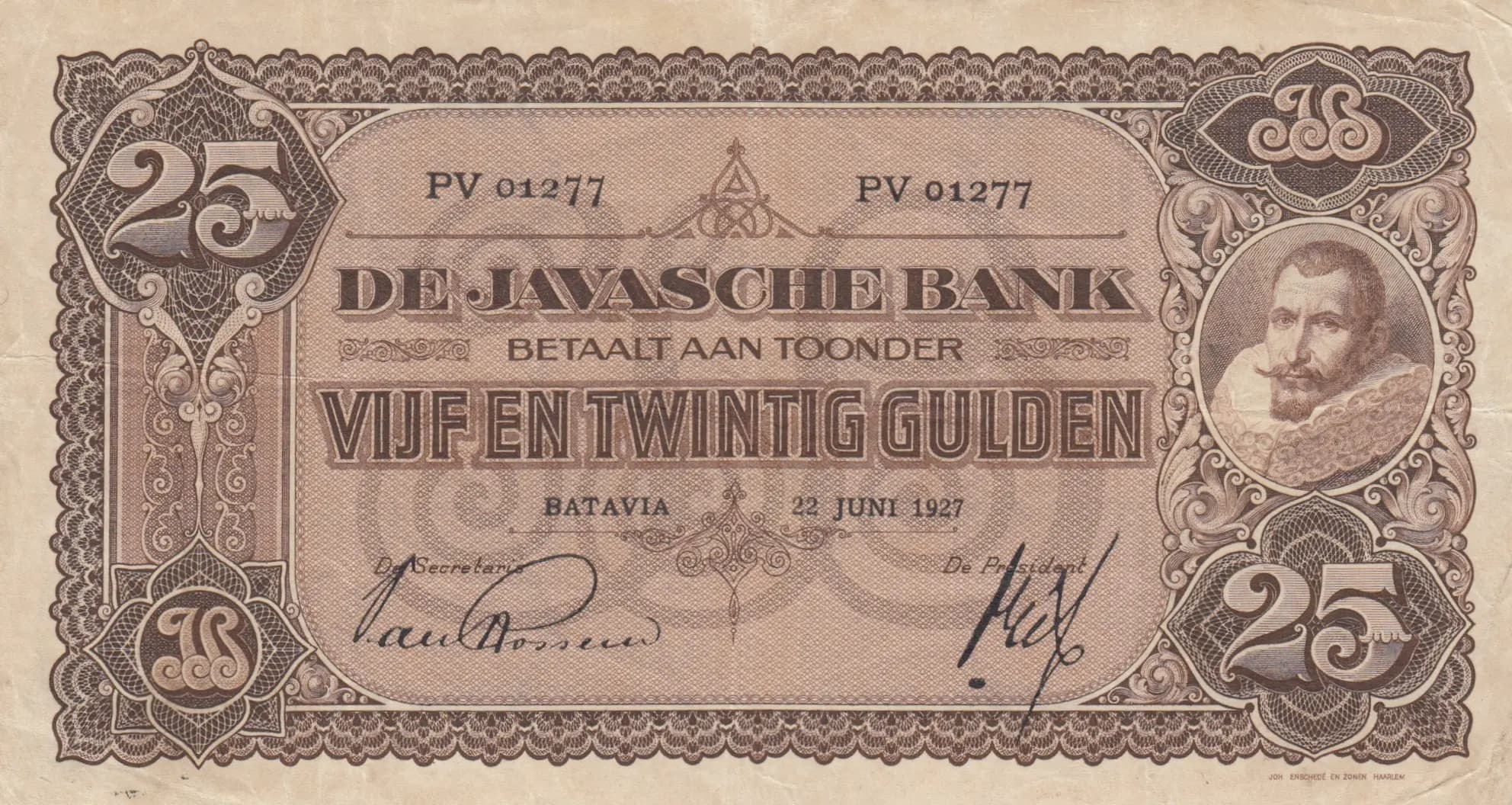
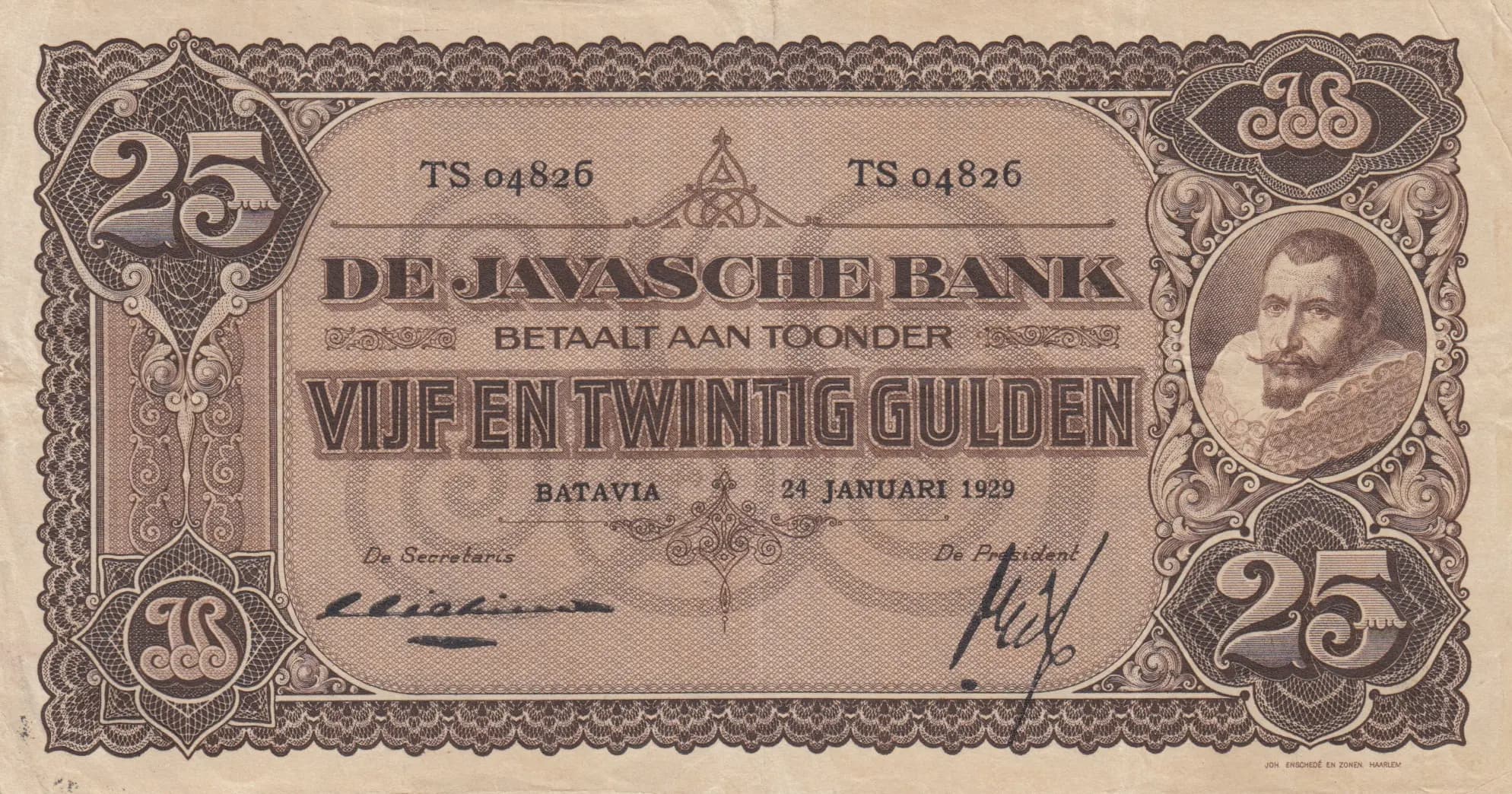
25 gulden 1930
About This Note
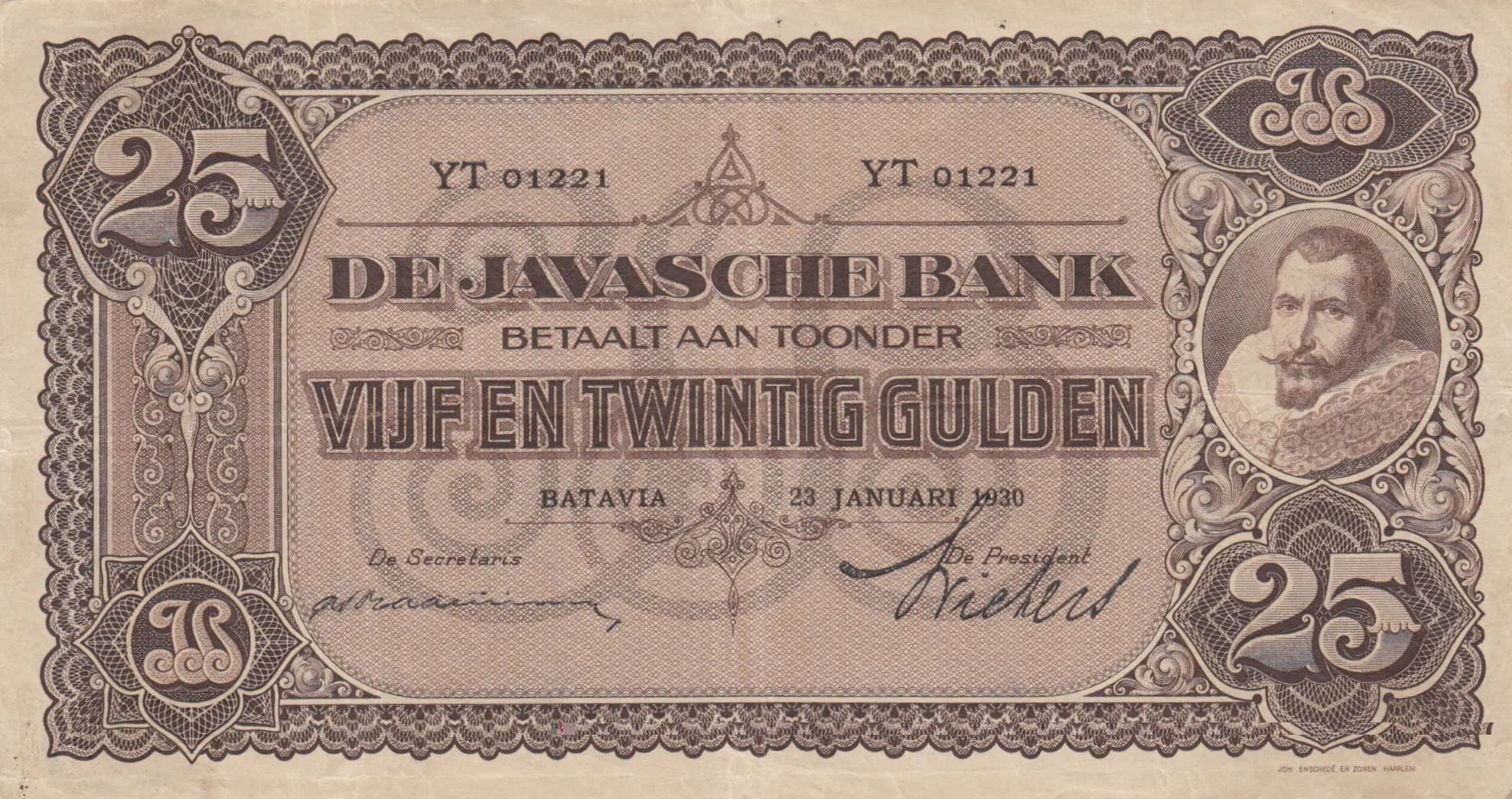
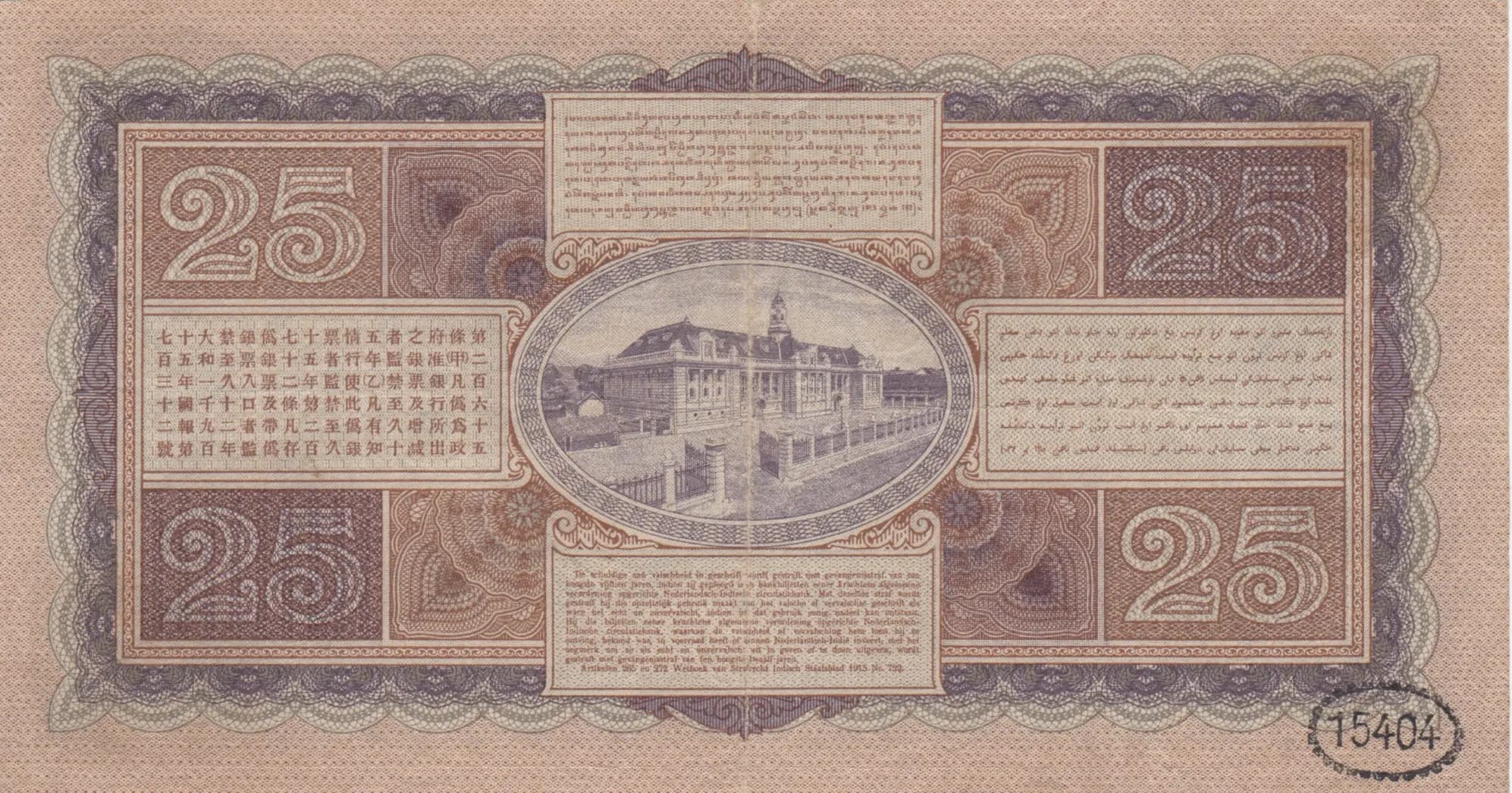
This is a splendid example of the De Javasche Bank 25 gulden note from 1930 (Pick P-71c), presented in exceptional condition that appears to be uncirculated or near-uncirculated. The note showcases the ornate Victorian-era engraving style characteristic of colonial-era currency, with intricate scrollwork borders, a dignified portrait on the obverse, and a striking colonial architectural landmark on the reverse. The sharp printing, clean margins, and absence of wear make this a highly desirable specimen for collectors of Netherlands Indies currency and colonial banknote specialists.
Common. The De Javasche Bank 25 gulden note from 1930 was issued in substantial quantities as a workhorse denomination of the colonial currency system. No evidence suggests a restricted print run, short circulation period, or recall that would render this specific Pick number scarce. While uncirculated examples in VF condition or better are always more desirable than worn specimens, the note itself remains commonly encountered in the collector market for Netherlands Indies currency.
Issued by De Javasche Bank (The Java Bank) on January 22, 1930, this note represents the height of Dutch colonial monetary authority in the Netherlands Indies during the interwar period. The architectural landmark depicted on the reverse—a grand colonial building with tower and ornate facade—symbolizes Dutch imperial presence and administrative infrastructure in the East Indies. The multilingual inscriptions in Dutch, Chinese (traditional characters), and Arabic script reflect the diverse commercial and cultural landscape of the Dutch colonial territories in Southeast Asia during this era.
The obverse features an ornate classical design with an elaborate scrollwork border in brown and tan tones. A bearded gentleman in historical dress with formal collar is portrayed in an oval frame positioned on the right side—this is likely a figure of historical or administrative significance to the Dutch colonial administration. The center displays the denomination '25' within ornamental oval frames, with 'DE JAVASCHE BANK' and issuance details prominently displayed. The reverse depicts a grand colonial-era building with a distinctive cupola and tower, surrounded by ornamental railings and fence, centered within an oval frame. This architectural vignette represents Dutch colonial infrastructure, possibly an administrative or institutional building. The design incorporates multilingual text blocks in Dutch, Chinese characters, and Arabic script, reflecting the cosmopolitan nature of colonial Java's trading ports and administrative centers. The entire note employs fine-line engraving with complex geometric and floral patterns in the borders and corners as integral security measures.
FRONT: 'DE JAVASCHE BANK' (The Java Bank) | 'BETAALT AAN TOONDER' (Payable to Bearer) | 'VIJF EN TWINTIG GULDEN' (Twenty-five Gulden) | 'BATAVIA' (Batavia, now Jakarta—the capital) | '22 JANUARI 1930' (22 January 1930) | 'De Secretaris' (The Secretary) | 'De President' (The President) | Serial number 'YT 01221'. BACK: Denomination markers '25' in corners | Security/plate number '15404' | Chinese text in traditional characters (legal/regulatory declaration, specific content unable to be fully transcribed at resolution provided) | Dutch text (legal/regulatory declaration, specific content unable to be fully transcribed at resolution provided) | Arabic script text above the central building (specific content unable to be fully transcribed at resolution provided).
Intaglio engraving (copperplate/steel plate printing), the standard security printing method for high-value banknotes of this era. The intricate fine-line work visible throughout the design, the sharp clarity of the portraits and architectural detail, and the complex decorative borders are all characteristic of intaglio printing. While specific printer attribution for P-71c requires catalog verification, the technical quality and style are consistent with leading European security printers of the 1930s who supplied colonial authorities.
This specimen carries the serial number prefix 'YT' with number '01221'. The date of issue is confirmed as 22 January 1930, issued from Batavia. The specific signature varieties (Secretary and President signatures) and serial number series may constitute distinguishable varieties within P-71c; detailed catalog cross-reference would be required to confirm if this particular serial range represents a known early or late printing. No overprints are visible on this example.