25 gulden 1925
About This Note
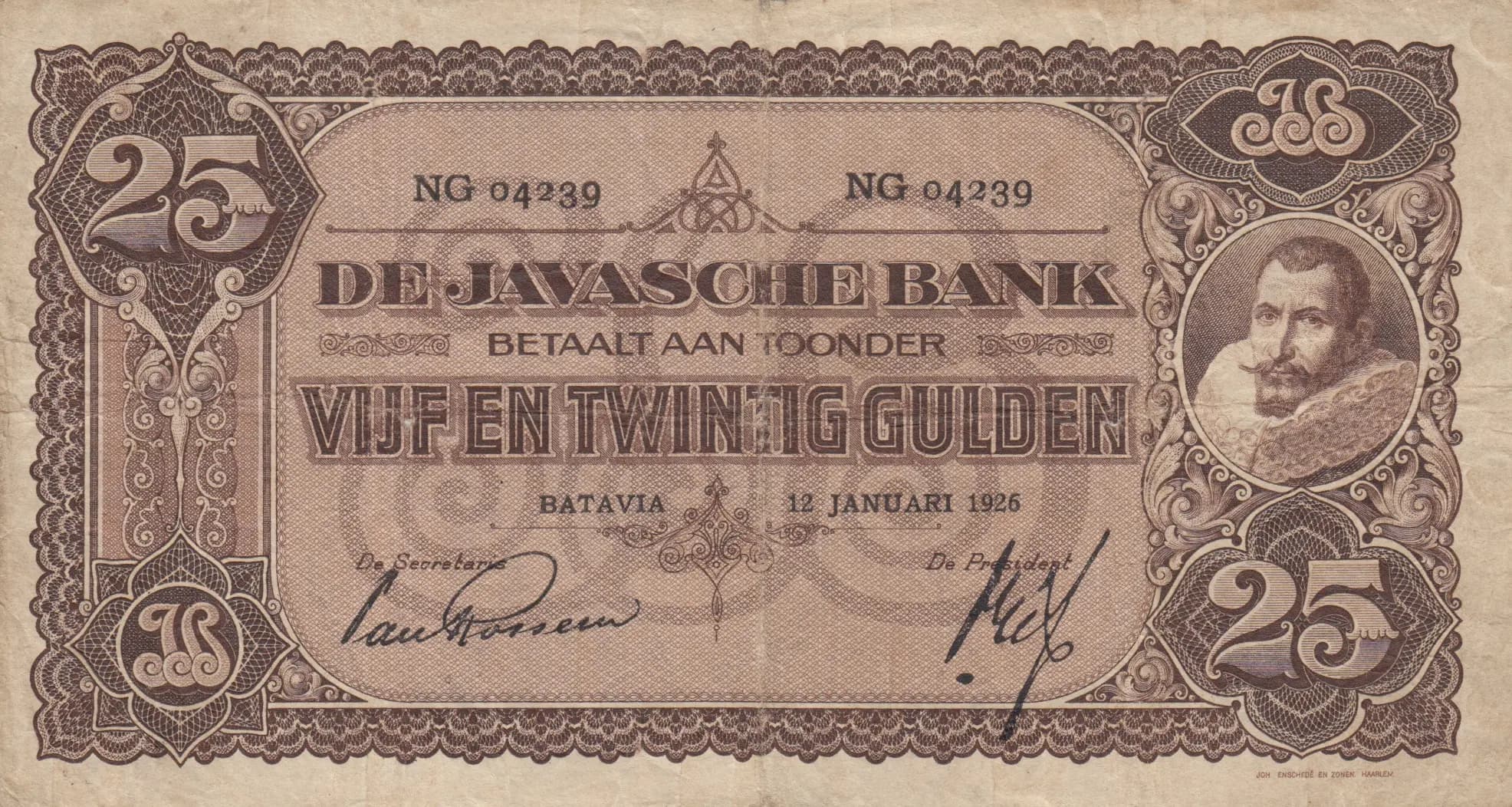
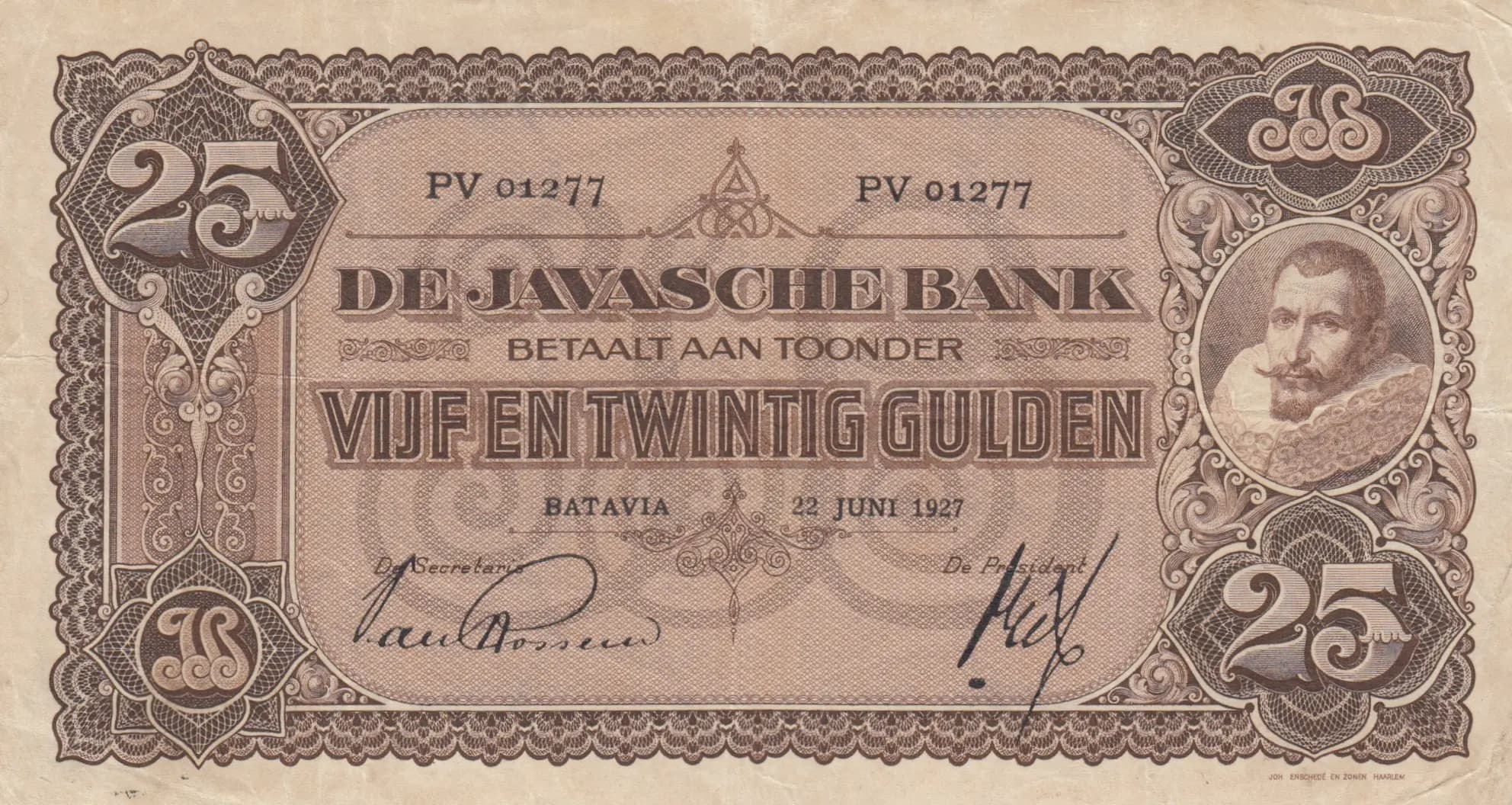
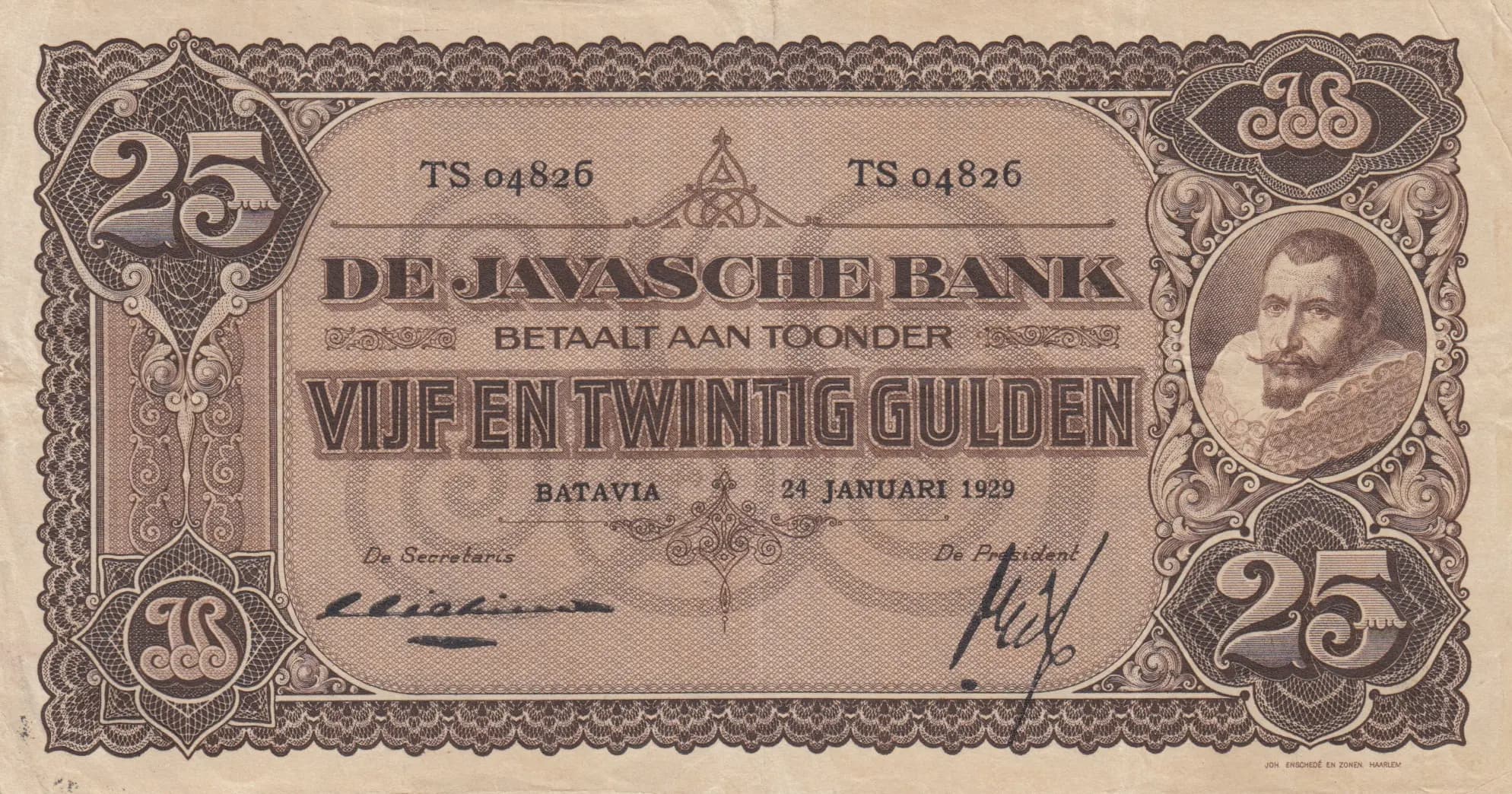
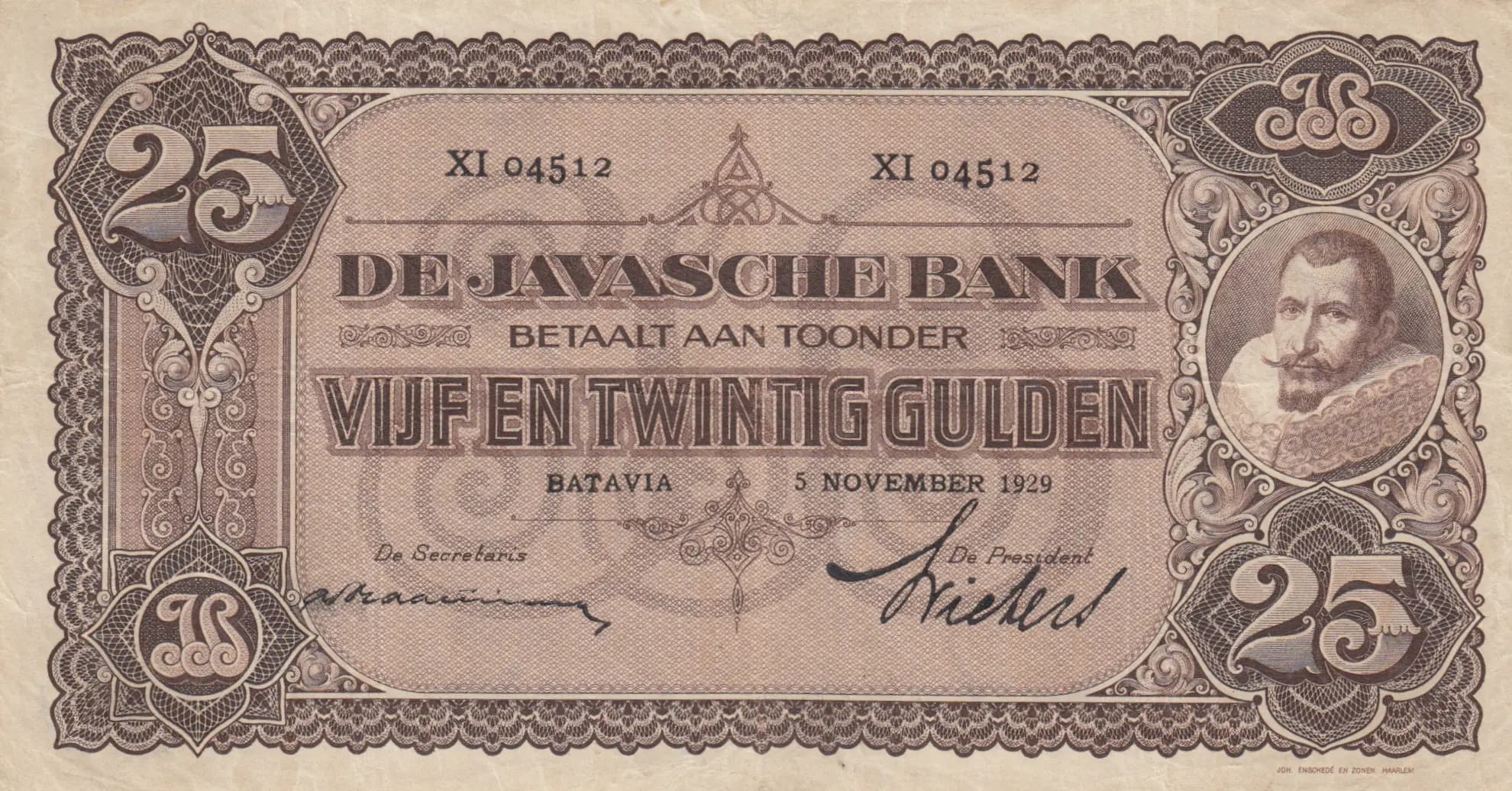
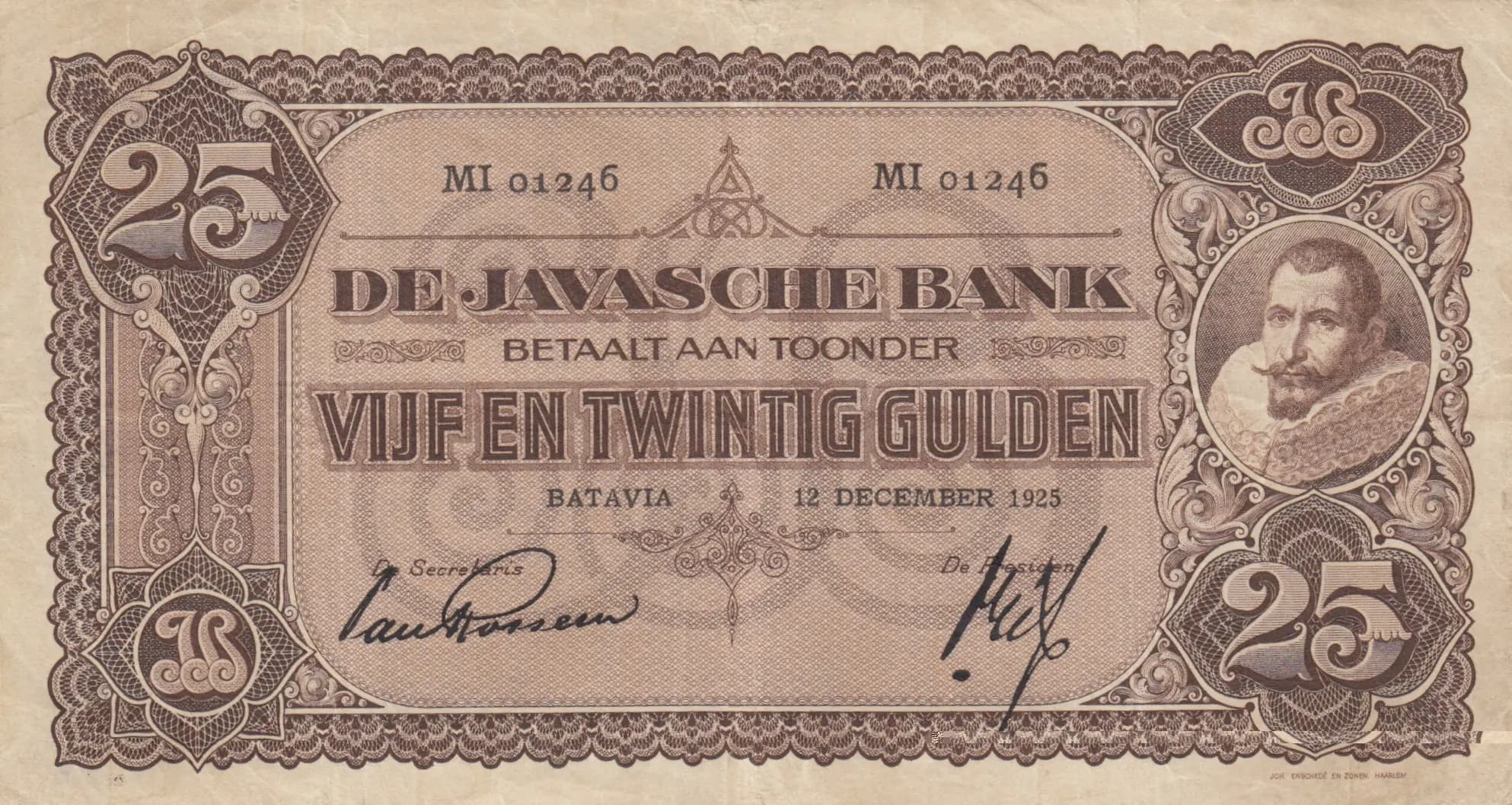
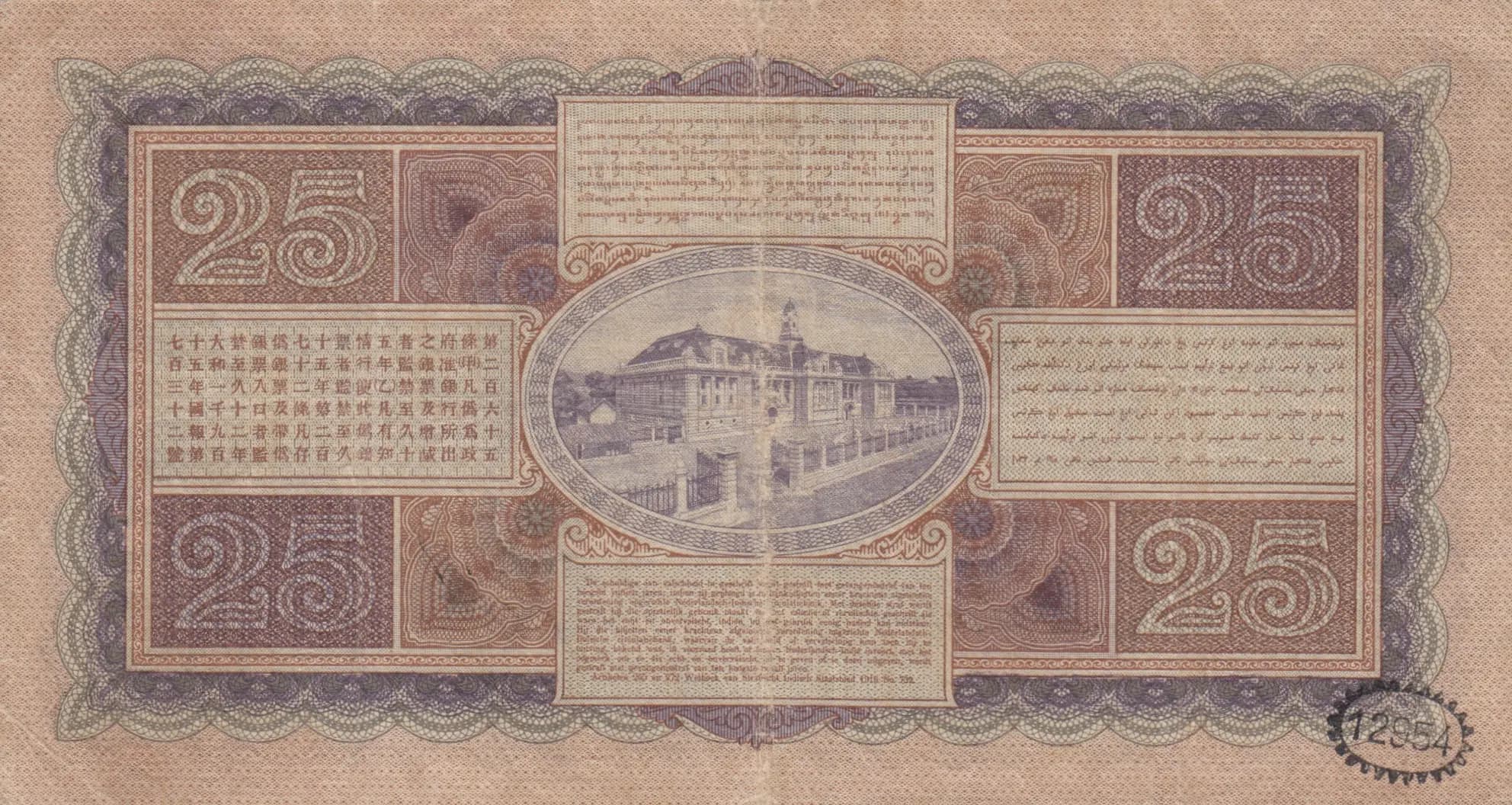
This is a 25 Gulden banknote issued by Javasche Bank on 12 December 1925, representing an important piece of Netherlands Indies colonial currency. The note displays exceptional preservation in VF condition with no visible wear, creases, or damage, featuring intricate period engraving throughout with brown and tan color tones. The front showcases a bearded gentleman's portrait in an oval frame alongside ornate security patterns, while the reverse presents a striking colonial building with cupola, making this a visually significant example of early 20th-century Dutch East Indies monetary design.
Common. The 25 Gulden 1925 (Pick 71a) from Javasche Bank was part of a standard circulation issue for the Dutch East Indies and represents a regular denomination in the bank's emission series. While specific print run data is not available, this note type appears regularly in the numismatic market and collector offerings. The VF condition grade is desirable but not exceptionally rare for this issue, as many examples have survived the intervening decades due to the durable paper stock and protective nature of colonial institutional records.
Issued during the height of Dutch colonial rule in the East Indies, this 1925 Javasche Bank note reflects the economic structure of Netherlands Indies under the Netherlands Bank system. The note's bilingual inscription design (Dutch and Chinese text) mirrors the multicultural composition of colonial Java, particularly the significant Chinese merchant and trading communities of Batavia (Jakarta). The formal architectural imagery on the reverse symbolizes colonial authority and institutional stability during the interwar period, before the major political and economic upheavals that would follow in the 1940s.
The obverse features an ornately engraved bearded male portrait (likely a colonial administrator or bank official of the period) positioned in an oval frame on the right side, flanked by elaborate scrollwork borders and geometric patterns characteristic of high-security banknote design. The center contains the official seal and institutional text of Javasche Bank. The reverse presents a colonial architectural vignette—a formal institutional building with a distinctive cupola—framed in an ornate oval within a geometric border pattern. The bilingual text arrangement with Dutch on the right and Chinese characters on the left reflects the commercial and multicultural importance of the Indies' trading networks. Decorative elements include spiral motifs in corners and fine cross-hatching throughout, all rendered in brown and tan tones on beige paper.
FRONT SIDE: 'DE JAVASCHE BANK' (The Java Bank) - issuing authority; 'BETAALT AAN TOONDER' (Payable to bearer) - legal tender clause; 'VIJF EN TWINTIG GULDEN' (Twenty-five guilders) - denomination in words; 'BATAVIA' (Batavia/Jakarta) - place of issue; '12 DECEMBER 1925' (12 December 1925) - issue date; 'Secretaris' (Secretary) - signatory title; signature 'van Haaren' - authorized official. Serial number 'MI 01246' appears twice on front. BACK SIDE: '25' - denomination numerals in decorative frames; Chinese characters - appear to be institutional or legal text (specific content not fully legible in image); Dutch text in rectangular frames - specific content not clearly legible in image; Serial number repeated in lower right corner.
This note was produced using traditional intaglio (engraved) printing methods, evidenced by the fine line work, detailed cross-hatching, intricate border designs, and the precise rendering of the portrait and architectural vignette. The complex security patterns and multi-layered decorative elements are characteristic of high-security banknote production by specialized currency printers of the 1920s era. While the specific printer for Pick 71a is not definitively confirmed in the provided data, Javasche Bank notes of this period were typically produced by European security printers capable of such fine detailed work.
The observed example shows the signature of 'van Haaren' as Secretary, which may represent a specific signatory variety within the 1925 issue. The serial number prefix 'MI' is visible, which may denote a particular printing batch or series. Pick catalog notes Pick 71a as a specific variety designation for the 1925 date. Collectors of Javasche Bank notes typically distinguish varieties by signatory officials and serial number prefixes, and further documentation would be needed to confirm if this particular signature/series combination represents a cataloged sub-variety within Pick 71a.