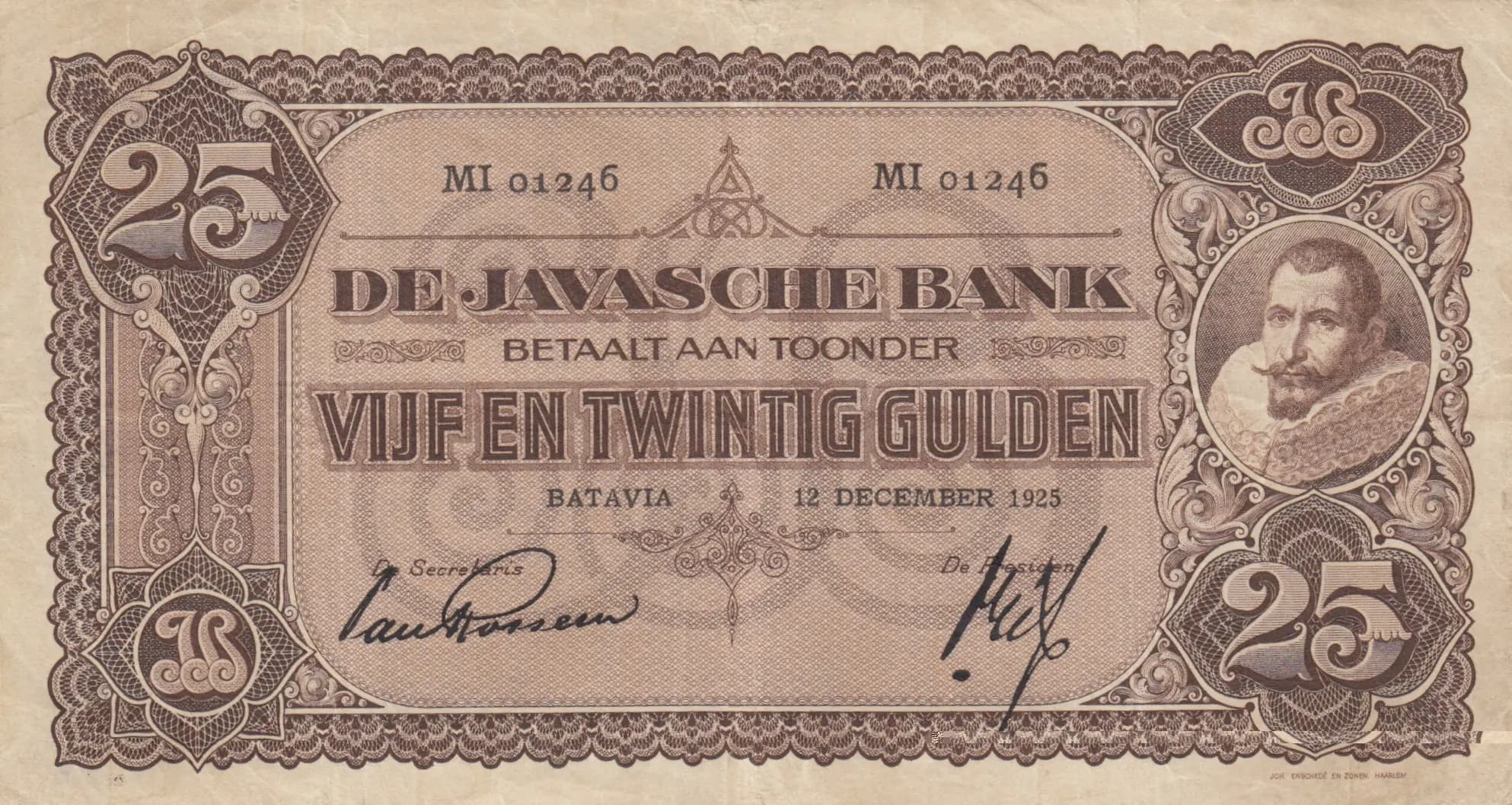
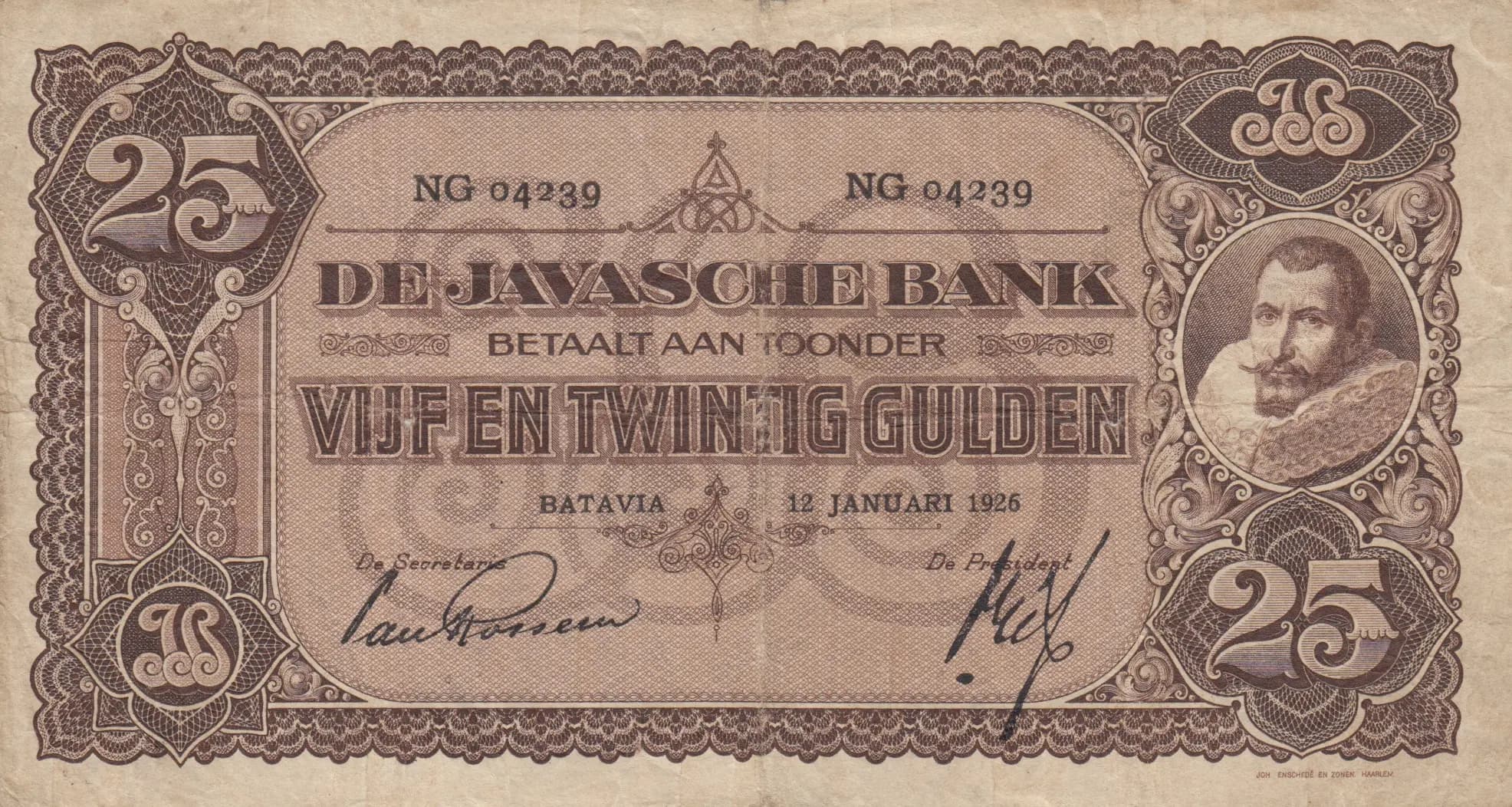
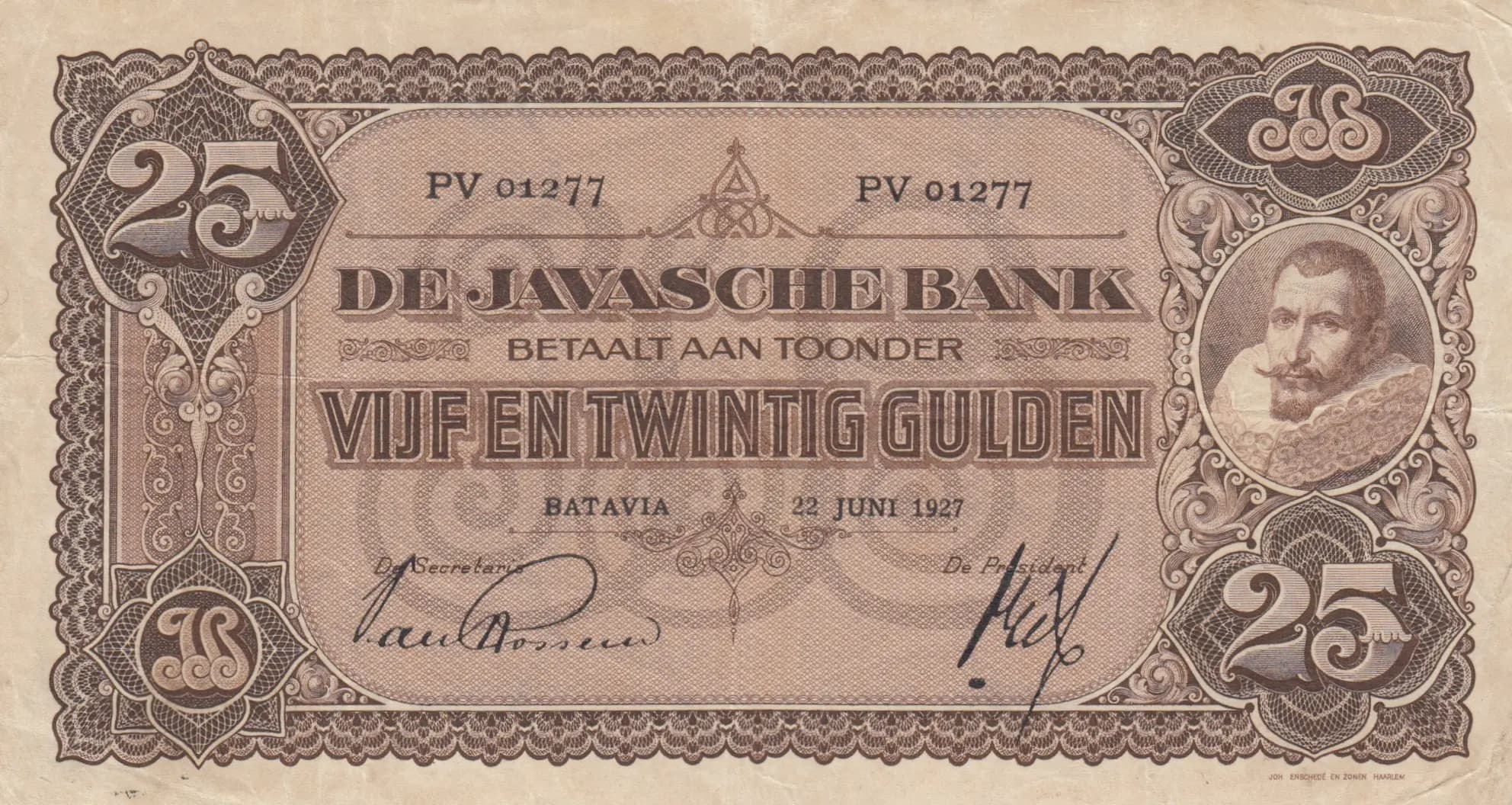
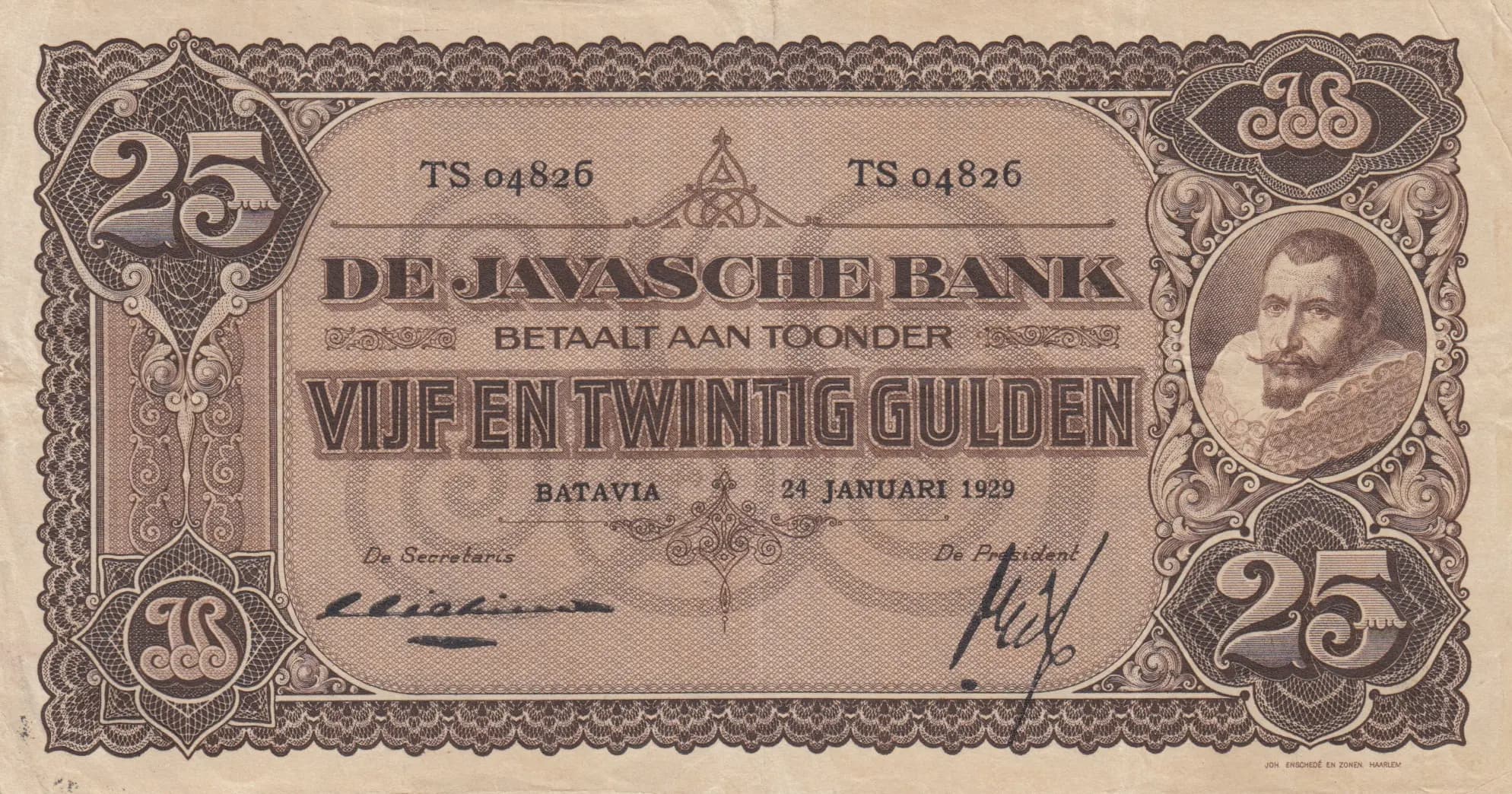
25 gulden 1929
About This Note
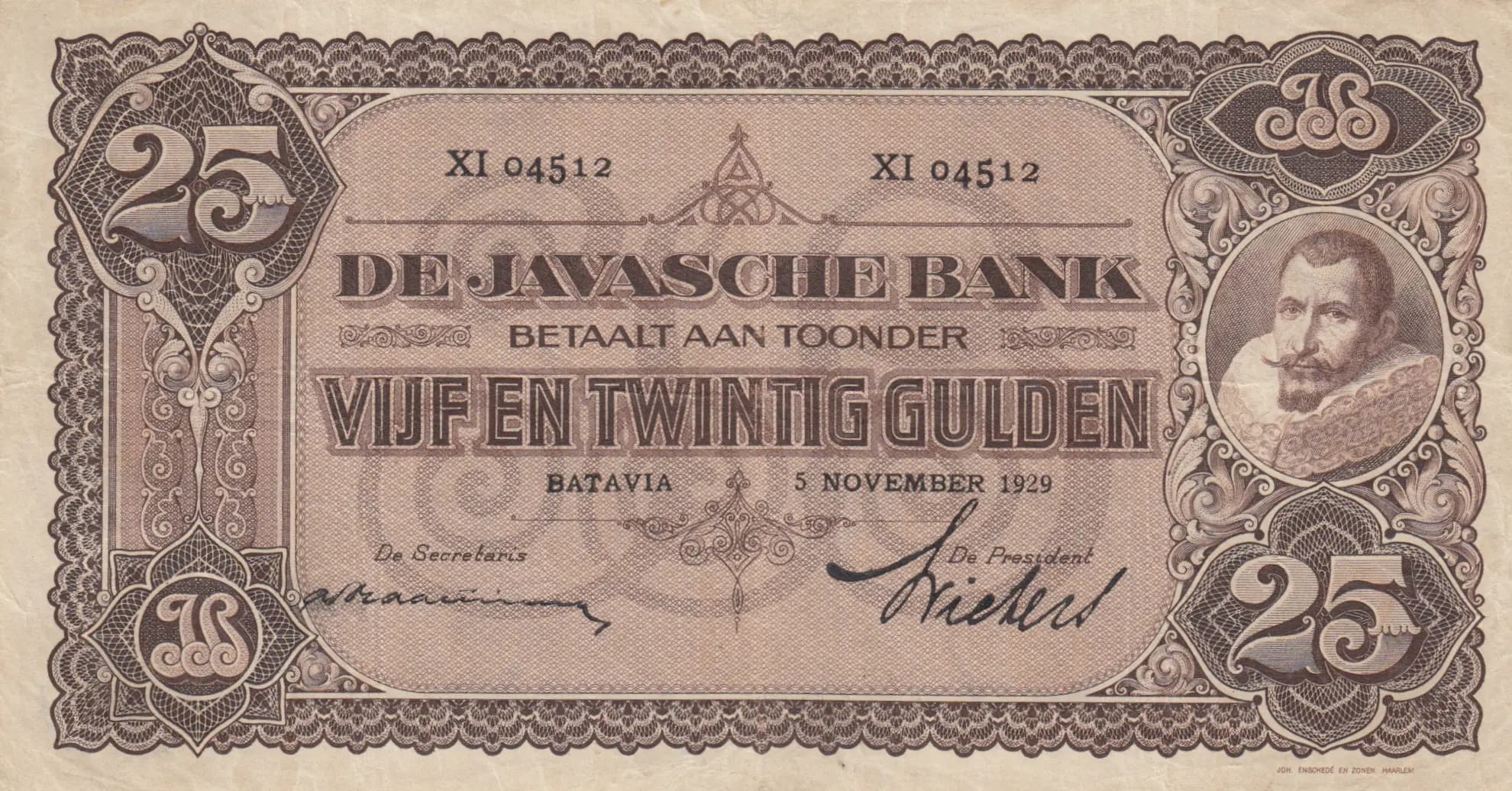
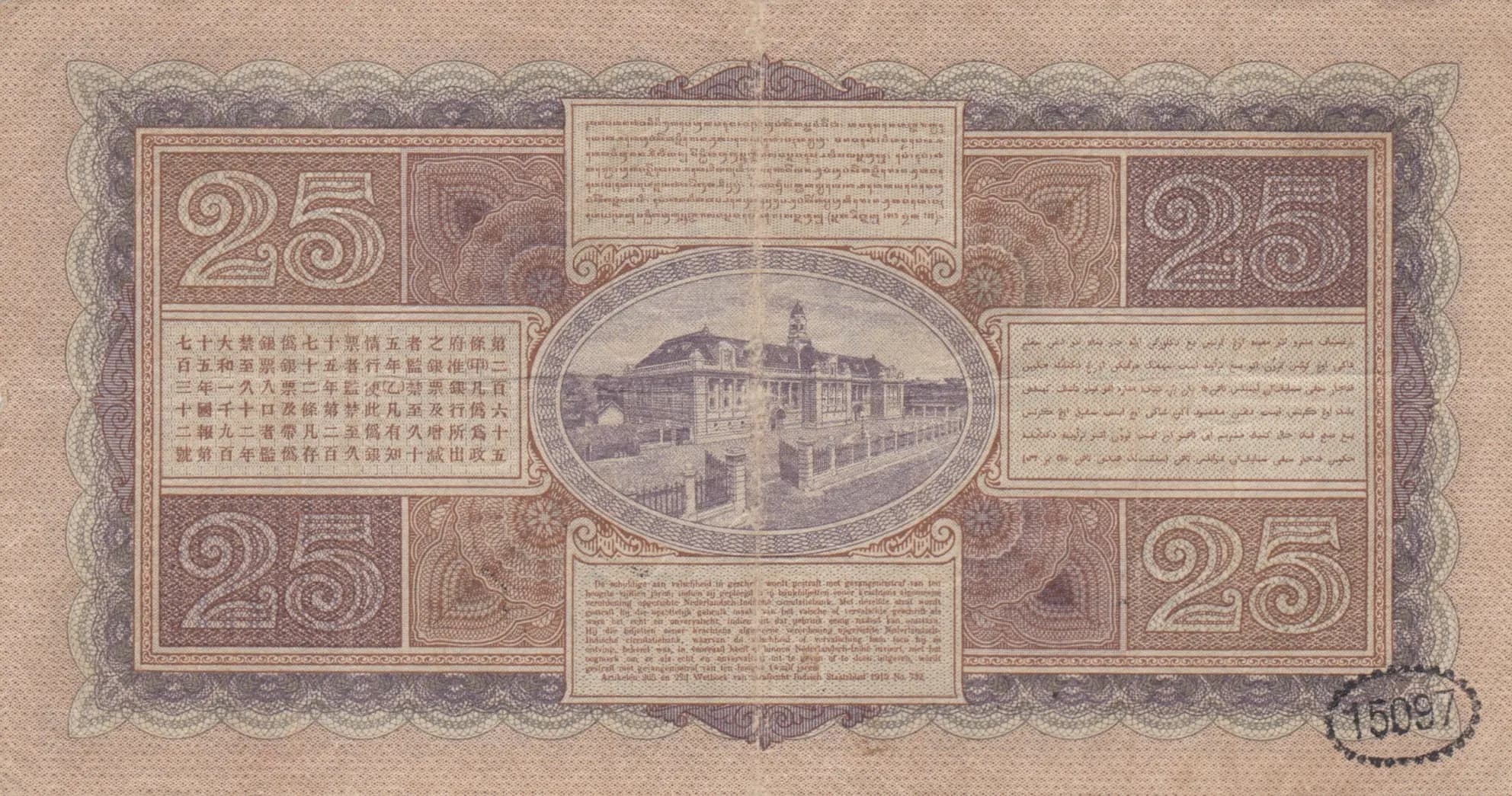
A handsome example of the 25 Gulden note issued by De Javasche Bank on November 5, 1929, graded VF. The note features exceptional ornamental engraving throughout, with an impressive portrait of a bearded historical figure in period dress on the obverse and a central architectural vignette of a grand institutional building on the reverse. The multilingual text (Dutch, Arabic/Persian, and Chinese) reflects the cosmopolitan nature of the Dutch East Indies, and the note shows minimal wear with sharp printing and well-preserved decorative elements.
Common. The 1929 25 Gulden denomination from De Javasche Bank represents a standard circulating issue from a major colonial bank with substantial print runs. While the note has historical significance, it was produced in sufficient quantities that examples in VF condition remain readily available to collectors at modest prices. The multilingual design and institutional architecture enhance collector interest but do not significantly impact rarity.
This 1929 note represents De Javasche Bank's final series of banknotes issued before the Japanese occupation of the Dutch East Indies during World War II. The inclusion of text in multiple languages—Dutch, Arabic/Persian script, and Chinese—reflects the diverse population and commercial interests across the archipelago. The architectural centerpiece on the reverse likely represents an important government or institutional building in Batavia (modern-day Jakarta), symbolizing colonial administrative authority during the late period of Dutch East Indies rule.
The obverse features a formal portrait of a bearded man with distinguished mustache, depicted in historical clothing with a draped collar, positioned within an ornamental frame on the right side of the note. The portrait is framed by elaborate scrollwork and decorative flourishes typical of high-security banknote design. The reverse presents a central oval-framed architectural vignette of a grand institutional building with classical elements including multiple domes, arches, and ornate detailing—likely representing an important government building in Batavia. Both sides employ elaborate ornamental borders, corner frames containing the denomination, and multilingual legal text blocks positioned in carefully balanced compositions. The color scheme throughout is a warm brown/tan/sepia palette characteristic of the era.
FRONT: '25' (denomination), 'DE JAVASCHE BANK' (The Java Bank), 'BETAALT AAN TOONDER' (Pays to Bearer), 'VIJFEN TWINTIG GULDEN' (Twenty-Five Guilders), 'BATAVIA' (place of issue), '5 NOVEMBER 1929' (issue date), 'XI 04512' (serial number), 'De Secretaris' (The Secretary - signature line), 'De President' (The President - signature line). BACK: '25' (denomination in ornamental frames at corners), plus legal text blocks in Dutch, Arabic/Persian script, and Chinese characters containing standardized banknote legal language and conditions of redemption.
Steel plate engraving and fine line intaglio printing, evidenced by the intricate decorative patterns, fine line work, and sharp detail reproduction visible throughout both sides. The ornamental borders, scrollwork, and architectural details all exhibit the characteristic depth and precision of intaglio work. While the printer is not definitively stated for this specific Pick 71c variety, De la Rue and other major security printers were contracted for Javasche Bank notes during this period.
This note is catalogued as Pick 71c, indicating it is a specific variety within the 1929 25 Gulden series. The serial number XI 04512 and signatures ('De Secretaris' and 'De President') are consistent with the standard format of this issue. The November 5, 1929 date is fixed for this variety. Collectors should note that different signature combinations and serial number prefixes exist for this denomination, creating minor varieties within the Pick 71c classification.