2 1/2 gulden 1940
About This Note
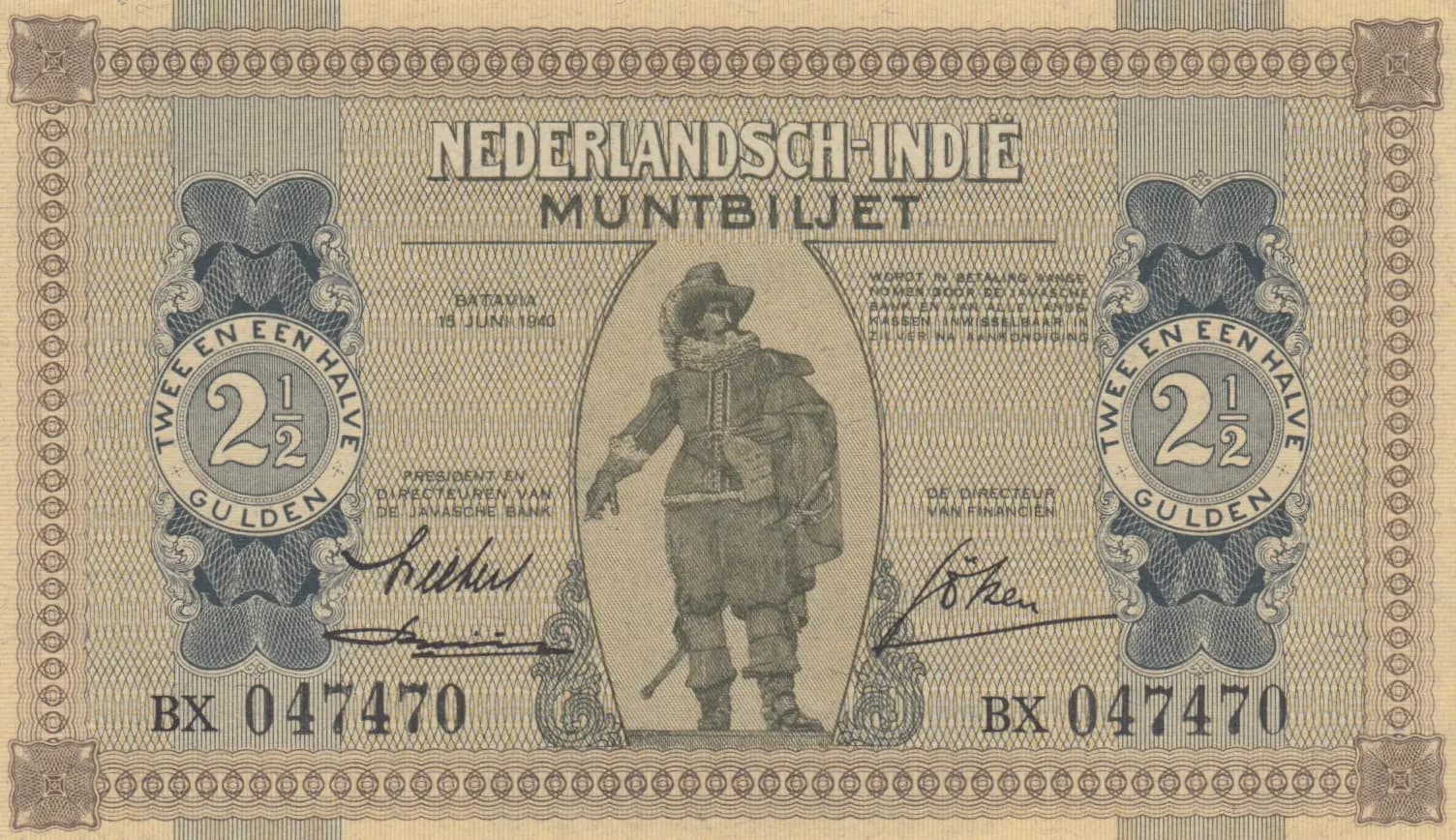
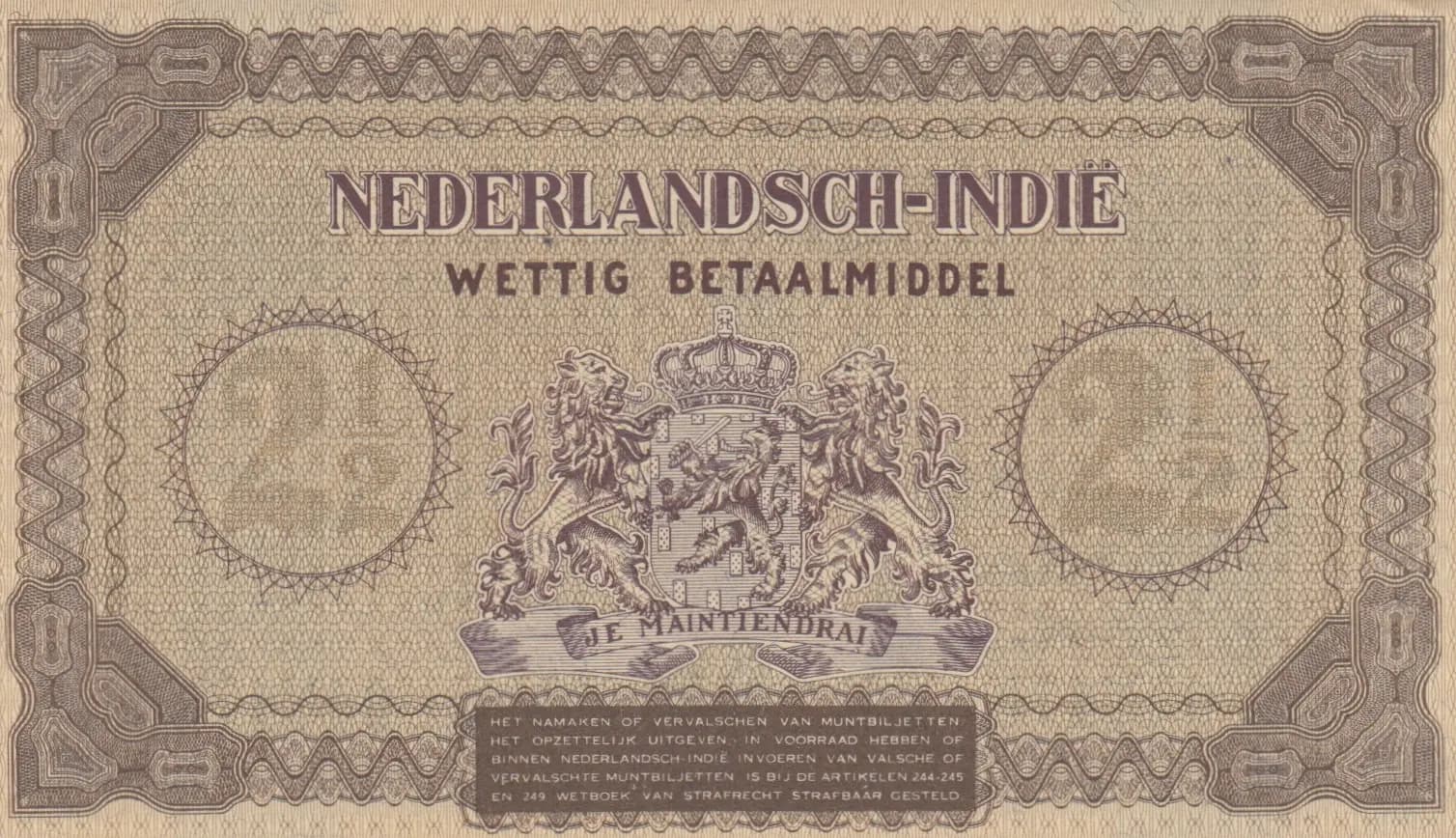
This is an uncirculated 2½ Gulden banknote from the Netherlands Indies, issued in June 1940 by the Muntbiljet authority. The note displays exceptional condition with pristine coloration, no visible wear, and fine engraved details throughout. The front features an elegant historical military figure in an oval vignette surrounded by ornate circular borders, while the reverse showcases a formal heraldic coat of arms with supporting lions and a crown—exemplifying the formal dignity expected of colonial currency during this transitional historical period.
Common. The 2½ Gulden 1940 issue (Pick P-109) represents a standard denomination from the final year of Netherlands Indies monetary independence. While the June 1940 date coincides with the Nazi invasion of the Netherlands and subsequent occupation, these notes were produced in substantial quantities as regular colonial currency. No evidence suggests an exceptionally limited print run, early recall, or significant attrition that would create scarcity in the modern collector market. Notes in UNC condition are desirable but not rare; many examples survive due to the deliberate preservation of high-grade specimens by numismatists.
This note was issued in June 1940, a critical moment when the Netherlands Indies faced imminent Japanese occupation during World War II. The heraldic coat of arms featured on the reverse, with its French motto 'DE MAINTENDRAIS' (I will maintain) and supporting lions, represented the Dutch crown's authority and continuity during this tumultuous period. The 'MUNTBILJET' (currency note) designation indicates this was emergency or supplementary currency issued by the colonial administration to maintain monetary stability in the face of impending territorial loss.
The front of this banknote features a standing male figure dressed in 17th or 18th-century military or noble attire, holding a staff or spear, rendered in profile within a central oval vignette. This historical figure represents Dutch colonial authority and martial tradition. The composition is framed by an elaborate decorative border of repeating circular patterns and ornamental floral motifs, with denomination circles on both left and right sides marked '2½' and 'GULDEN' beneath crown-like decorative elements. The reverse displays the formal heraldic coat of arms of the Dutch crown, featuring two double-headed supporting lions flanking a shield with crown above, and the French heraldic motto 'DE MAINTENDRAIS' on a banner below. The design is symmetrical with wave-pattern borders and corner ornaments. Fine line crosshatching and security patterns permeate both sides, typical of high-security banknote engraving.
FRONT SIDE: 'NEDERLANDSCH-INDIË' (Netherlands Indies), 'MUNTBILJET' (Currency Note), 'TWEE EN EENHALVE GULDEN' (Two and a Half Guilders), 'JUNI 1940' (June 1940), Serial number 'BX 047470', and official handwritten signatures. BACK SIDE: 'NEDERLANDSCH-INDIE' (Netherlands Indies), 'WETTIG BETAALMIDDEL' (Legal Tender), 'DE MAINTENDRAIS' (I will maintain—heraldic motto), and counterfeiting warning text: 'The counterfeiting or falsification of banknotes and the intentional distribution, possession or importation into the Netherlands Indies of false or forged banknotes is punishable under articles 244-245 and 249 of the Criminal Code.'
Intaglio engraving (line engraving), the standard security printing method for banknotes of this era. The fine line patterns, detailed crosshatching, and elaborate heraldic rendering visible throughout the note are characteristic of intaglio work. The precise serial number application and signature spaces indicate professional banknote production. For Dutch colonial issues of this period, the printer was typically the Enschedé company (Joh. Enschedé en Zonen) of Haarlem, Netherlands, though definitive attribution would require additional documentation.
The observed variety is characterized by serial number prefix 'BX' and date 'JUNI 1940'. The BX prefix appears consistent with the 1940 issue series. Collectors should note variations in signature combinations and serial number prefixes across the 1940 emission, which may represent different printing runs or batches. The specific serial number BX 047470 places this in the documented series for the June 1940 issue. No major overprints or errors are visible on this specimen.