100 gulden 1929
About This Note
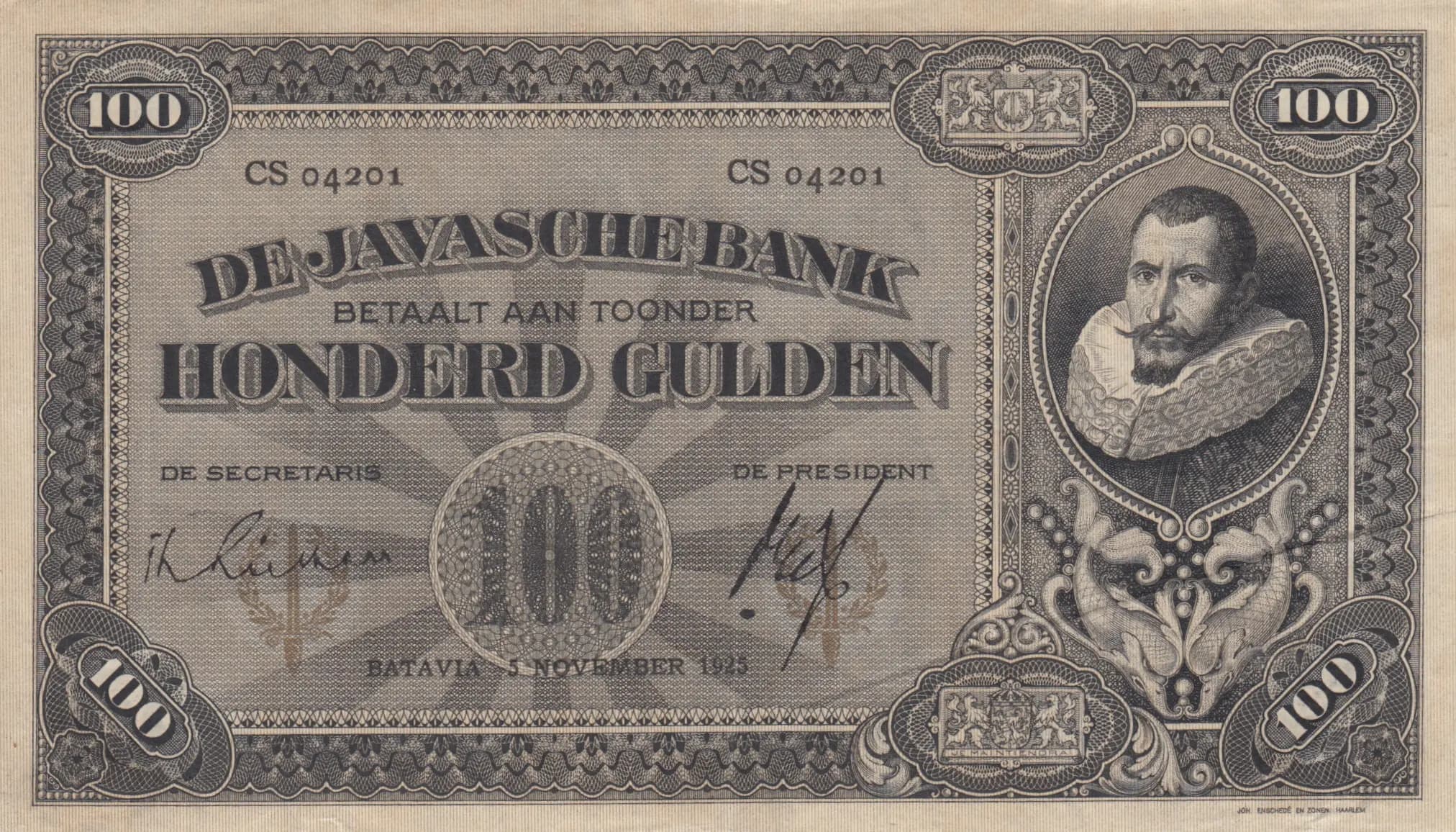
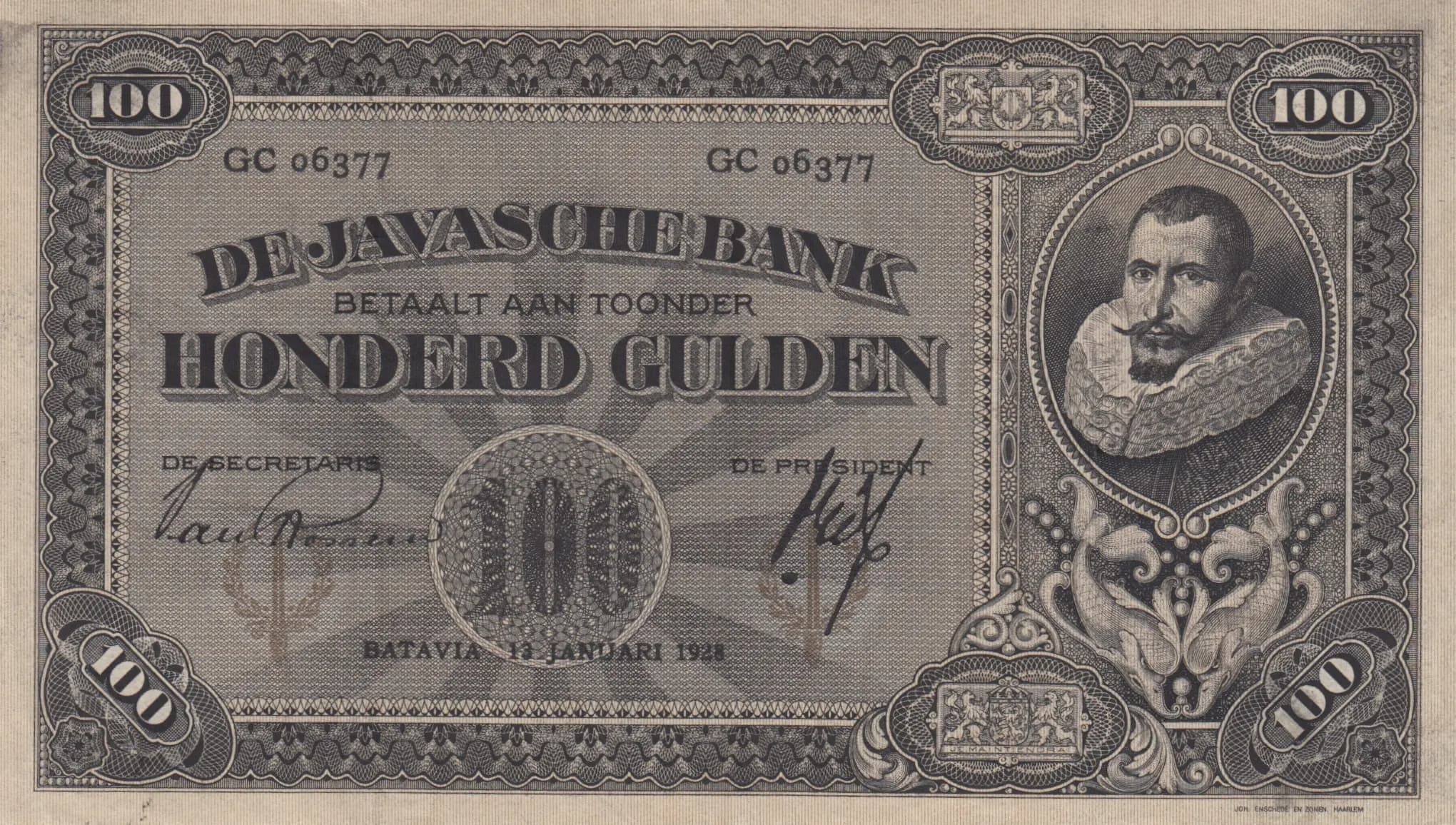
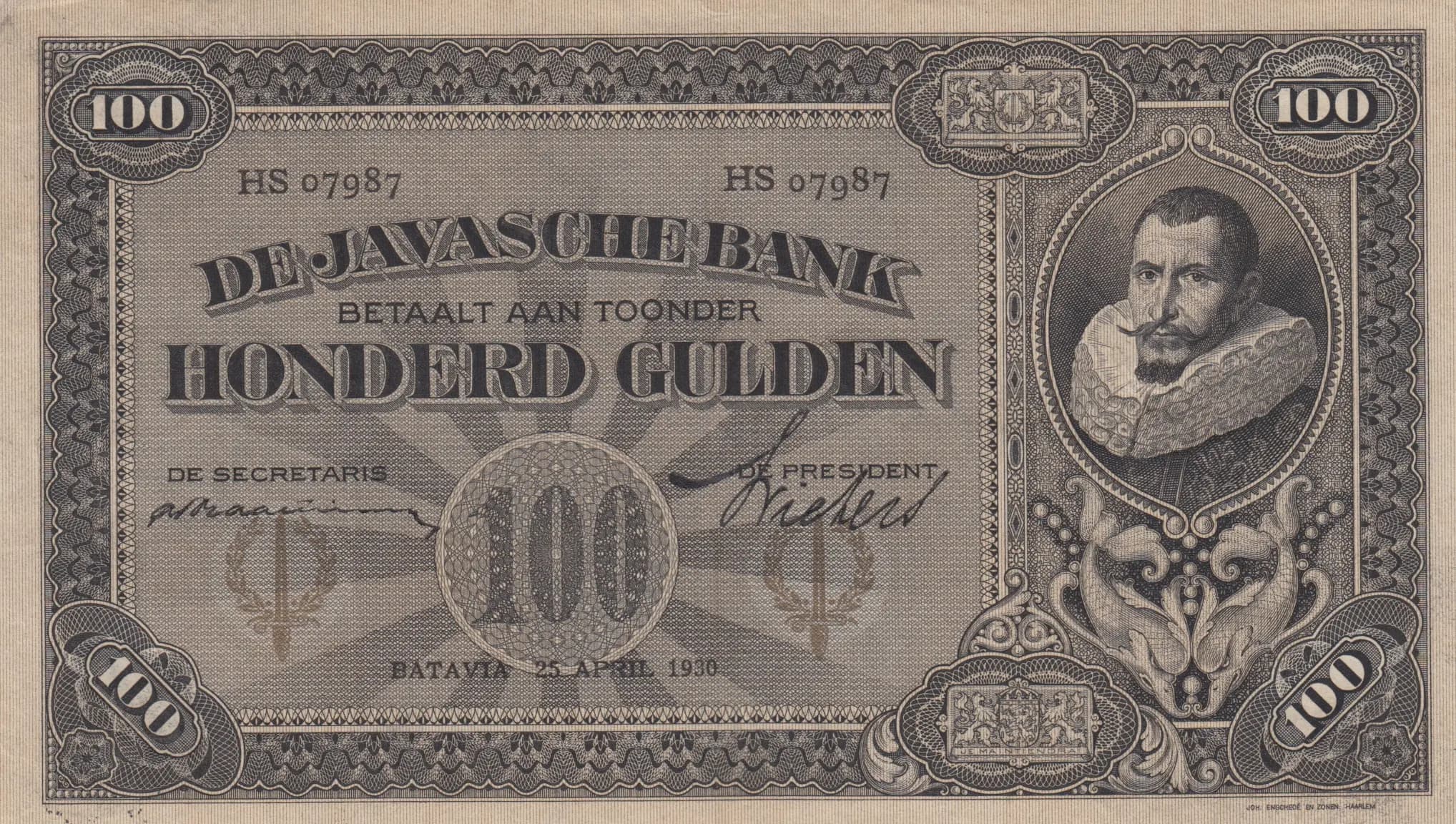
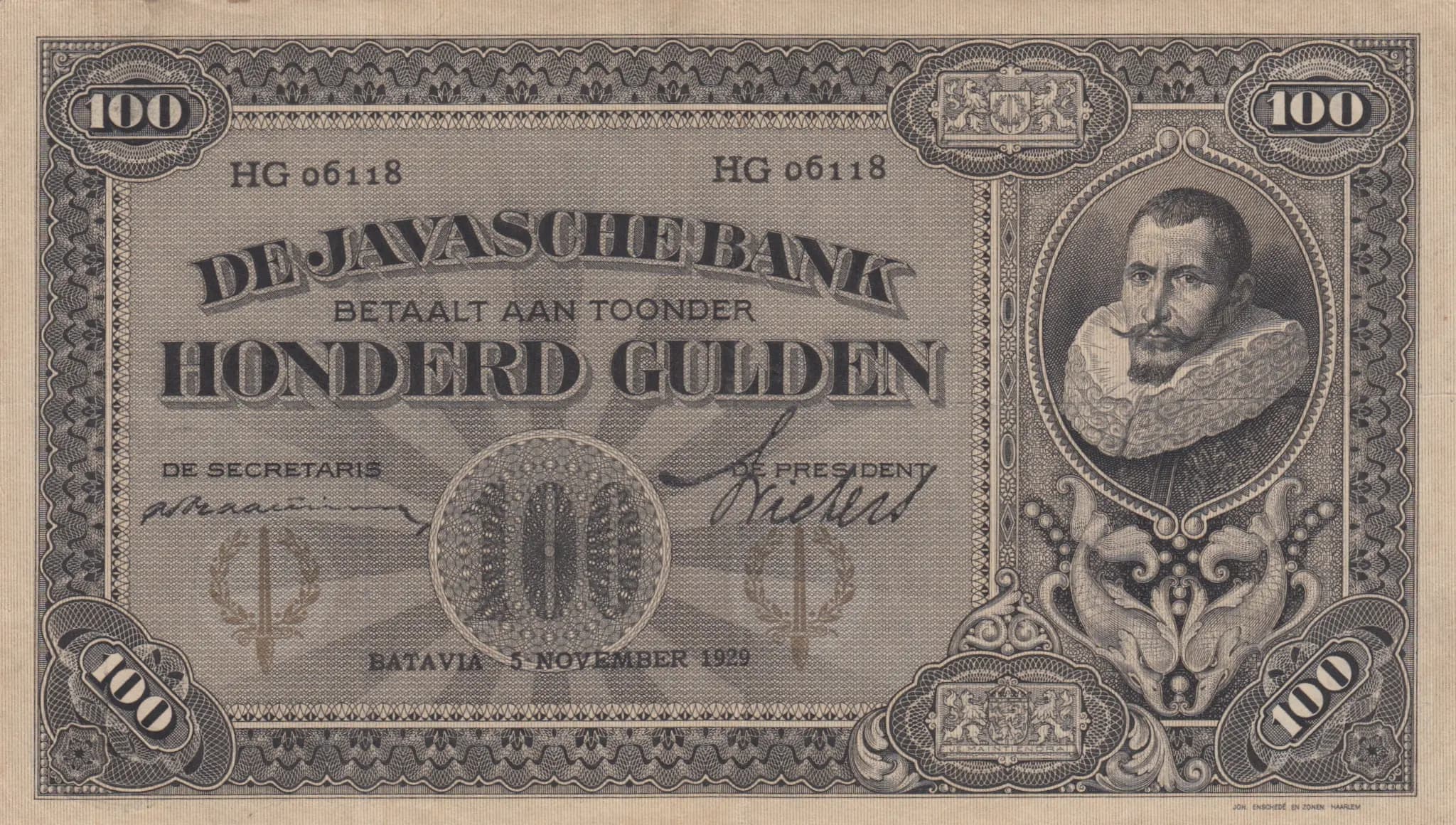
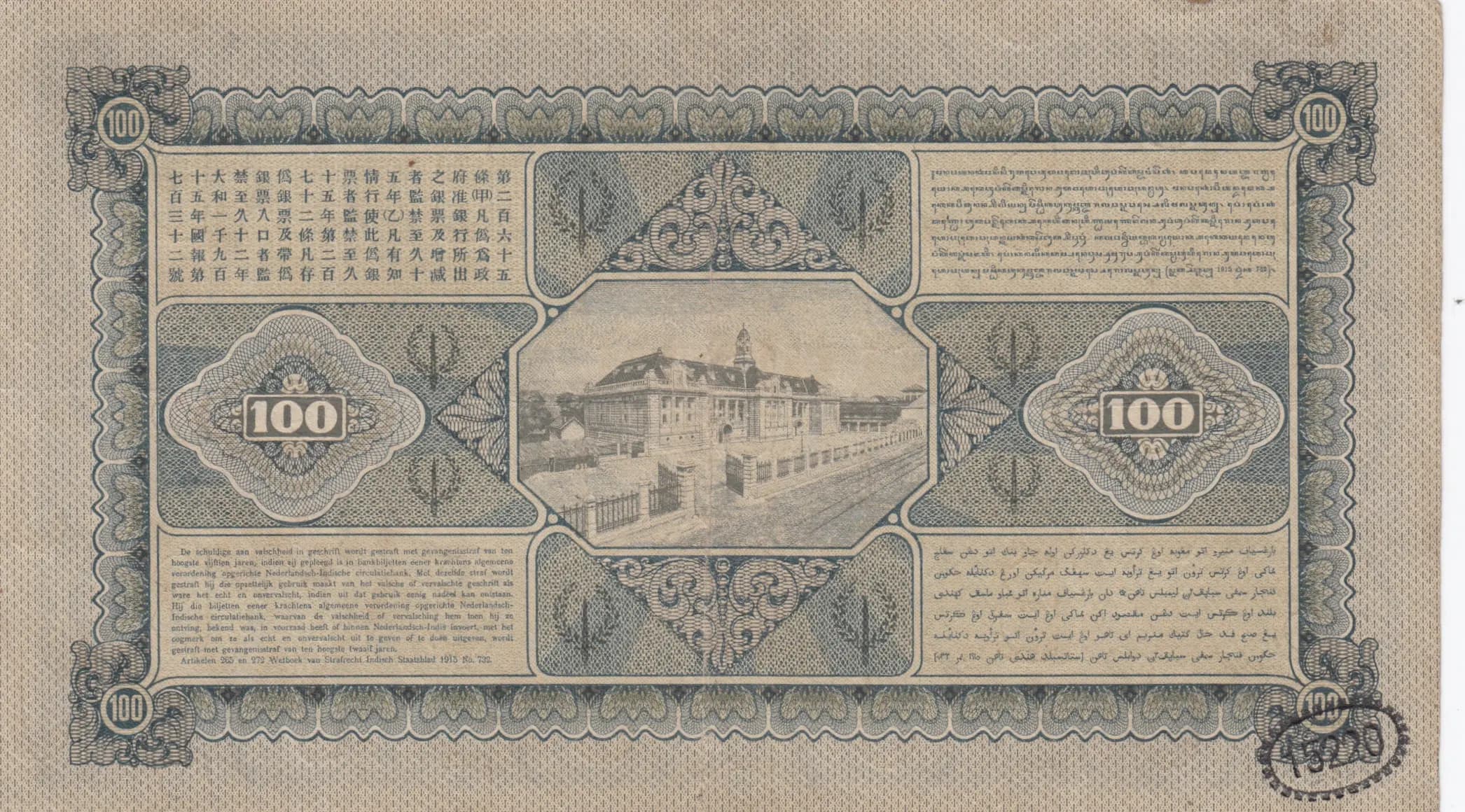
This is a well-preserved example of the De Javasche Bank 100 Gulden note from 1929 (Pick P-73c), issued in the Netherlands Indies during the colonial period. The note features exceptional intaglio printing with ornate decorative borders and a Renaissance-era portrait on the obverse, while the reverse displays a colonial administrative building. The VF condition grade reflects the note's excellent state of preservation with sharp printing and minimal wear, making it a desirable example for collectors of Indonesian numismatic history.
Common. The 100 Gulden denomination from De Javasche Bank's 1929 series was widely issued and remains commonly available to collectors. Print runs for this Pick number were substantial, and many examples survive in various grades. The note is not scarce in the market, with examples regularly available from dealers and at reasonable prices. The VF condition grade does not significantly elevate rarity.
The De Javasche Bank (Java Bank) issued this note during the late Dutch colonial period in the Netherlands Indies, when Java was the economic and administrative heart of the colony. The multilingual text on the reverse (Dutch, Chinese, and Arabic script) reflects the diverse population and commercial networks of the colony, while the colonial architecture depicted on the reverse represents the institutional infrastructure of Dutch rule. This denomination and design remained in circulation through the transition of Indonesian independence, making it historically significant to both Dutch and Indonesian numismatic collectors.
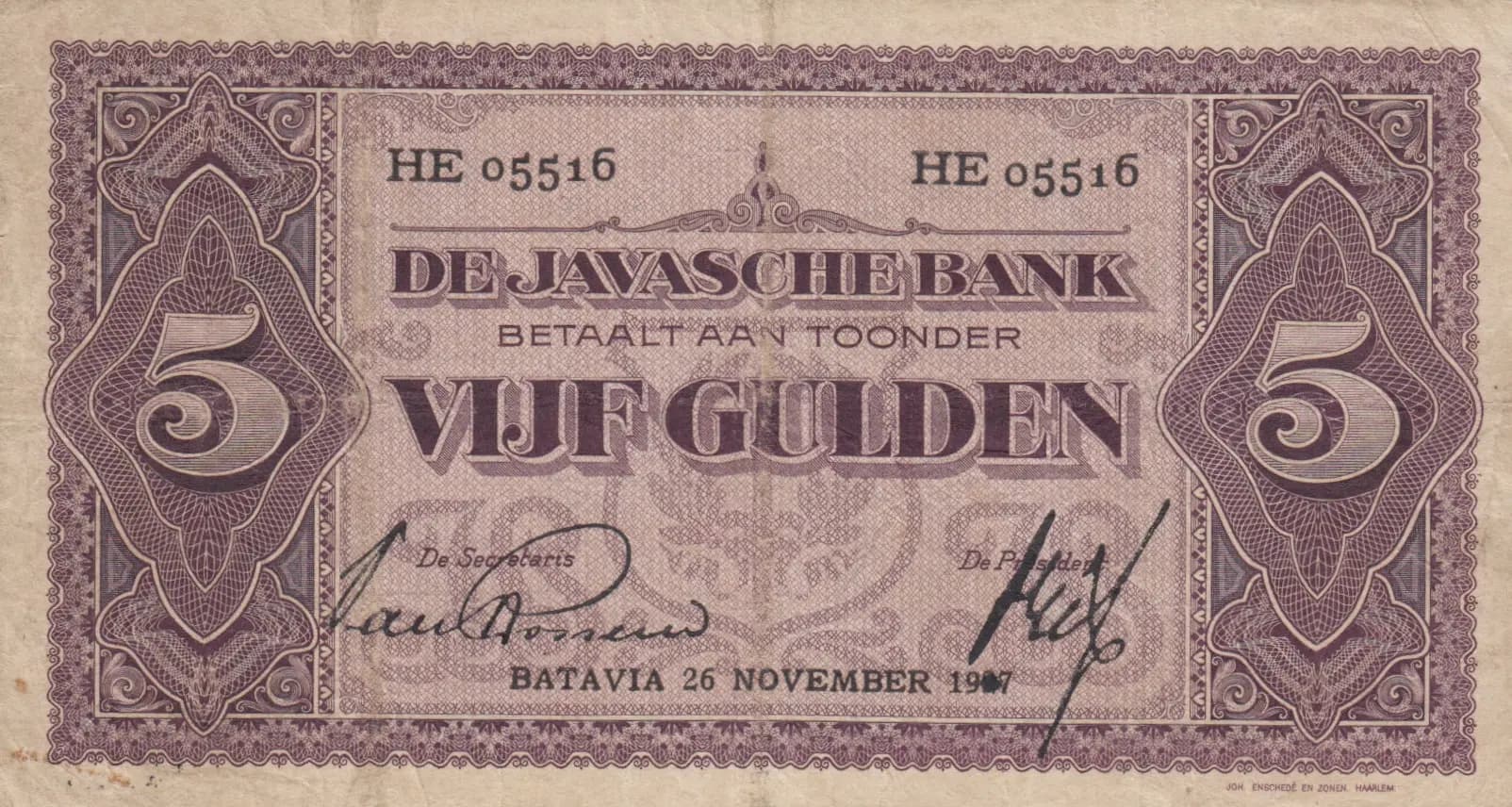
The obverse features a bearded man in Renaissance-era attire with a large ruffled collar, likely representing a historical figure associated with Dutch commerce or colonial administration in the Indies. The portrait is positioned on the right side of the note and serves as the primary security element. The center features an ornate circular rosette design typical of high-security banknote production. Four oval cartouches in the corners contain the denomination '100'. The reverse displays a substantial colonial-era building with a tower, mansard roof, and covered colonnade with railings—representing an administrative or banking institution of the Dutch colonial period. Both sides feature elaborate repeating floral and geometric border patterns characteristic of De Javasche Bank's design aesthetic. The entire design employs a monochromatic scheme of black and dark gray on a beige/tan background.
Front: 'DE JAVASCHE BANK' (The Java Bank), 'BETAALT AAN TOONDER' (Pays to Bearer), 'HONDERD GULDEN' (One Hundred Guilders), 'DE SECRETARIS' (The Secretary), 'PRESIDENT' (President), 'BATAVIA 5 NOVEMBER 1929' (Batavia, November 5, 1929), Serial number 'HG 06118', Denomination '100' (in four corners). Back: Denomination '100' (in two corners), multilingual text including Chinese characters (content not fully legible), Dutch text (partially legible), and Arabic script (content not fully legible). The Chinese and Arabic inscriptions likely served legal or commercial certification purposes for the diverse trading communities of the Indies.
Intaglio printing (engraving and steel plate printing), as evidenced by the sharp, finely-detailed line work, complex cross-hatching, ornate borders, and the characteristic impression depth visible in high-security banknote production. The printer is identified as Johan Enschede, Netherlands, one of the premier security printing houses of the period. The intricate decorative borders, fine line patterns, and security rosette design all indicate sophisticated intaglio production methods typical of professional banknote manufacturing.
This example is identified as Pick P-73c, representing a specific variety within the 1929 series. The serial number 'HG 06118' with the 'HG' prefix indicates this particular batch. Varieties within the 1929 100 Gulden series are typically distinguished by signature combinations, date variations (this example is dated 5 November 1929), and serial number prefixes. No major overprints or alterations are visible on this specimen.