100 gulden 1925
About This Note
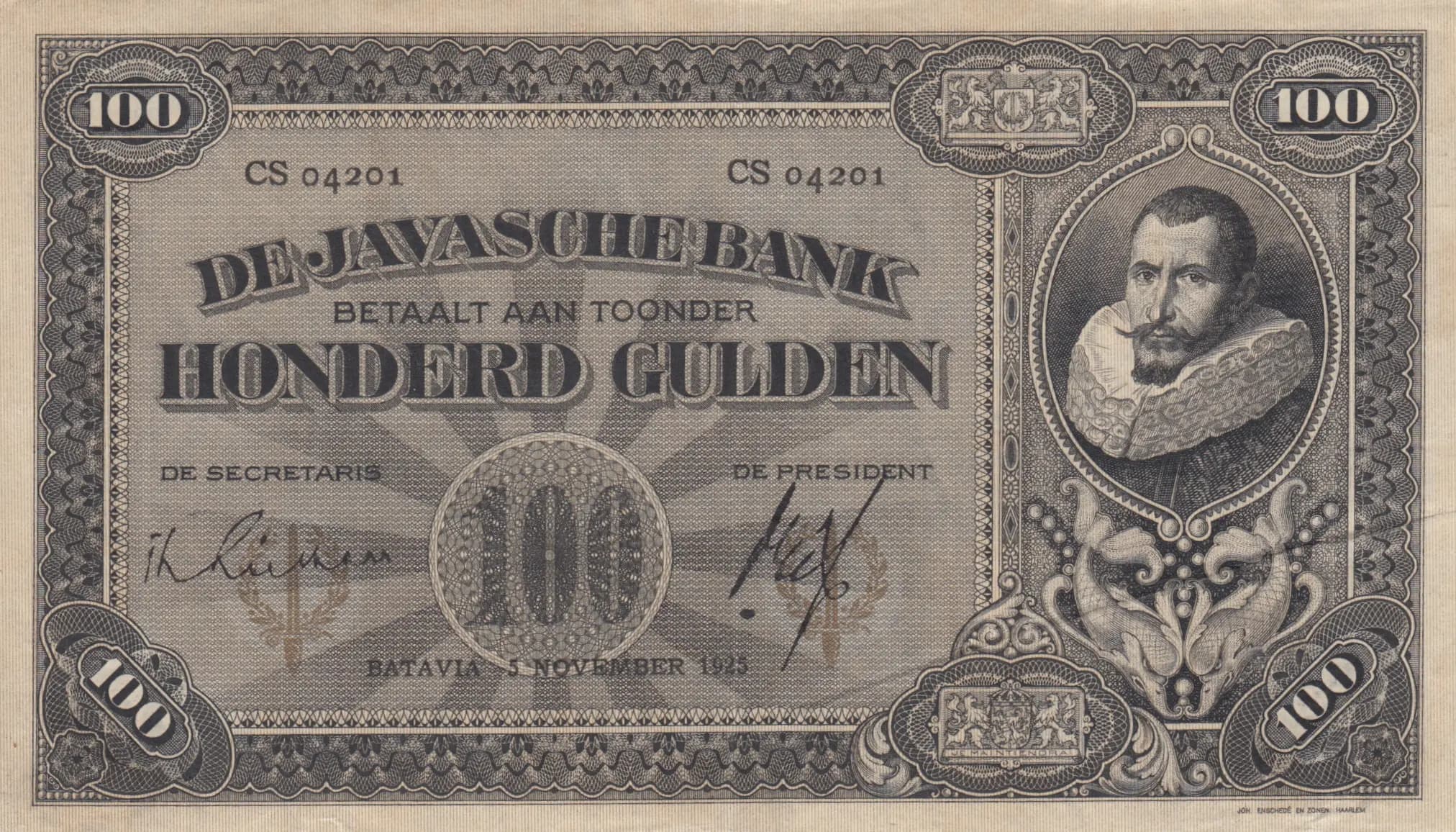
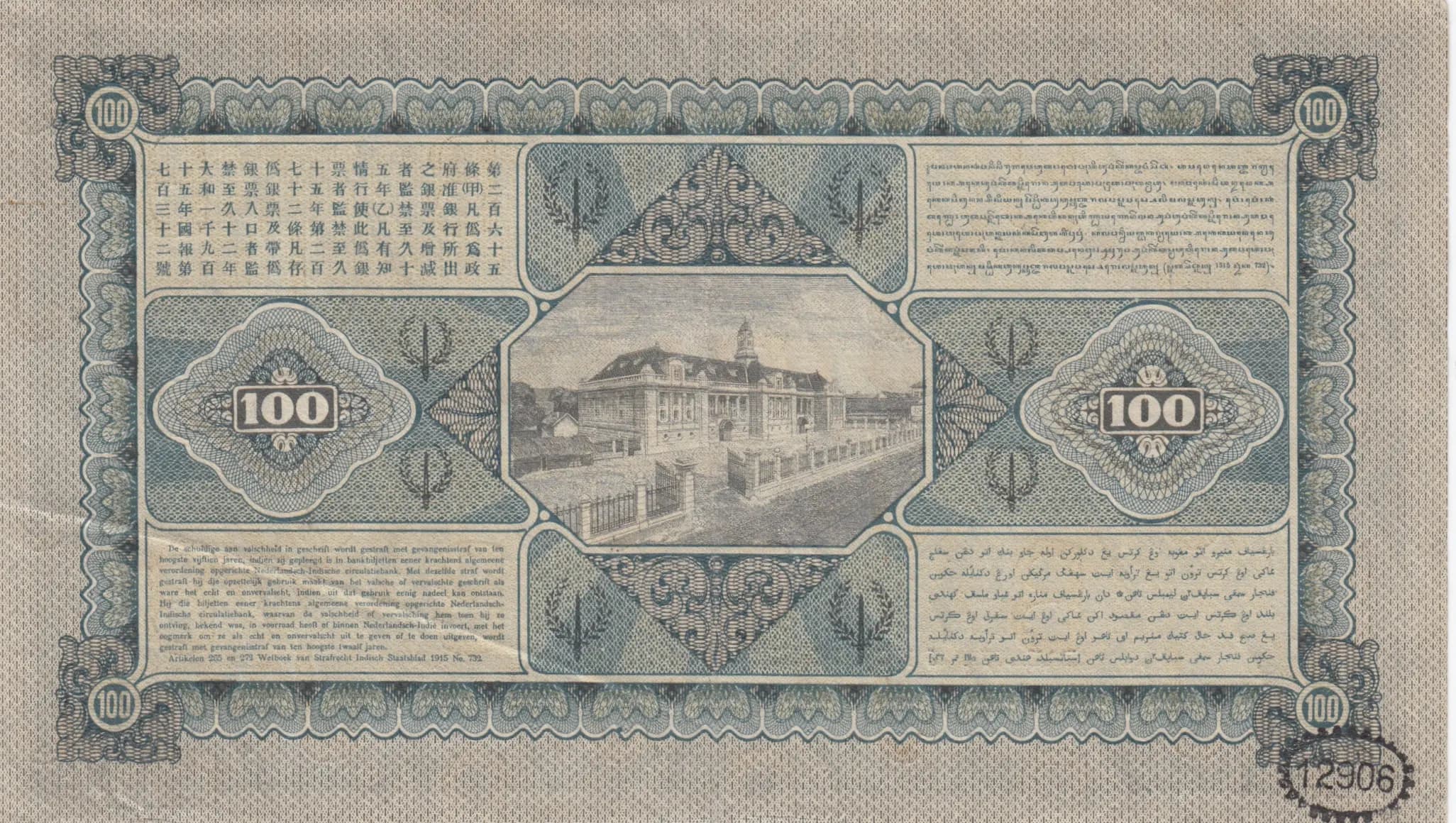
A striking 100 gulden note from the Javasche Bank dated November 5, 1925, presented in VF condition with excellent visual clarity. The obverse features a historical portrait of a bearded gentleman in elaborate 16th-17th century dress with a prominent ruffled collar, while the reverse showcases a palatial building rendered in teal and blue-green tones. This note is notable for its ornate security features, multilingual inscriptions including Chinese, Arabic, and Dutch text, and represents an important transitional period in Dutch colonial currency design.
Common. The 100 gulden 1925 Javasche Bank issue (Pick 73a) was produced in substantial quantities as a standard circulation note for the Dutch East Indies during the mid-1920s. No documented print run restrictions, recall orders, or short production period support a rare classification. The denomination and issuing authority were stable during this period, and surviving examples in VF condition appear with reasonable frequency in the colonial banknote market.
Issued during the late Dutch colonial period in the East Indies, this 100 gulden note reflects the Javasche Bank's role as the primary financial institution of the Dutch East Indies. The palatial building depicted on the reverse, rendered in classical architectural style, likely represents a significant colonial administrative or financial building. The inclusion of multiple languages—Dutch, Chinese, and Arabic—reflects the cosmopolitan nature of Java's commercial centers and the diverse populations under colonial administration during the 1920s.
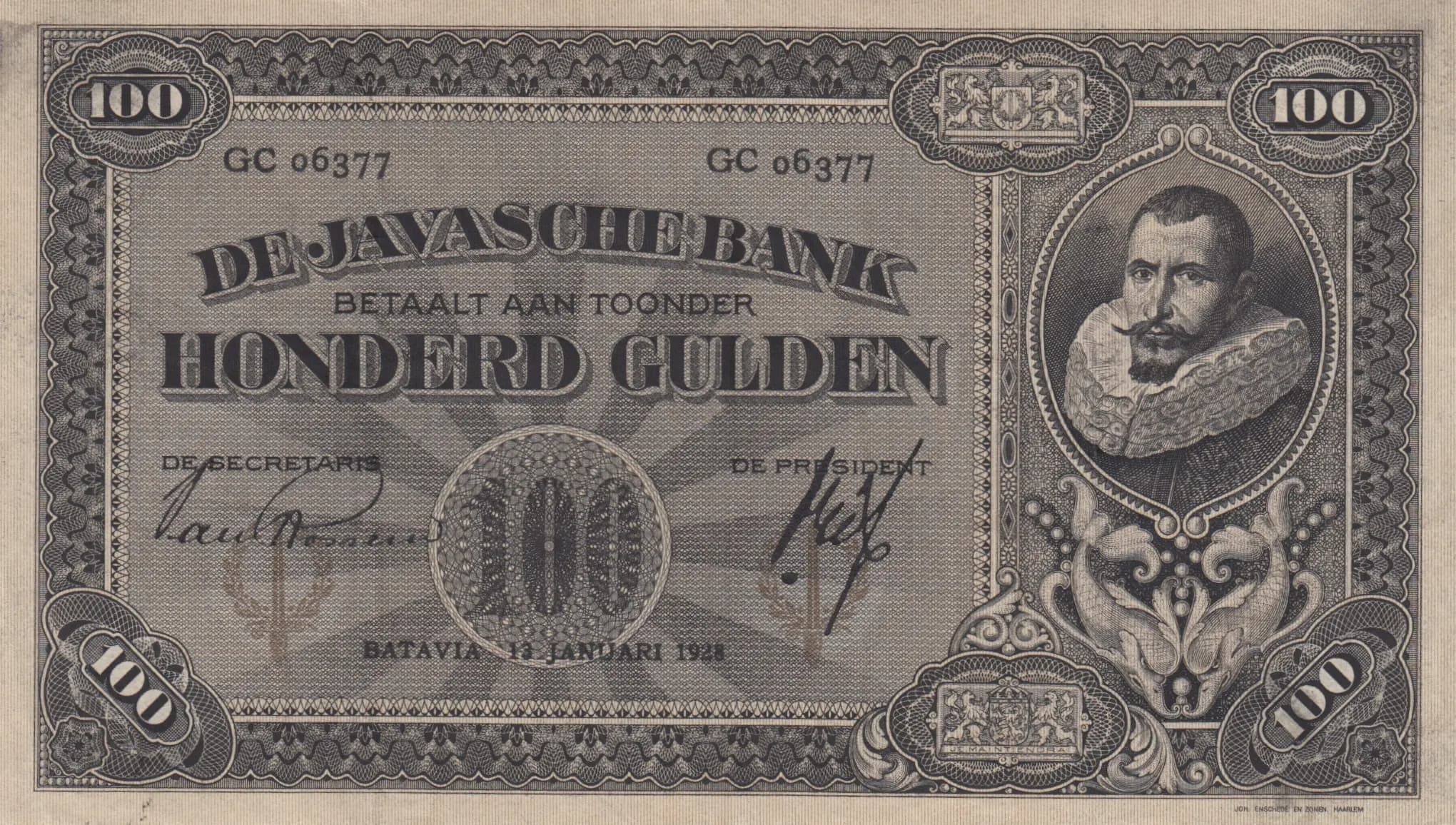
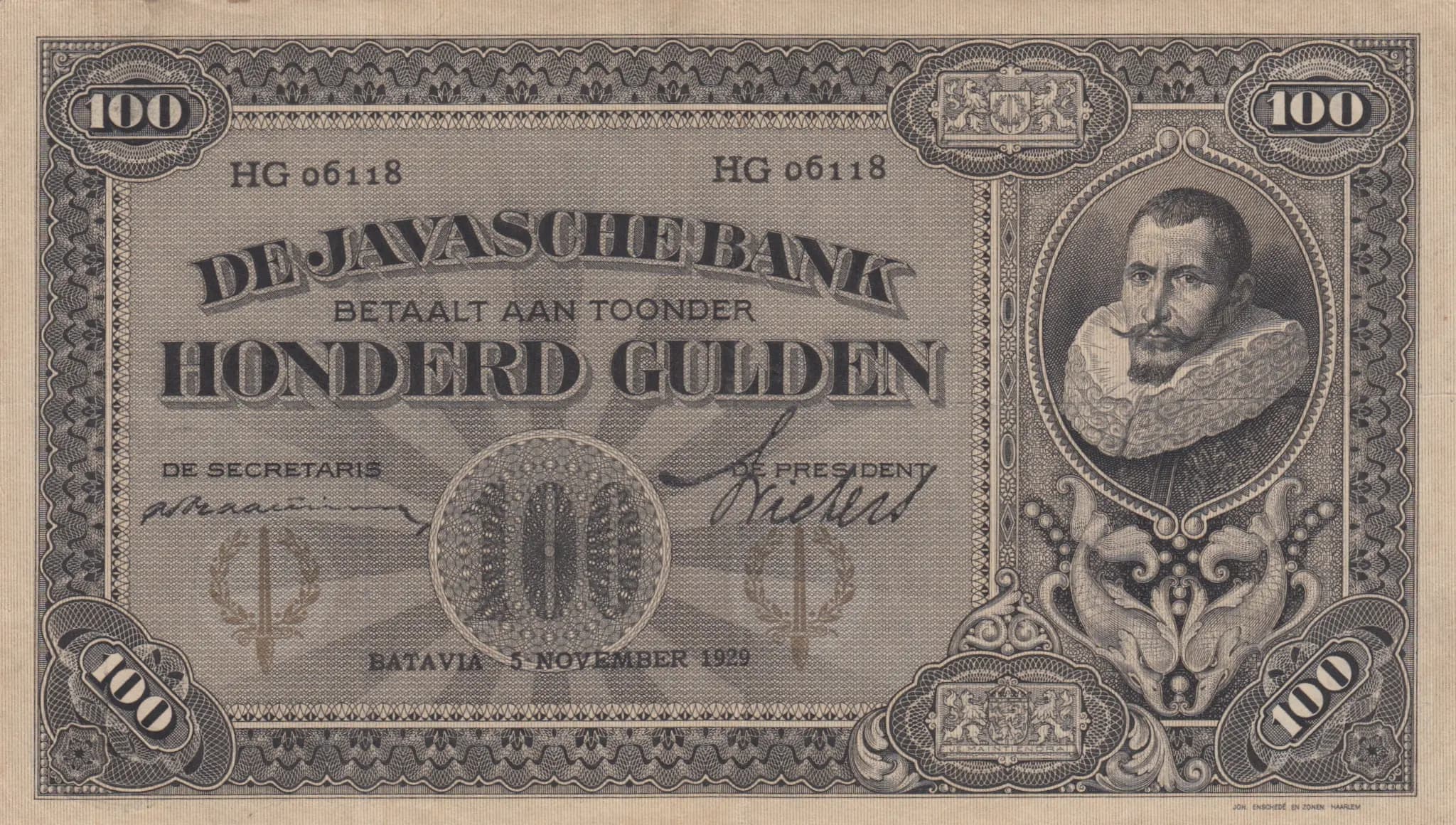
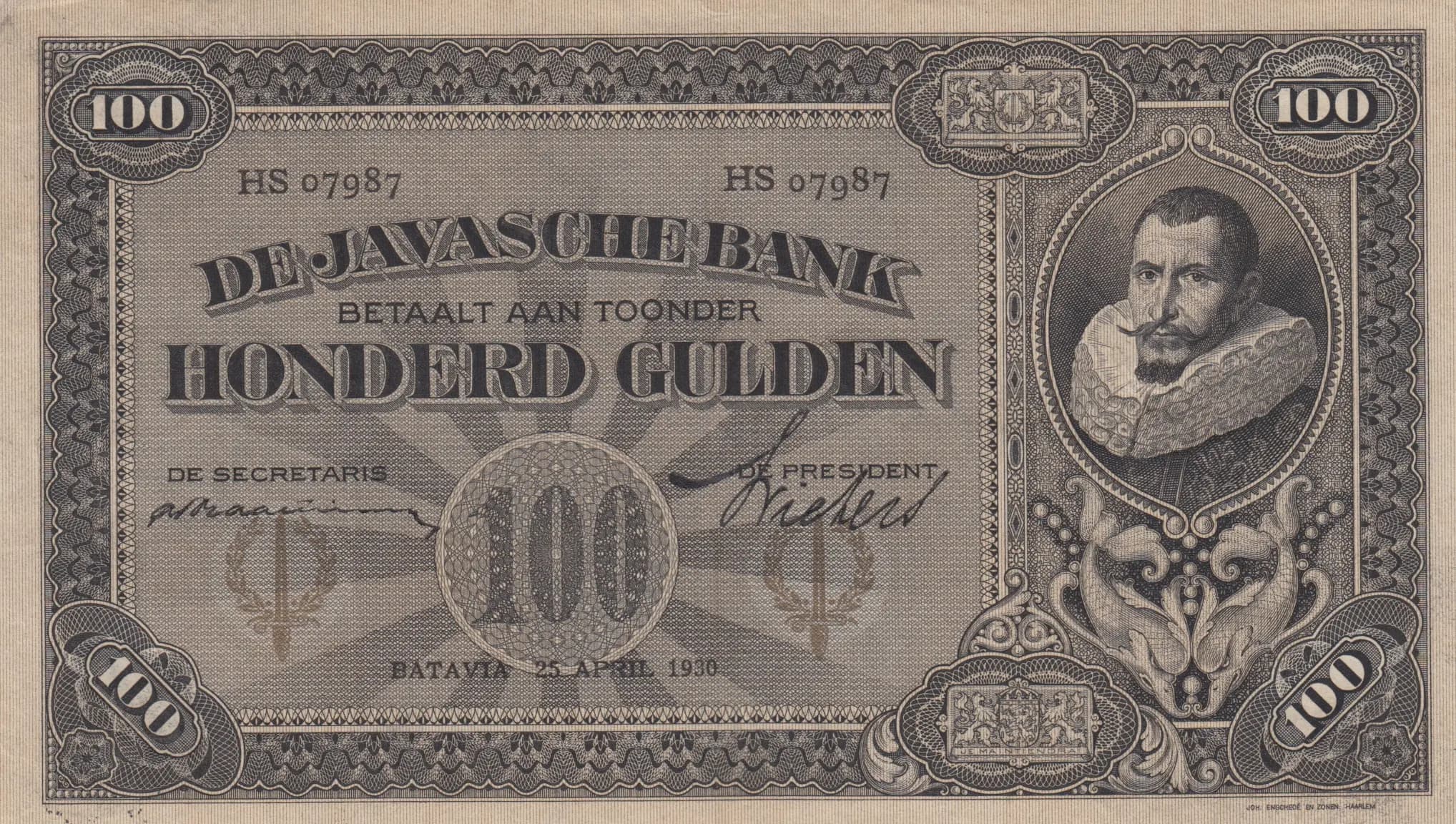
This 100 gulden banknote exemplifies the sophisticated design standards of early 20th-century colonial currency. The obverse portrays what is likely a historical Dutch figure or dignitary from the 16th-17th century, rendered in fine detail with period-accurate costume including the distinctive white ruffled collar characteristic of that era. The central coat of arms and circular emblem serve as focal security elements. The reverse features a prominent architectural photograph of a grand multi-story palatial structure with classical design elements, domed sections, and formal gardens—possibly the Javasche Bank headquarters or another significant colonial administrative building in Batavia (Jakarta). Ornamental border patterns featuring repeating geometric and floral motifs frame all four sides of both obverse and reverse, demonstrating the engraver's craftsmanship. The multilingual text—Dutch, Chinese, and Arabic—was integrated into the design to serve both functional and authenticating purposes within the diverse colonial trading environment.
Front side: 'DE JAVASCHE BANK' (The Java Bank); 'BETAALT AAN TOONDER' (Pays to Bearer); 'HONDERD GULDEN' (One Hundred Guilders); 'DE SECRETARIS' (The Secretary); 'DE PRESIDENT' (The President); 'BATAVIA 5 NOVEMBER 1925' (Batavia November 5, 1925); Serial number 'CS 04201'. Back side: Denomination '100' in corner cartouches; Chinese commemorative or historical text block in upper left; Dutch text block describing the depicted building or historical context in lower left; Arabic text block on right side providing additional historical or descriptive information; Reference/serial number '112906'.
Intaglio engraving and printing, characteristic of high-security banknote production of the 1920s. The fine line work visible in the decorative borders, the detailed portraiture, and the sharp reproduction of the architectural photograph indicate traditional engraved plate printing. The printer for this series was the established Dutch security printer Johan Enschede, though this particular note bears a Batavia (Jakarta) issue date reflecting production oversight by the Javasche Bank in the Indies.
This example bears the date 'BATAVIA 5 NOVEMBER 1925' and serial number 'CS 04201' on the obverse. The prefix 'CS' represents a standard serial numbering block for this issue. Varieties of Pick 73a may be distinguished by different signature combinations representing different terms of office for the Javasche Bank's President and Secretary. The visual quality and printing characteristics appear consistent with standard production for this Pick number, with no evidence of overprints, emergency issues, or emergency modifications.