100 gulden 1928
About This Note
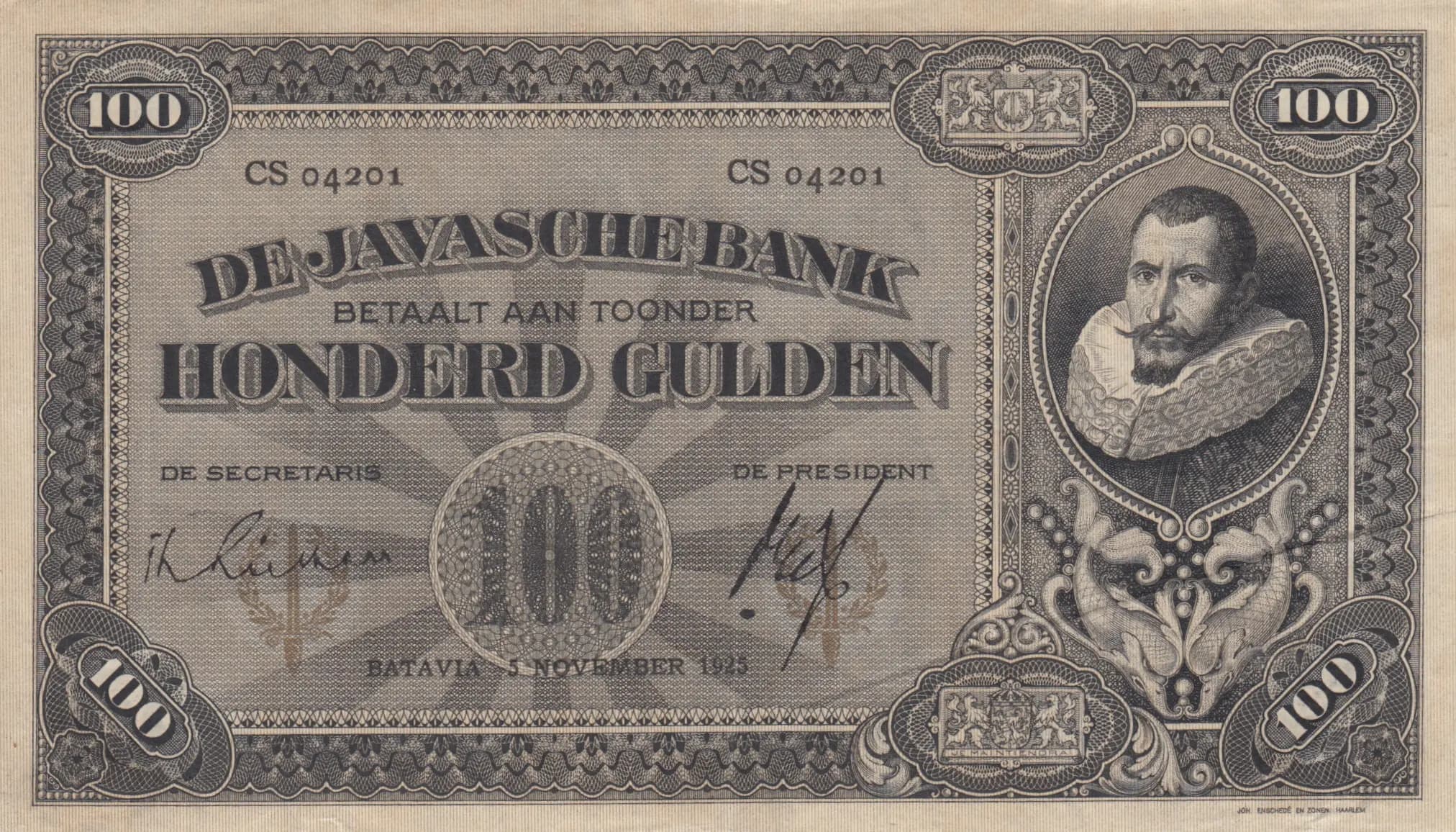
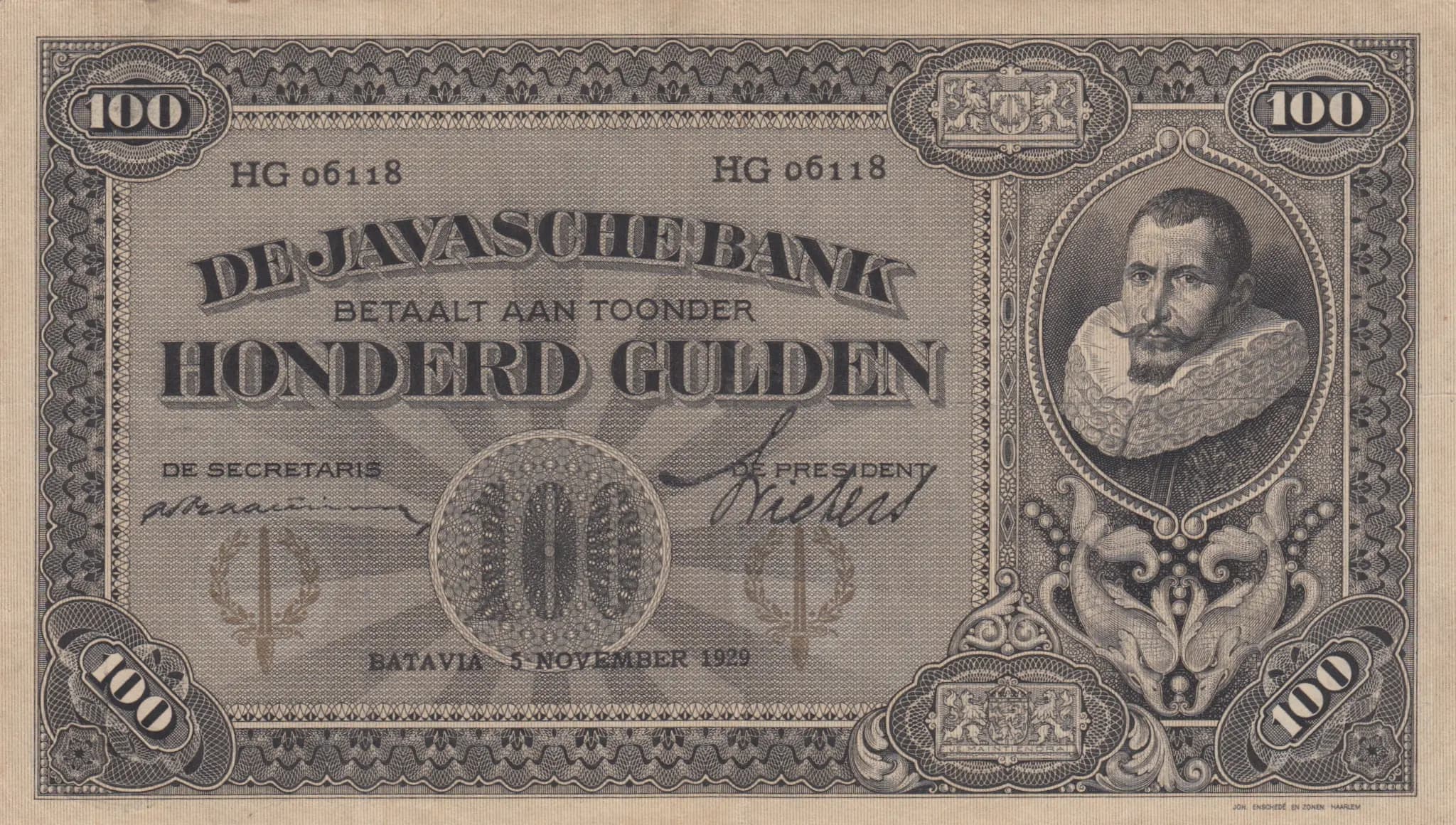
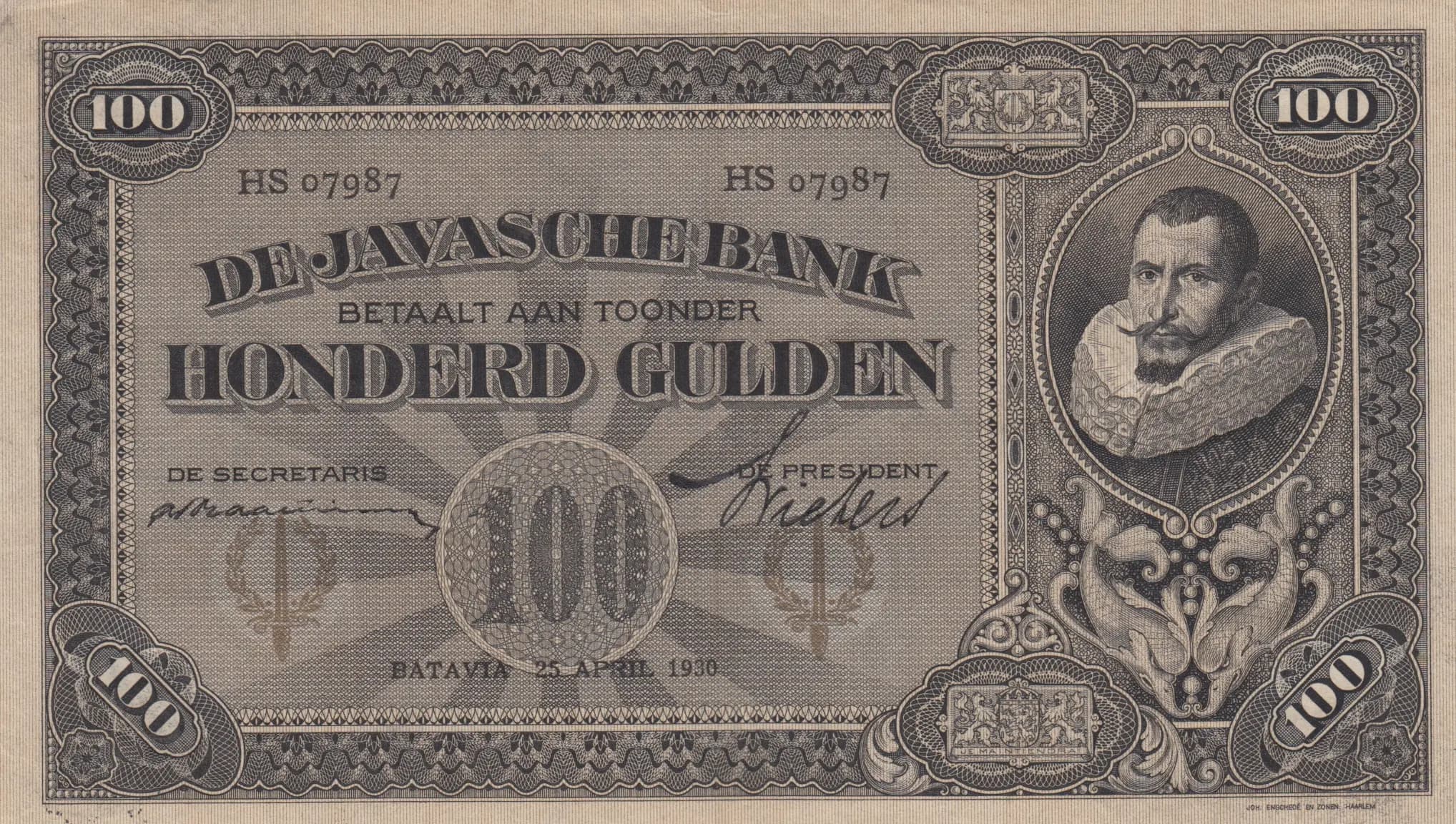
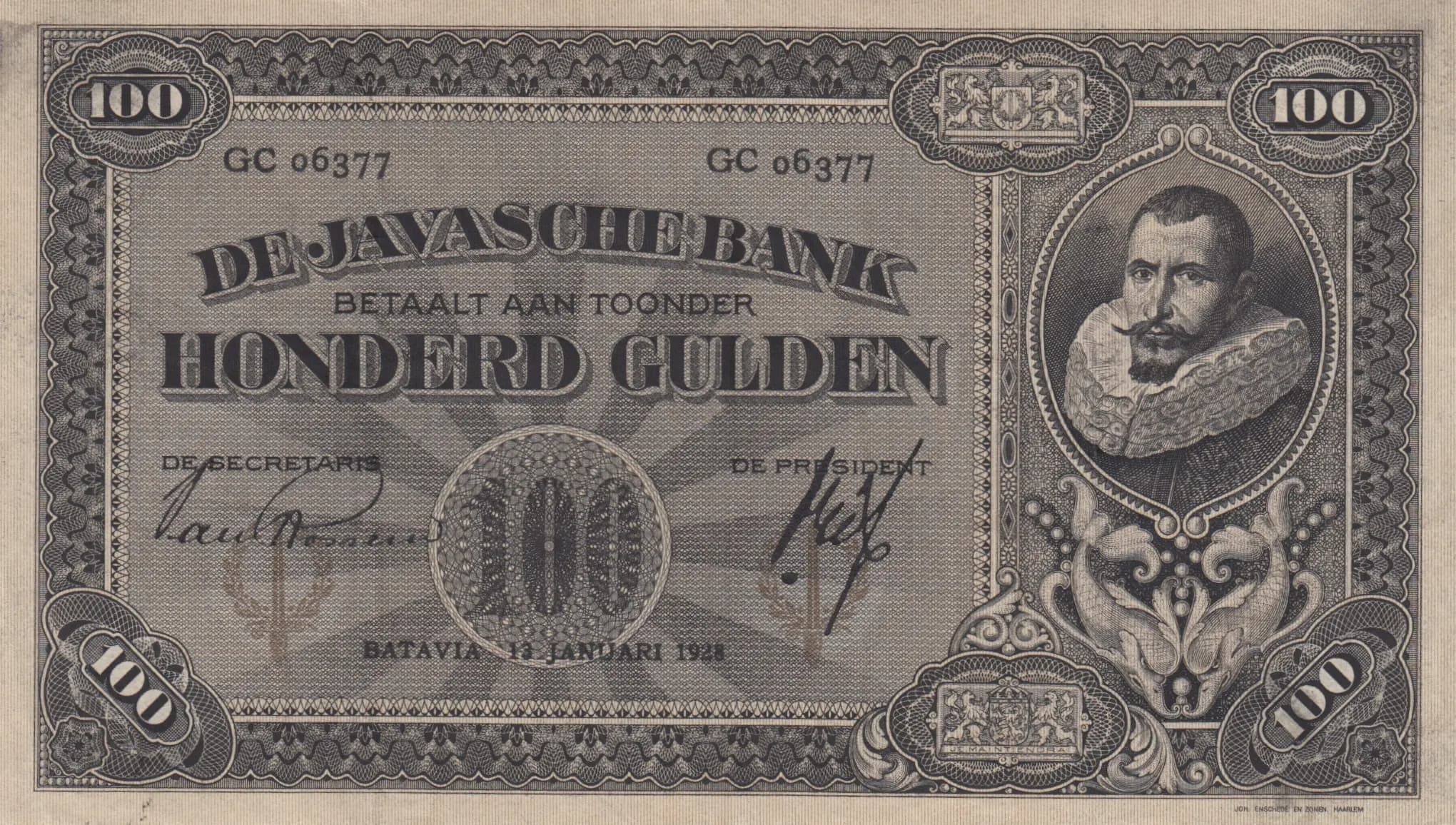
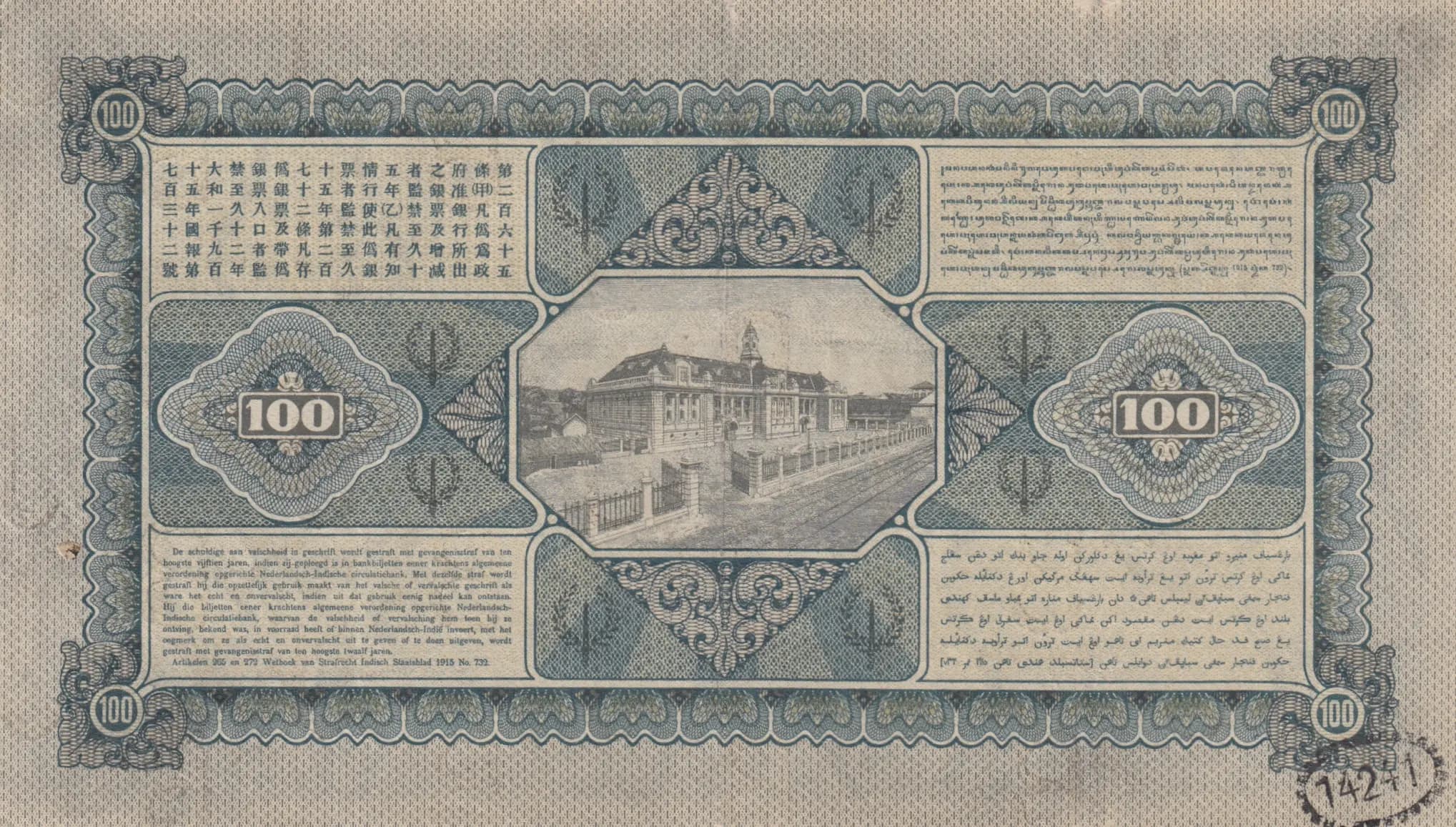
A striking 100 gulden banknote issued by Javasche Bank in 1928, displaying the exceptional engraving quality characteristic of Dutch East Indies currency from this era. The front features an ornate portrait of a bearded gentleman in classical ruff collar within an elaborate oval frame, while the reverse showcases a photograph of an imposing institutional building framed by intricate geometric and multilingual text (Dutch, Chinese, and Arabic), reflecting the cosmopolitan nature of colonial Batavia. The note presents in VF condition with sharp printing, minimal wear, and excellent clarity throughout the design.
Common. The Javasche Bank 100 gulden 1928 (Pick 73b) was issued in substantial quantities during normal circulation throughout the Dutch East Indies during the late 1920s and 1930s. While notes from this era have become less common due to the passage of time and the significant historical disruptions of World War II and Indonesian independence, surviving examples in VF condition are regularly encountered in the market. No evidence of restricted print runs, short-lived issuance, or government recalls makes this a standard collectible note rather than a scarcity.
This 100 gulden note represents the height of Javasche Bank's currency production during the final decades of Dutch colonial rule in the East Indies. The multilingual inscriptions (Dutch, Chinese, and Arabic script) on the reverse building photograph reflect Batavia's status as a major trading hub serving diverse merchant communities. The classical institutional architecture depicted and the formal portraiture underscore the colonial authority's emphasis on financial stability and institutional legitimacy during a period of economic development in the Dutch East Indies.
The front of this note features a formal portrait of what appears to be a senior official or dignitary of the Dutch East Indies administration, rendered in classical engraving style with a distinctive white ruffled collar and shown in profile facing left. The portrait is surrounded by an ornate oval frame with elaborate decorative borders. The reverse showcases the Javasche Bank building in Batavia (modern Jakarta), a substantial classical institutional structure with multiple stories, regularly-spaced windows, and a prominent central cupola or tower, presented as a photographic intaglio insert surrounded by decorative frames and ornamental borders. The entire note employs symmetrical design with denomination cartouches in all four corners, ornate geometric and floral border patterns, and a hierarchical arrangement emphasizing the bank's authority and the stability of the currency through architectural monumentalism.
FRONT: 'DE JAVASCHE BANK' (The Javanese Bank), 'BETAALT AAN TOONDER' (Pays to Bearer), 'HONDERD GULDEN' (One Hundred Guilders), 'DE SECRETARIS' (The Secretary), 'DE PRESIDENT' (The President), 'BATAVIA 14 JANUARI 1928' (Batavia 14 January 1928), 'GC 06377' (Serial number, appears twice), '100' (denomination numerals in corner cartouches). BACK: '100' (denomination in all four corner cartouches), with multilingual text blocks in Dutch, Chinese characters, and Arabic script surrounding the central building photograph; specific translations of multilingual text require specialist translation but indicate institutional and regulatory inscriptions typical of colonial currency design.
Intaglio (copperplate engraving) combined with photogravure for the building image on the reverse. The intricate border patterns, fine line work, geometric designs, and detailed ornamental frames visible throughout indicate master-level engraving work. The photographic reproduction of the Javasche Bank building on the reverse represents sophisticated photogravure technology integrated into the intaglio process. This note was produced by Johan Enschede, the renowned Dutch security printer, whose technical expertise is evident in the exceptional quality of detail and fine line work throughout the design.
This note corresponds to Pick 73b specifically, indicating it is from the 1928 Batavia issue dated 14 January 1928. The serial number prefix 'GC' visible on this example (GC 06377) represents one of the serial number series used for this denomination and date. The signature lines for 'DE PRESIDENT' and 'DE SECRETARIS' would contain the specific official signatures authorizing this note's issue. Varieties of this Pick number may exist based on different signature combinations and serial number prefixes, typical of colonial banknote production practices where multiple officials signed notes over extended production periods.