10 gulden 1937
About This Note
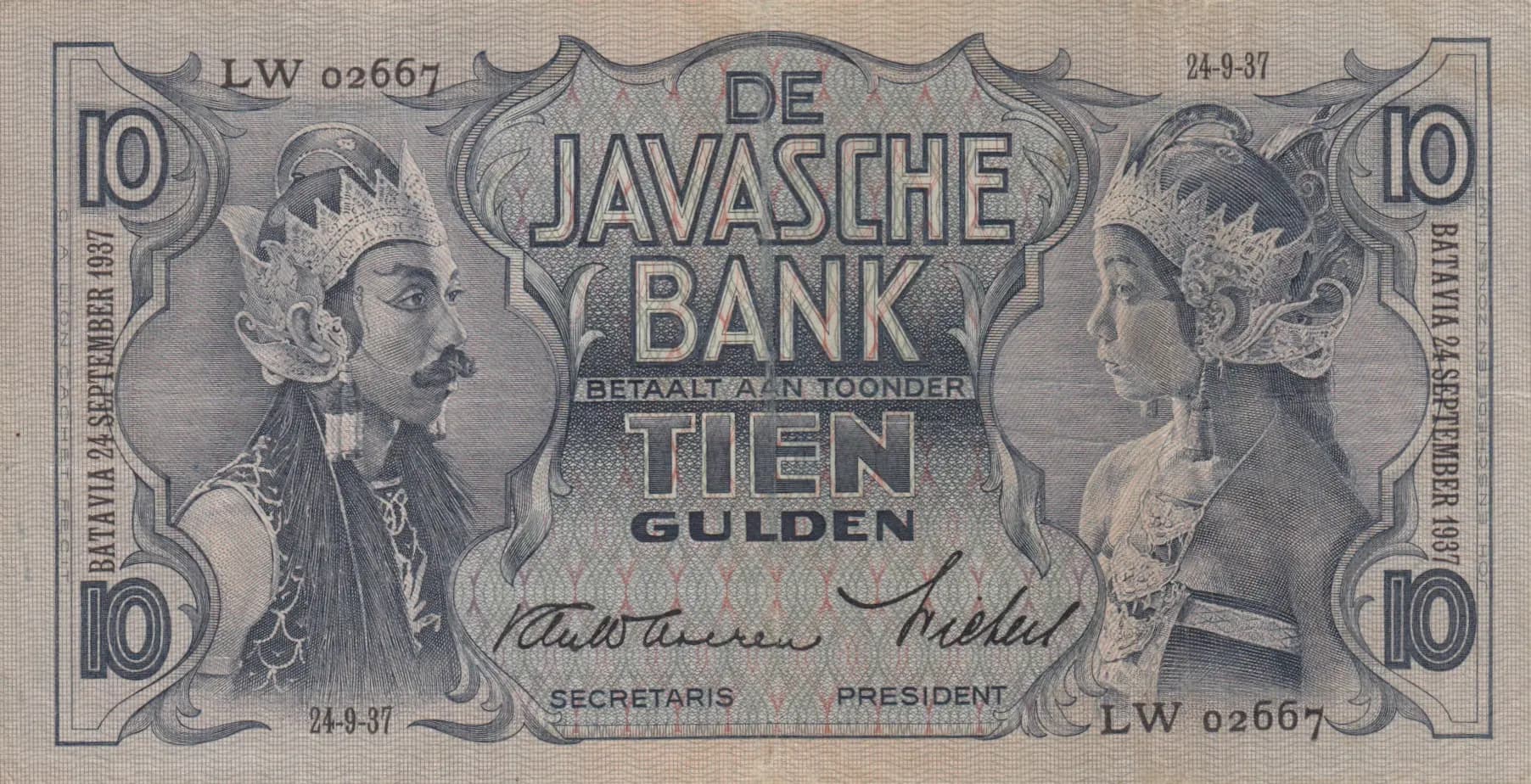
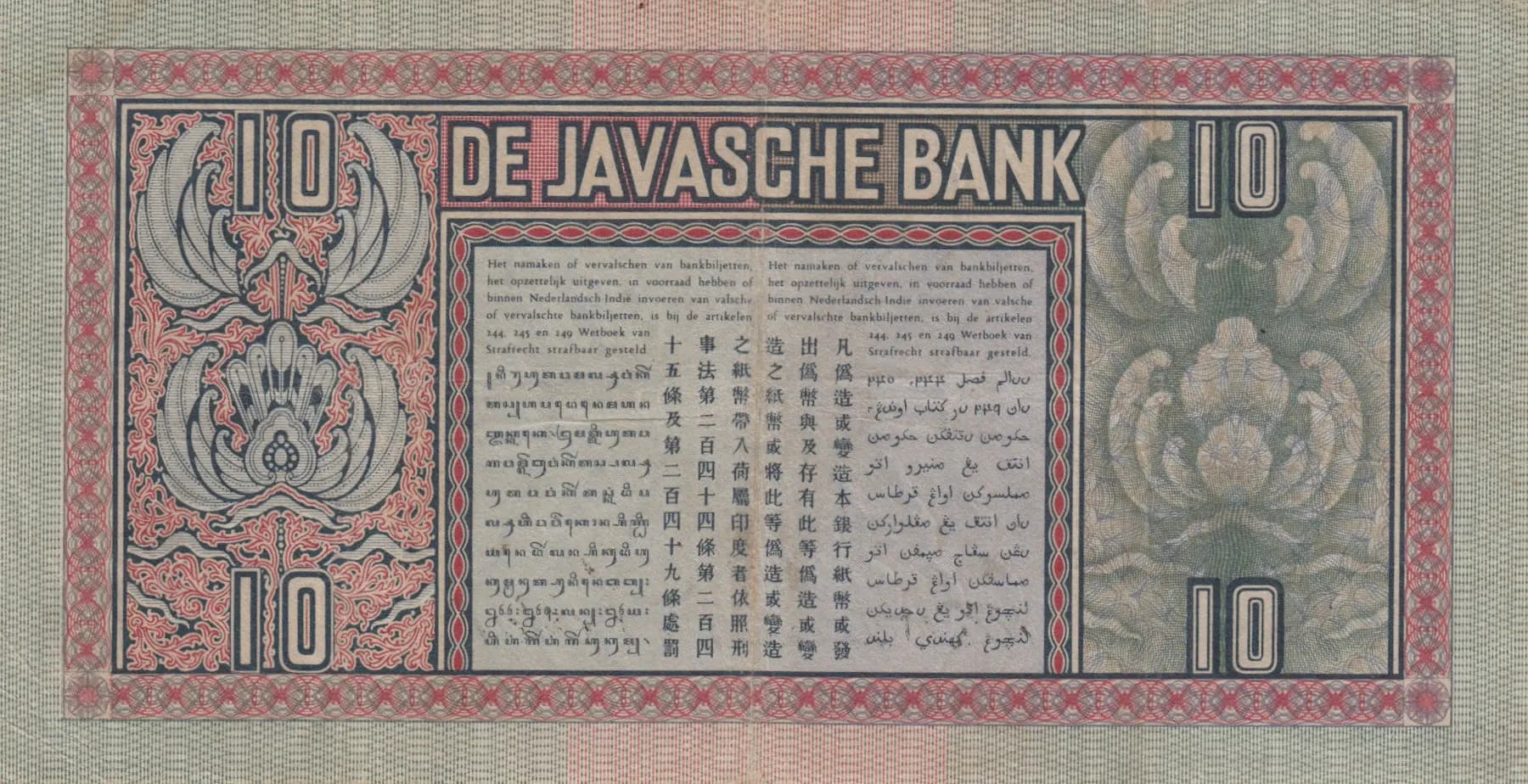
This is a striking 10 gulden banknote from the Javasche Bank dated September 24, 1937, presented in excellent VF condition with crisp engraving and no visible wear. The note features elegant dual portrait medallions in profile on the obverse and an exceptionally ornate reverse with Thai-inspired decorative patterns in red and gold, along with multilingual legal text reflective of the Dutch East Indies' cosmopolitan character. The exceptional condition and intricate security engraving make this an attractive example of pre-war Indonesian colonial currency.
Common. The 10 gulden 1937 (Pick 79b) from the Javasche Bank was produced in substantial quantities and remains readily available to collectors. These notes were widely circulated throughout the Dutch East Indies and many survive in various grades. The VF condition grade is desirable but not exceptionally rare for this denomination and series. No special scarcity factors (limited print run, recall, or short issuance period) apply to this note.
This note was issued during the final decade of Dutch colonial rule in the East Indies, when the Javasche Bank served as a principal financial institution for the Dutch East Indies. The multilingual inscriptions in Dutch, Chinese, Arabic, and Thai on the reverse reflect the diverse merchant and trading communities of the colonial territories. The denomination and date of issuance (1937) place this note in the interwar period, before the Japanese occupation and subsequent Indonesian independence in 1945.
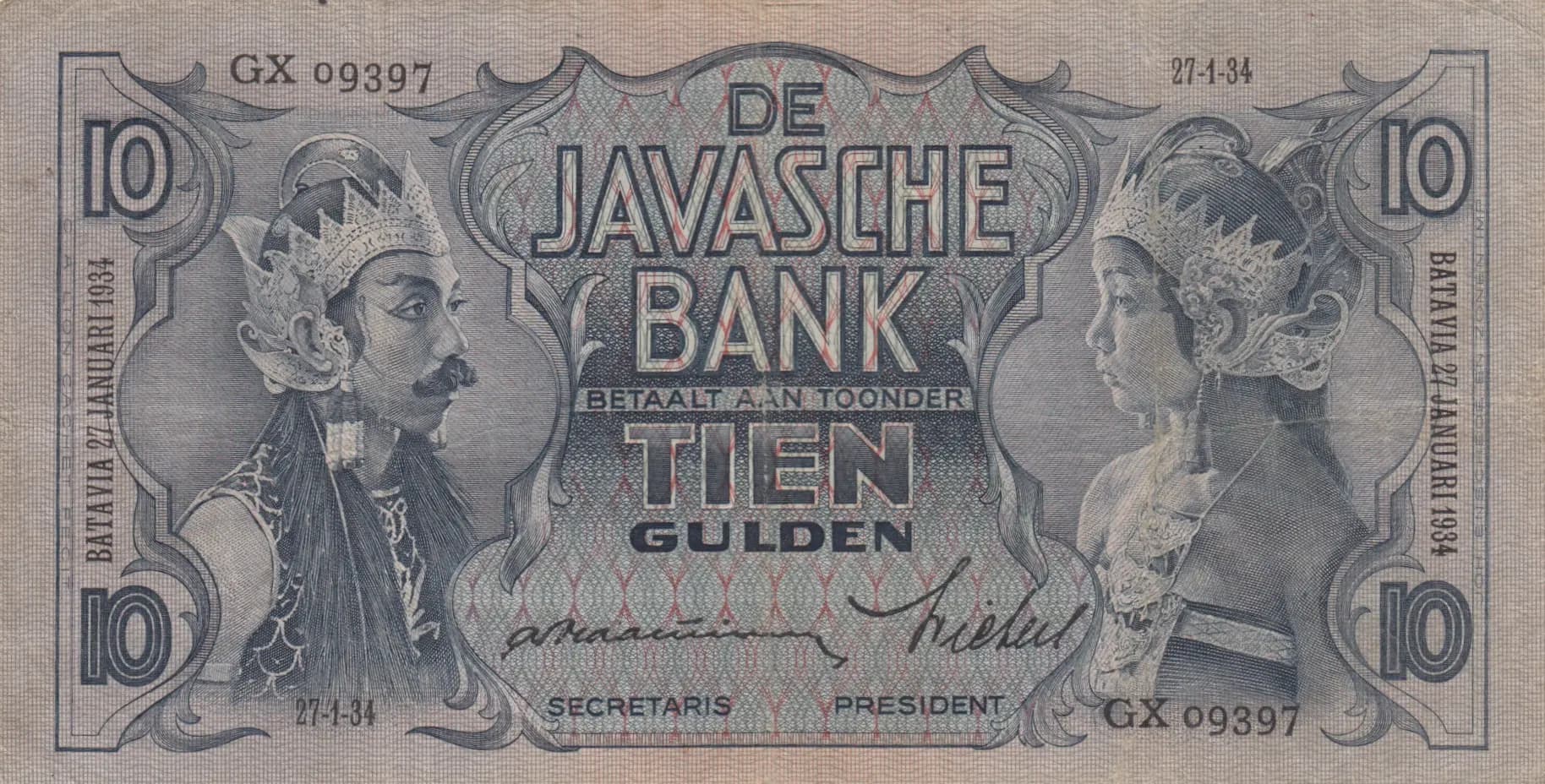
The obverse presents a formal, dignified composition with two portrait medallions in ornate circular frames—a male figure on the left in formal attire with elaborate headdress (likely representing Dutch authority or a historical dignitary) and a female figure on the right wearing an ornate crown or ceremonial headdress (possibly representing Asia or the colonial territories). The center displays the bank name and denomination with classical scrollwork and flourished border elements throughout. The reverse is distinctly more decorative, featuring an elaborate Thai or Southeast Asian style ornamental pattern on the left in red and gold with intricate lotus-like floral motifs and geometric interlocking designs, symbolizing the cultural richness of the East Indies. A classical or mythological vignette featuring two figures appears as a watermark element on the right side. The multilingual legal text in four scripts arranged in columns demonstrates the cosmopolitan nature of colonial commerce and legal jurisdiction.
FRONT: 'DE JAVASCHE BANK' (The Java Bank), 'BETAALT AAN TOONDER' (Payable to Bearer), 'TEN GULDEN' (Ten Guilders), 'SECRETARIS' (Secretary), 'PRESIDENT' (President), serial number 'LW 02667', date '24-9-37' (September 24, 1937). BACK: 'DE JAVASCHE BANK' (top), denomination '10' (corners), Dutch legal text: 'Counterfeiting or forging banknotes, intentionally issuing, keeping in stock or importing counterfeit or forged banknotes within the Dutch Indies is punishable under articles 544, 545 and 546 of the Penal Code,' followed by equivalent legal warnings in Chinese, Arabic, and Thai scripts addressing counterfeiting penalties.
This note was produced using intaglio engraving (steel plate engraving), the security standard for high-value banknotes of this era. The crisp, fine line work visible throughout—particularly in the background patterns, decorative borders, and portrait detail—is characteristic of master engraving. The printer was Joh. Enschede (Haarlem), one of Europe's most prestigious security printers, known for their exceptional craftsmanship. The multicolor printing on the reverse was achieved through multiple engraved plates working in sequence, requiring precise registration.
The specific variety is identified by the date '24-9-37' (September 24, 1937) on the obverse and the serial number prefix 'LW'. Pick catalog number 79b designates this as a specific variety within the 10 gulden 1937 series. Different signature combinations and serial number prefixes exist for notes from this bank and year; this example with 'LW' prefix and the September 1937 date represents one documented variety of the 1937 issue.