10 gulden 1934
About This Note
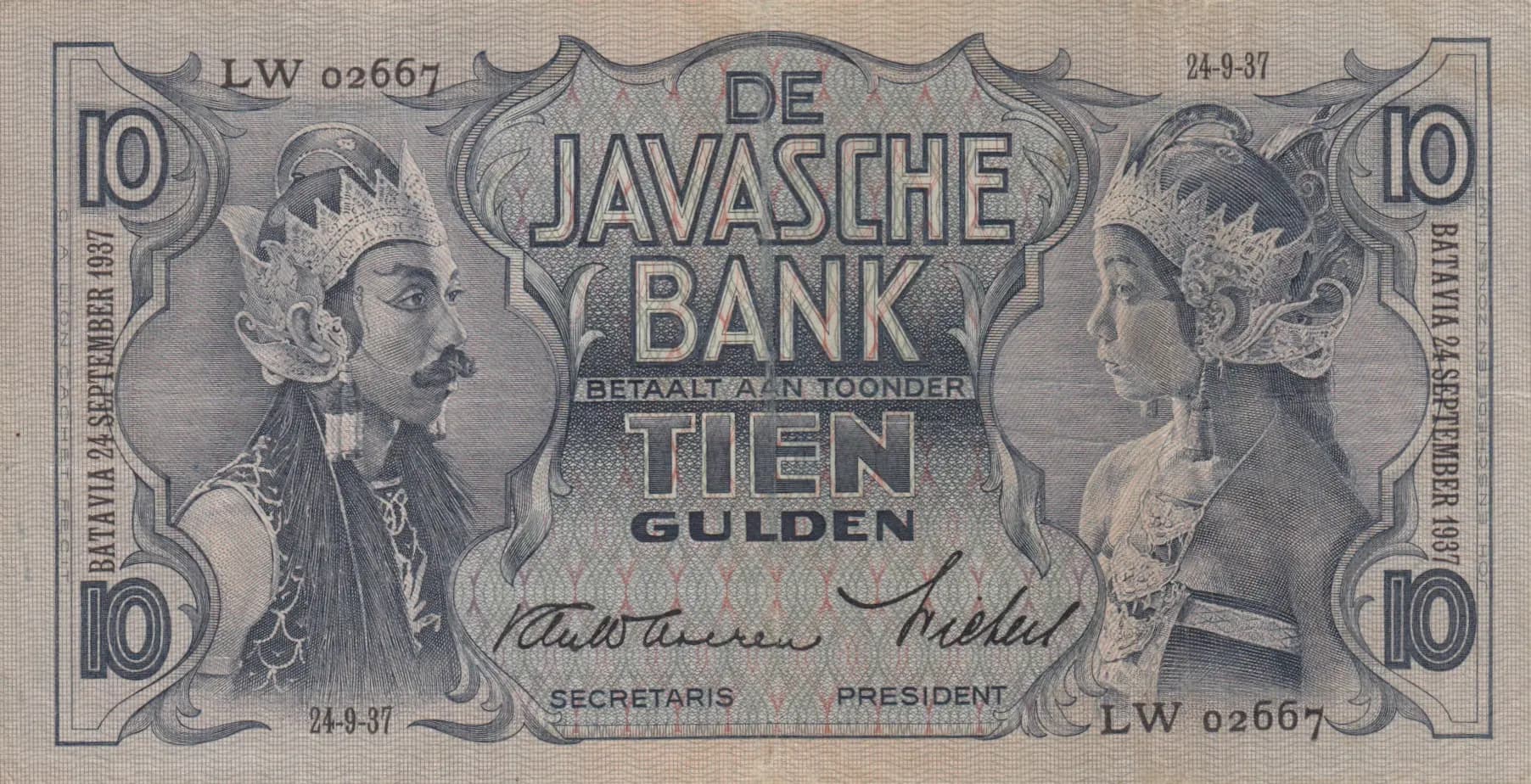
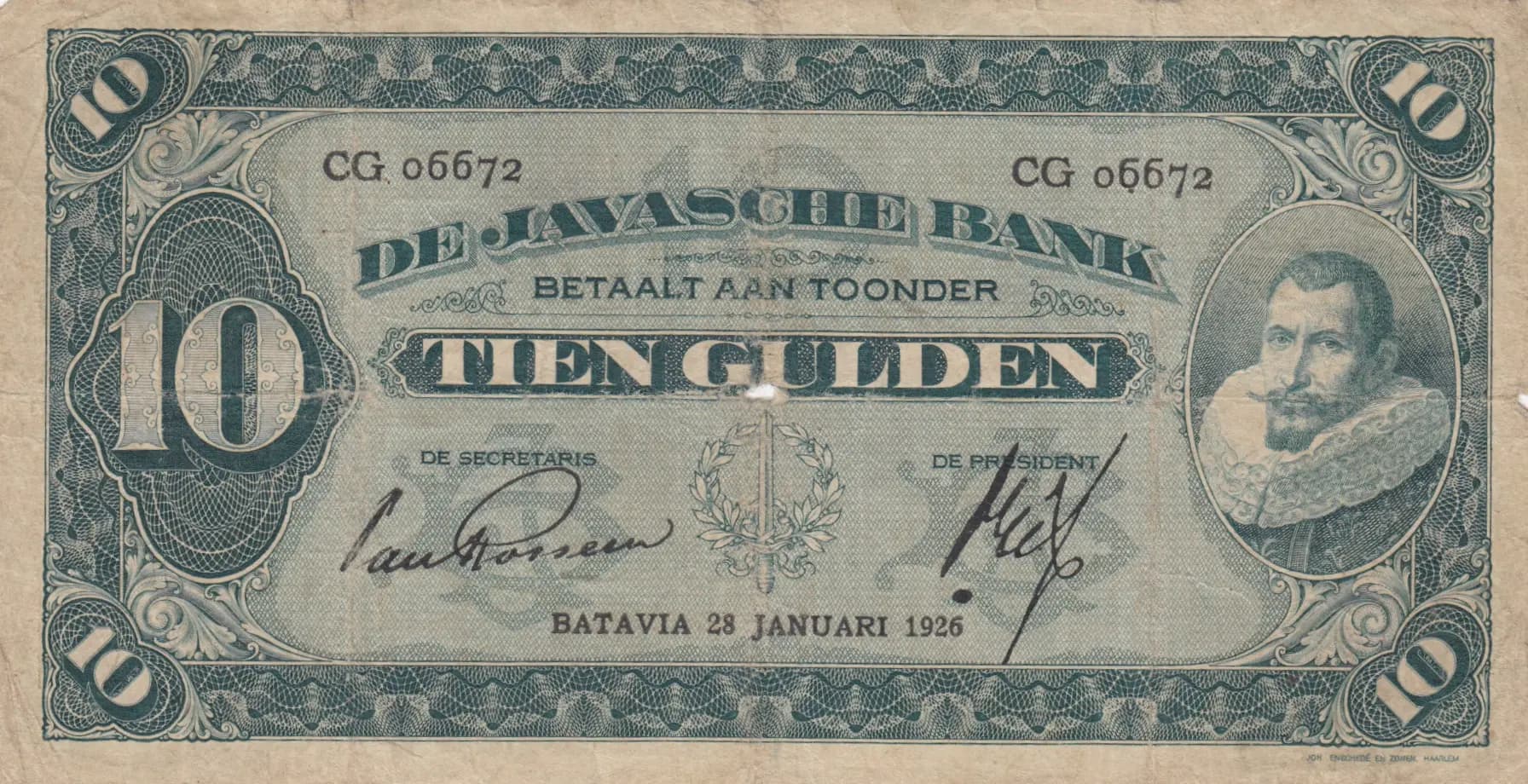
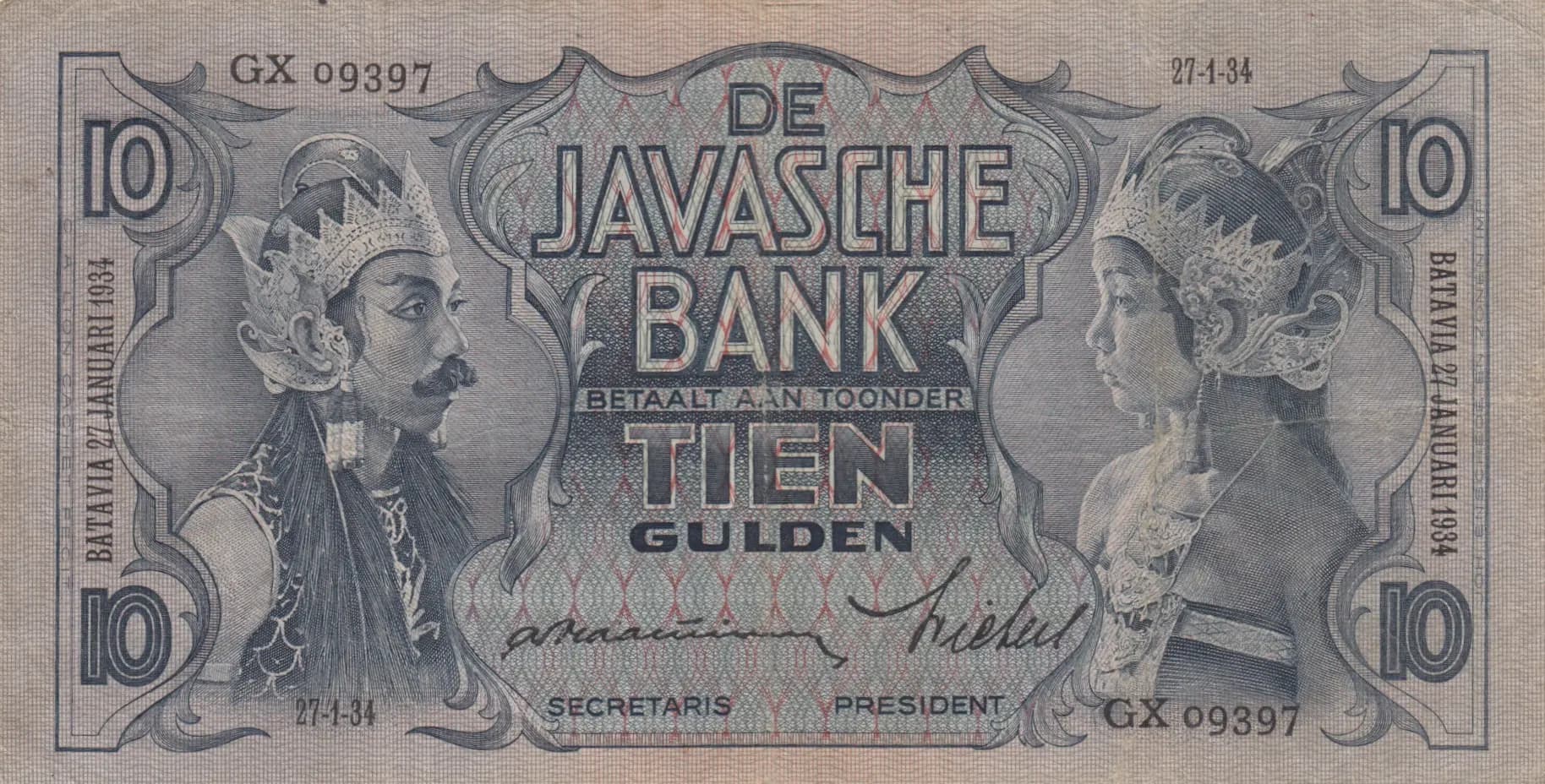
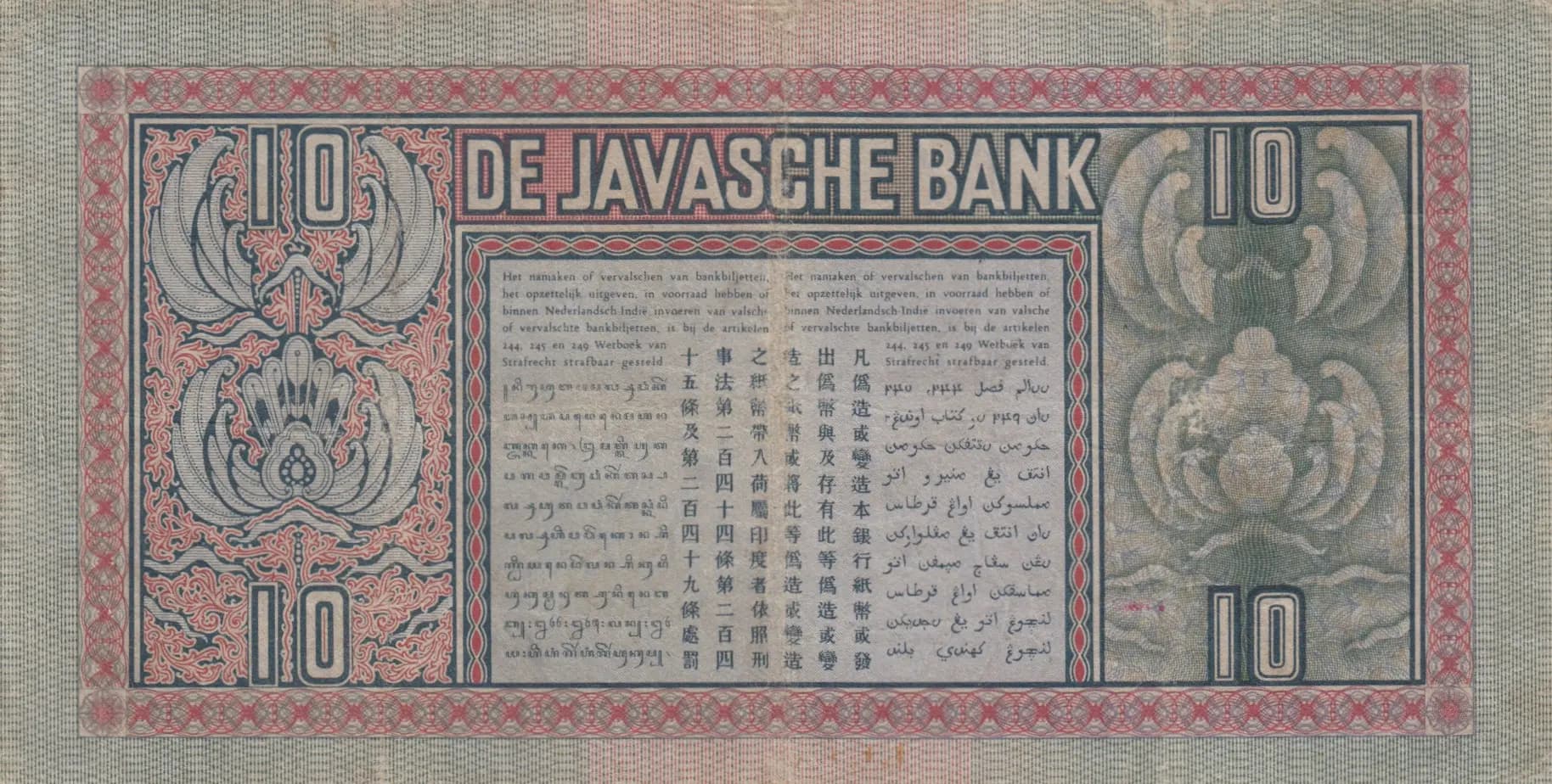
This is a 10 Gulden banknote issued by the Javasche Bank on 27 January 1934, presented in Very Fine condition. The note features exceptional engraved artwork with two portrait medallions of historical figures in elaborate period dress flanking ornate baroque-style decorative borders, complemented by a scenic landscape vignette on the reverse. The multilingual security text (Dutch, Chinese, and Arabic) and fine line engraving throughout reflect the sophisticated anti-counterfeiting measures employed by the Javasche Bank for colonial currency.
Common. The 10 Gulden denomination from the Javasche Bank's 1934 series (Pick 79a) was issued in substantial quantities for routine circulation throughout Java and the Dutch Indies, and examples remain relatively available in numismatic markets. No evidence indicates a restricted print run, early recall, or unusual scarcity for this specific variety. Notes in Very Fine condition are somewhat more desirable than heavily circulated examples but do not command significant premiums, confirming common status.
This note represents the currency of the Netherlands Indies during the pre-World War II colonial period, issued by the Javasche Bank, the primary banking authority for Java and the broader Dutch East Indies. The inclusion of Chinese and Arabic script on the reverse reflects the cosmopolitan, multi-ethnic commercial environment of the Dutch colonial East Indies, where these language communities played significant roles in regional commerce and administration. The ornate baroque design and dual-portrait composition exemplify the decorative and authoritative aesthetic favored by colonial-era banking institutions to establish legitimacy and prevent counterfeiting.
The obverse features an elegant two-medallion composition with a male figure in period dress and ornate headdress on the left and a female figure wearing an elaborate headdress on the right, representing Java's historical nobility or cultural heritage. Both medallions are framed by intricate baroque-style scrollwork and decorative borders with floral and geometric motifs. The reverse displays a panoramic landscape vignette featuring mountains, water, and natural scenery characteristic of the Java region, anchored by large ornamental '10' numerals in the corners. The multilingual text (Dutch, Chinese, and Arabic) on the reverse served both functional and security purposes, establishing the note's validity across the diverse populations of the Dutch colonial territories. Dominant colors shift from brown and cream tones on the obverse to pink, rose, blue-gray, and green hues on the reverse, creating visual distinction between sides.
FRONT SIDE: 'DE JAVASCHE BANK' (The Javanese Bank) / 'BETAALT AAN TOONDER' (Pays to Bearer) / 'TIEN GULDEN' (Ten Guilders) / 'SECRETARIS' (Secretary) / 'PRESIDENT' (President) / '27-1-34' (27 January 1934) / 'GX 09397' (Serial number). BACK SIDE: 'DE JAVASCHE BANK' (The Javanese Bank) / '10' (denomination numeral) / 'Het aanaken van vervalschen van bankbiljetten, het opzettelijk uitgeven, in voorraad hebben of binnen Nederlandsch Indie invoeren van valsche of vervalsclhe bankbiljetten, is bij de artikelen 244, 245 en 249 Wetboek van Strafrecht strafbaar gesteld' (The counterfeiting of banknotes, the intentional issuing, possession for sale or importation into the Dutch Indies of false or counterfeit banknotes is punishable under articles 244, 245 and 249 of the Penal Code) / Chinese legal/regulatory text / Arabic legal/regulatory text.
This banknote was produced using steel engraving, the dominant security printing method for high-value currency of the 1930s era. The fine line engraving is evident throughout the note in the detailed portrait work, decorative scrollwork, and complex border patterns. The Javasche Bank contracted with Joh. Enschedé (though the external catalog reference may contain errors regarding date and denomination), the renowned Dutch security printer based in Haarlem, which was the primary security printer for Netherlands colonial currency during this period. The multilayered color printing required separate passes for the obverse and reverse, with the rose/pink tones and green accents on the reverse indicating skilled polychromatic intaglio printing.
The specific variety is Pick 79a, distinguished from other denominations and issuing periods by the date 27 January 1934 and the Javasche Bank imprint. The serial number observed (GX 09397) indicates a standard production issue; the 'GX' prefix likely denotes a specific printing batch or signature combination. No documented major varieties (such as date variants, signature substitutions, or significant overprints) are known for this Pick number, making this a standard example of the 1934 issue.