1 gulden 1940
About This Note
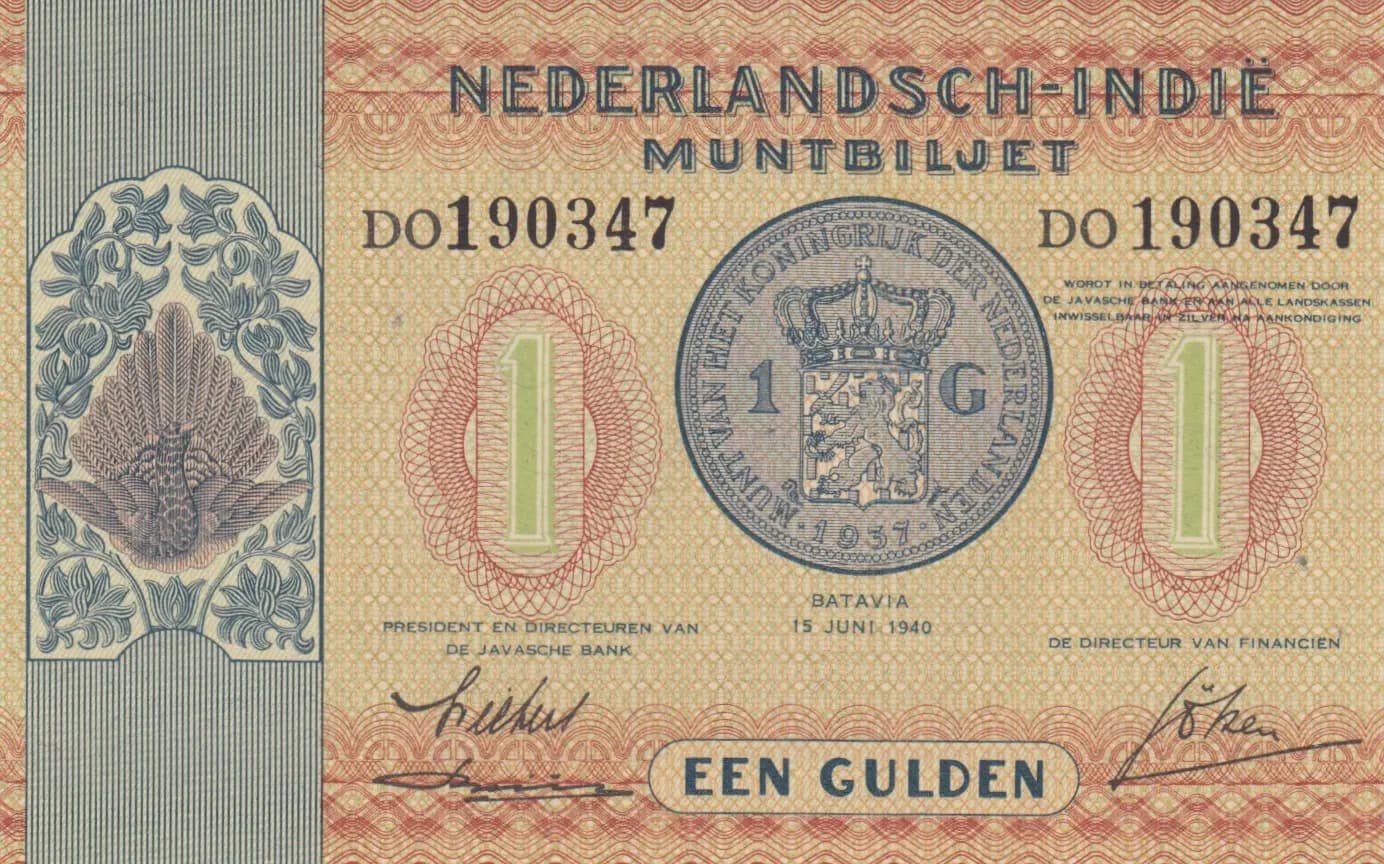
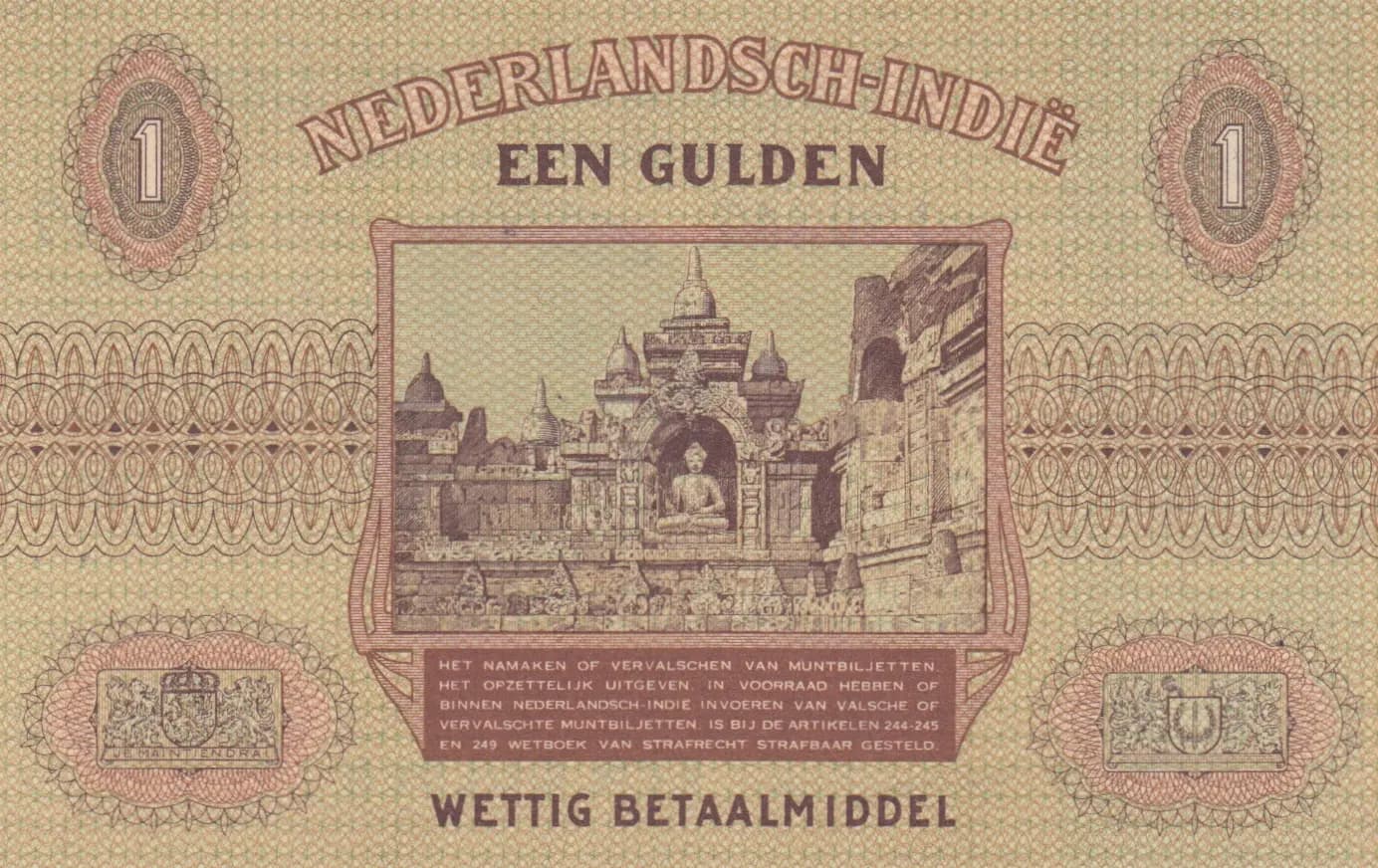
A pristine example of the Netherlands Indies 1 Gulden Muntbiljet from 1940, graded UNC. This emergency banknote features striking cream and tan tones with red and blue heraldic imagery, including an ornate eagle emblem and crowned coat of arms dated 1591. The reverse displays an exquisitely detailed engraving of a Southeast Asian temple or palace structure, characteristic of the Indies' cultural heritage, all rendered in crisp condition with vibrant color retention and no visible wear.
Common. The 1 Gulden Muntbiljet of 1940 (Pick P-108a) was issued in substantial quantities by the Javasche Bank as emergency currency during the early WWII period. While these notes saw circulation in the Dutch East Indies and some were lost or destroyed during the Pacific War and subsequent Indonesian independence conflict, surviving examples in all grades remain readily available to collectors. UNC examples are not scarce and trade at modest valuations typical of common twentieth-century colonial banknotes.
Issued on June 15, 1940, by the Javasche Bank during the tumultuous opening months of World War II, this Muntbiljet represents emergency currency issued by the Dutch colonial administration in the East Indies. The heraldic imagery—particularly the crowned coat of arms with lions—reflects the Dutch royal authority over the colony, while the depicted Southeast Asian architectural landmark symbolizes the exotic locale and Dutch colonial presence in the Indonesian archipelago during this critical historical period.
The obverse presents a formal heraldic composition dominated by a central circular medallion containing the Dutch coat of arms—a crowned shield with three lions—dated 1591, flanked by large red ovals enclosing the denomination numeral '1'. The left margin features an ornate vertical panel with a blue eagle emblem set within decorative scrollwork, symbolizing Dutch imperial authority. The reverse showcases a finely engraved architectural centerpiece depicting what appears to be a Javanese temple or royal palace with multiple ornate spires and pagoda-like towers, reflecting the cultural landscape of the Dutch East Indies. Large denomination numerals '1' occupy the upper corners in red ovals. Ornamental guilloche borders and intricate line work frame both sides, with decorative heraldic shields positioned in the lower corners of the reverse. The overall color palette of cream, tan, red, and blue reinforces the formal, official character of this emergency currency.
FRONT SIDE: 'NEDERLANDSCH-INDIE MUNTBILJET' (Dutch East Indies Bank Note); 'PRESIDENT EN DIRECTEUREN VAN DE JAVASCHE BANK' (President and Directors of the Javasche Bank); 'BATAVIA 15 JUNI 1940' (Batavia June 15, 1940); 'DE DIRECTEUR VAN FINANCIEN' (The Director of Finance); 'EEN GULDEN' (One Guilder); Serial number: DO190347. BACK SIDE: 'NEDERLANDSCH-INDIE' (Dutch East Indies); 'EEN GULDEN' (One Guilder); 'WETTIG BETAALMIDDEL' (Legal tender); 'HET NAMAKEN OF VERVALSCHEN VAN MUNTBILJETTEN HET OPZETTELIJK UITGEVEN IN VOORRAAD HEBBEN OF BINNEN NEDERLANDSCH-INDIE IN VOEREN VAN VALSCHE OF VERVÄLSCHTE MUNTBILJETTEN IS BIJ DE ARTIKELEN 244-245 EN 249 WETBOEK VAN STRAFRECHT STRAFBAAR GESTELD' (The counterfeiting or falsification of banknotes, the deliberate issuing, keeping in stock, or bringing into the Netherlands East Indies of false or counterfeit banknotes is punishable under articles 244-245 and 249 of the Penal Code).
Intaglio engraving (line engraving/copperplate printing), as evidenced by the intricate, finely detailed guilloche patterns, complex geometric backgrounds, and the three-dimensional depth visible in the heraldic imagery and architectural engraving. The crisp, sharp line work and precision of the security features are characteristic of high-quality bank note intaglio production. The 1940 Muntbiljet series was produced by De Nederlandsche Bank's printing facilities using traditional security engraving methods.
The observed specimen carries the serial number 'DO190347', indicating the 'DO' prefix series. Varieties of the P-108a exist primarily in serial number prefixes (such as DA, DB, DC, DO, etc.) reflecting different printing runs. The June 15, 1940 Batavia date is consistent with the primary issue. No major design overprints, signature varieties, or notable variants are documented for this Pick number in the standard catalogs.