1/2 gulden 1942
About This Note
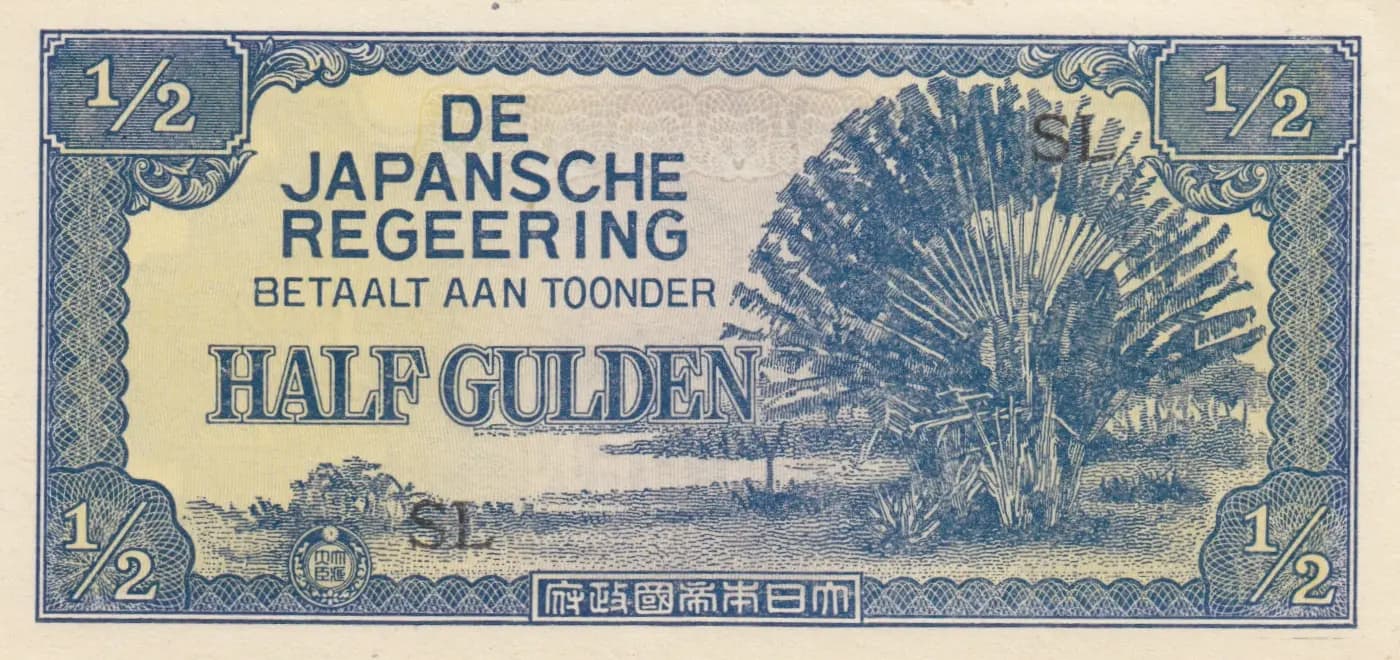
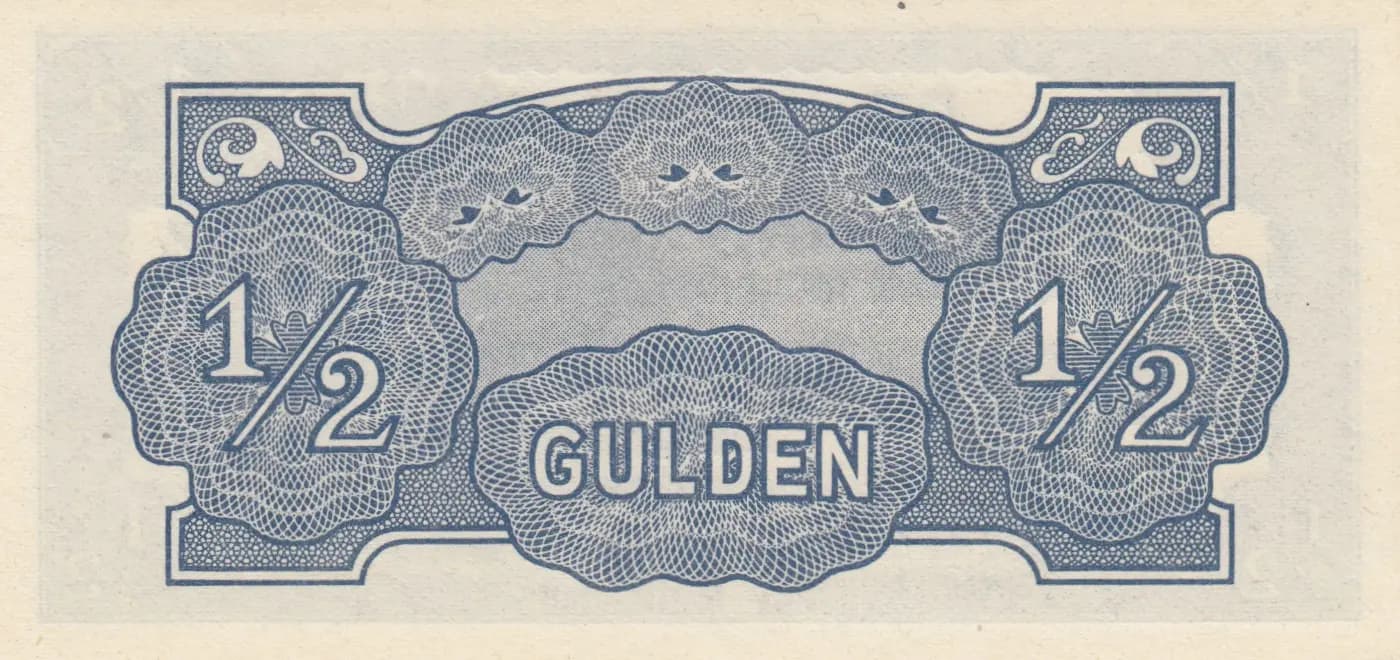
This is an exceptional example of a Japanese occupation currency note from the Netherlands Indies, a 1/2 gulden issued in 1942 by De Japansche Regeering (The Japanese Government). The note is presented in uncirculated condition with sharp, crisp printing throughout, featuring an appealing tropical landscape design on the obverse with palm trees and water scenery rendered in blue and cream tones, while the reverse displays an elegant symmetrical ornamental design with cloud and floral motifs. The bilingual Dutch-Japanese inscriptions and intricate engraved border work make this a significant historical artifact from the three-year Japanese occupation period.
Common. This is a standard denominational issue from a large occupation currency series that circulated throughout the Netherlands Indies during the three-year Japanese occupation (1942-1945). The 1/2 gulden was a frequently-used fractional denomination, resulting in substantial print runs. Pick P-122b notes in uncirculated condition regularly appear on the market at modest valuations, typically in the $15-40 range depending on exact condition and collector demand. No evidence of limited print runs, recall, or scarcity characteristics exists for this particular Pick number.
This note represents the emergency currency issued during Japan's occupation of the Dutch East Indies (1942-1945), replacing the pre-war Dutch colonial gulden. The tropical landscape imagery on the obverse reflects the regional geography and natural resources of the occupied territory, while the prominent 'De Japansche Regeering' inscription and Japanese characters on the reverse serve as visible reminders of the occupation authority. The use of Dutch language alongside Japanese demonstrates the transitional nature of the occupation administration and the maintenance of certain administrative continuity during wartime conditions.
The obverse features a picturesque tropical landscape scene representative of the Netherlands Indies geography, with a prominent palm tree positioned on the right side, a central body of water suggesting either a river or coastal vista, and lush vegetation in the foreground. This natural imagery was characteristic of Dutch colonial currency design and its retention under Japanese occupation provided continuity and familiarity to the local population. The reverse employs a more formal, symmetrical design centered on an ornamental cartouche containing the denomination, surrounded by decorative cloud and floral motifs in the Asian artistic tradition. All four corners of both sides feature elaborate ornamental designs with geometric patterns and flourishes. A circular seal or emblem appears in the lower left of the obverse, likely representing official authorization. The color scheme of predominant blue with cream and white backgrounds creates visual distinction while maintaining the refined aesthetic typical of high-value fractional currency.
Front side: '1/2' (one half), 'DE JAPANSCHE REGEERING' (The Japanese Government), 'BETAALT AAN TOONDER' (Pays to Bearer), 'HALF GULDEN' (Half Gulden), and Japanese characters. Back side: '1/2' (one half), 'GULDEN' (Gulden). The front combines Dutch administrative and legal language typical of colonial currency with Japanese governmental authority, emphasizing the occupation's legal claim to issue currency in the occupied territory.
The note exhibits characteristics of intaglio (engraved) printing, evidenced by the fine line work, intricate border patterns, detailed ornamental flourishes, and sharp definition throughout the design. The complex decorative patterns and security-oriented engraved details throughout both sides are consistent with Bureau of Engraving and Printing standards. This occupation currency was produced under Japanese military administration, likely utilizing existing or newly-established printing facilities in Java, with engraving quality maintained to prevent counterfeiting.
Pick catalog designates this as P-122b, indicating a specific variety within the 1/2 gulden 1942 series. Varieties within occupation currency issues typically relate to printer marks, serial number ranges, or subtle design variations. The 'b' designation suggests this represents a secondary variety, possibly differentiated by printer characteristics, serial number series, or minor design elements. Without access to detailed serial number or printer information visible in the images, the specific distinguishing features of the P-122b variety cannot be definitively identified, but collectors should verify serial number prefixes and printer marks against Pick catalog specifications for variety confirmation.