25 gulden 1940
Market Prices
16 salesAbout This Note
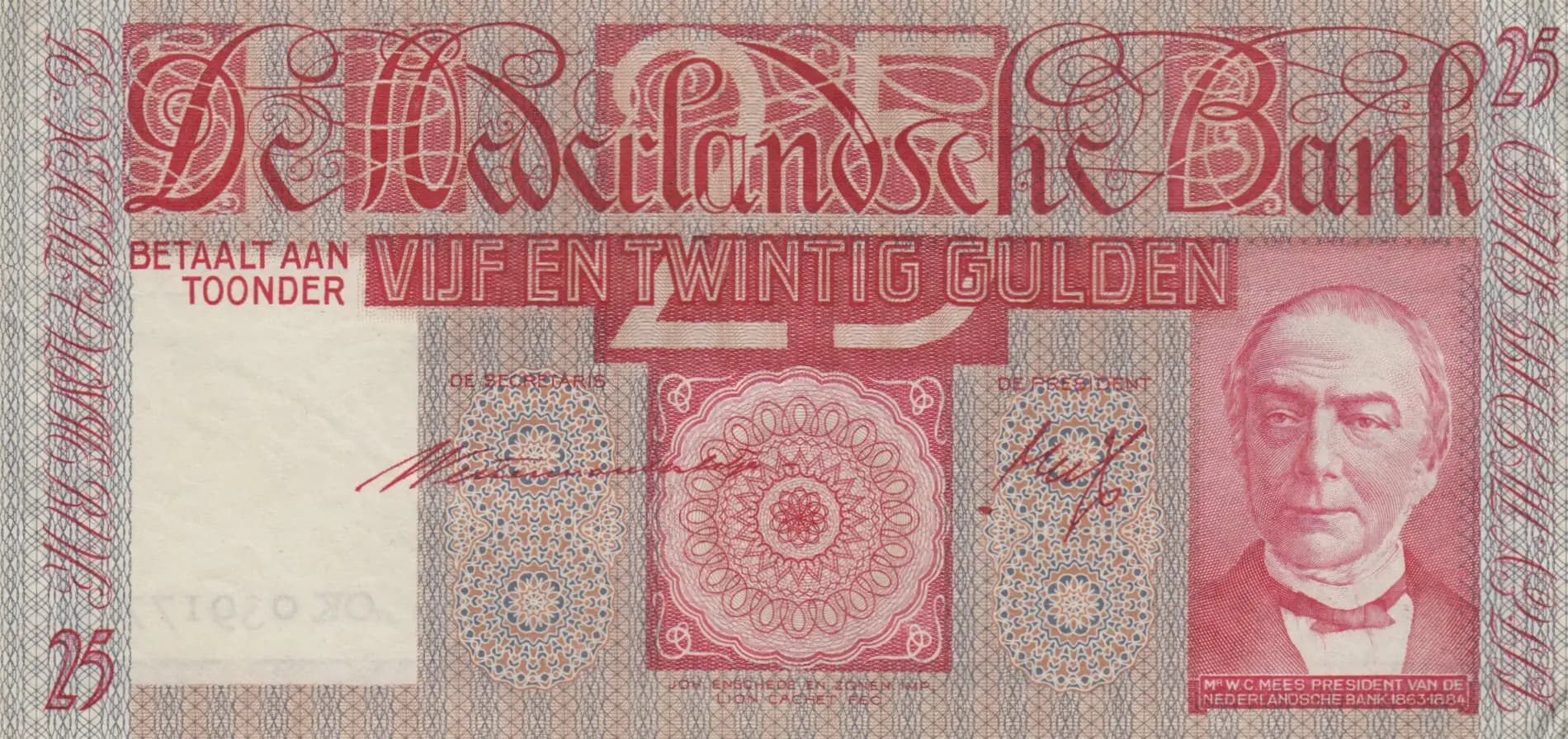
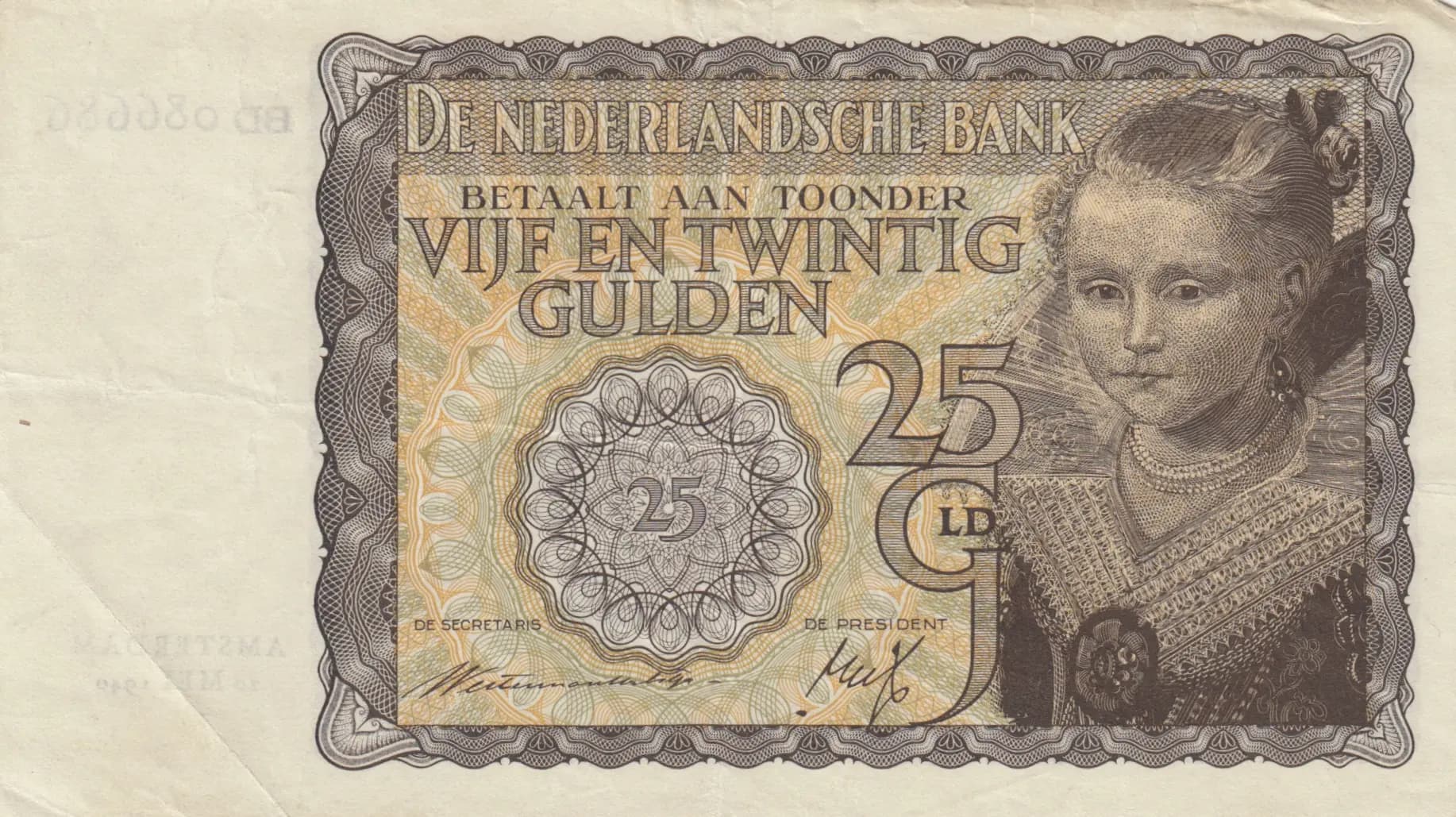
This Netherlands 25 gulden note from 1940 presents an exceptional example of early 20th-century Dutch banknote design, featuring a beautifully rendered portrait of a young woman in Renaissance-era dress on the obverse, framed by intricate ornamental rosette patterns and fine line engraving. The note is in VF condition with light aging and foxing consistent with its 80+ year age, showing no major tears or significant creasing. The combination of artistic portraiture, geometric security patterns, and sophisticated printing technique makes this a notable example from the final year of pre-occupation currency design.
Common. While this is a specific year and denomination, the 25 gulden denomination was produced in substantial quantities during the 1940 series. eBay market data shows consistent supply with VF-graded examples selling for $30-72 in recent decades, and current catalog values place VF examples at approximately $30-50 range. The abundance of sales records spanning from 2009 to 2026, including multiple examples in PMG grades, confirms this is a frequently encountered note in the collector market. No evidence of limited print runs, recall status, or rarity exists for Pick P-57.
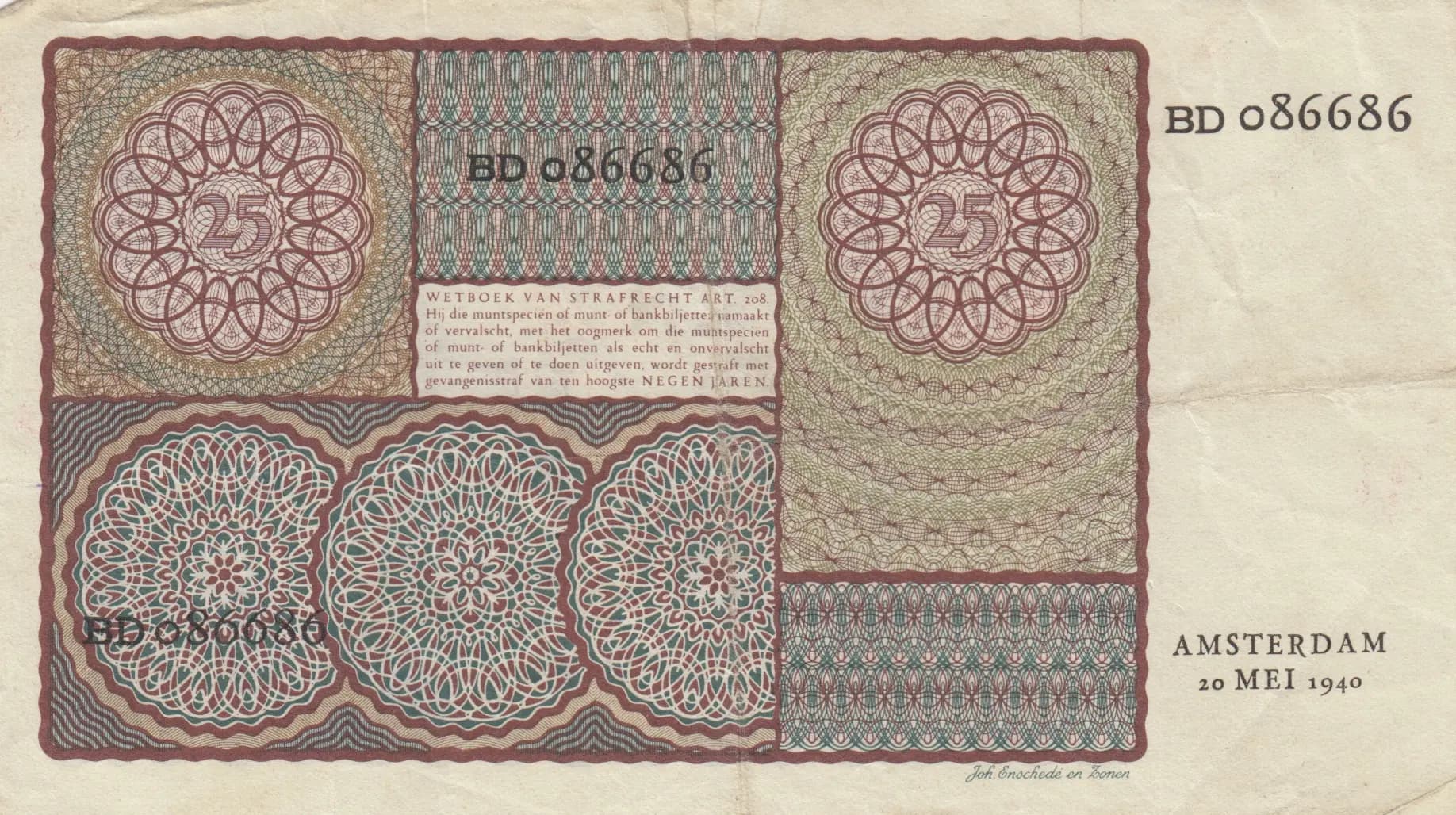
Issued on May 20, 1940—just days before Nazi Germany's invasion of the Netherlands on May 10, 1940—this banknote represents the last regular series printed by Nederlandsche Bank before the occupation. The Renaissance-era portrait and classical artistic motifs reflect the cultural identity that Dutch currency sought to project during the pre-war period. The Penal Code warning printed on the reverse underscores the serious nature of counterfeiting in the interwar period, a time when currency security was paramount.
The obverse features a classically rendered portrait of a young woman in profile facing right, depicted in the style of Paulus Moreelse's 'Young Woman' or 'The Little Princess,' wearing Renaissance or Tudor-era clothing with an elaborate jeweled necklace and embroidered bodice. A prominent circular rosette with concentric geometric patterns is centered on the note, serving both aesthetic and security purposes. The note is bordered by ornate repeating wavy patterns and ornamental flourishes rendered in fine line engraving. The reverse presents an elaborate arrangement of five large circular rosettes with intricate geometric designs positioned in a balanced composition, interspersed with fine mesh patterns and wavy line borders. The dominant colors of olive-brown on the obverse and maroon/burgundy and green teal on the reverse create a sophisticated, security-conscious design typical of the era.
Front: 'DE NEDERLANDSCHE BANK' (The Netherlands Bank); 'BETAALT AAN TOONDER' (Pays to bearer); 'VIJF EN TWINTIG GULDEN' (Twenty-five gulden); '25' (denomination); 'G' (currency designation); 'DE SECRETARIS' (The Secretary); 'DE PRESIDENT' (The President). Back: 'BD 086686' (Serial number, repeated); '25' (denomination); 'AMSTERDAM' (place of issue); '20 MEI 1940' (May 20, 1940 - issue date); 'WETBOEK VAN STRAFRECHT ART. 208' (Penal Code Article 208); 'Hij die muntspecien of munt- of bankbiljetten namaaakt of vervalschet, met het oogmerk om de muntspecien of munt- of bankbiljetten als echt en onvervalschet uit te geven of te doen uitgeven, wordt gestraft met gevangenisstraf van ten hoogste NEGEN JAREN' (He who counterfeits or falsifies coin or bank notes, with the intention to issue or cause to be issued the coin or bank notes as genuine and unaltered, is punished with imprisonment of at most NINE YEARS).
This banknote was produced using intaglio (copperplate engraving) printing by Joh. Enschede, the renowned Dutch security printer. The fine line work, intricate geometric rosette patterns, and complex mesh patterns visible throughout both sides are characteristic of intaglio printing, which was the standard security printing method for high-value currency in 1940. The precision of the decorative elements and the consistency of the fine engraving across the entire note demonstrate the sophisticated technical capabilities of Joh. Enschede.
The observed serial number 'BD 086686' represents the standard serial numbering system used for this issue. No significant varieties are known for this Pick number. The note was issued on a single date (May 20, 1940) and represents the final regular issue before the occupation. Variations in signature combinations and minor printing differences may exist among notes from this brief issuing period, but none are cataloged as significant varieties by major reference works.