1 gulden 1920
Market Prices
5 salesAbout This Note
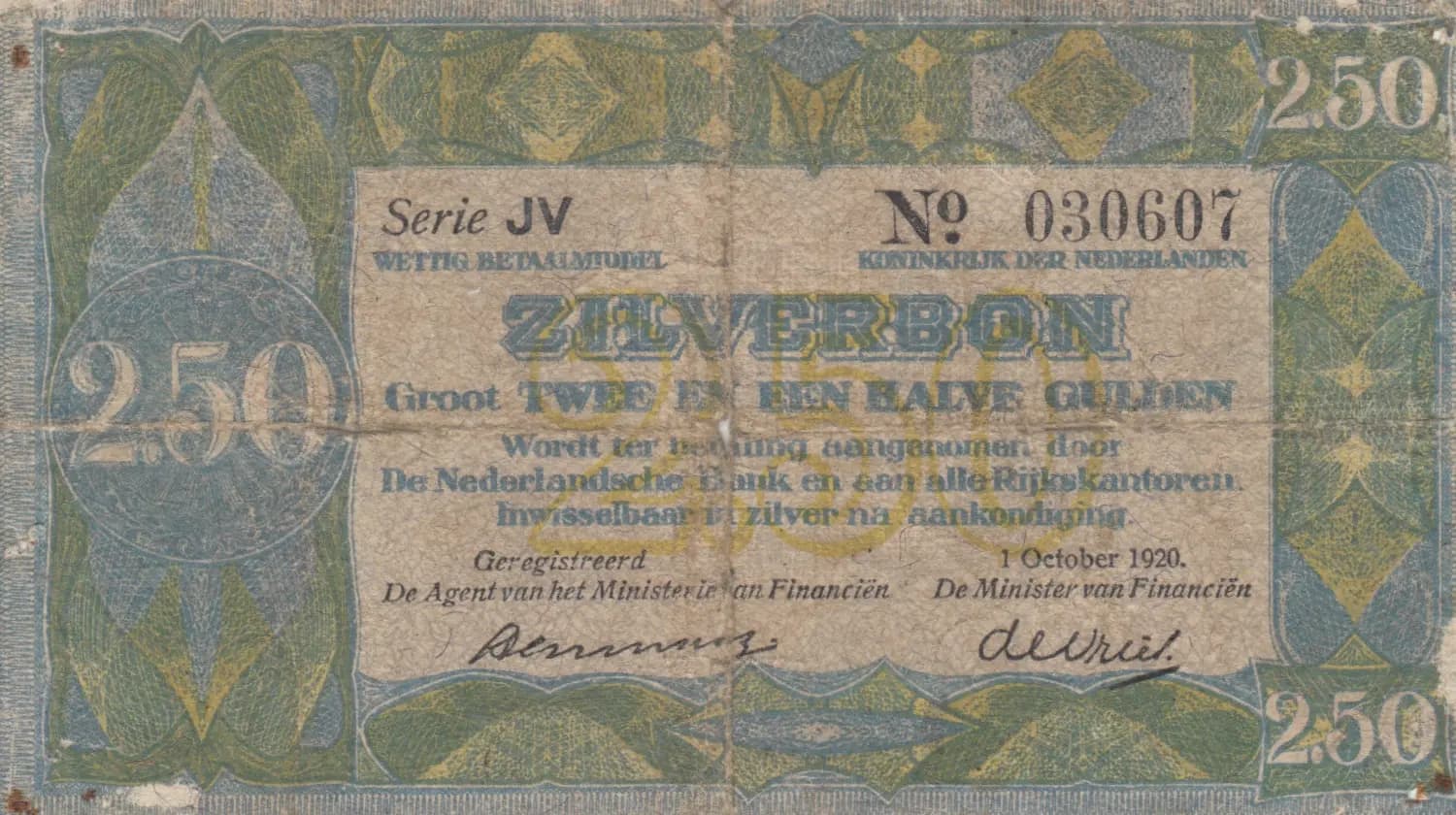
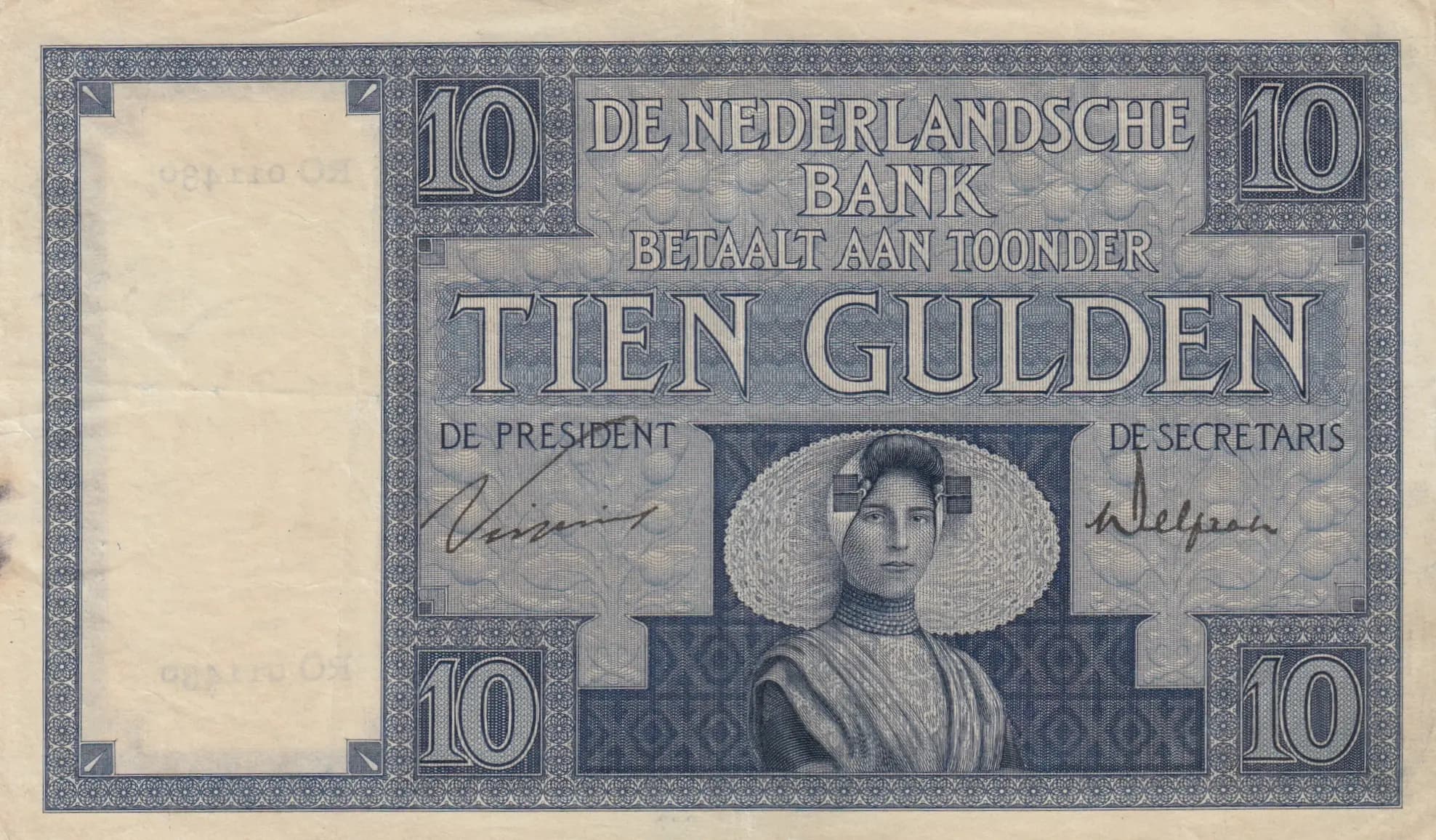
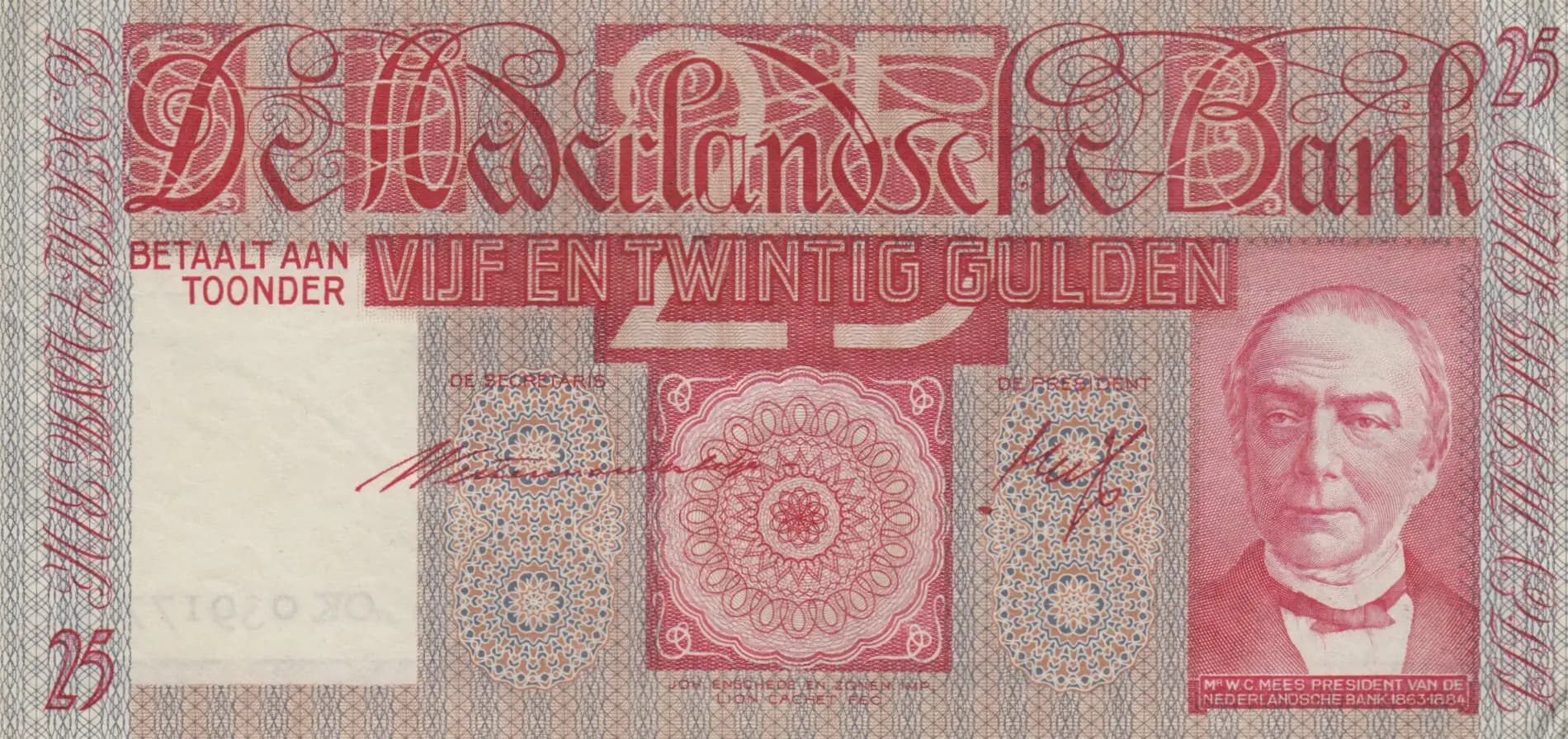
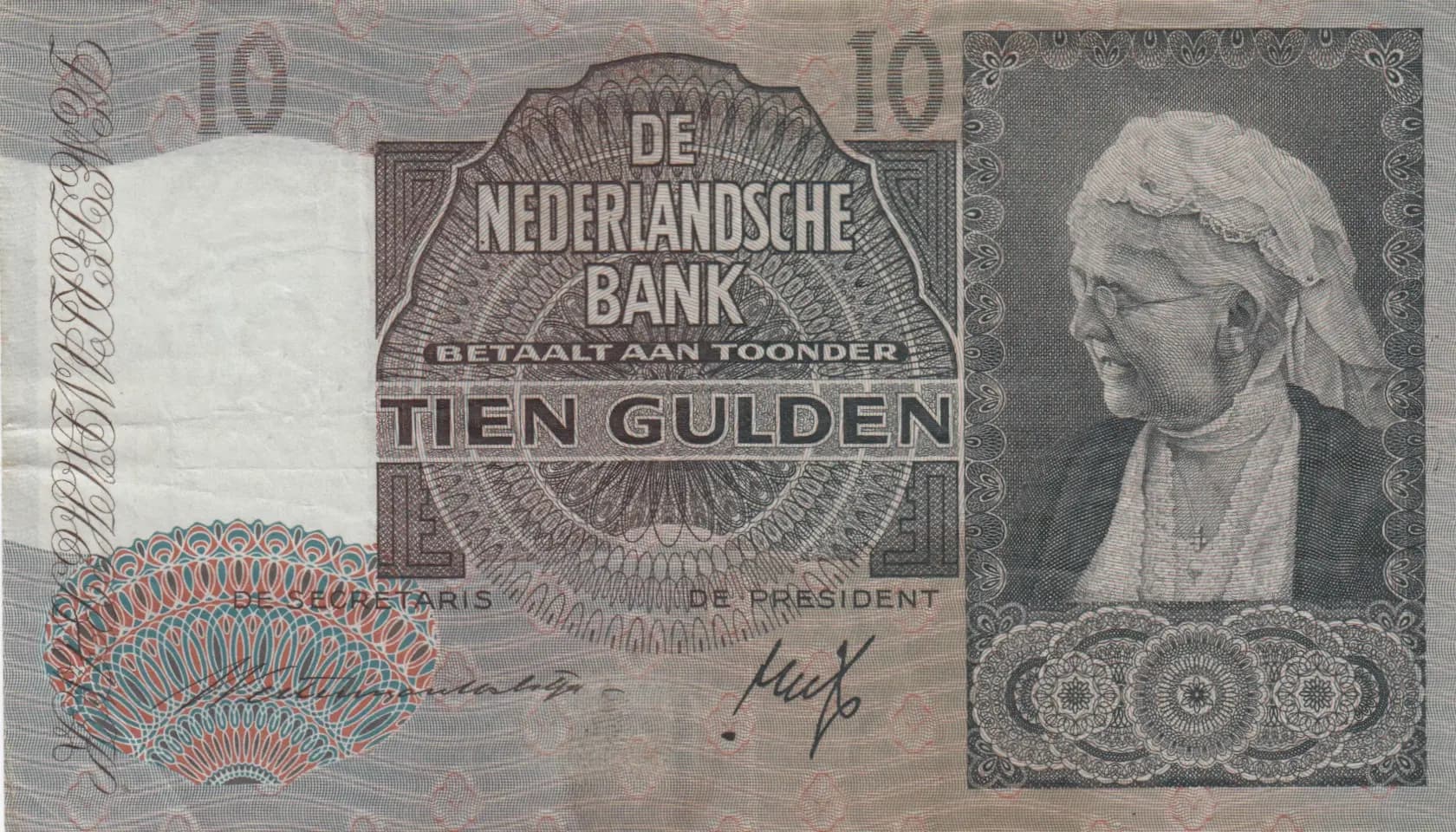
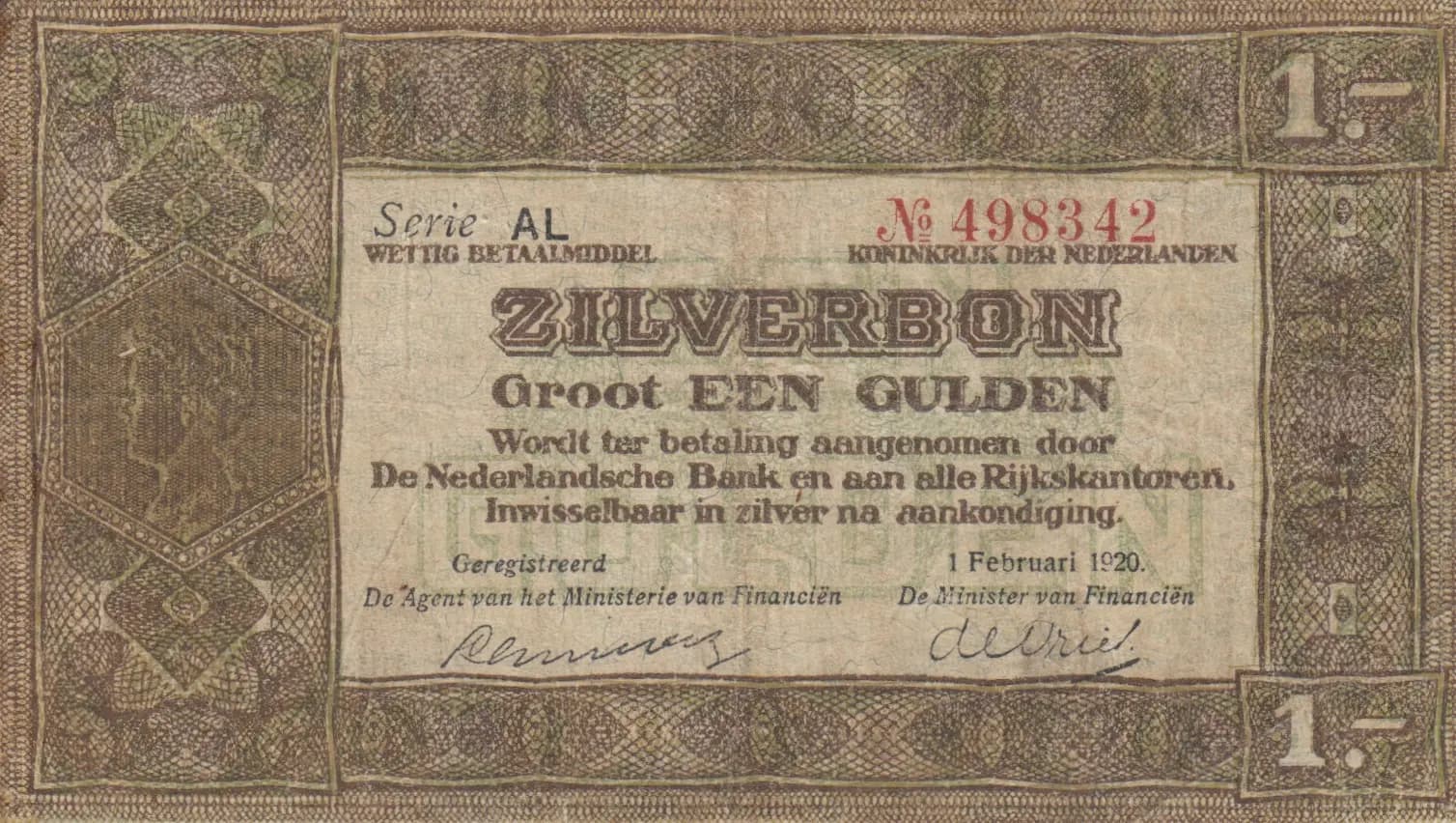
This is a Netherlands 1 Gulden silver certificate from 1920, issued by the Ministry of Finance as a legal tender note exchangeable for silver. The note displays the characteristic beige and brown color scheme with intricate geometric and floral border patterns typical of early 20th-century Dutch currency design. In VF condition, this note shows expected age-related wear including foxing and creasing, with all text and design elements remaining clearly legible after over 100 years.
Common. This is a regular issue of the 1920 Dutch 1 Gulden with a substantial print run typical of circulating currency from this period. The eBay price tracking data provided shows consistent sales in the $6–$25 range across multiple condition grades from 2012–2020, with VF examples selling for $6–$15, clearly establishing this as common circulating currency rather than a scarce issue. The standard series designation (AL) and lack of any noted print run restrictions further support common classification.
Issued on 1 February 1920, this 'ZILVERBÖN' (silver bond) represents the post-World War I stabilization period of the Dutch economy under Queen Wilhelmina's reign. The note explicitly states it was exchangeable for silver upon notice and accepted by De Nederlandsche Bank and all state offices, reflecting the gold and silver standards still in use during the early interwar period. The prominent heraldic emblem and royal coat of arms underscore the Kingdom's authority and the formal nature of this monetary instrument during a period of economic recovery.
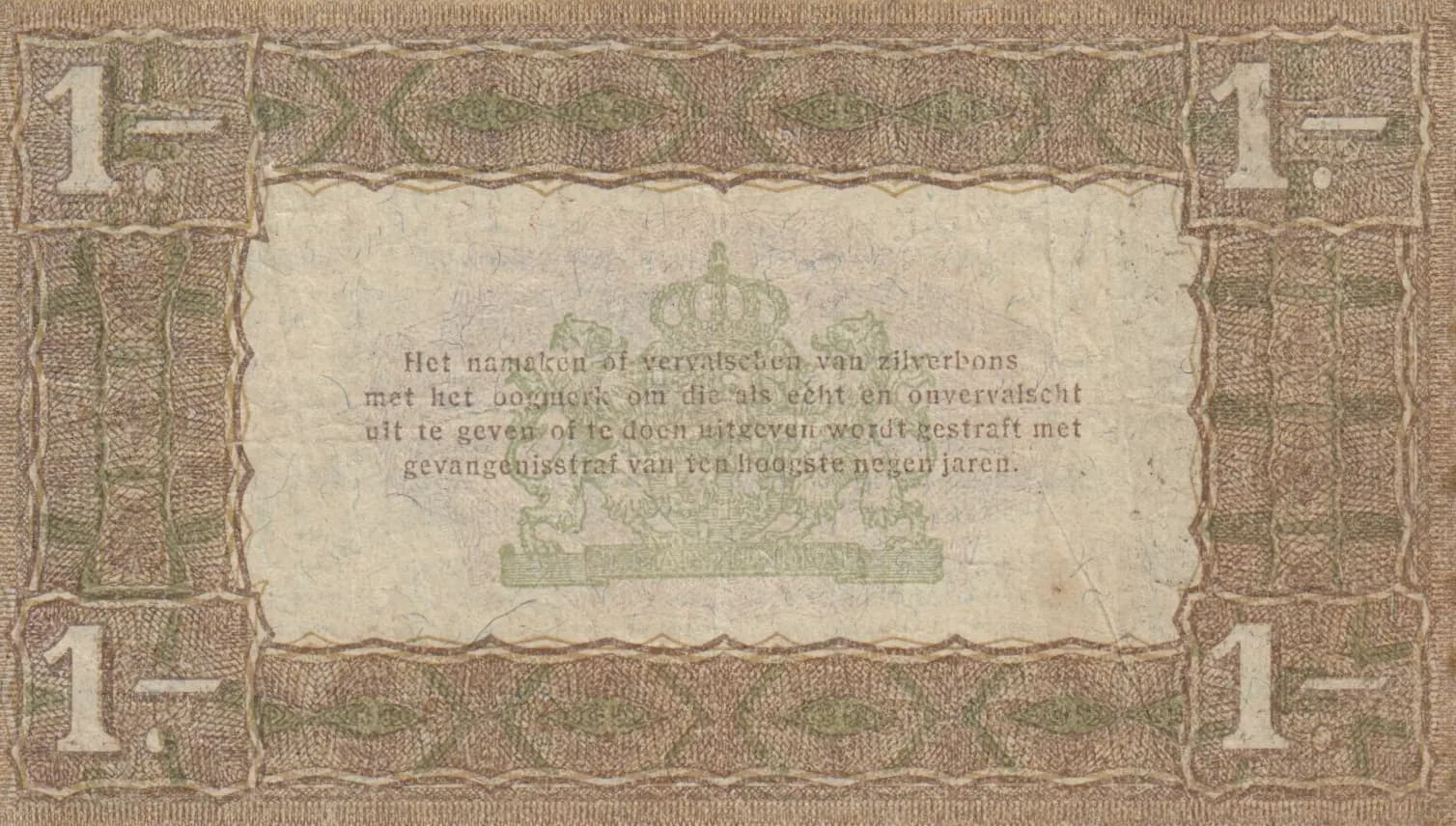
This is a classical Dutch banknote design featuring the Royal Dutch coat of arms with crown prominently displayed on both the obverse and reverse sides. The front bears the formal institutional text identifying it as a silver bond issued by the Kingdom of the Netherlands Ministry of Finance, while the reverse displays an enhanced coat of arms with extensive heraldic detail. The design employs no prominent portrait (contrary to the external catalog reference citing Queen Wilhelmina), but instead emphasizes the royal heraldic emblem as the central security and authority element. The borders on both sides feature an elaborate geometric lattice pattern interspersed with floral motifs, creating a dense anti-counterfeiting design that was typical of security printing of the era. Denomination numerals '1.-' appear in the corners. The color scheme of beige, tan, and brown inks on a light greenish underprint creates a distinctive appearance characteristic of 1920s Dutch currency.
FRONT SIDE: 'Serie AL' (Series AL); 'WETTIG BETAALMIDDEL' (Legal tender); 'No 498342' (Serial number 498342); 'KONINKRIJK DER NEDERLANDEN' (Kingdom of the Netherlands); 'ZILVERBÖN' (Silver bond/certificate); 'Groot EEN GULDEN' (Great one gulden); 'Wordt ter betaling aangenomen door De Nederlandsche Bank en aan alle Rijkskantoren. Inwisselbaar in zilver na aankondiging.' (Accepted as payment by The Dutch Bank and at all State offices. Exchangeable for silver upon notice.); 'Geregistreerd' (Registered); '1 Februari 1920' (1 February 1920); 'De Agent van het Ministerie van Financiën' (The Agent of the Ministry of Finance); 'De Minister van Financiën' (The Minister of Finance); '1.-' (1 gulden). BACK SIDE: 'Het namaken of vervalschen van zilverbons met het oogmerk, om die als echt en onvervaalscht uit te geven of te doch uitgeven wordt gestraft met gevangenisstraf van te hoogste negen jaren.' (The counterfeiting or falsification of silver bonds with the intent to issue or distribute them as genuine and unaltered is punishable by imprisonment of up to nine years.); '1.-' (1 gulden).
This note was produced using traditional intaglio (engraved) printing techniques, evidenced by the fine line work visible in the coat of arms, the detailed geometric lattice borders, and the crisp rendering of the text. The multi-color printing (brown on light green underprint) suggests offset lithography or combination intaglio-lithography techniques common to Dutch banknote production of this period. The intricate border patterns show the characteristic depth and precision of engraved plates. Dutch banknotes of this era were typically printed by the Joh. Enschedé en Zonen company in Haarlem, though printer attribution is not explicitly marked on this note's face.
This example is from Series AL, serial number 498342, issued on 1 February 1920. No signature varieties or overprints are visible on this note. The series designation and serial number fall within the normal range for regular circulation issues of this date. The Pick P-15 designation covers all regular 1920 1 Gulden issues from this printing; no distinct varieties of major numismatic significance have been documented for this catalog entry.