10 gulden 1940
Market Prices
12 salesAbout This Note
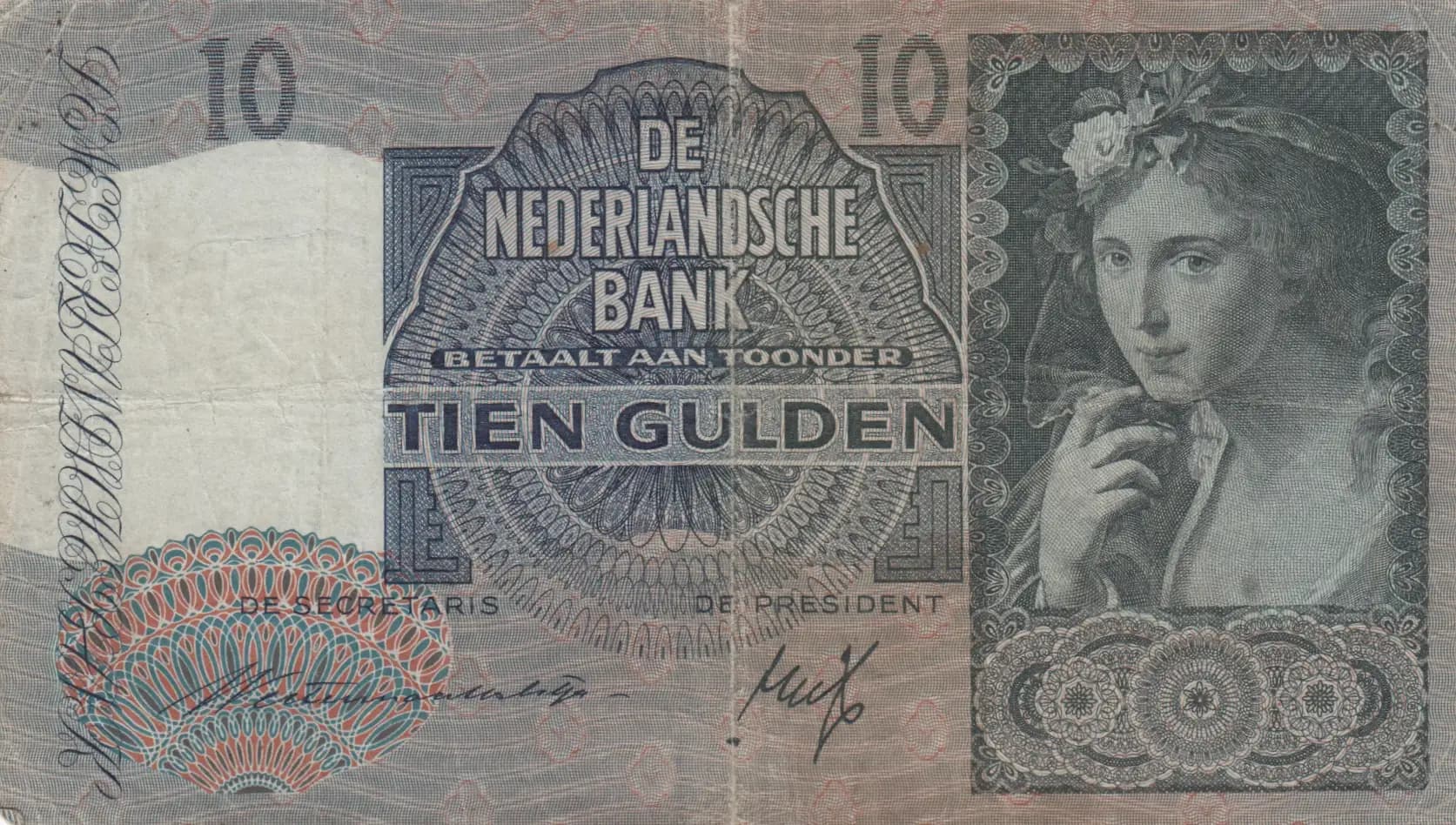
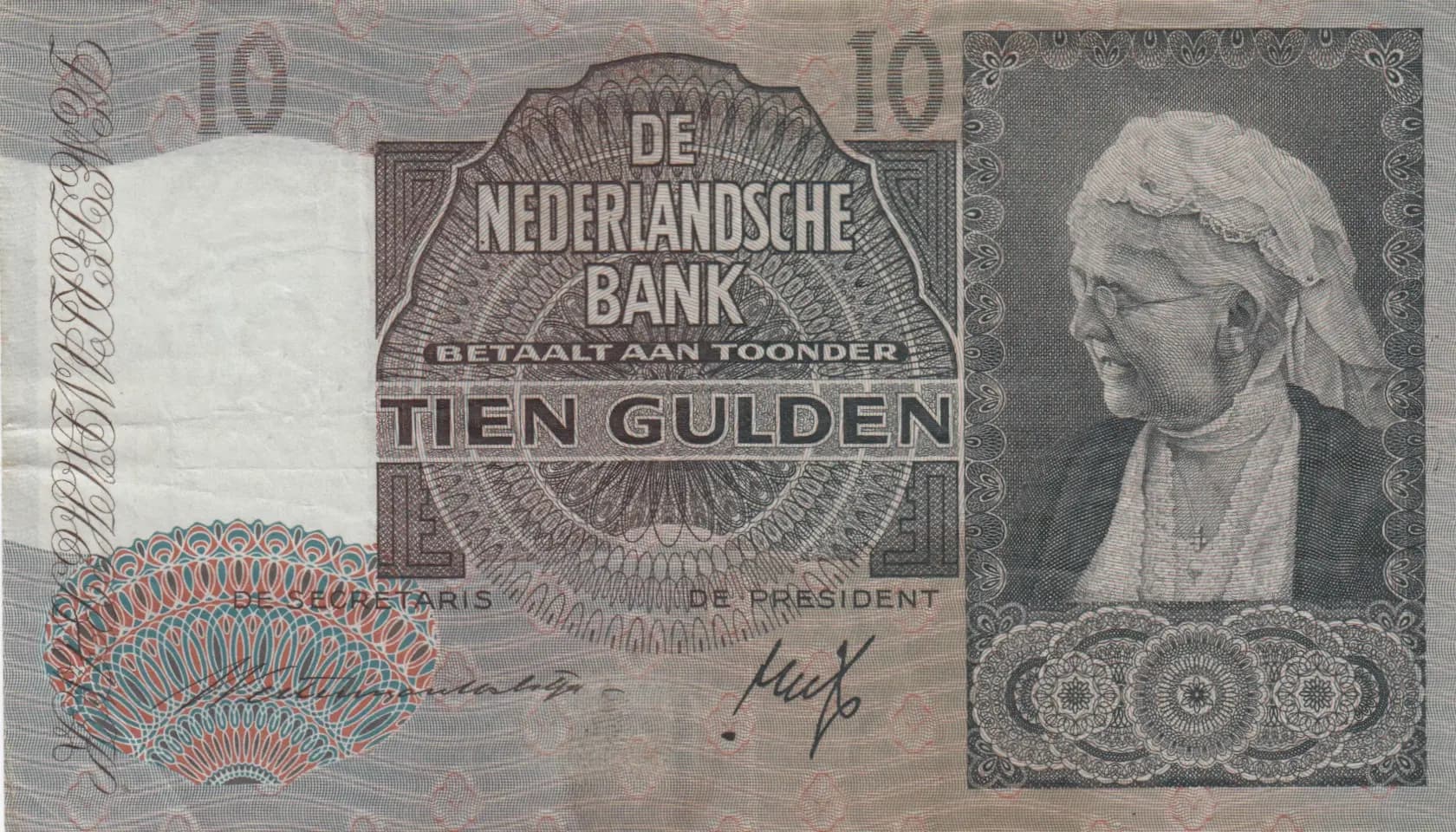
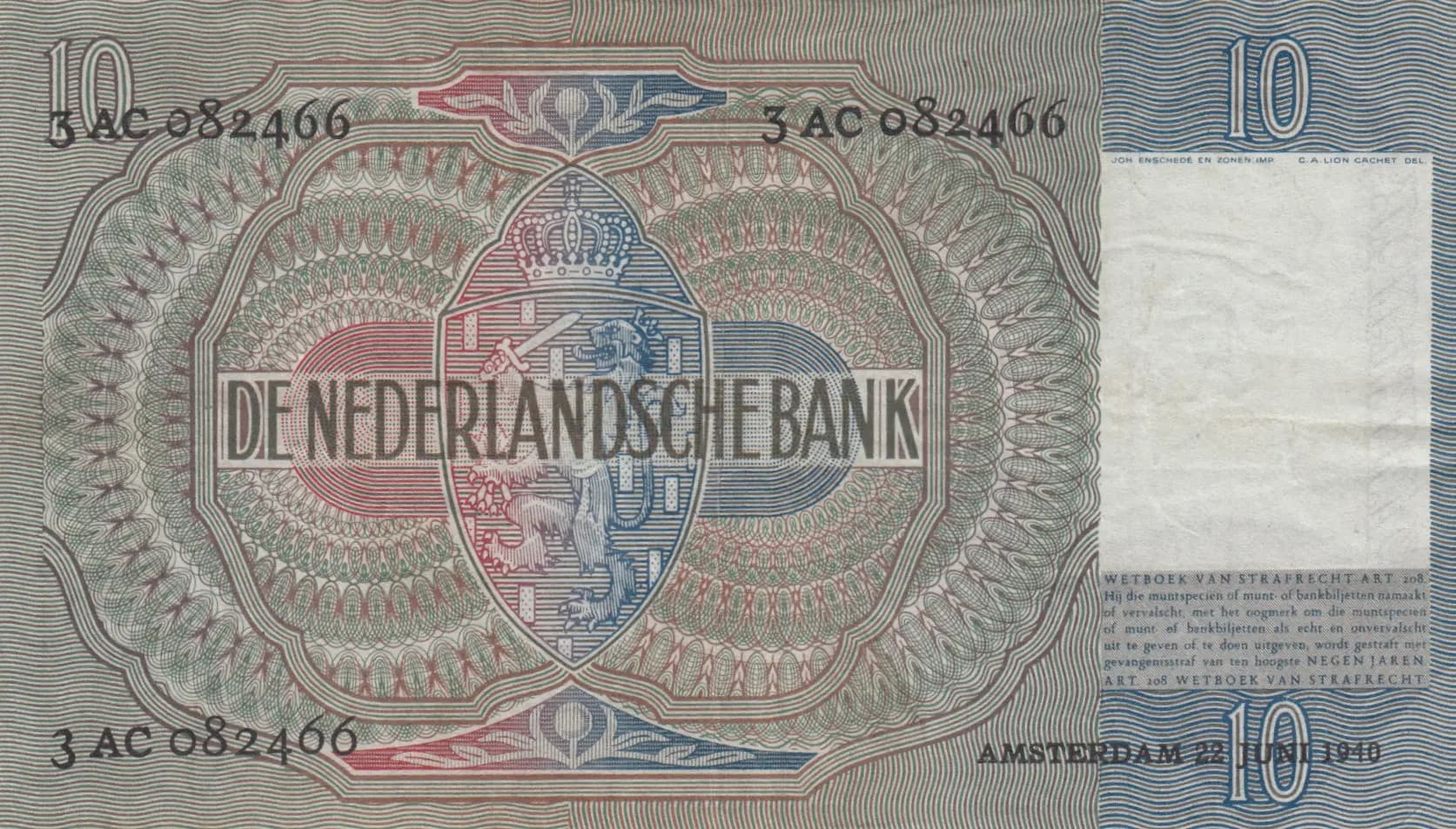
This Netherlands 10 gulden note from 1940 (Pick-53) features a portrait of Queen Emma in profile on the obverse and the Dutch coat of arms on the reverse, printed in brown and green tones with red and blue accents. The note exhibits moderate circulation wear consistent with VF grade, including visible creases and fold marks, with some age-related discoloration typical of notes now over 80 years old. As a regular issue from the critical 1940-1941 emission period during Nazi occupation, this note represents an important segment of Dutch monetary history during World War II.
Common. The eBay sales data provided shows this note in VF condition selling consistently in the $21-$182 range with variable results, suggesting healthy but not exceptional collector demand. The 2016 catalogue value for VF grade of approximately $45 aligns with observed market activity. As a regular issue from a short but identified emission period (June 1940 - January 1941), print runs were substantial. The lack of evidence for recall, rarity designation, or scarcity in specialized catalogs confirms common status despite wartime issuance.
Issued by Nederlandsche Bank between June 1940 and January 1941, this banknote was printed during the German occupation of the Netherlands in World War II, a period marked by economic uncertainty and currency control. The portrait of Queen Emma, who reigned 1890-1948 and served as regent during the German occupation, represents continuity of Dutch sovereignty during wartime. The heraldic coat of arms on the reverse symbolizes Dutch national identity during one of the most turbulent periods in modern Dutch history.
The obverse features a right-facing profile portrait of Queen Emma, the Dutch regent and reigning queen, rendered in fine engraved detail. The left side displays an ornamental fan-shaped pattern in red and blue, while a central cartouche contains the bank's emblem. The reverse presents an elaborate heraldic coat of arms with crown at its apex, surrounded by symmetrical ornamental borders and decorative flourishes in red, blue, and green. The entire design employs sophisticated line work and parallel line patterns to create visual depth and texture, with fine engraving throughout characteristic of high-security banknote production of the period.
FRONT SIDE: 'DE NEDERLANDSCHE BANK' (The Dutch Bank) - issuing authority; 'BETAALT AAN TOONDER' (Payable to Bearer) - legal promise; 'TIEN GULDEN' (Ten Guilders) - denomination; 'DE PRESIDENT' (The President) - official signature line. BACK SIDE: 'DE NEDERLANDSCHE BANK' (The Dutch Bank) - repeated issuer identification; Denomination marking '10'; Serial number format '3AC 082400' (observed example); 'WETBOEK VAN STRAFRECHT ART. 208' (Penal Code Article 208) - anti-counterfeiting legal warning; Full legal text warning: 'Bij die muntspecien of munt- of bankbiljetten namaaakt of deszelfs munt- en muntspecien of munt- of bankbiljetten als echt en onvervalsch uit te geven of te doen uitgeven, wordt gestraft met gevangenisstraf van ten hoogste NEGENJAREN' (Whoever counterfeits coins or banknotes or causes counterfeited coins or banknotes to be issued as genuine and unaltered shall be punished with imprisonment of not more than nine years); 'GOV ENSCHEDE EN ZONEN IMP C.A LION CACHET DEL' (Printer Joh. Enschede and Sons, engraver C.A. Lion).
Intaglio engraving (recess printing) executed by Joh. Enschede en Zonen (Johannes Enschede and Sons), the renowned Dutch security printer. The visual characteristics confirm traditional engraving methodology: fine parallel line patterns throughout creating moiré effects and complex geometric textures, multi-color registration achieved through successive plate impressions, and the intricate ornamental details visible in both portraits and heraldic elements. The security features include extensive fine line work patterns, detailed background texturing, and complex curving ornamental designs typical of premium intaglio banknote production.
The observed serial number prefix '3AC' is consistent with standard numbering for this issue. The note represents the regular production variety of Pick-53, with the standard brown and green color scheme, Queen Emma portrait, and heraldic reverse design. No overprints or special varieties are evident from the visual analysis. The presence of dual signatures (President signature line visible) represents standard practice for this series. Additional variety research would require access to comprehensive prefix catalogues for Dutch occupation-period currency.