10 gulden 1940
Market Prices
22 salesAbout This Note
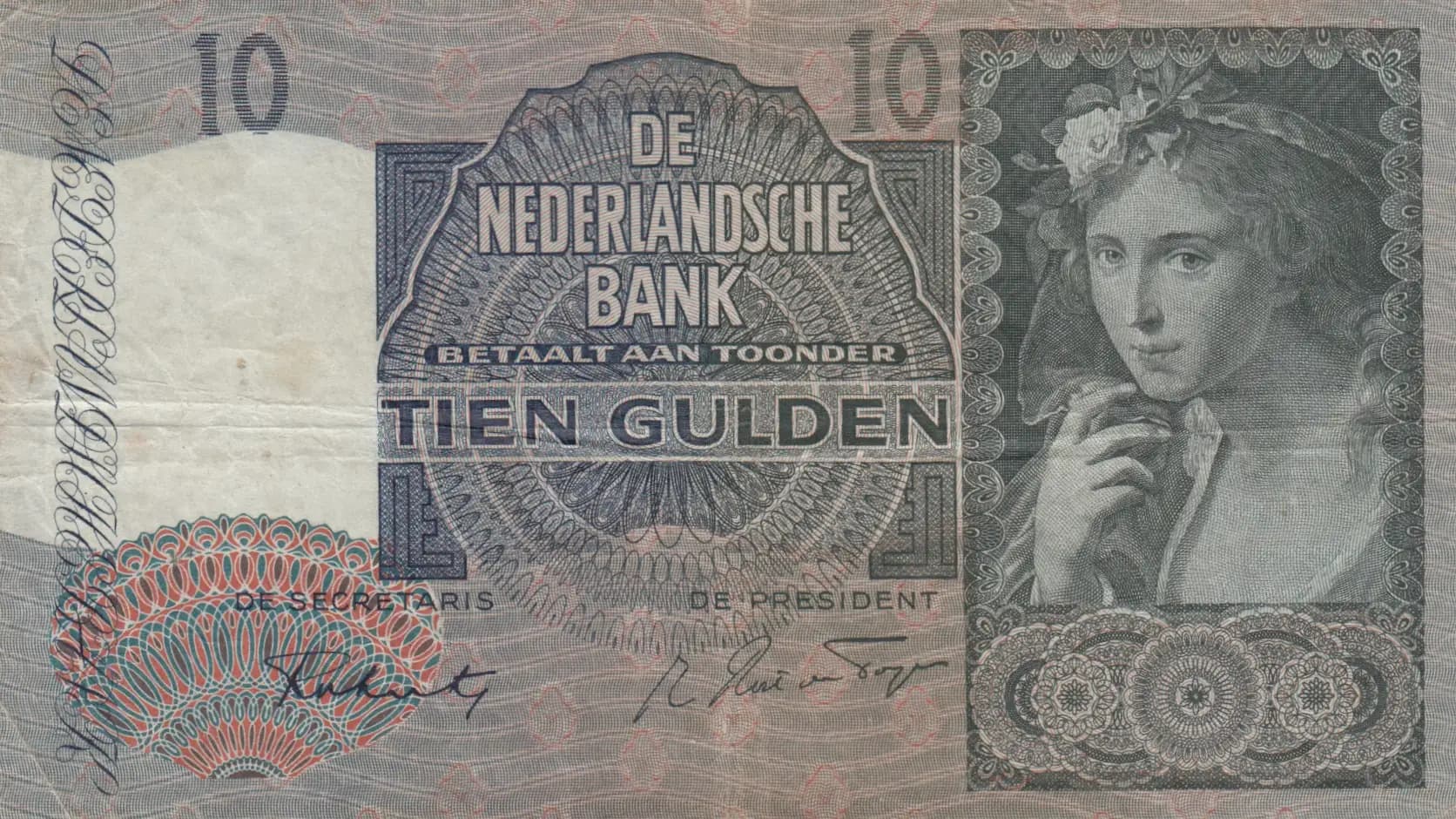
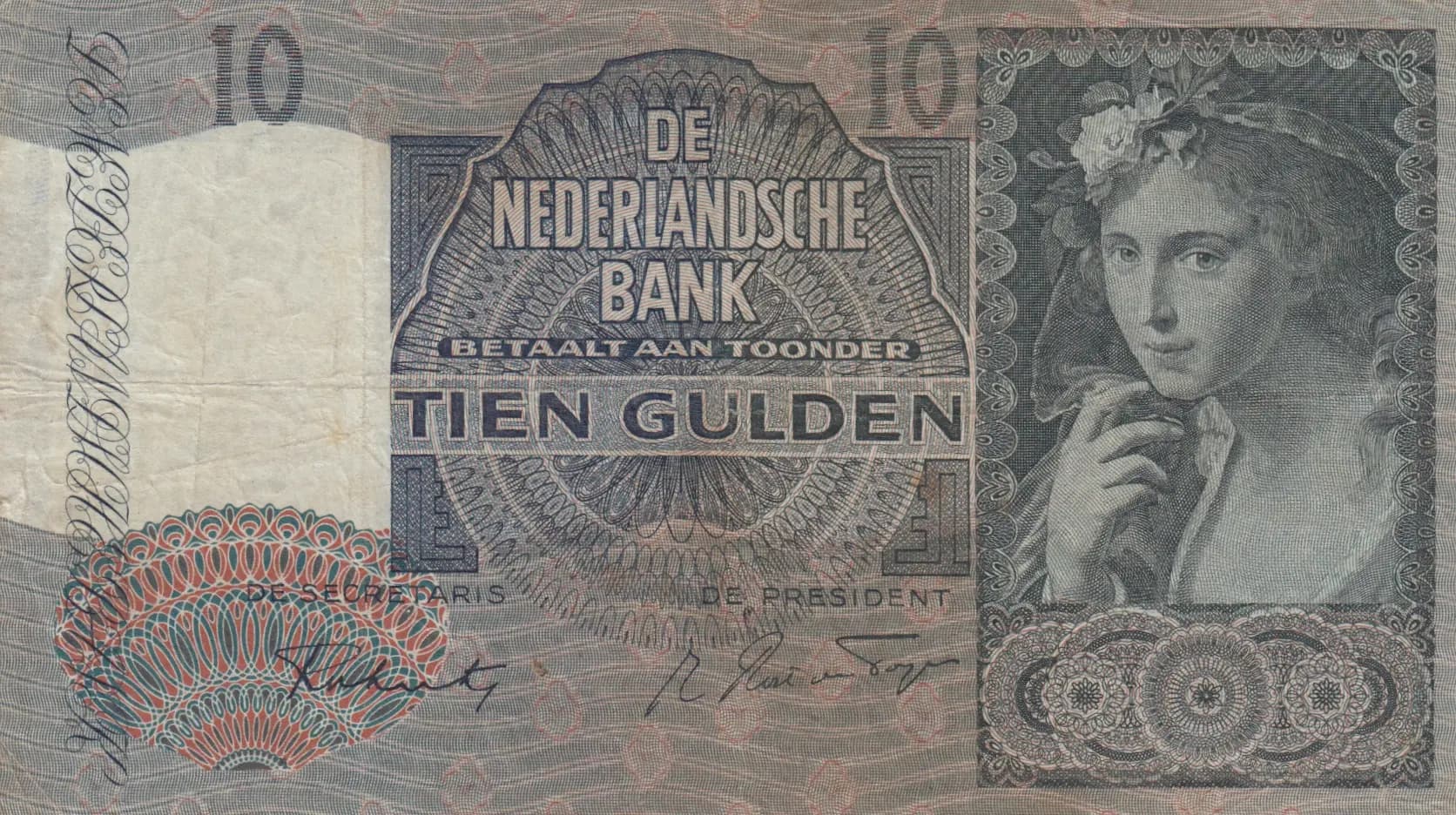
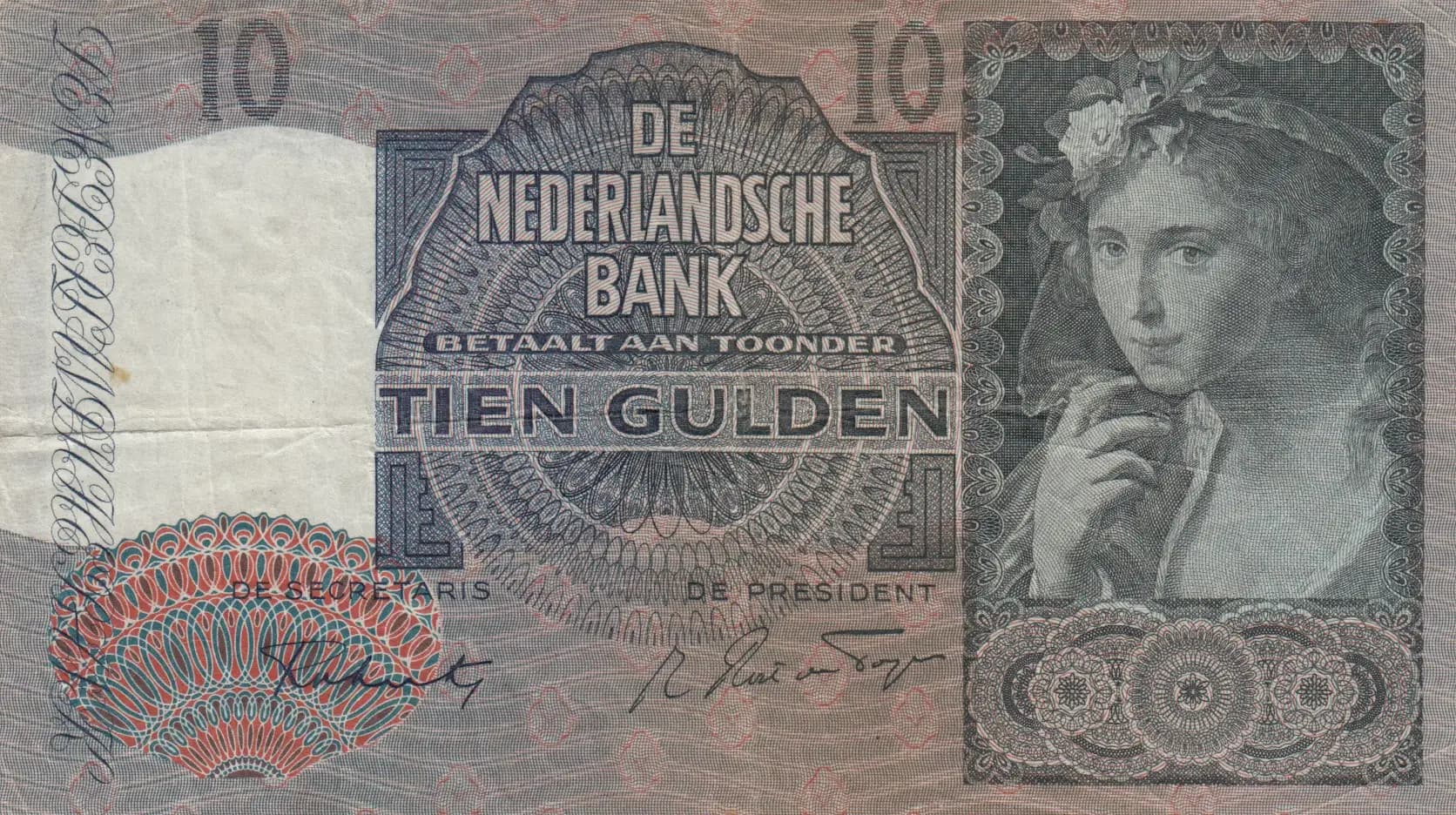
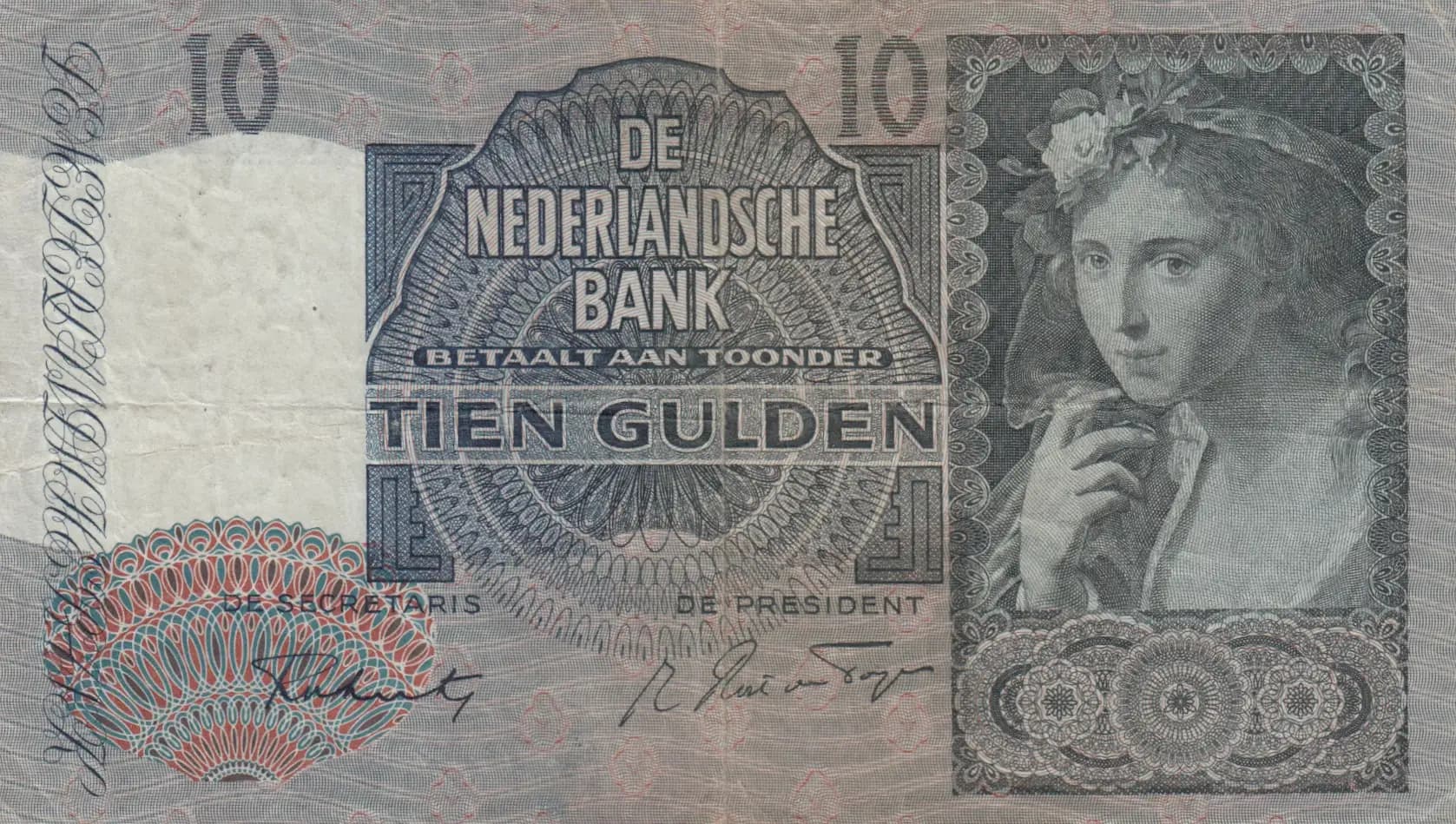
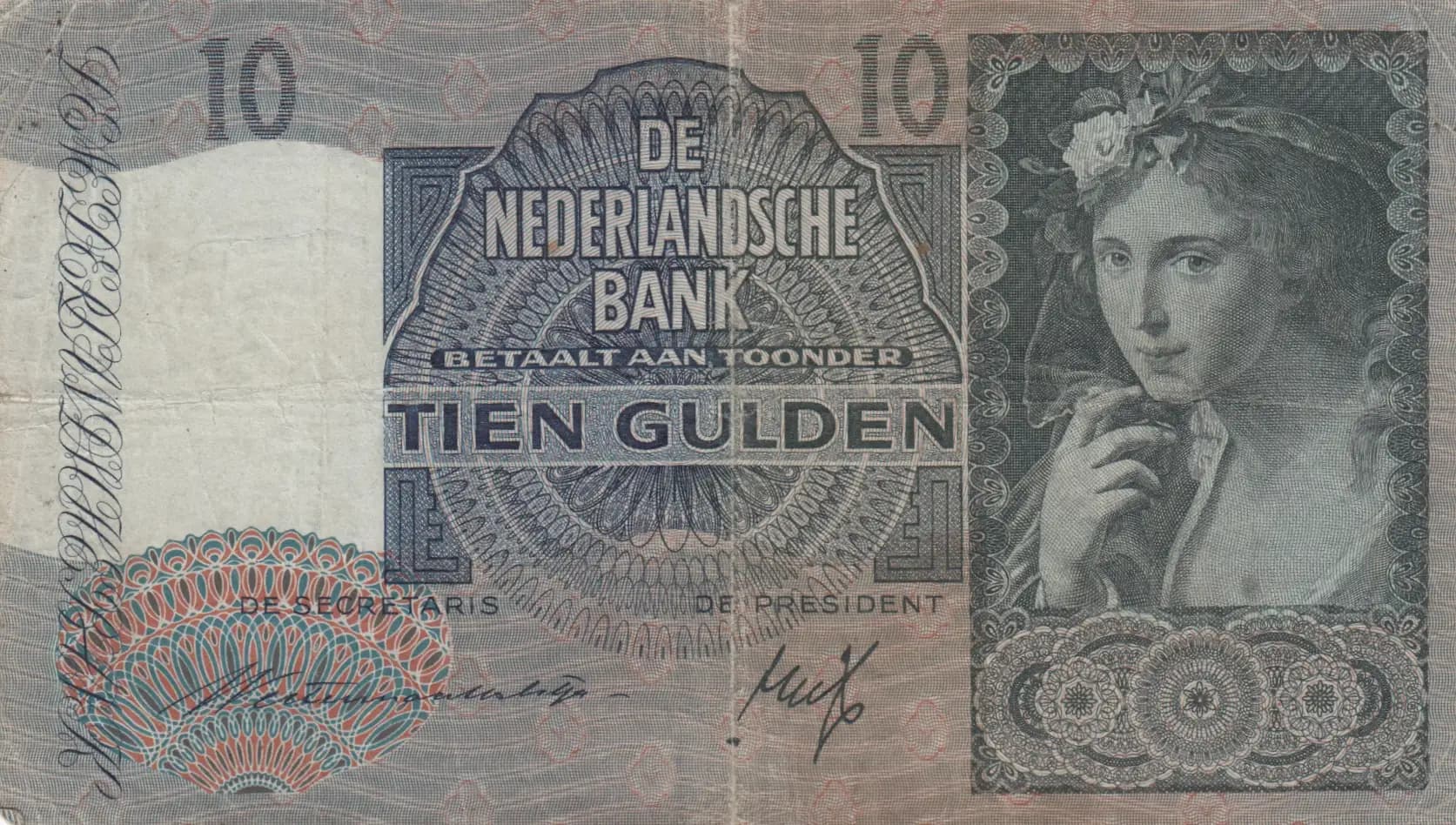
This is a Netherlands 10 Gulden note from 1940, issued by Nederlandsche Bank during the early years of World War II. The note displays the characteristic Art Deco styling of the period with a striking portrait of a young woman in profile on the obverse, ornate geometric patterns in blue, red, and pink, and the Dutch coat of arms on the reverse. In VF condition, the note shows moderate wear including visible creases and age-related discoloration typical of notes from this era that have seen circulation.
Common. The eBay price data clearly indicates this note trades frequently and inexpensively, with VF examples selling in the $6.50-$23.50 range over a seven-year period (2014-2020), and catalogue values listing EF specimens at only $17.50. High-volume circulation sales across multiple years and condition grades demonstrate this is a readily available note in the collector market. Pick-56a was issued during a three-year period (1940-1942) with substantial print runs typical of regular circulating currency.
This banknote was issued during 1940-1942, a pivotal period when the Netherlands was occupied by Nazi Germany following the invasion of May 1940. The continued issuance of notes by Nederlandsche Bank under occupation reflects the complex financial arrangements maintained during wartime. The artistic design, featuring the classical portrait 'The Beautiful Shepherdess' by Dutch Golden Age painter Paulus Moreelse (1571-1638), represents a connection to Dutch cultural heritage and artistic tradition that predates the contemporary political upheaval.
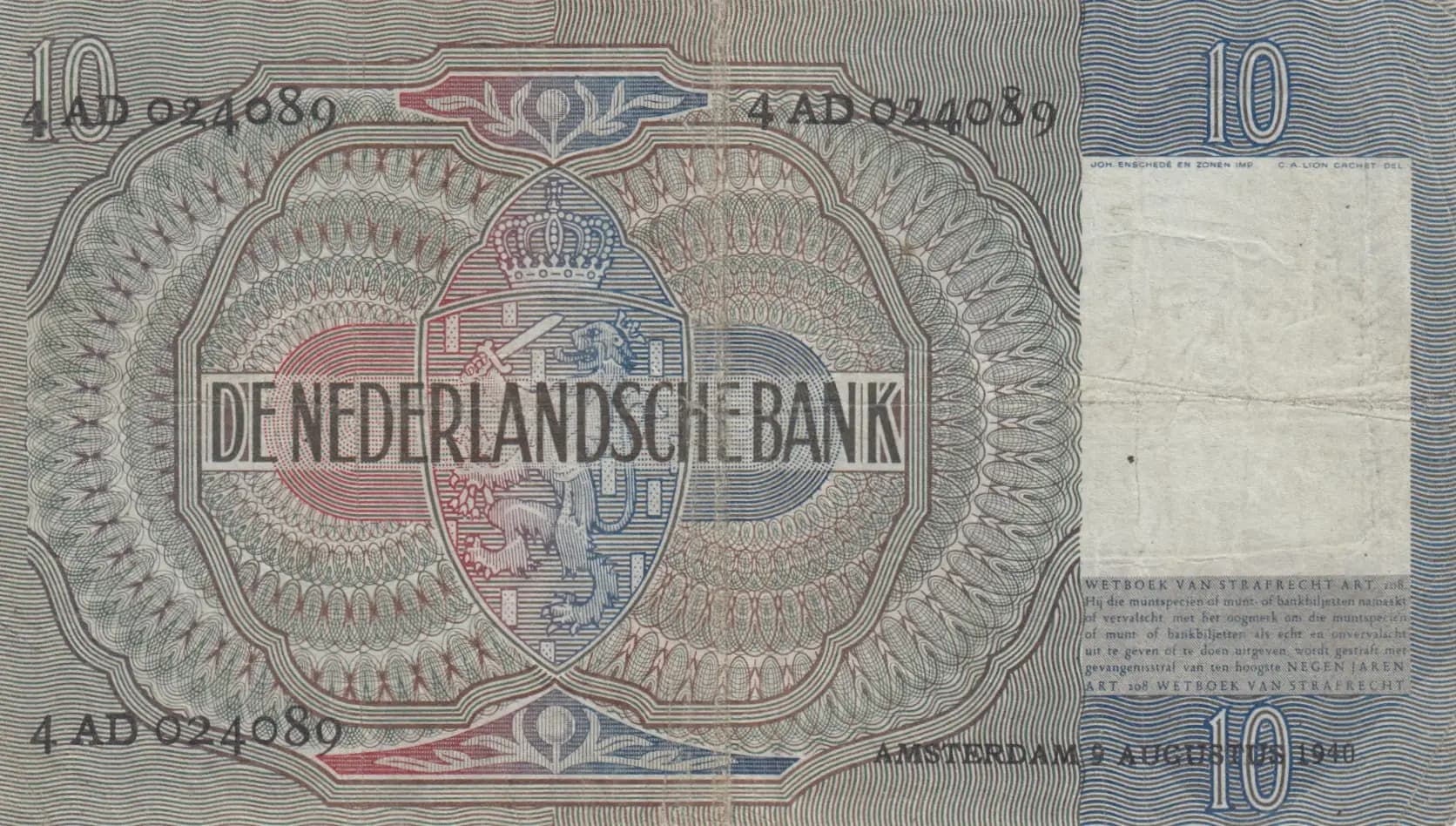
The obverse features a three-quarter profile portrait of a young woman facing right, identified as Paulus Moreelse's 'The Beautiful Shepherdess,' with decorative flowers adorning her hair. The portrait is positioned on the right portion of the note and serves as the primary focal point. Surrounding this central image are elaborate Art Deco ornamental elements including radial sunburst patterns in a central medallion containing bank text, fan-like designs in red and blue on the left side, scrollwork, and geometric borders. The denomination '10' appears prominently in the top corners. The reverse presents the coat of arms of the Netherlands—a crowned shield—within an ornate decorative frame featuring radial patterns and architectural scrollwork. The overall composition demonstrates high-quality intaglio engraving typical of interwar European banknote design.
FRONT SIDE: 'DE NEDERLANDSCHE BANK' (The Netherlands Bank); 'BETAALT AAN TOONDER' (Payable to Bearer); 'TIEN GULDEN' (Ten Guilden); 'DE PRESIDENT' (The President); '10' (denomination numeral). BACK SIDE: 'DE NEDERLANDSCHE BANK' (The Netherlands Bank); '10' (denomination numeral); 'WETBOEK VAN STRAFRECHT' (Penal Code); 'ART 108 WETBOEK VAN STRAFRECHT' (Article 108 Penal Code - anti-counterfeiting legal warning); reference numbers '4AD53.1880' and '14AD53 1880' (plate or production identifiers).
Intaglio engraving (line engraving and recess printing), executed by Joh. Enschede of the Netherlands, a premier security printing facility. The visual evidence of fine crosshatching, stippling, detailed line work, wavy patterns, and complex geometric designs reflects the multi-plate intaglio process characteristic of high-security banknote production. The intricate engraving served both aesthetic and security purposes, making counterfeiting extremely difficult with available 1940s technology.
This note is catalogued as Pick-56a, indicating it represents the first major variety of the 10 Gulden 1940 issue. The visual analysis identifies the note as dating to the 1940-19.3.1941 period based on standard cataloguing. The watermark is identified as a head of an old man. While the visual analysis does not reveal specific signature variations or serial number prefixes clearly enough to distinguish sub-varieties, collectors should note that signature variants and plate number differences may exist within the Pick-56a designation. The reference numbers visible on the back (4AD53.1880 and 14AD53.1880) likely represent plate identifiers rather than distinguishing characteristics between major catalogued varieties.