10 gulden 1941
“30.10.41”
Market Prices
60 salesAbout This Note
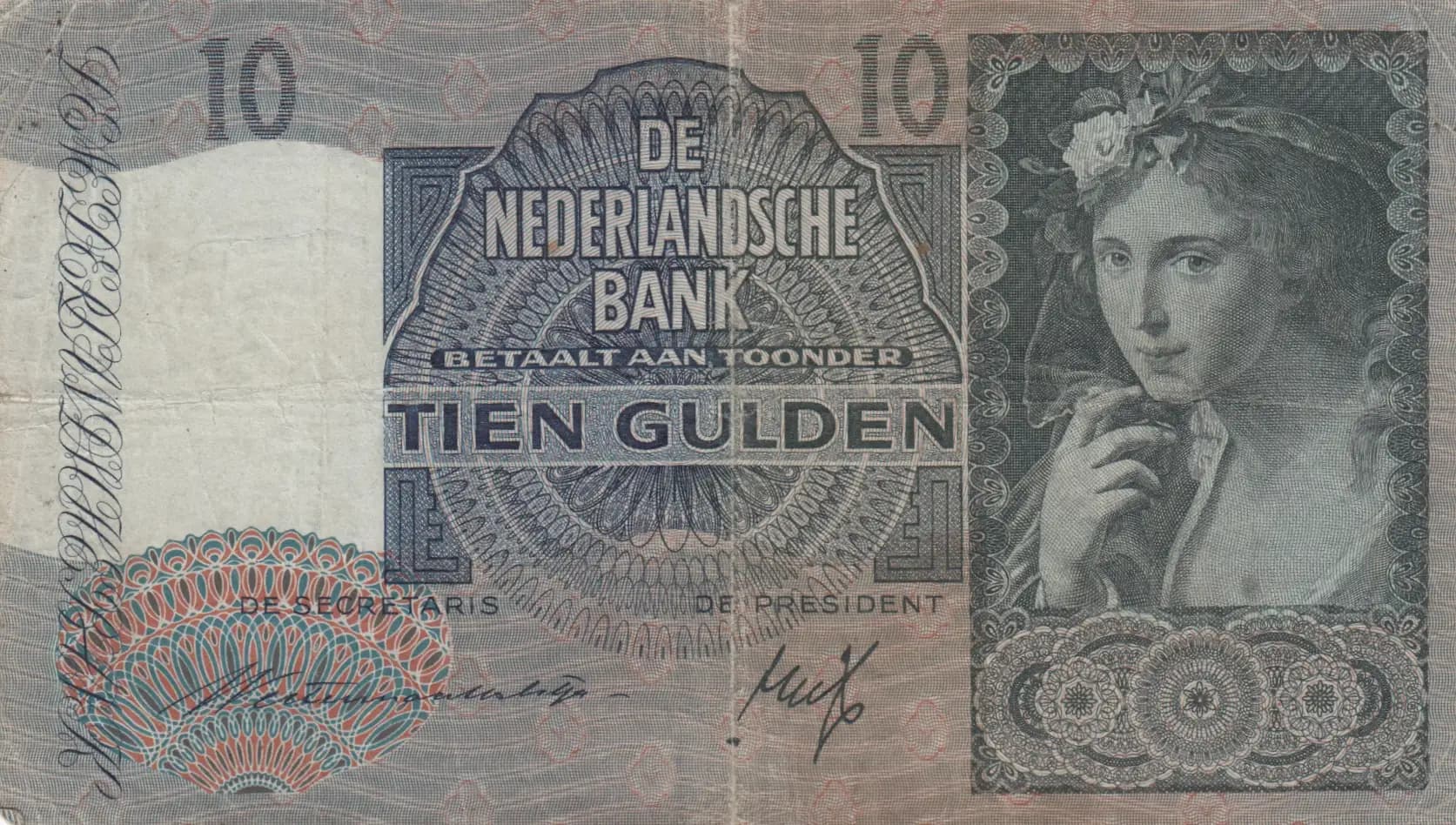
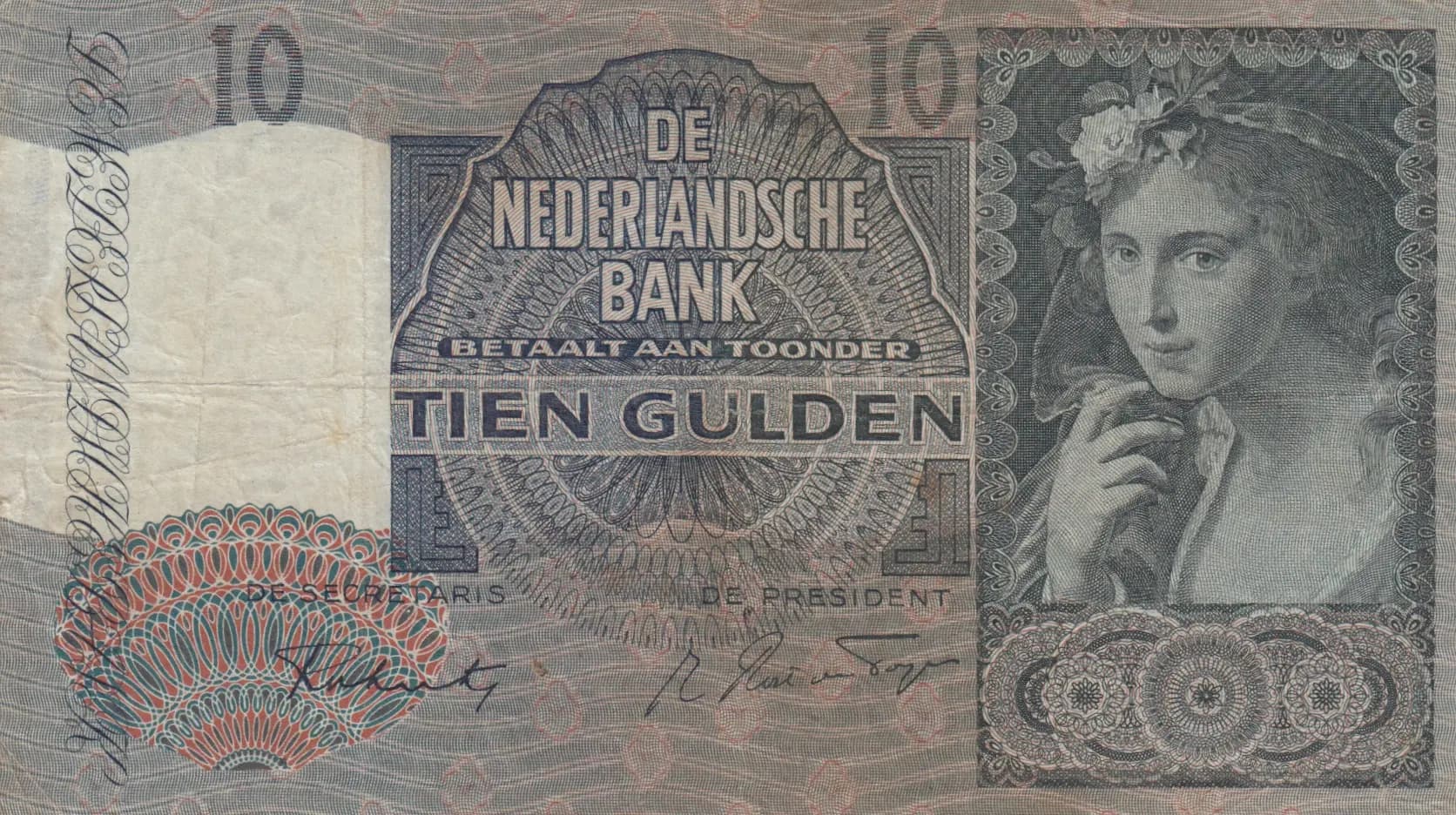
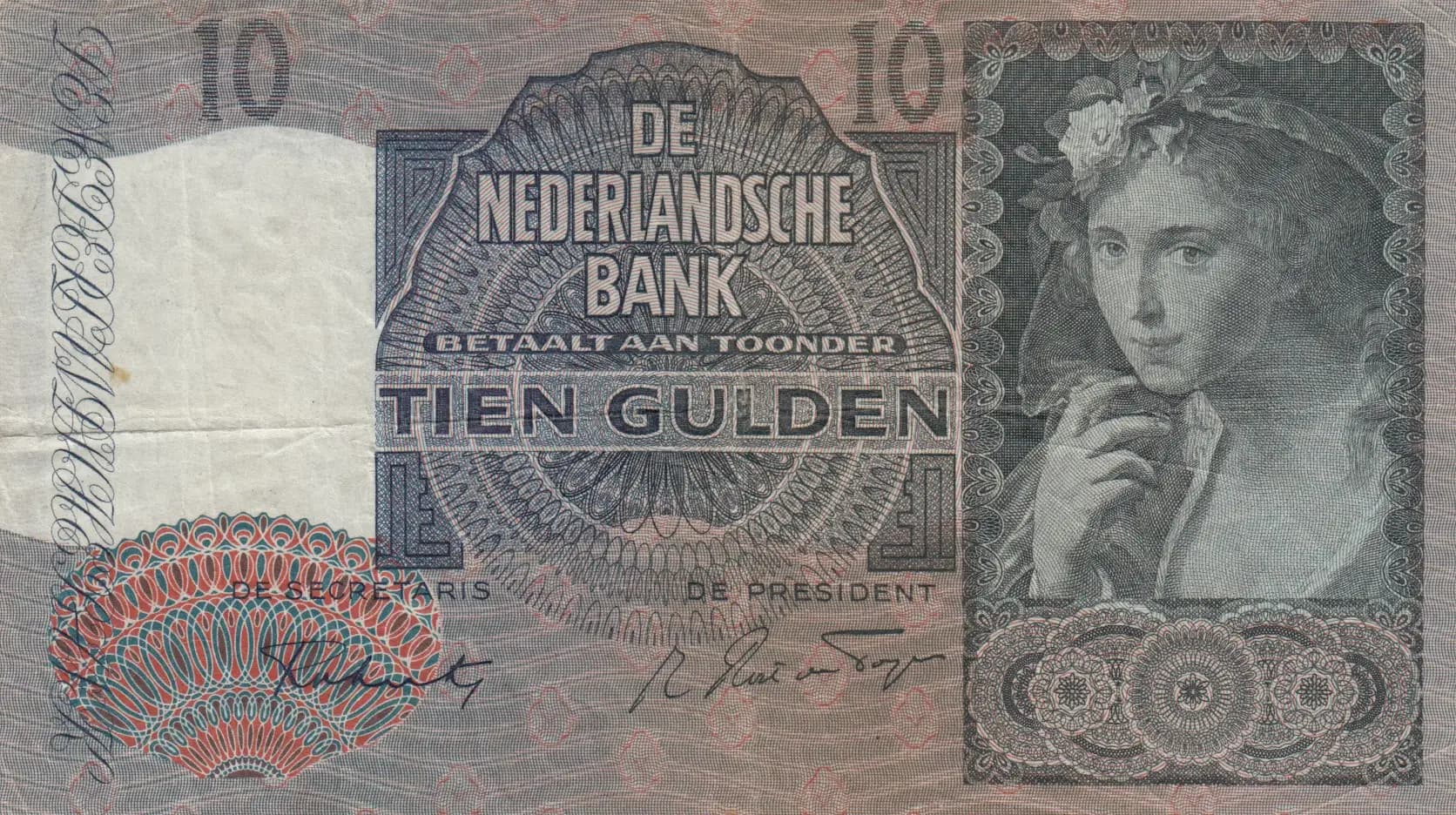
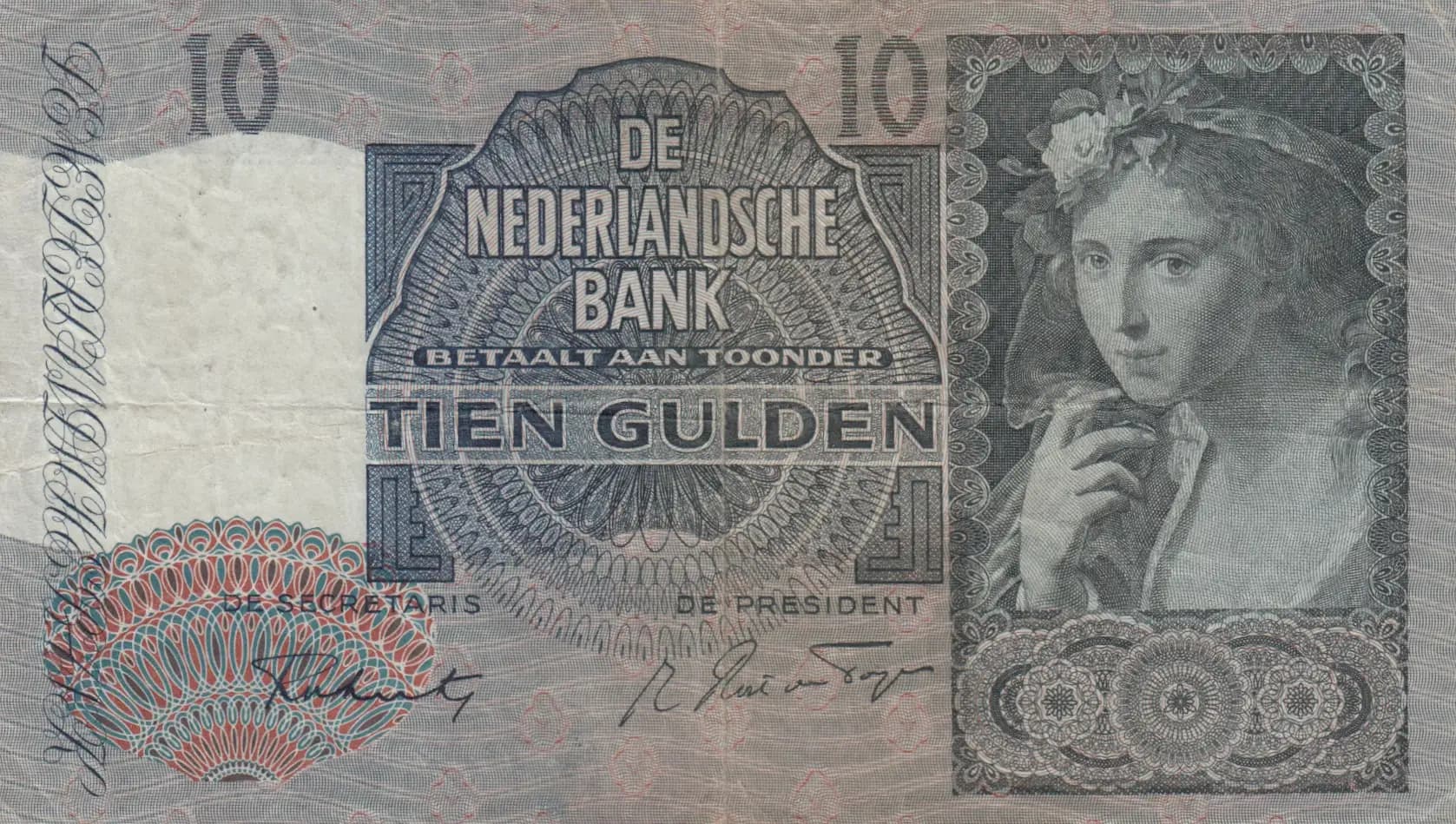
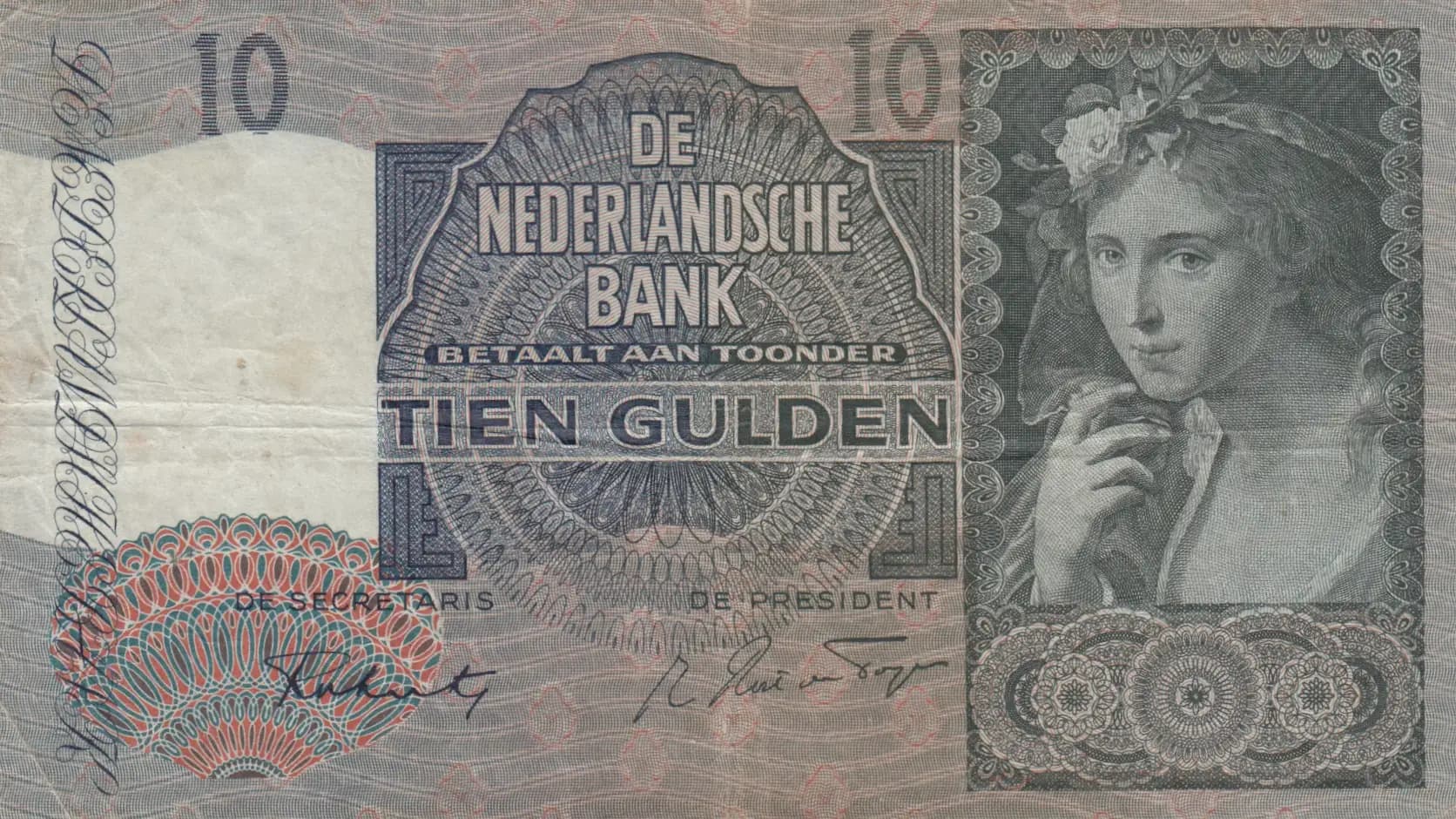
This Netherlands 10 gulden banknote from 1941 (Pick P-56b) features the classic portrait of 'The Beautiful Shepherdess' by Paulus Moreelse on the obverse, rendered in the characteristic green and blue tones typical of this issue. The note exhibits the expected wear of a circulated VF specimen with visible creasing and fold marks, though the fine line engraving and ornamental details remain clearly legible. Market data confirms this denomination and condition grade trades regularly in the $5-$20 range, representing an accessible and collectible example of Dutch currency from the German occupation period.
Common. This is a regular issue banknote produced in substantial quantities during 1940-1942 by the Nederlandsche Bank. The extensive eBay price history provided demonstrates consistent, frequent market activity over more than a decade, with VF examples regularly trading in the $5-$16 range and F-condition notes typically bringing $5-$15. The availability of PMG-graded examples and the regular appearance at auction indicate healthy supply. This denomination and period represent foundational Dutch currency collecting and are not scarce in any significant way.
Issued by Nederlandsche Bank during 1941-1942, this banknote was produced amid the Nazi occupation of the Netherlands (1940-1945), a period of significant political and economic disruption. The choice to feature artwork by the 17th-century Dutch Golden Age painter Paulus Moreelse reflects the nation's cultural identity and artistic heritage, serving as a deliberate affirmation of Dutch cultural continuity during occupation. The heraldic imagery on the reverse, including the crowned coat of arms, further emphasizes national sovereignty and institutional authority during a challenging historical period.
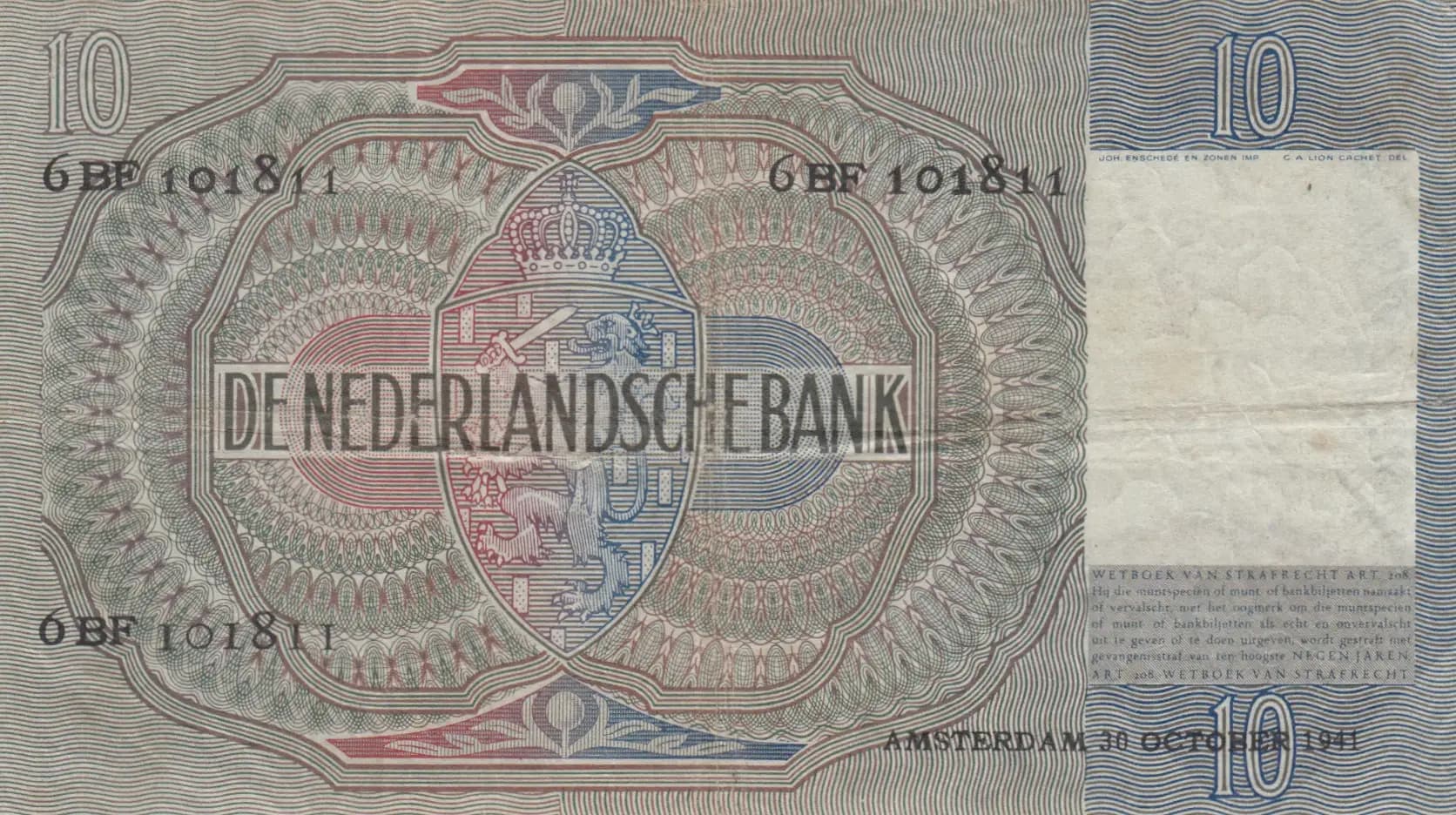
The obverse features a formal three-quarter portrait of a young woman attributed to Paulus Jacobsz Moreelse (1571-1638), positioned prominently on the right side of the note. The subject wears 17th-century formal dress with white garments and elaborately styled hair, rendered with fine detail characteristic of Moreelse's portraiture. The left side of the obverse displays distinctive decorative fan or shell-like ornamental patterns in red/coral tones, with the central emblem of De Nederlandsche Bank prominently displayed within a decorative shield surmounted by a crown. The reverse features an elaborate heraldic coat of arms of the Netherlands as the central focal point, surrounded by ornate baroque-style geometric and ornamental patterns executed through fine line engraving. The entire design demonstrates the high-quality intaglio work typical of Dutch banknote production, with guilloché patterns and intricate linework providing security against counterfeiting.
FRONT SIDE: 'DE NEDERLANDSCHE BANK' (The Netherlands Bank) - issuing authority; 'BETAALT AAN TOONDER' (Payable to Bearer) - standard bearer clause; 'TIEN GULDEN' (Ten Guilders) - denomination in words; 'DE PRESIDENT' (The President) - signature authority; 'DE SECRETARIS' (The Secretary) - signature authority; denomination numerals '10' appear multiple times. BACK SIDE: 'DE NEDERLANDSCHE BANK' (The Netherlands Bank) - repeated; 'JOH ENSCHEDE EN ZONEN IMP' (Joh. Enschede and Sons, Printed) - printer attribution; 'WETBOEK VAN STRAFRECHT ART 208' (Penal Code Article 208) - legal reference regarding counterfeiting penalties; 'NEGEN JAREN VERBOD' (Nine Years Prohibition) - punishment specification; 'VAN STRAFRECH' (Of/From the Penal Code) - partial text of legal notice; serial number '6BF 1018' visible.
Intaglio engraving (line engraving/copperplate), executed by Joh. Enschede and Sons (Joh. Enschede en Zonen), the principal Dutch security printer of the period. The visual analysis confirms the characteristic fine line work, guilloche patterns, and varying line densities typical of intaglio production. Multiple colors (beige, cream, green, blue, red, gray/black) were achieved through multi-plate printing, a standard technique for high-security currency of this era. The detailed ornamental borders, intricate geometric patterns, and fine portraiture all bear the hallmarks of professional intaglio execution.
Serial number '6BF 1018' is visible on the reverse, indicating standard production numbering. The catalog designation P-56b indicates this is variant 'b' of the 10 gulden 1941 issue; variants in this series typically relate to signature combinations, date ranges, or printer marks. The collector note '30.10.41' suggests this particular note may bear an October 30, 1941 date or was specifically cataloged on that date. No overprints, commemorative markings, or unusual features are evident in the visual analysis that would constitute a distinct variety beyond the standard P-56b classification.