2 1/2 gulden 1949
Market Prices
63 salesAbout This Note
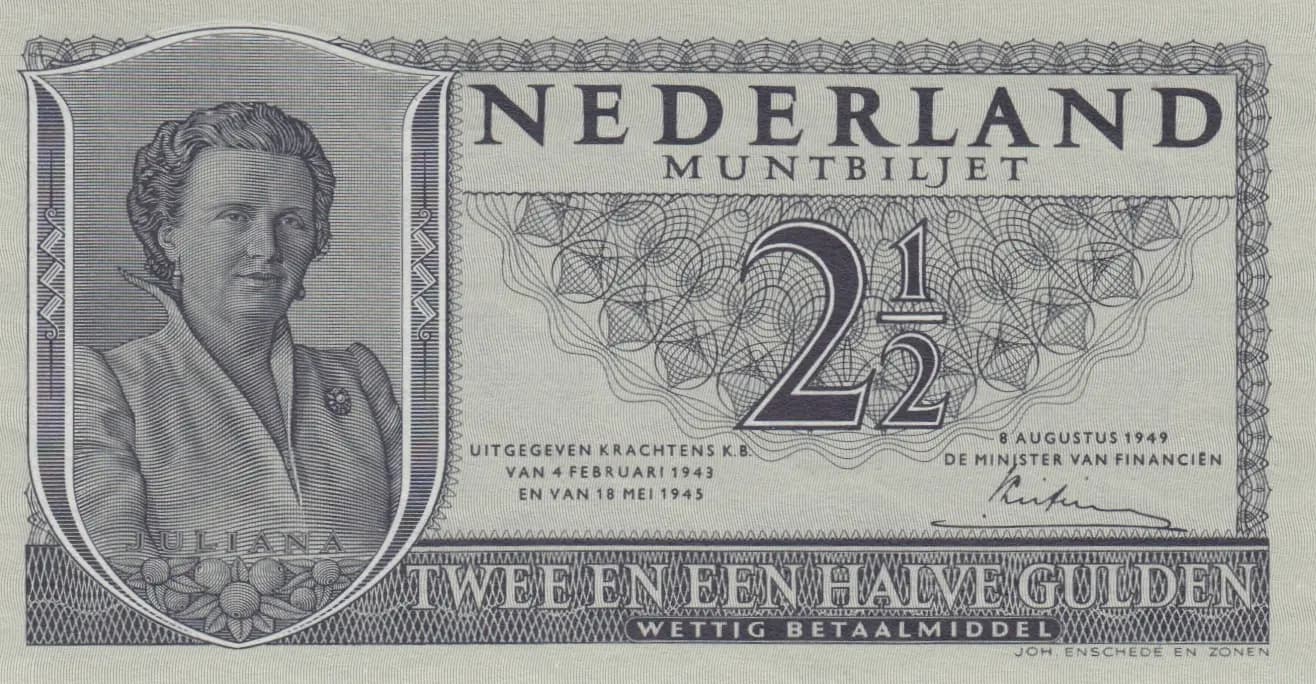
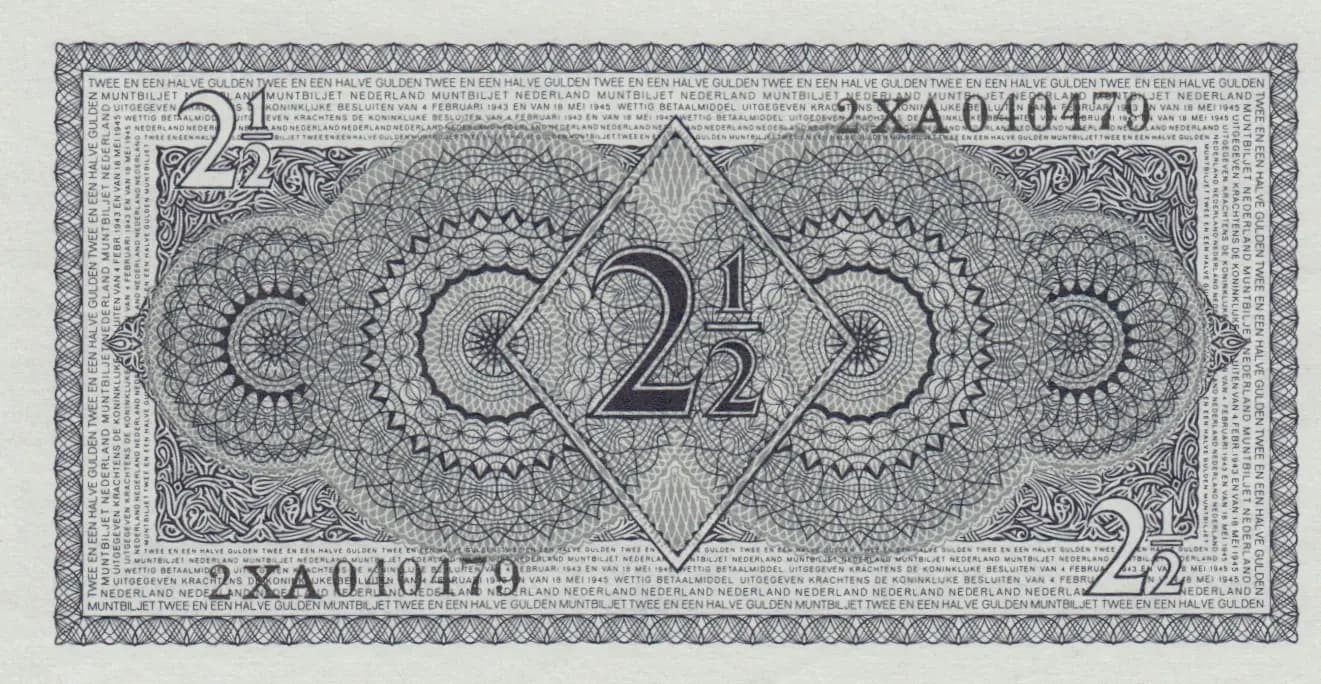
This is an exceptional example of the Netherlands 2½ Gulden from 1949 (Pick P-73), graded UNC and displaying museum-quality preservation. The note features a formal portrait on the obverse within an ornate oval frame, with the reverse showcasing an elaborate diamond-shaped denomination display framed by intricate circular medallion patterns. The exceptional sharpness of the engraving, absence of any wear, creases, or stains, and pristine print quality make this an outstanding specimen for collectors of Dutch currency or mid-20th century European banknotes.
Common. While this is a historically significant post-war Dutch issue, the eBay market data shows consistent sales activity with UNC examples selling in the $20-31 range historically, and more recently around $25-50 for certified examples (PMG 65-68). The apparent large print run, continued availability in the market across multiple decades, and relatively modest pricing for uncirculated specimens all indicate this is a standard, commonly available issue rather than a scarce or rare note. No evidence of limited printing, recalls, or scarcity conditions.
This 1949 issue was authorized under Royal Decrees dated February 4, 1943, and May 18, 1945, reflecting the Netherlands' post-World War II currency stabilization period. The note was issued by the Minister of Finance and printed by the prestigious Johan Enschedé and Sons, one of Europe's finest security printers. The formal portrait and legal tender inscription underscore the Dutch government's assertion of monetary authority during the early years of the restored Kingdom following Nazi occupation.
The obverse features a formal portrait of a dignified man in profile, depicted in classical engraving style within an ornate oval frame adorned with decorative floral or botanical motifs at its base. The reverse displays a large central diamond-shaped frame containing the denomination, flanked by symmetrical ornate circular medallion designs with radiating line patterns. Both sides are extensively decorated with elaborate geometric and floral patterns, fine parallel line work, and intricate guilloche patterns that serve as both aesthetic and security elements. The entire design employs black intaglio engraving on a white background, creating a sophisticated and authoritative appearance befitting the Dutch Minister of Finance's monetary authority.
Front side: 'NEDERLAND' (Netherlands), 'MUNTBILJET' (Banknote), '2½' (Two and a half), 'TWEE EN EEN HALVE GULDEN' (Two and a half guilders), '8 AUGUSTUS 1949' (August 8, 1949), 'DE MINISTER VAN FINANCIËN' (The Minister of Finance), 'UITGEGEVEN KRACHTENS K.B.' (Issued under Royal Decree), 'VAN 4 FEBRUARI 1943' (of February 4, 1943), 'EN VAN 18 MEI 1945' (and of May 18, 1945), 'WETTIG BETAALMIDDEL' (Legal tender), 'JOH ENSCHEDÉ EN ZONEN' (Joh Enschedé and Sons). Back side: 'NEDERLAND MUNTBILJET' (Netherlands Banknote), 'TWEE EN EEN HALVE GULDEN' (Two and a half guilders), 'WETLIG BETAALMIDDEL UITGEGEVEN KRACHTENS DE KONINKLIJKE BESLUITEN VAN 4 FEBRUARI 1943 EN VAN 18 MEI 1945' (Legal tender issued under Royal Decrees of February 4, 1943 and May 18, 1945), repeating border text of 'MUNTBILJET NEDERLAND' and 'TWEE EN EEN HALVE GULDEN'.
Intaglio engraving (copperplate), executed by Johan Enschedé and Sons (identified as 'JOH ENSCHEDÉ EN ZONEN' on the note). The extensive use of fine parallel lines, crosshatching, guilloche patterns, and intricate engraved detail visible throughout both sides are characteristic of high-security intaglio printing. The repeating text elements around borders and the complex radiating patterns in the circular medallions represent advanced security features typical of this prestigious Dutch security printer's work during the post-war period.
Serial number observed: CA40419. This note appears to be from the standard 1949 issue with the official date of August 8, 1949. The serial number prefix 'CA' is typical for this printing period. No obvious varieties (such as signature variations, overprints, or major printing differences) are apparent from the visual analysis. This represents the standard variety of Pick P-73 for the 1949 issue authorized under the stated Royal Decrees.