1 gulden 1938
Market Prices
100 salesAbout This Note
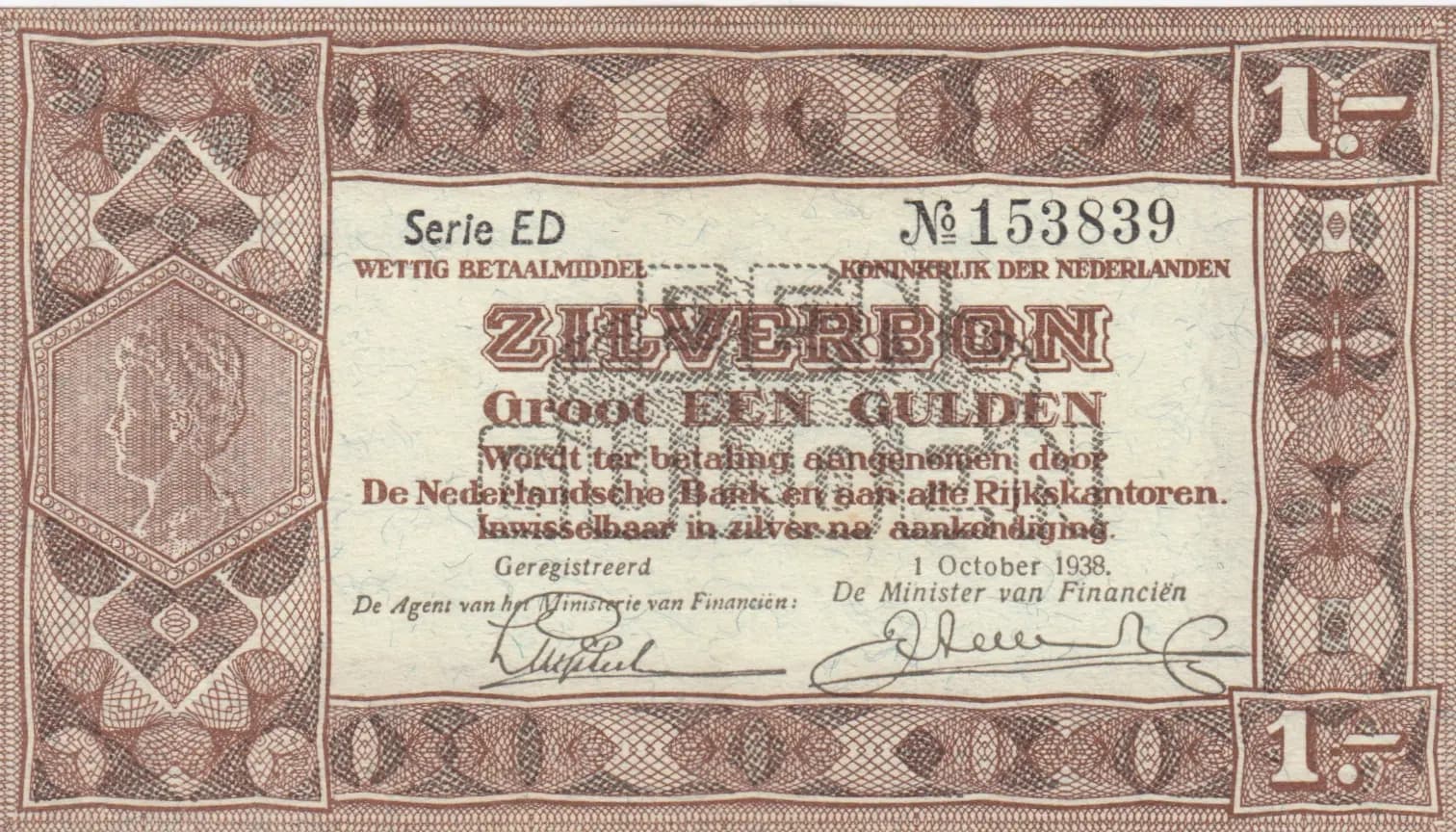
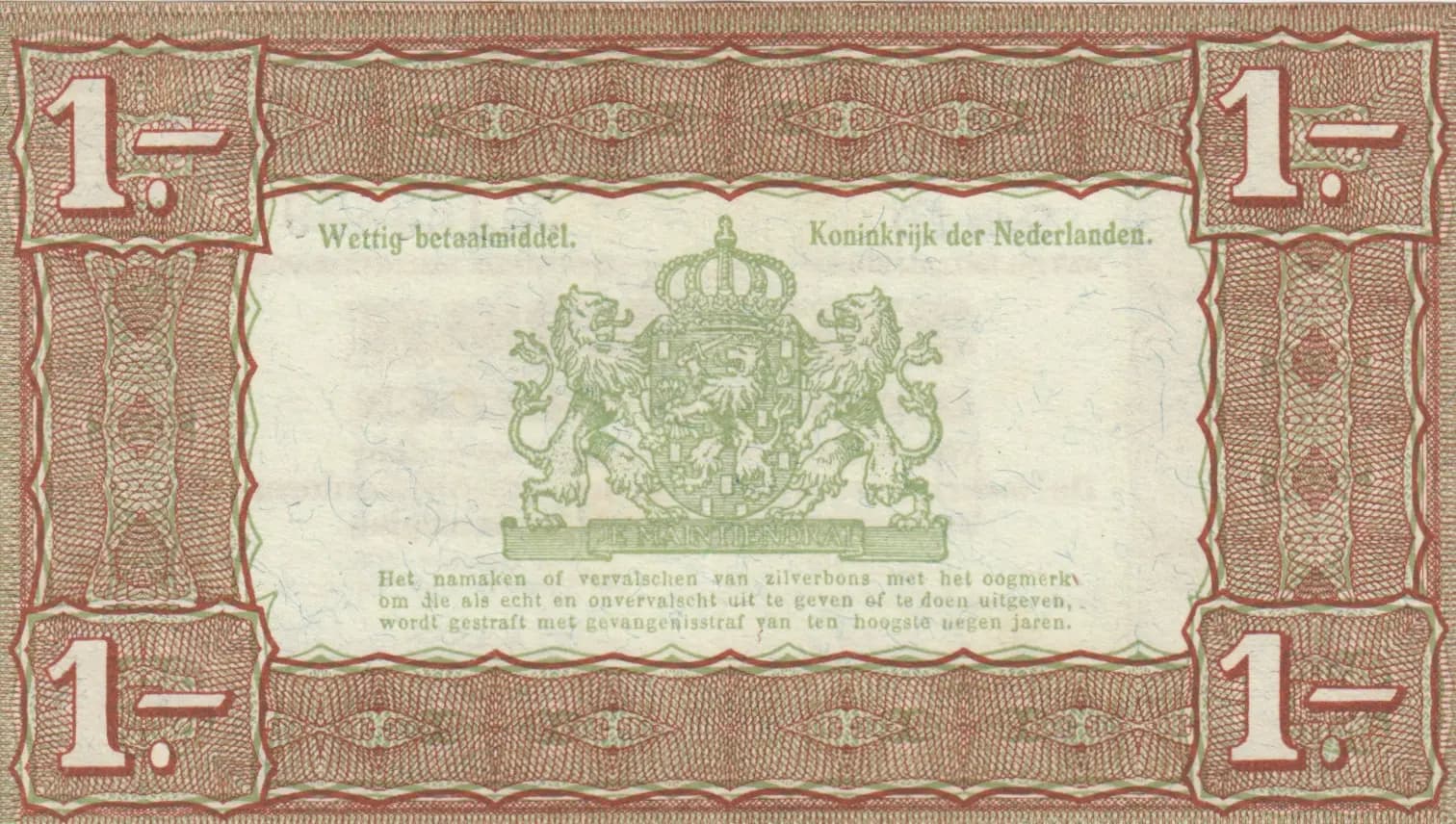
This 1938 Dutch 1 gulden note (Pick P-61) presents in AU condition with typical period characteristics including age-related discoloration, light foxing, and minor creasing consistent with careful circulation. The note features an ornate brown and green color scheme with fine engraved decorative borders and the Dutch royal coat of arms on the reverse, accompanied by handwritten signatures of government officials dated October 1, 1938. As a pre-WWII Kingdom of the Netherlands issue with intact structure and legible inscriptions, it represents an important piece of Dutch monetary history from the interwar period.
Common. This is a standard regular-issue banknote from a major central bank with substantial print runs typical of circulating currency from 1938. The eBay price data confirms this assessment, showing typical auction prices ranging from under $1 to $8 for VF and lower grades, with even high-graded examples (PMG 67, PMG 65) reaching only $46-$81. The 2016 catalog value of $0.50 for VF condition further confirms common status. While the note has historical interest as a pre-war Dutch issue, it lacks the characteristics that would make it scarce or rare (limited print run, special varieties, recall, etc.). AU examples like this are moderately above-average but not exceptional in value or scarcity.
Issued during the reign of Queen Wilhelmina on October 1, 1938, this banknote was produced by the Netherlands Bank at a critical moment just before World War II began. The note prominently displays the royal coat of arms with supporting lions and crown, symbolizing the Kingdom's sovereignty during a period of increasing European tension. The formal language promising redemption in silver (a common pre-war standard) and the dual signature authority of both the Minister of Finance and the Bank's agent reflect the institutional framework of the Dutch monetary system in the late interwar period.
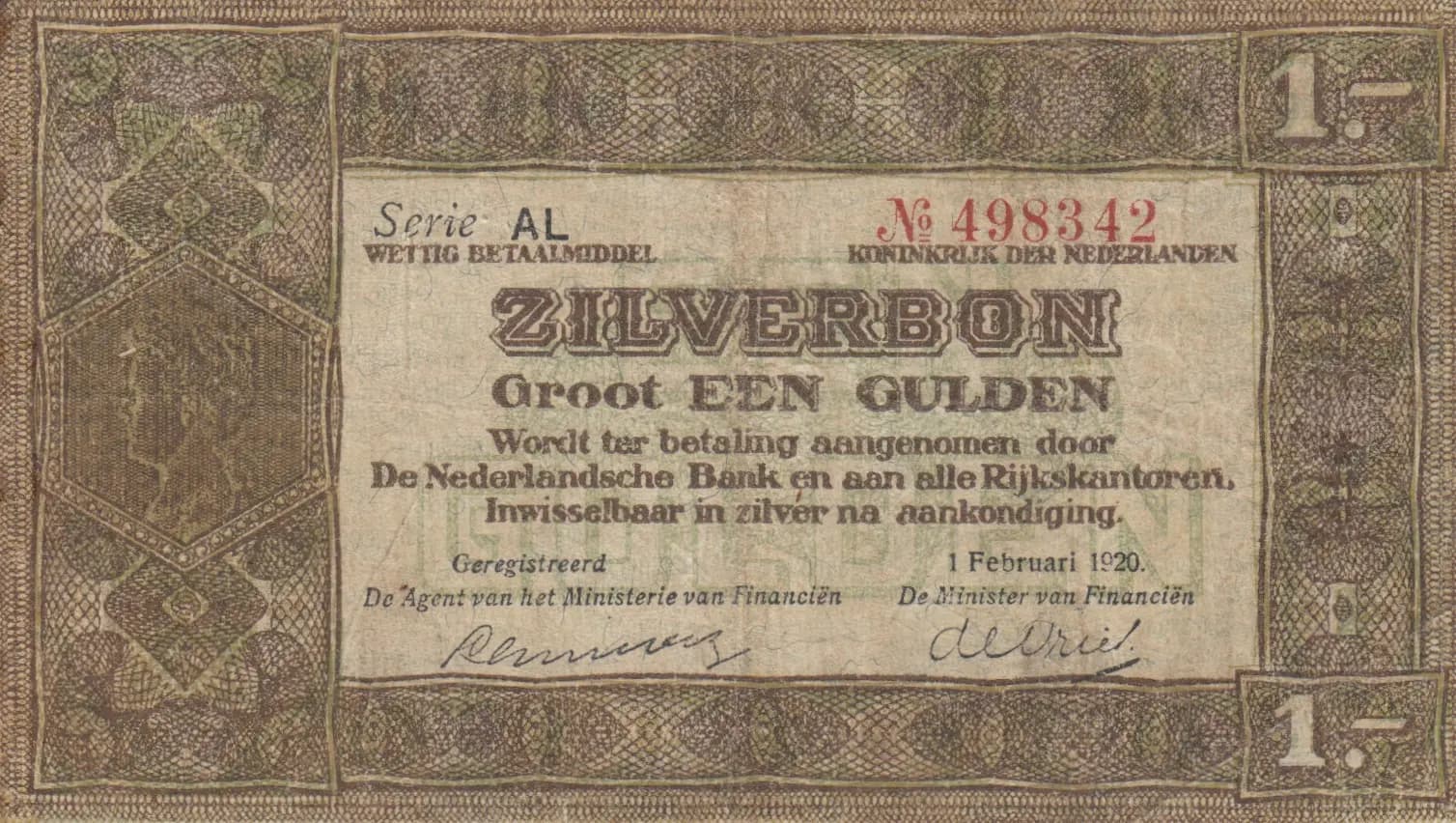
The front of this note showcases an ornate design dominated by intricate geometric and floral patterns in brown and tan, with the denomination '1.-' positioned in the upper right and lower right corners. The central text area contains legal and governmental language in Dutch, and handwritten signatures of both the Minister of Finance and the Bank's agent appear at the bottom. The reverse side features the coat of arms of the Kingdom of the Netherlands in green at center, consisting of a heraldic shield supported by two lion figures and topped with a royal crown, all enclosed within elaborate baroque-style decorative frames. The dominance of fine-line engraving throughout both sides served dual purposes: creating an aesthetically sophisticated design befitting a nation's currency and providing security against counterfeiting through complexity. The color scheme of brown borders with green heraldic elements was typical of Netherlands Bank notes from this era.
FRONT SIDE: 'Serie ED' / 'No. 153839' (Series and serial identification); 'WETTIG BETAALMIDDEL' (Legal Tender); 'KONINKRIJK DER NEDERLANDEN' (Kingdom of the Netherlands); 'ZILVERBOON' (Silver Note); References to acceptance by De Nederlandsche Bank and Government Offices with redemption in silver upon notification; 'Geregistreerd' (Registered); '1 October 1938' (Issue date); 'De Agent van het Ministerie van Financiën' (Agent of the Ministry of Finance) and 'De Minister van Financiën' (The Minister of Finance) with handwritten signatures. BACK SIDE: '1.-' (denomination in all four corners); 'Wettig-betaalmiddel' (Legal tender); 'Koninkrijk der Nederlanden' (Kingdom of the Netherlands); 'Het namaken of vervalschen van zilverbons met het oogmerk om die als echt en onvervalscht uit te geven of te doen uitgeven, wordt gestraft met gevangenisstraf van ten hoogste negen jaren' (Counterfeiting or forging silver notes with intent to pass them off as genuine shall be punished with imprisonment for a maximum of nine years).
This note was produced using intaglio engraving (recess printing), evidenced by the fine line patterns, geometric mesh security features, and depth of impression visible in the ornamental borders and heraldic details. The two-color printing process (brown for decorative borders and denomination frames, green for the coat of arms) required separate plates or careful registration of sequential printing passes. The Dutch government contracted with a security printer for this issue; notes of this period and quality were typically produced by firms specializing in government security printing. The handwritten signatures were applied as a final security measure after mechanical printing.
This specific example is identified as Series ED, Serial No. 153839, dated October 1, 1938. The handwritten signatures visible on the front represent the authorities in office on this specific date. Netherlands Bank notes from 1938 exist in different series designations; Series ED may represent a specific printing batch or allocation. While signature varieties are common on Dutch banknotes of this period, they are typically not catalogued as major varieties unless they represent distinctly different officials or significant date variations. No major catalogued varieties are noted for Pick P-61 beyond normal serial number and signature combinations expected across the production run.