5 maloti 1981
Market Prices
7 salesAbout This Note
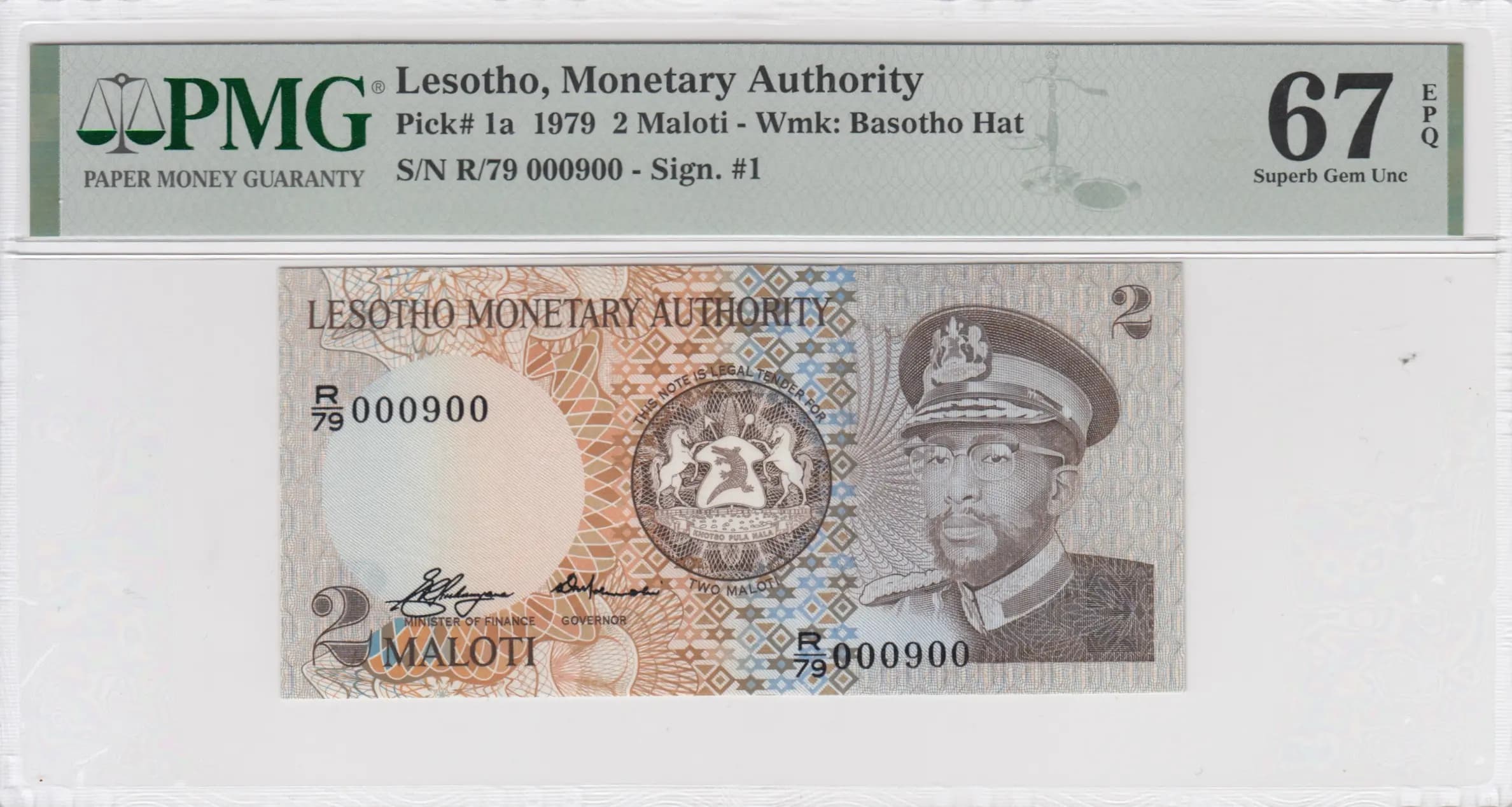
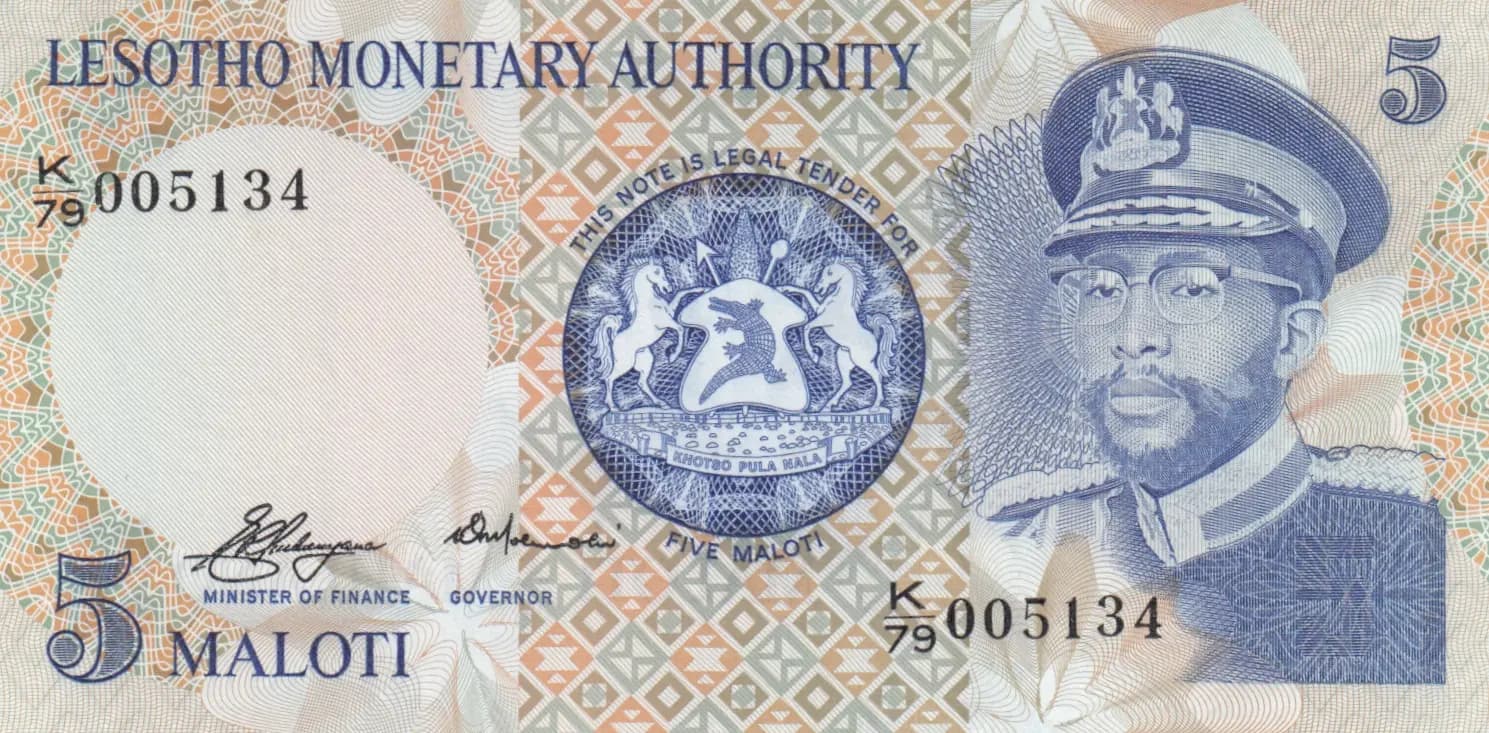
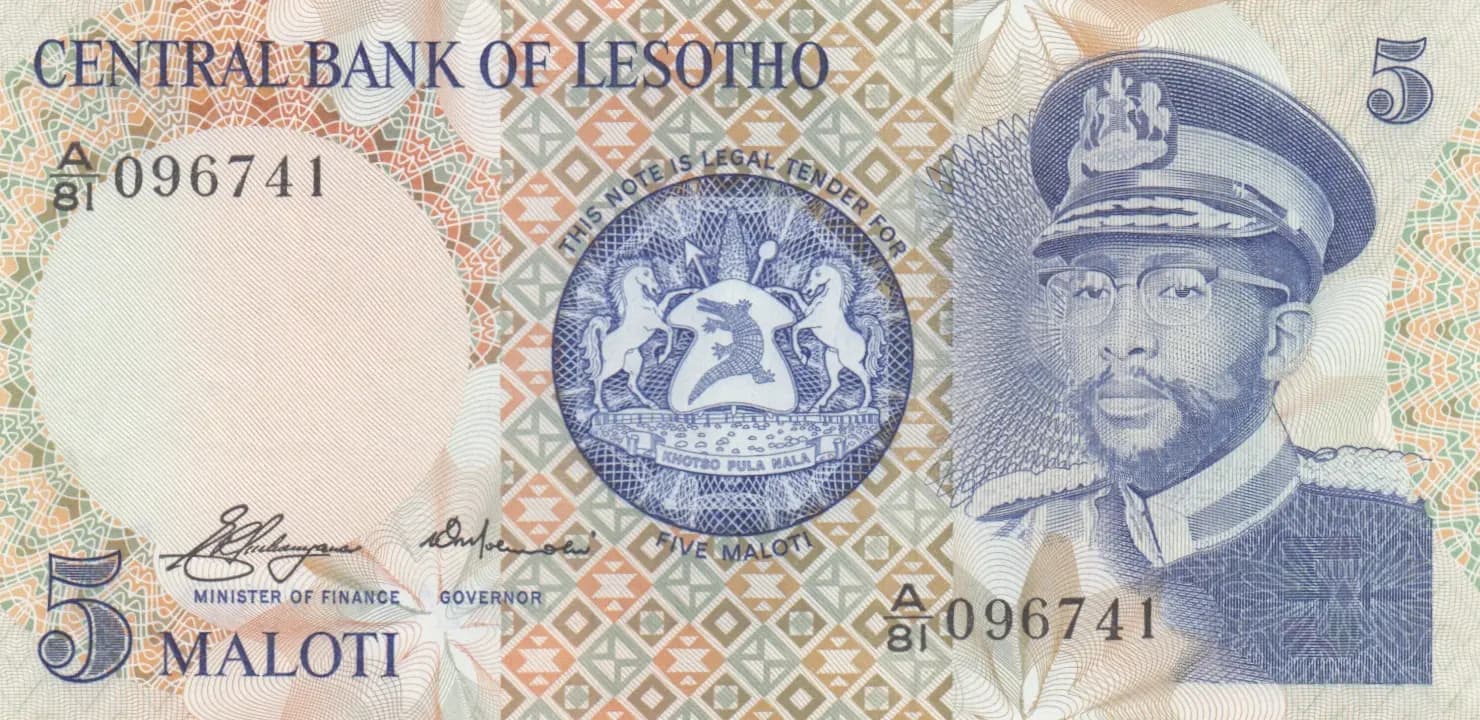
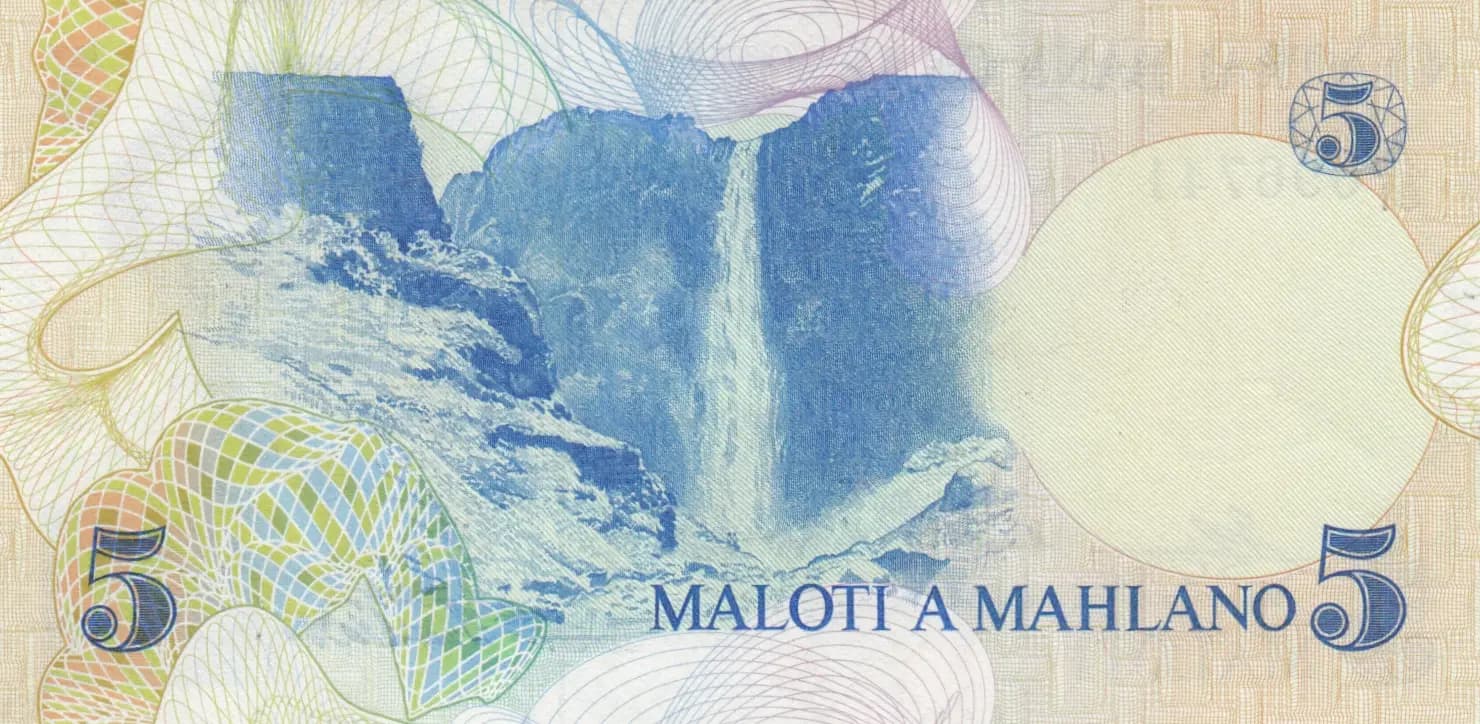
This is an uncirculated 1981 Central Bank of Lesotho 5 Maloti note (Pick P-5a) featuring King Moshoeshoe II in military dress on the obverse and the scenic Maletsunyane Falls on the reverse. The note exhibits pristine condition with sharp, crisp printing throughout, no wear, folds, or creases, and displays the characteristic fine-line engraved security patterns typical of early Lesotho currency. With eBay market data showing UNC examples consistently selling in the $14–$21 range, this represents a collectible but readily available note from Lesotho's early post-independence currency period.
Common. This is a regular-issue banknote from 1981 with no indication of a limited print run, recall, or short-lived status. The eBay market data provided shows consistent sales of UNC examples in the $14–$21 range over multiple years (2010–2018), with numerous auctions (9–14 bids per sale), indicating healthy collector demand but abundant supply. The 2019 catalog valuation of $22 for UNC examples further confirms this is a standard, readily available note. The specimen grade combined with serial number evidence (A/81 0096741) shows normal production parameters.
Issued in 1981, this note commemorates King Moshoeshoe II (depicted in military uniform on the obverse), the reigning monarch during Lesotho's early years as an independent nation. The reverse features the Maletsunyane Falls, one of Lesotho's most iconic natural landmarks, symbolizing the country's mountainous landscape and natural heritage. The national emblem on the obverse—bearing the motto 'FARTHING PULA KALA'—anchors the design in Lesotho's post-colonial identity and sovereignty.
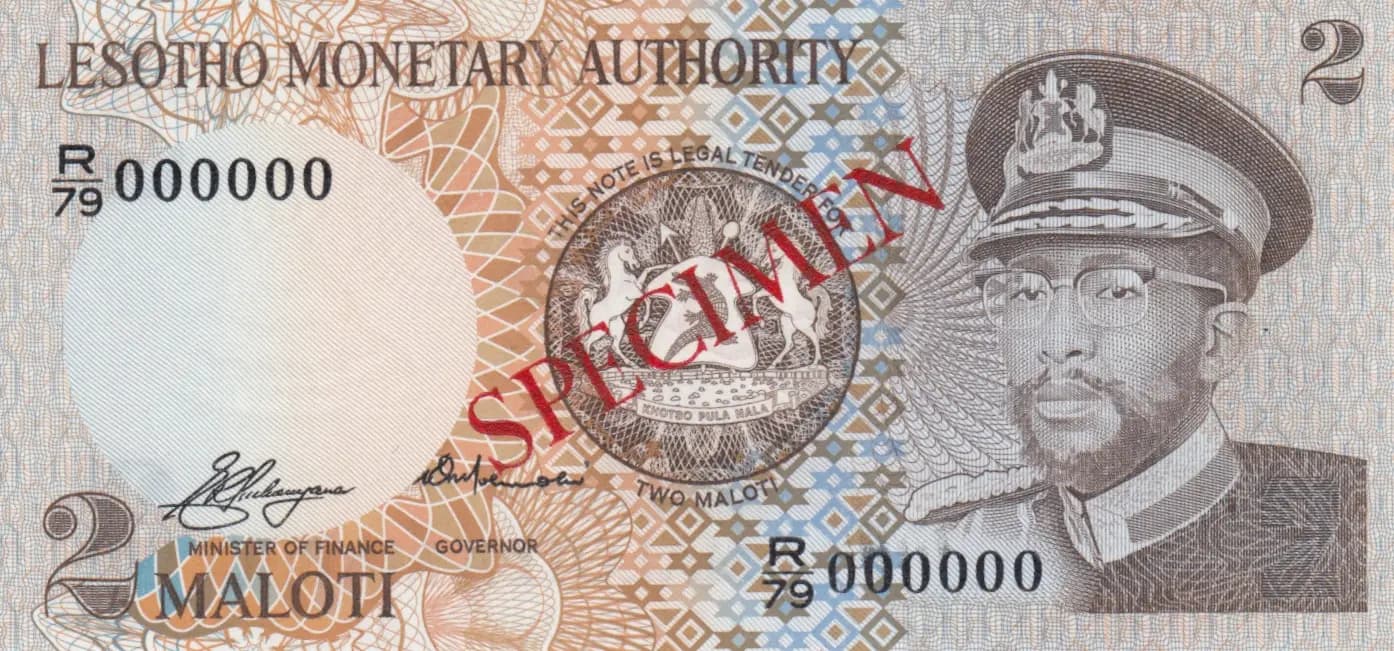
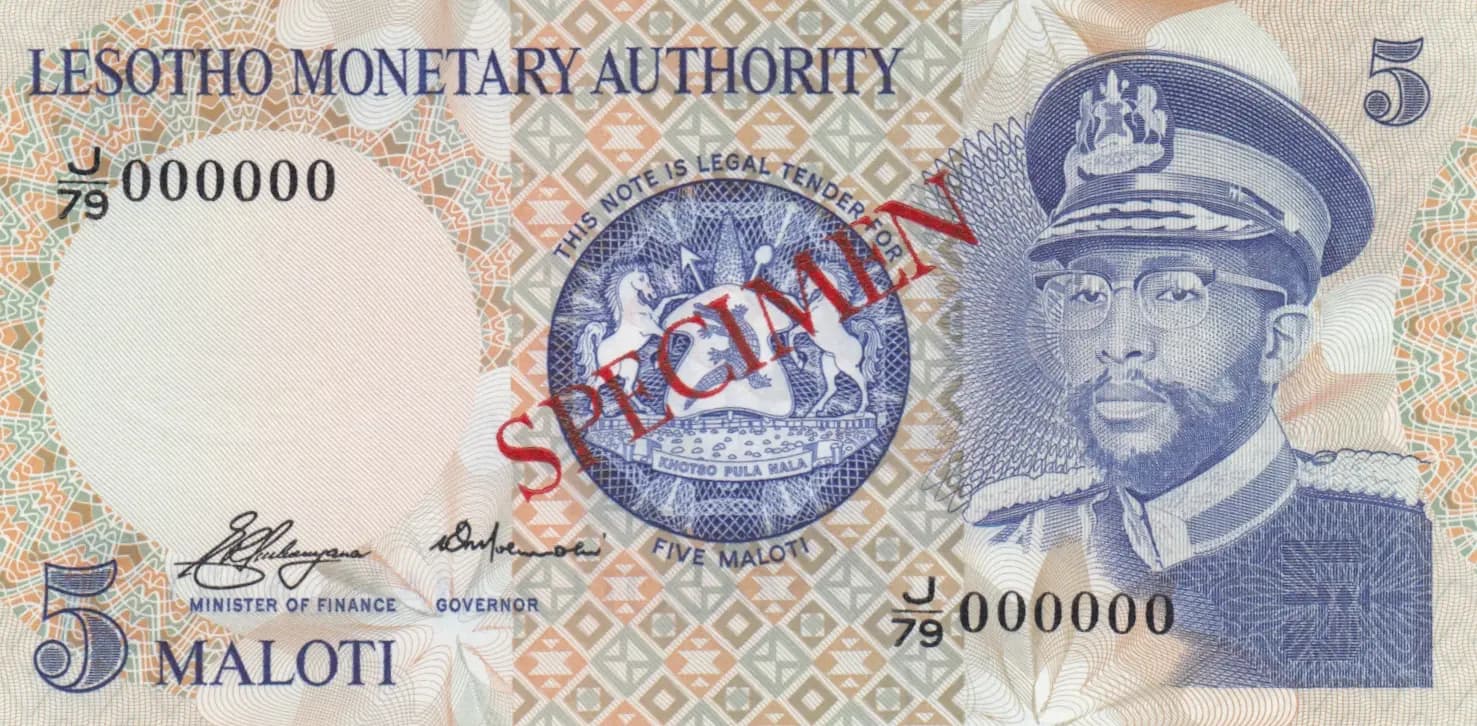
The obverse features a centered national coat of arms (seal with two horses flanking a shield and the inscription 'FARTHING PULA KALA') in the upper portion, with a formal portrait of King Moshoeshoe II positioned on the right side, depicted wearing a military-style cap and formal military uniform with a full beard. The background is an intricate geometric pattern in warm tones (orange, brown, green, tan, and blue), executed with fine-line engraving throughout. The reverse presents the Maletsunyane Falls—Lesotho's most famous waterfall—depicted as a cascading mountain landscape in blue and white tones, surrounded by rocky terrain and vegetation, framed by decorative guilloche patterns and ornamental '5' numerals in the corners. Both sides feature the denomination prominently in the upper right and lower left corners. The bilingual design (English and Sesotho) reflects Lesotho's linguistic heritage.
Front (Obverse): 'CENTRAL BANK OF LESOTHO' (issuing authority); '5' and 'FIVE MALOTI' (denomination in English); 'THIS NOTE IS LEGAL TENDER FOR' (legal tender declaration); 'MINISTER OF FINANCE' and 'GOVERNOR' (authorization signatures); Serial number 'A/81 0096741' (with '81' encoding the year 1981 in the prefix fraction). Back (Reverse): 'MALOTI A MAHLANO' (Sesotho language: 'Five Maloti'); '5' (denomination numeral).
The note was produced using intaglio (engraved) printing, the standard security printing method for Central Bank of Lesotho currency during this period. The fine-line engraved patterns, detailed portrait work, elaborate circular seal design, and intricate landscape engraving are characteristic of high-security intaglio production. The crisp, sharp detail observed in the UNC specimen indicates excellent plate condition and printing quality. Historical records suggest these notes were produced by De La Rue or similar specialized currency printers, though the specific printer is not explicitly identified on the note.
This note is cataloged as Pick P-5a, identified by the Basotho Hat watermark. The PMG population report documents four variants for the base Pick P-5 number: P-5a (Basotho Hat watermark), P-5pm1, P-5r (Basotho Hat watermark), and P-5s. Based on the visual analysis showing the Basotho Hat watermark and the standard obverse/reverse design with King Moshoeshoe II and Maletsunyane Falls, this specimen corresponds to the P-5a variety. The serial number prefix format 'A/81' is consistent with the 1981 issue date, where the denominator of the serial number prefix fraction encodes the final two digits of the year of issue. No overprints, unusual signatures, or other anomalies are visible.