2 maloti 1979 specimen
Market Prices
1 saleAbout This Note
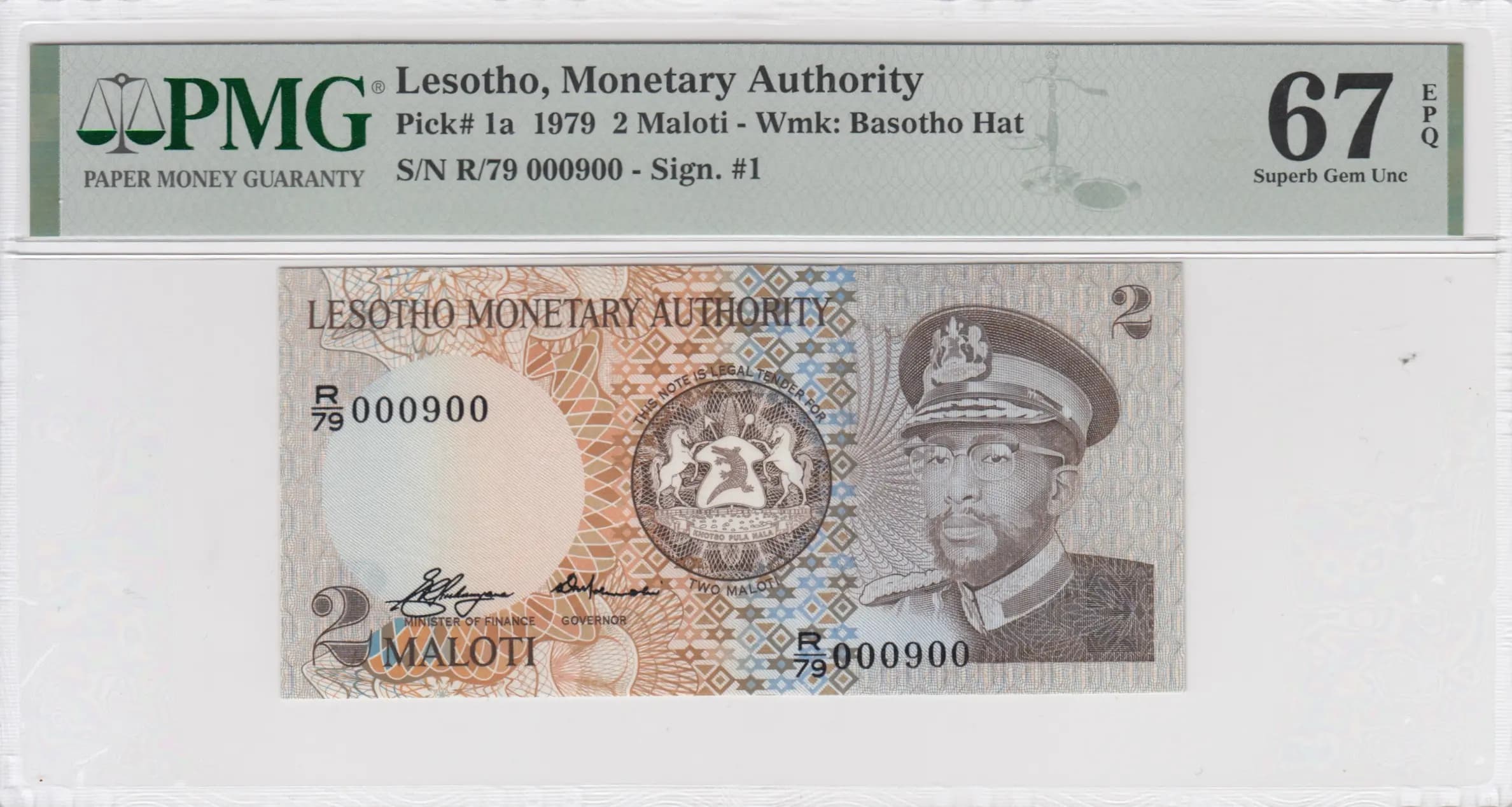
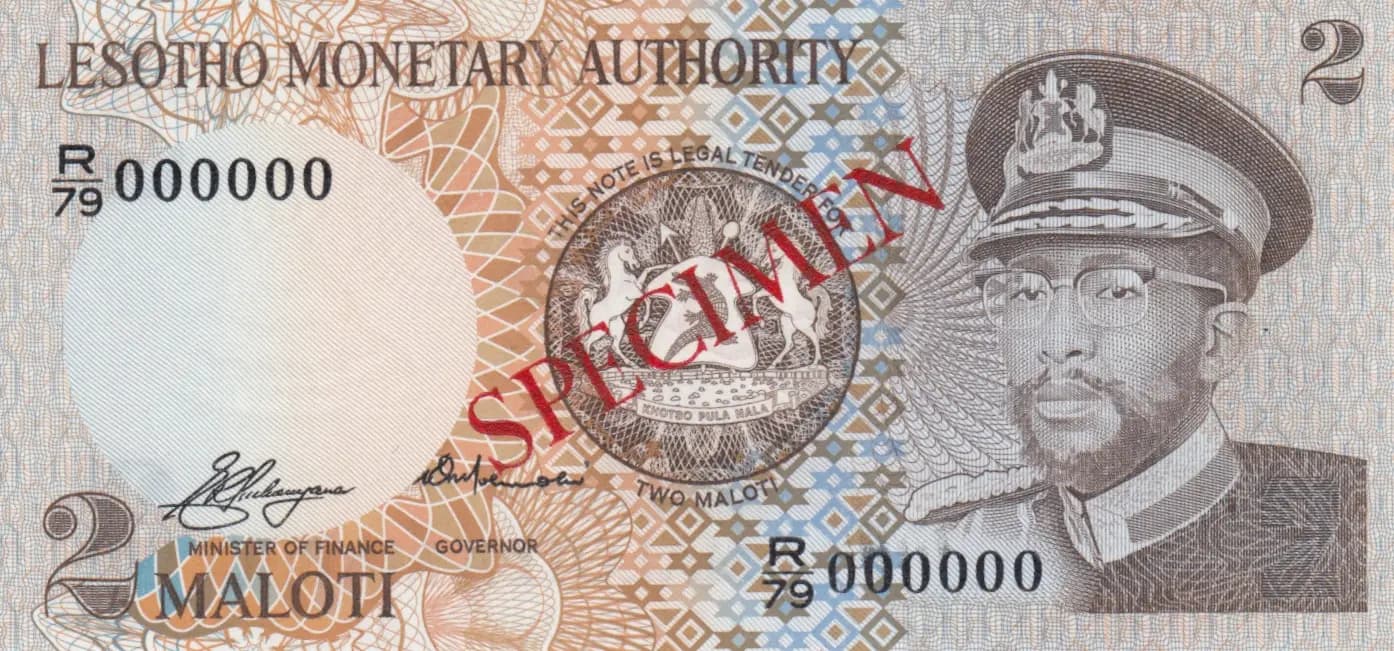
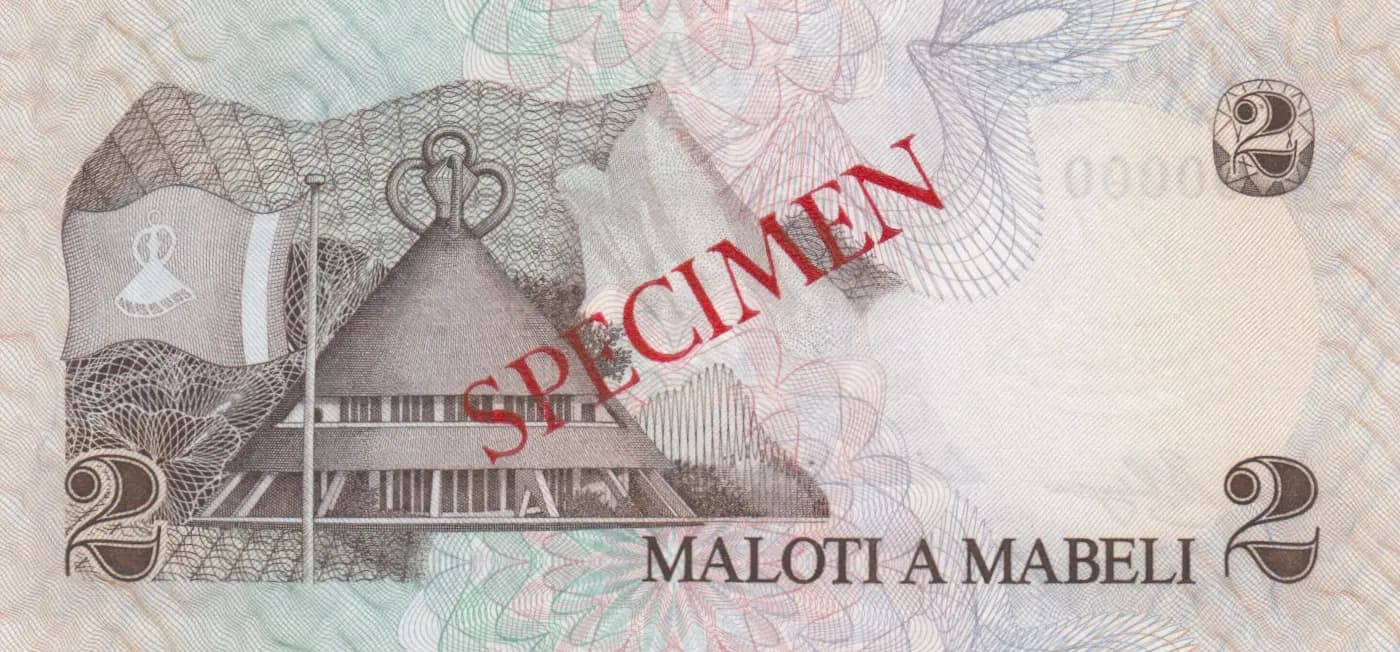
This is a 1979 Lesotho 2 Maloti specimen note (Pick P-1s) in uncirculated condition, representing the inaugural issue of Lesotho's banknote series by the Lesotho Monetary Authority. The note features a striking portrait of King Moshoeshoe II in military uniform on the obverse and a traditional Basotho rondavel building on the reverse, both rendered in fine engraved detail with multicolored underprints in orange, beige, blue, and brown tones. The red 'SPECIMEN' overprint and R/79 serial number prefix confirm its status as a non-circulating specimen issue, with no visible wear or damage.
Common. This specimen note, while officially issued in limited quantities as a non-circulating specimen, was produced during the initial issue period and represents a standard catalog variety (P-1s) for Lesotho's first banknote series. The eBay market data showing UNC examples selling for $35 in 2022 (with catalog values around $135) indicates modest collector interest but broad availability. Specimen notes from this era are typically more common than their circulation counterparts, as they were produced for distribution to banks, government institutions, and collectors. The absence of special printing anomalies or extreme scarcity markers places this firmly in the common category.
This note was issued in 1979, shortly after Lesotho gained independence in 1966, marking the nation's transition to its own monetary authority and banknote currency. King Moshoeshoe II, depicted in military regalia, served as the reigning monarch during this period and became a symbol of national identity on Lesotho's currency. The reverse features a traditional rondavel, a quintessential element of Basotho vernacular architecture, reflecting the nation's cultural heritage and commitment to preserving indigenous design elements in its modern currency.
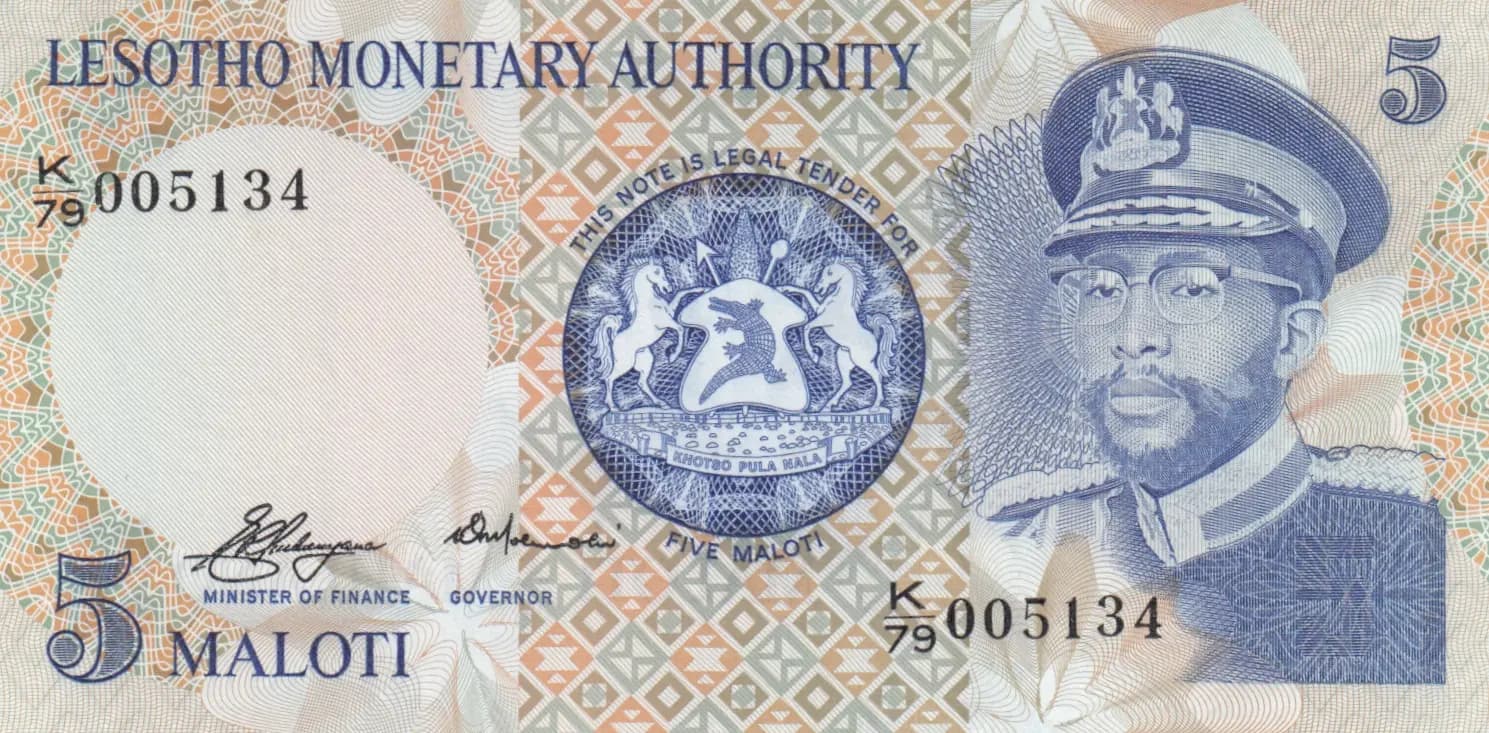
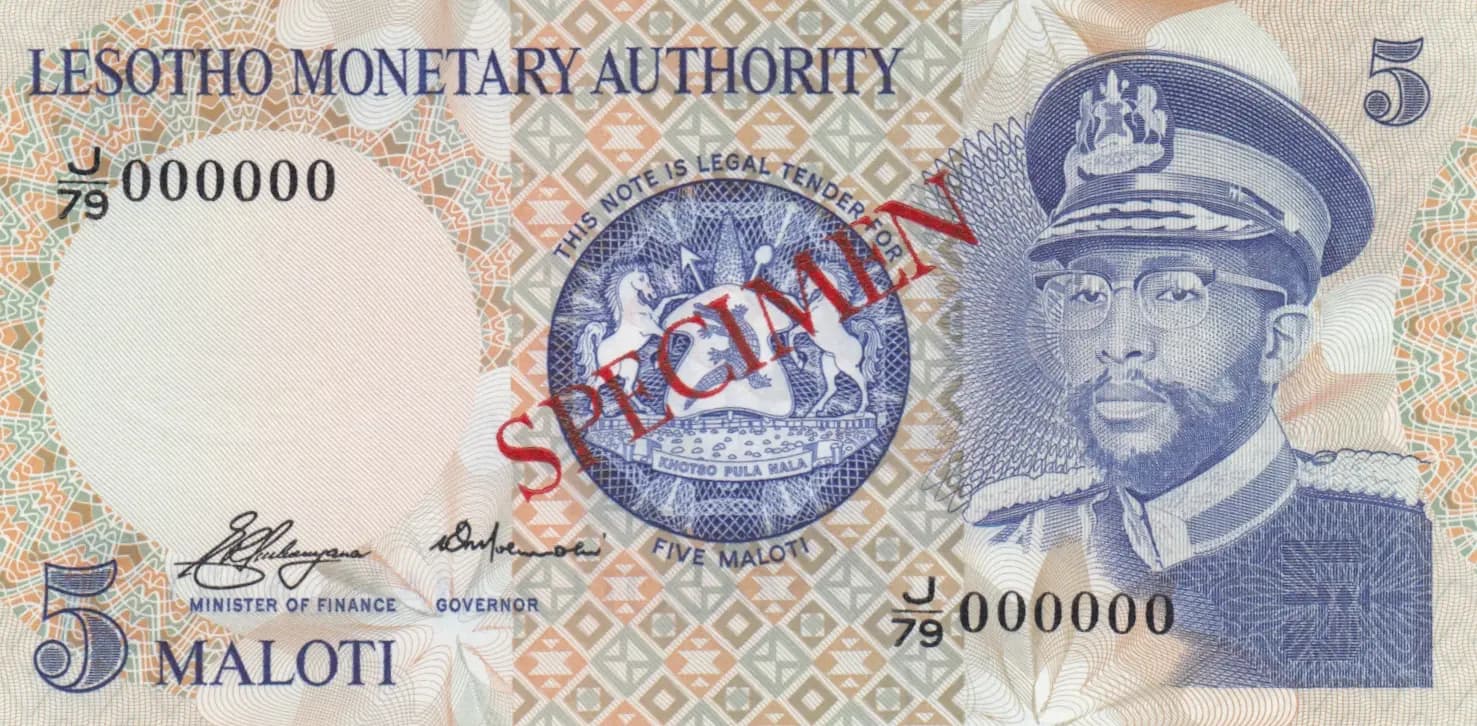
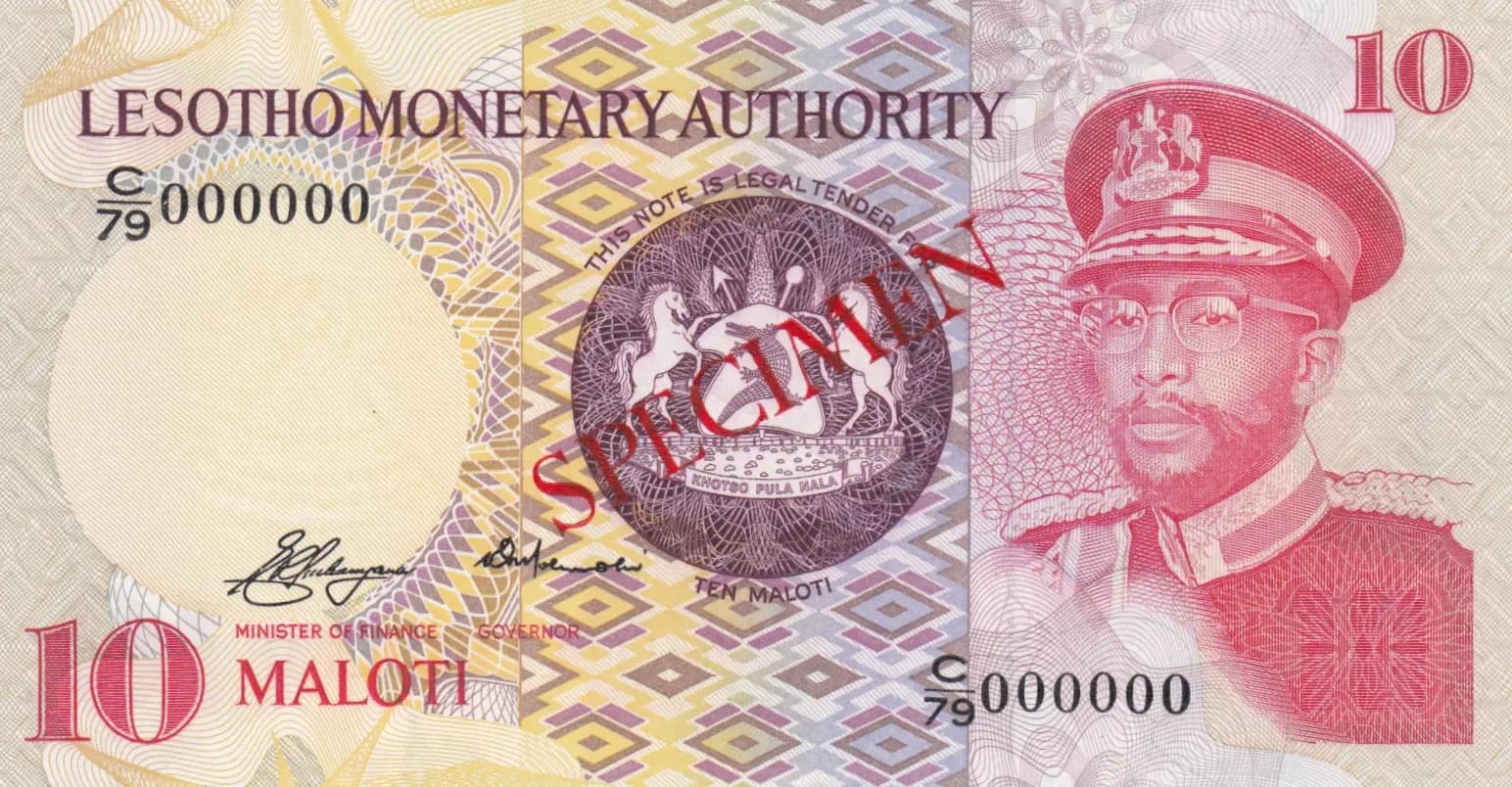
The obverse features a portrait of King Moshoeshoe II positioned on the right side, depicted in formal military uniform with peaked cap, symbolizing the nation's leadership and sovereignty. A circular heraldic coat of arms with a lion and shield design is centrally placed, representing Lesotho's national identity and authority. The reverse showcases a traditional Basotho rondavel with characteristic peaked/thatched roof, featuring pillars and a central entrance, rendered in detailed engraved style with an ornamental staff or ceremonial object on the left. Both sides employ fine geometric line patterns and multicolored underprints (orange, beige, brown, blue, pink, and green) creating a sophisticated, secure design typical of 1970s banknote production.
Front Side: 'LESOTHO MONETARY AUTHORITY' (issuing institution); 'R79 000000' (serial number with 1979 date indicator); 'THIS NOTE IS LEGAL TENDER' (legal tender declaration); 'SPECIMEN' (non-circulating specimen designation); 'TWO MALOTI' (denomination in English); 'MINISTER OF FINANCE' and 'GOVERNOR' (signature titles); 'MALOTI' (denomination label). Back Side: 'SPECIMEN' (non-circulating designation); 'MALOTI A MABELI' in Sesotho (Two Maloti in the local language); '2' (denomination numeral).
Intaglio (engraved) printing process, evidenced by the fine line work, detailed portrait rendering, elaborate coat of arms, and intricate geometric background patterns visible throughout both sides. The multicolored underprinting and the precision of the security patterns indicate professional security-printer quality typical of the era. Based on the PMG population report and catalog data, this note was likely produced by a major international security printer, though the specific printer for the P-1s specimen variant is not explicitly identified in available records.
This is the specimen variety of the 2 Maloti 1979 issue, cataloged as Pick P-1s. The serial number prefix 'R/79' indicates the 1979 date of issue. The non-circulating 'SPECIMEN' overprint, combined with the zero serial numbers (000000), confirms its status as a specimen note rather than a circulation issue. The watermark is documented as a Basotho hat, consistent with the official specifications for this denomination and vintage. The primary circulation variety for comparison is Pick P-1a, which features the same Basotho hat watermark but includes actual serial numbers and lacks the specimen overprint.