5 maloti 1979
Market Prices
6 salesAbout This Note
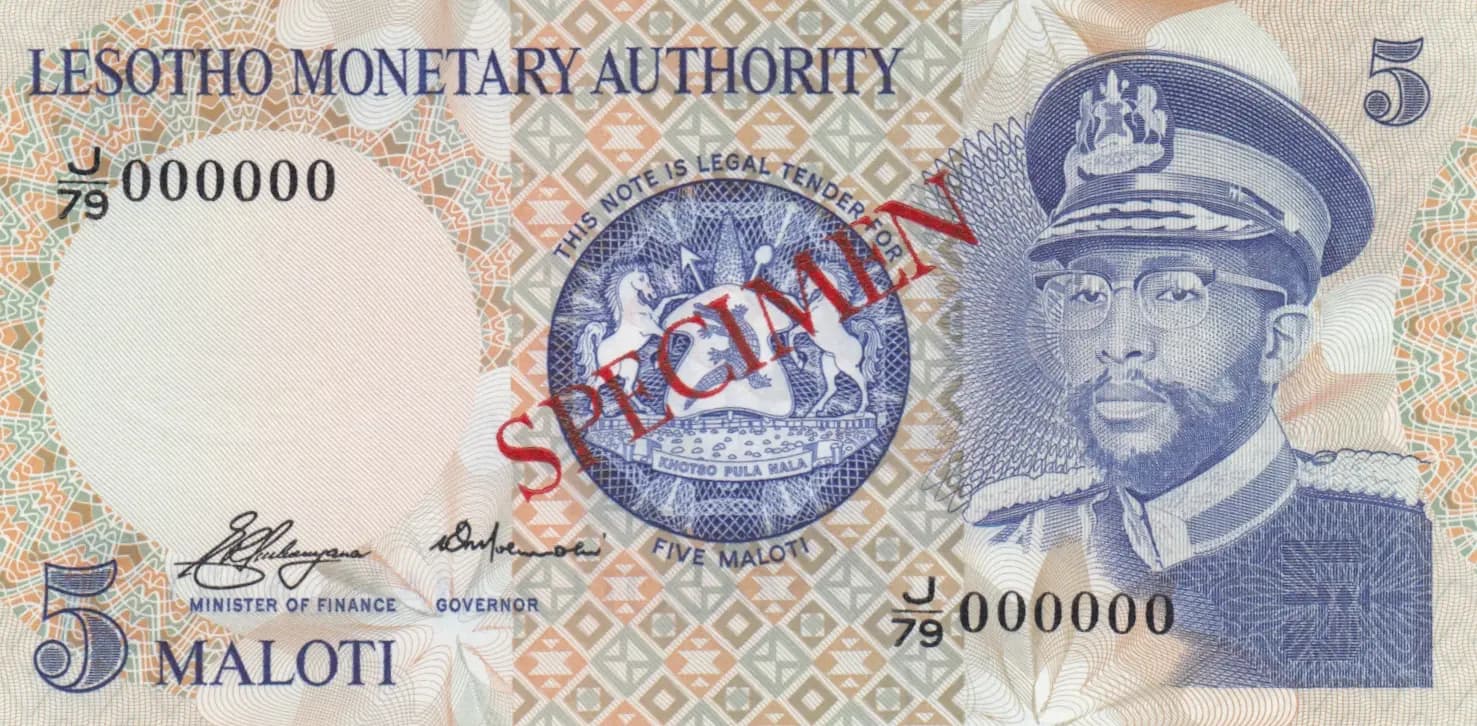
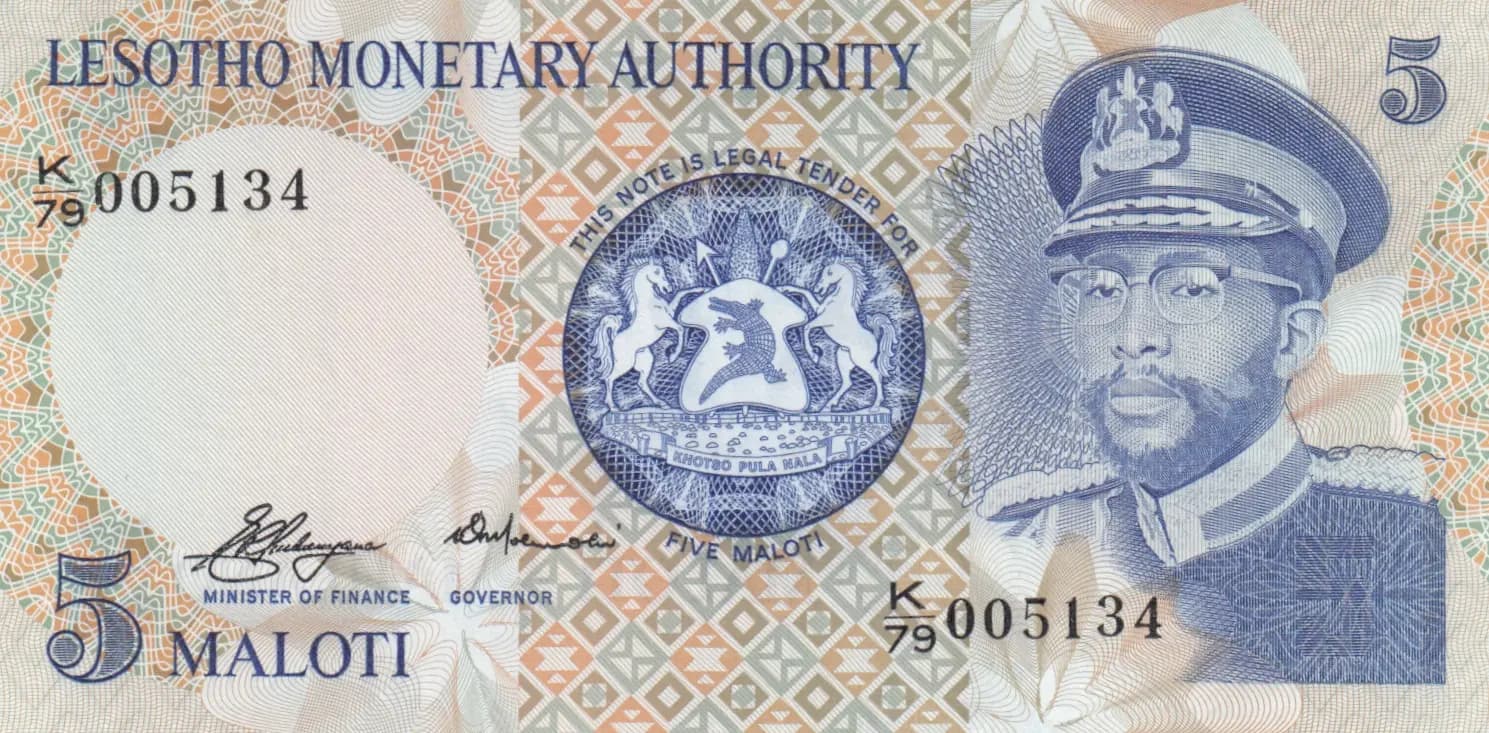
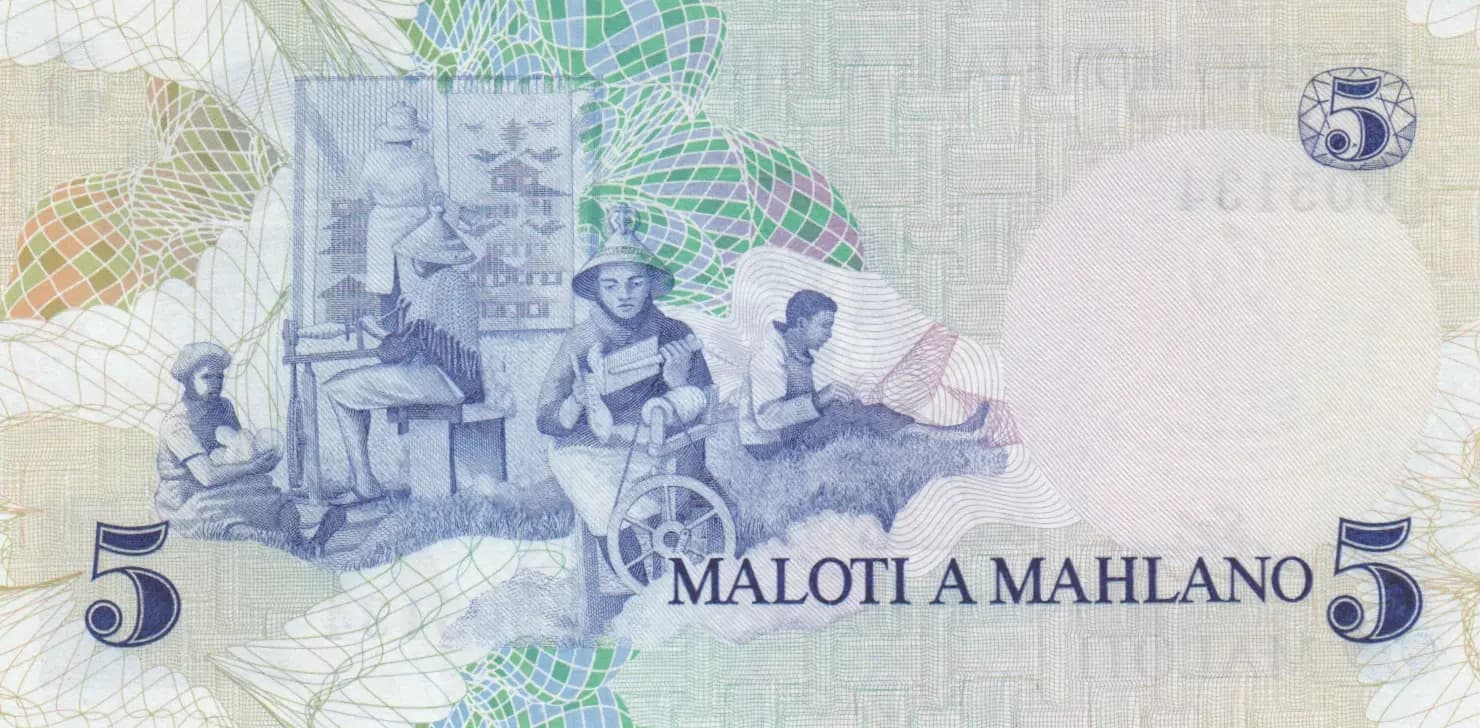
This is an uncirculated 1979 Lesotho 5 Maloti note (Pick P-2) issued by the Lesotho Monetary Authority, displaying exceptional condition with no signs of wear, creasing, or damage. The note features vibrant multicolored printing with a prominent portrait of King Moshoeshoe II in military dress on the obverse and traditional Basotho craftsmen engaged in weaving activities on the reverse. The ornate geometric patterns, fine security line work, and detailed engraving throughout make this an attractive example of 1970s Southern African currency design.
Common. eBay market data shows UNC specimens consistently selling in the $15-36 range (2014-2026), with 2019 catalog values listing UNC at $37. These modest prices and regular auction activity indicate healthy supply in the market. The 1979 5 Maloti is part of the standard inaugural series and was issued in quantities sufficient to maintain circulation. No evidence of scarcity, recalls, or limited mintage exists for this Pick number.
Issued in 1979 during King Moshoeshoe II's reign, this note represents Lesotho's early post-independence monetary period following the establishment of the Lesotho Monetary Authority. The obverse prominently features the reigning monarch in military uniform, reflecting the nation's governance structure, while the reverse celebrates traditional Basotho craftsmanship and cultural heritage through its depiction of weavers and traditional dwellings. The dual-language inscriptions (English and Sesotho) underscore Lesotho's cultural identity during this formative period of nation-building.
The obverse features the Lesotho national coat of arms at center—a heraldic design with two springbok antelope as supporters flanking a shield with ornamental crown, all enclosed in an ornate circular seal with fine line work. To the right is a portrait of King Moshoeshoe II depicted in military dress uniform with peaked cap and glasses, rendered in fine engraving detail. The background comprises elaborate geometric guilloche patterns in orange, tan, and green, creating a complex security background. Signature lines for the Minister of Finance and Governor appear below the coat of arms. The reverse depicts traditional Basotho life through an engraved illustration showing figures engaged in various activities including weaving, with one figure positioned at the doorway of a traditional rondavel (circular hut). Additional figures appear to be engaged in reading, writing, or craft work. Decorative geometric mesh patterns in blue, green, and orange frame the central vignette. The Basotho hat watermark provides additional security.
FRONT SIDE: 'LESOTHO MONETARY AUTHORITY' (English: Lesotho Monetary Authority); 'THIS NOTE IS LEGAL TENDER FOR' (English: This note is legal tender for); 'FIVE MALOTI' (English: Five maloti); 'MINISTER OF FINANCE' (English signature designation); 'GOVERNOR' (English signature designation); 'MALOTI' (English/Sesotho: Maloti, plural of loti); '5' (numeric denomination). Serial number: 'K79 005134' (indicating 1979 issue year). REVERSE SIDE: '5' (numeric denomination); 'MALOTI A MAHILANO' (Sesotho: Traditional reference to maloti/currency in Sesotho language context).
This note employs traditional intaglio/engraving printing combined with multicolor lithography, evidenced by the fine line work, intricate guilloche patterns, detailed portraiture, and layered color printing visible throughout. The complex background patterns, security line work, and the depth of detail in both the coat of arms and reverse vignette are characteristic of security printing by a specialized currency printer. The specific printer for this Pick number (P-2a and variants) is not definitively identified in the provided data, though notes from this era were commonly printed by established international security printers such as Thomas De La Rue (TDLR) or similar firms.
This note is cataloged as Pick P-2, with known varieties including P-2a (standard) and P-2s (specimen). The observed serial number 'K79 005134' contains the date designator '79' in the prefix (indicating 1979 issue), which is consistent with catalog documentation stating that the serial number prefix contains the last two digits of the year of issue. No specific overprints, signature varieties, or printing variants are apparent from the visual analysis. The note appears to be a standard production example of the P-2a variety.