2 maloti 1979
Market Prices
4 salesAbout This Note
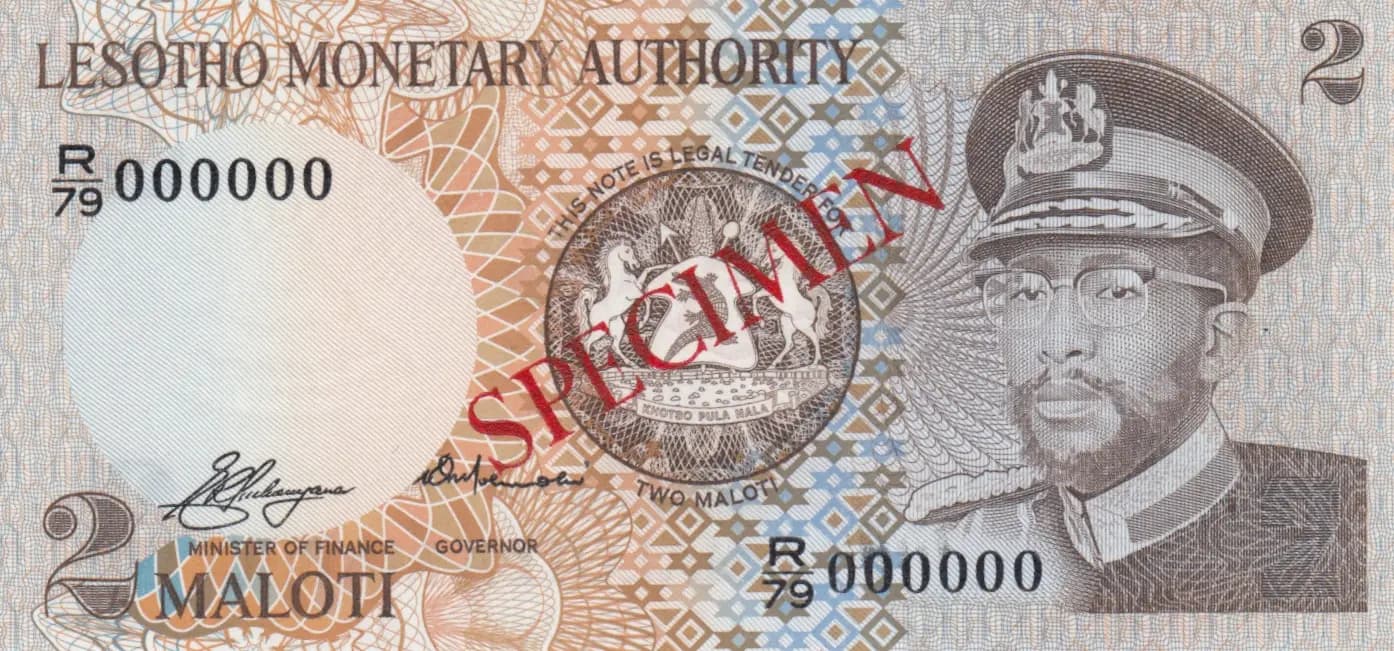
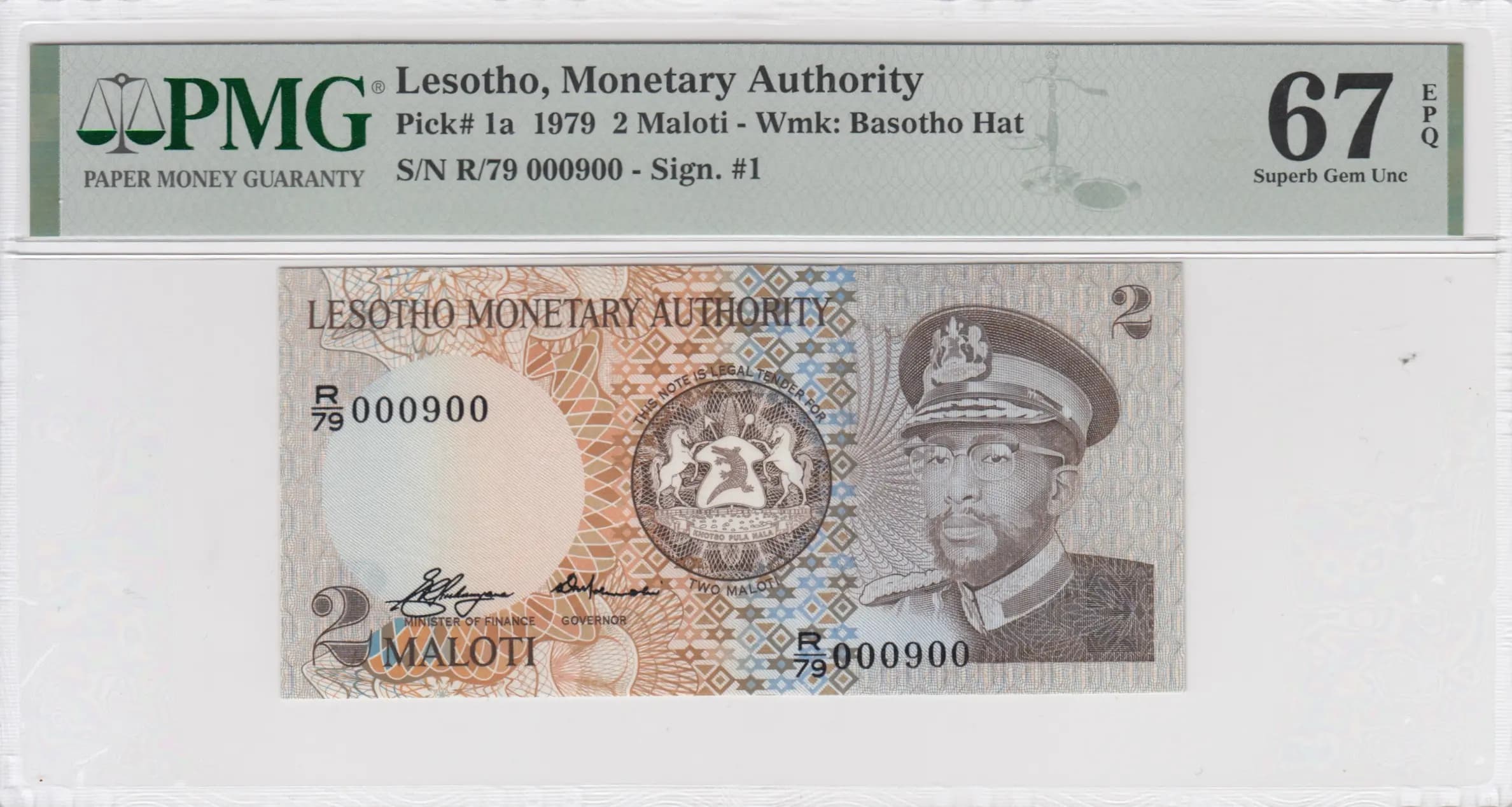
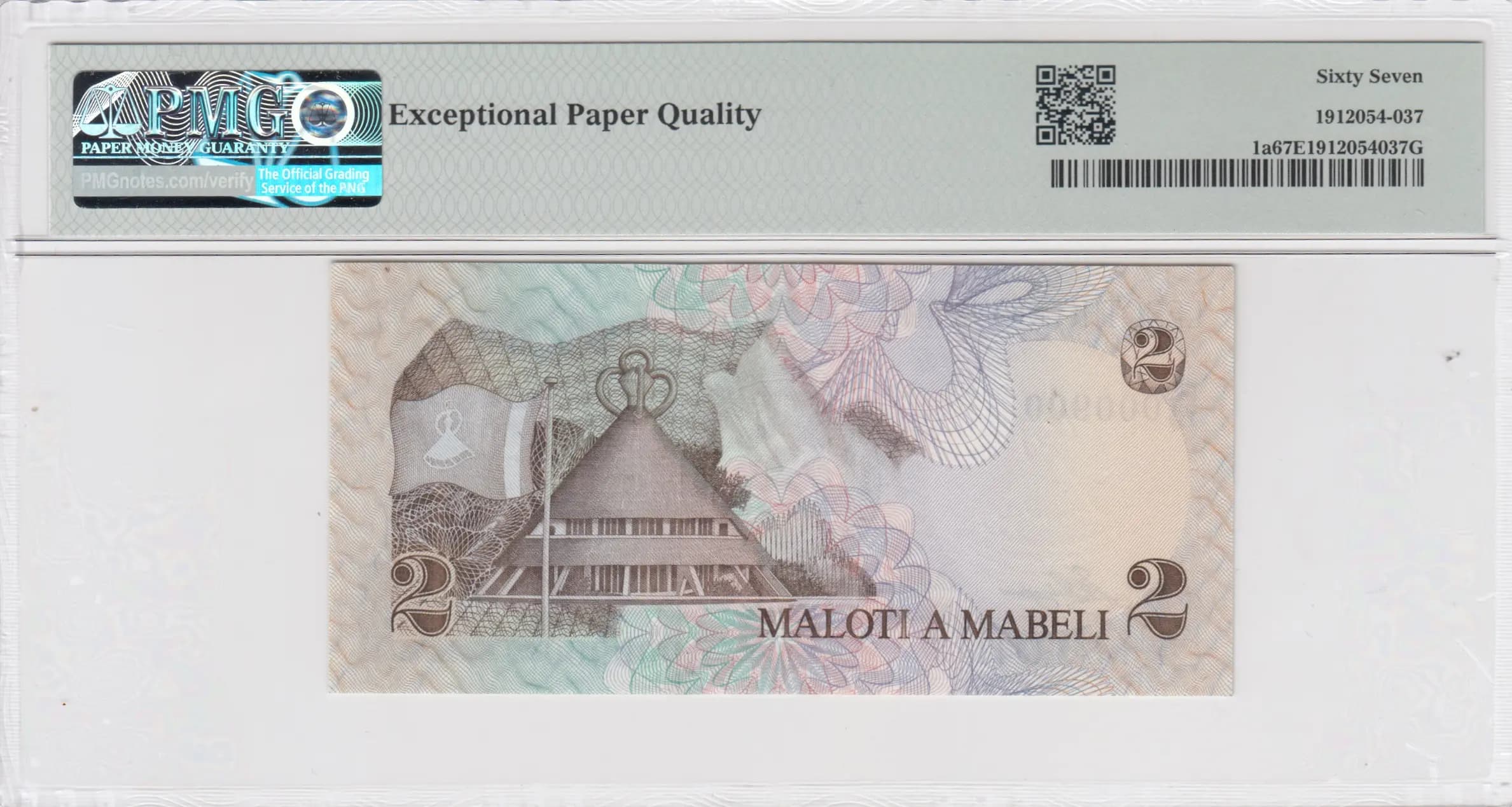
This is a PMG 67 EPQ example of Lesotho's first 2 Maloti banknote from 1979, representing an important early issue from the newly independent nation's monetary authority. The note exhibits exceptional preservation with pristine paper quality, showcasing the distinctive military portrait of King Moshoeshoe II on the obverse and a beautifully rendered traditional Basotho rondavel on the reverse. As the lowest denomination in Lesotho's inaugural currency series, this note is notable for its cultural significance and the fine engraving quality that characterizes the entire 1979 issue.
Common. This is the base denomination (2 Maloti) from Lesotho's initial 1979 currency issue, which means it was produced in significant quantities for circulation. The eBay market data provided shows regular trading activity with comparable grades selling in the $13-24 range, indicating steady collector demand but no scarcity premium. Even in PMG 67 EPQ condition, this note commands modest prices, consistent with common currency issues from a small nation's inaugural series.
Issued in 1979 by the Lesotho Monetary Authority, this banknote commemorates the nation's early independence era and celebrates Basotho cultural heritage through its design elements. The portrait of King Moshoeshoe II in military dress reflects the country's political leadership during this period, while the reverse design featuring the iconic rondavel hut with geometric patterns emphasizes traditional Basotho architecture and identity. The bilingual inscriptions in English and Sesotho underscore Lesotho's linguistic and cultural foundation during the formative years of its independent monetary system.
The obverse features King Moshoeshoe II depicted in military uniform with a peaked cap, shown in left-facing profile on the right side of the note. The national coat of arms appears in a circular seal in the upper center, flanked by decorative geometric patterns in orange and blue. The reverse displays a traditional Basotho rondavel (conical thatched hut) as the central architectural focal point, rendered with intricate geometric decorative patterns in green, pink, purple, and tan tones that reflect authentic Basotho artistic traditions. The Basotho Hat watermark is visible throughout, serving as the primary security feature.
Front: 'LESOTHO MONETARY AUTHORITY' (English), 'TWO MALOTI' / 'MALOTI' (English denomination), 'MINISTER OF FINANCE' and 'GOVERNOR' (English titles for signatories), Serial number 'R/79 000900' (where 79 indicates year of issue). Back: '2' (denomination numeral), 'MALOTI A MABELI' (Sesotho language equivalent of 'Two Maloti').
The note employs intaglio/engraving printing methods, evidenced by the fine line engraving quality visible throughout both sides and the complex geometric pattern backgrounds serving dual purposes of design and security. The multicolor printing technique (brown, orange, blue on obverse; green, pink, purple, tan on reverse) indicates sophisticated security printing appropriate to early currency issues. The printer for Pick P-1a is not definitively identified in available records but represents the technical standards of 1970s currency production.
This is cataloged as Pick P-1a, the primary variety of the 2 Maloti 1979 issue, identified by the Basotho Hat watermark. The serial number prefix 'R/79' follows the standard format where the year component (79) indicates the 1979 issue date. A specimen variety (P-1s) exists but is distinct from this circulating note. The PMG population report indicates P-1a is the standard variety, with 'P-1a' and 'P-1s' being the only major variants cataloged for this denomination. No overprints, replacement notes, or other significant varieties are noted for this issue.