10 maloti 1981
Market Prices
2 salesAbout This Note
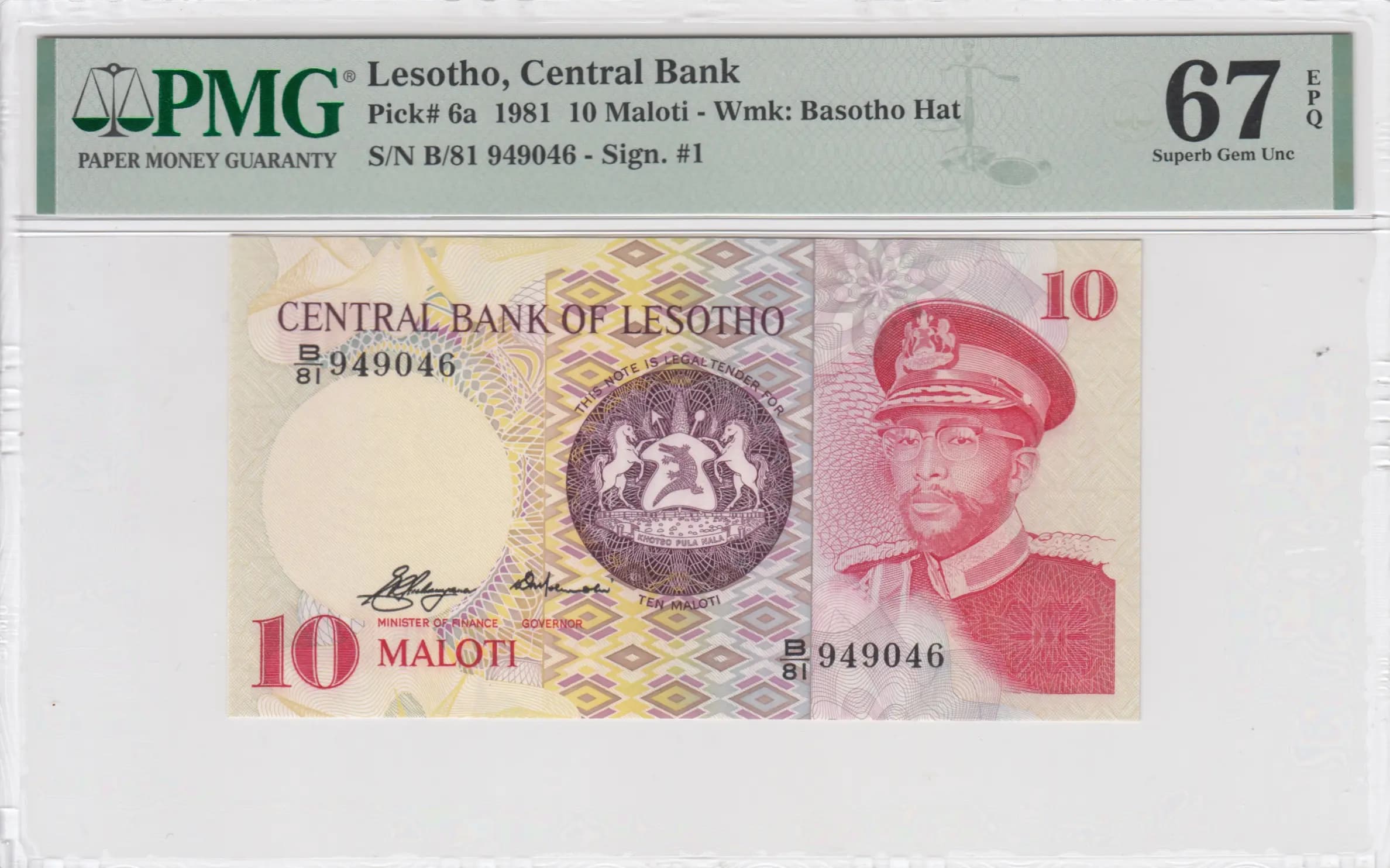
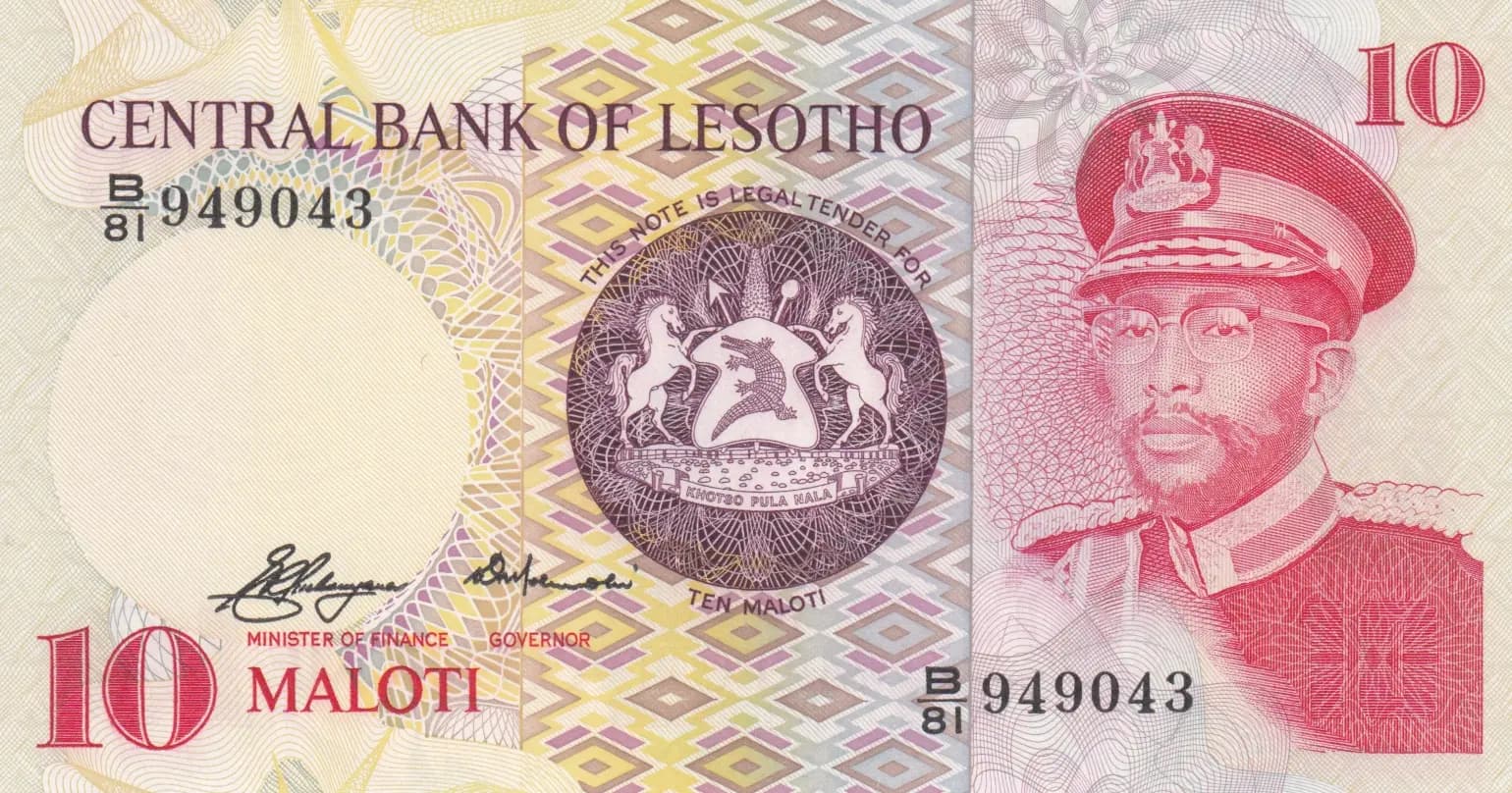
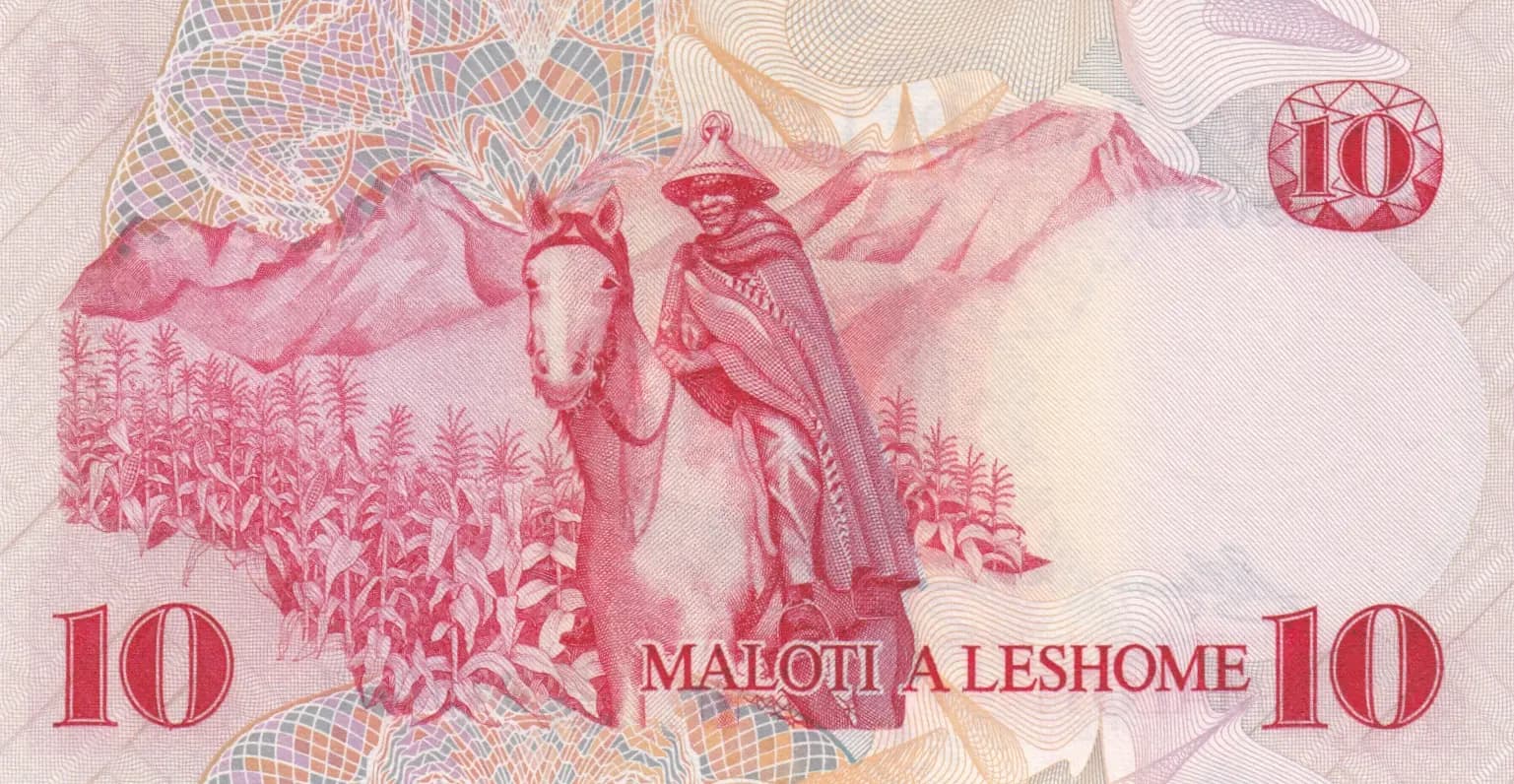
This is a pristine, uncirculated 1981 Central Bank of Lesotho 10 maloti note (Pick P-6a) featuring King Moshoeshoe II in military dress on the obverse and a mounted figure in a maize-cultivated landscape on the reverse. The note displays exceptional clarity with intricate geometric patterns, fine engraving, and rich multicolored printing in red, pink, yellow, purple, and beige tones. In UNC condition with sharp printing and no signs of wear, this note represents an excellent example of early Lesotho currency design.
Common. The 10 maloti 1981 (P-6a) is a regular-issue note with a substantial print run. eBay market data shows UNC examples selling for $33.95–$55 in 2015–2019, indicating steady but modest collector demand rather than scarcity. The existence of five cataloged variants (P-6a through P-6s2) and typical pricing well under $100 confirm this is a common note in the secondary market. Most 1981 Lesotho banknotes remain plentiful.
Issued in 1981, this note reflects Lesotho's early years as an independent nation (independent since 1966) and commemorates the reign of King Moshoeshoe II, the reigning monarch during this period. The reverse imagery—depicting a mounted figure amid maize crops with mountain backdrop—emphasizes the nation's agricultural heritage and Basotho pastoral traditions, while the heraldic coat of arms on the obverse underscores the kingdom's sovereignty and constitutional monarchy structure established post-independence.
The obverse features a central coat of arms with heraldic design (antelope supporters flanking a shield), surrounded by ornate geometric diamond and lattice patterns in yellow, purple, and beige. To the right is a portrait of King Moshoeshoe II dressed in formal military uniform with peaked military cap and shoulder insignia, rendered in red and pink tones. The reverse depicts a Basotho herdsman or dignitary mounted on a white horse in formal military dress with plumed hat, set within an agricultural landscape showing maize fields on either side and mountains in the background. The composition emphasizes both the nation's pastoral heritage and its monarchical authority. Both sides are framed with ornate line-work borders and feature the denomination '10' in decorative frames.
Front side: 'CENTRAL BANK OF LESOTHO' (issuing authority), '10' (denomination), 'THIS NOTE IS LEGAL TENDER FOR' (legal tender declaration), 'TEN MALOTI' (denomination in words), 'MINISTER OF FINANCE' (signature authority), 'GOVERNOR' (signature authority), 'MALOTI' (currency name), Serial number 'B 81 949043' (with '81' indicating 1981 issue year). Back side: '10' (denomination marker, repeated in multiple locations), 'MALOTI A LESHOME' (Sesotho/English: 'Maloti of Lesotho').
Intaglio (engraved) printing with multicolor lithographic underprinting. The fine detailed line work, intricate crosshatching, stippling effects in background patterns, and precise geometric borders are characteristic of high-security banknote engraving. The note exhibits the quality and security features typical of notes produced by established international security printers serving central banks during this period, with complex background designs intended to deter counterfeiting.
This specific note is identified as Pick P-6a, characterized by the Basotho hat watermark. The serial number 'B 81 949043' shows the '81' prefix fraction denominator indicating 1981 issue as documented in catalog convention. The PMG population report identifies four other variants of the 10 maloti from this issue (P-6b, P-6r, P-6s1, P-6s2), suggesting potential differences in watermarks, security features, or printing characteristics. This example appears to be an early printing from the initial 1981 release, with no overprints or unusual features noted.