Windau 20 kopeek 1915
About This Note
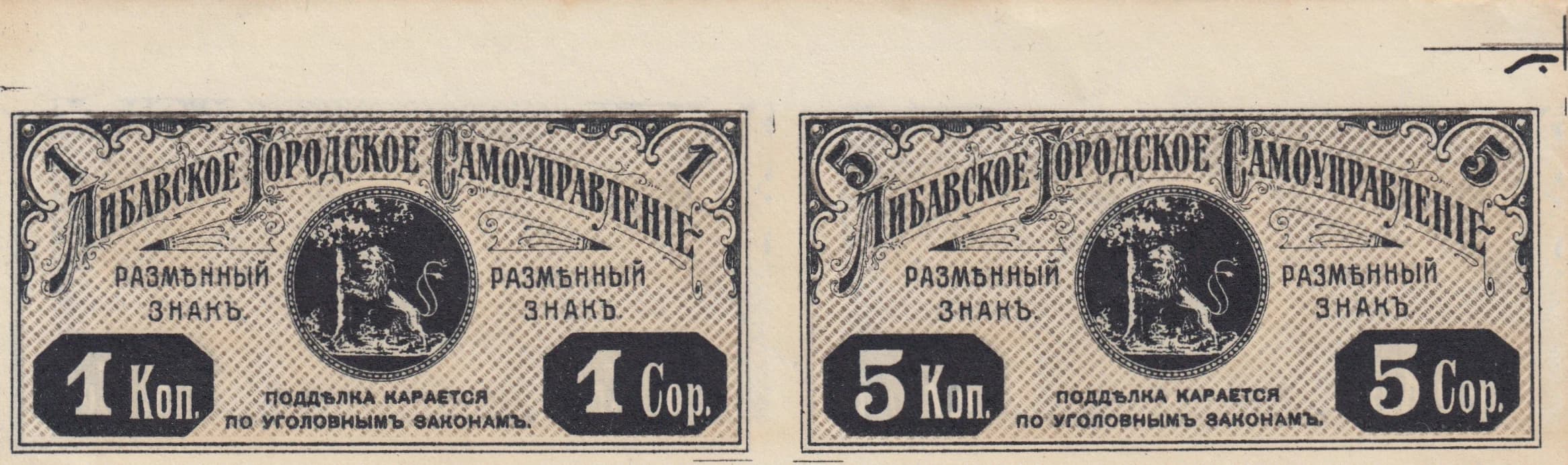
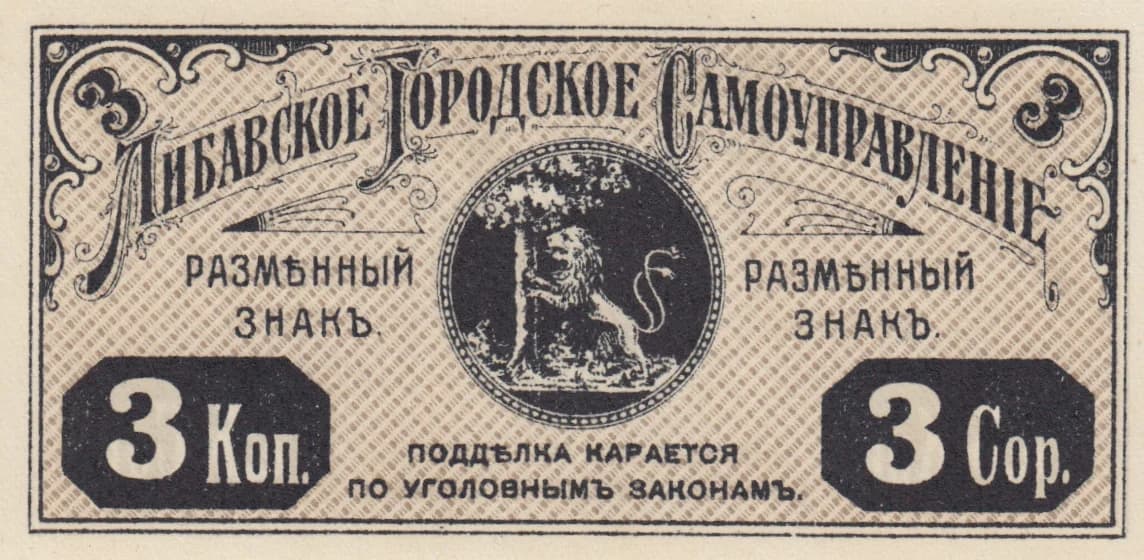
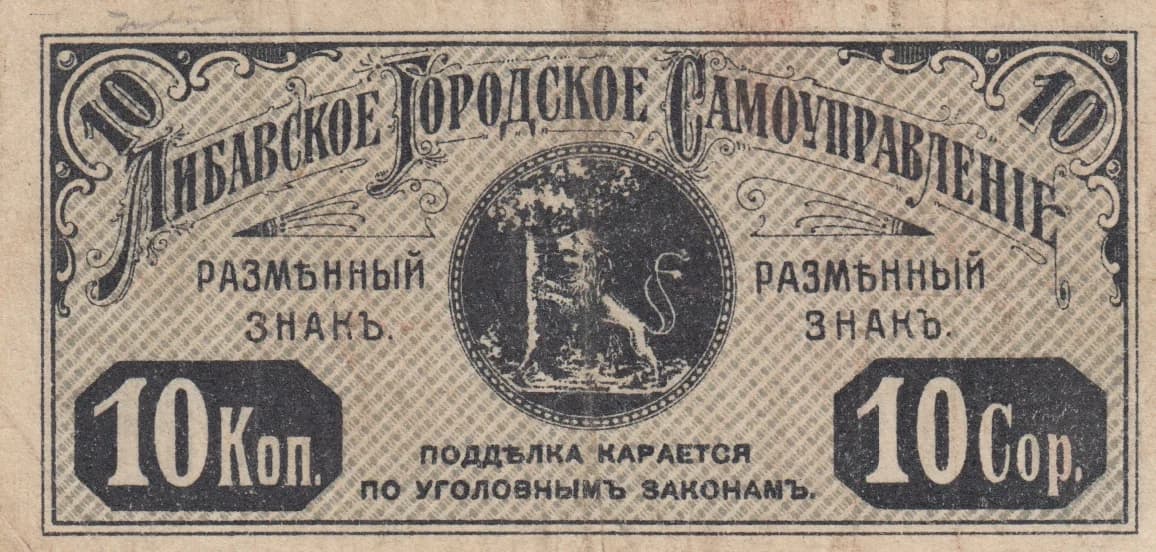
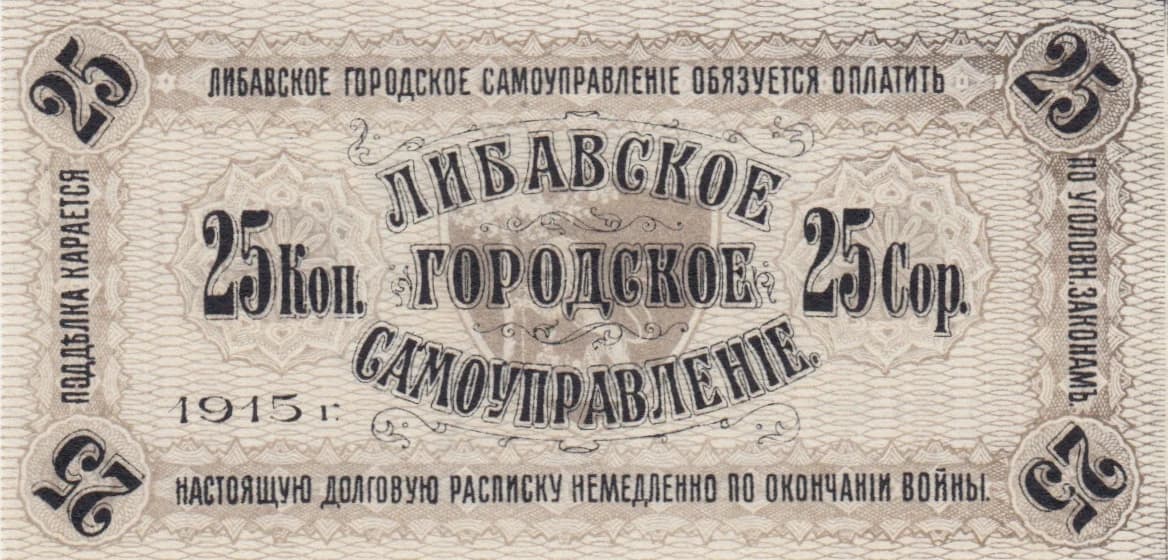
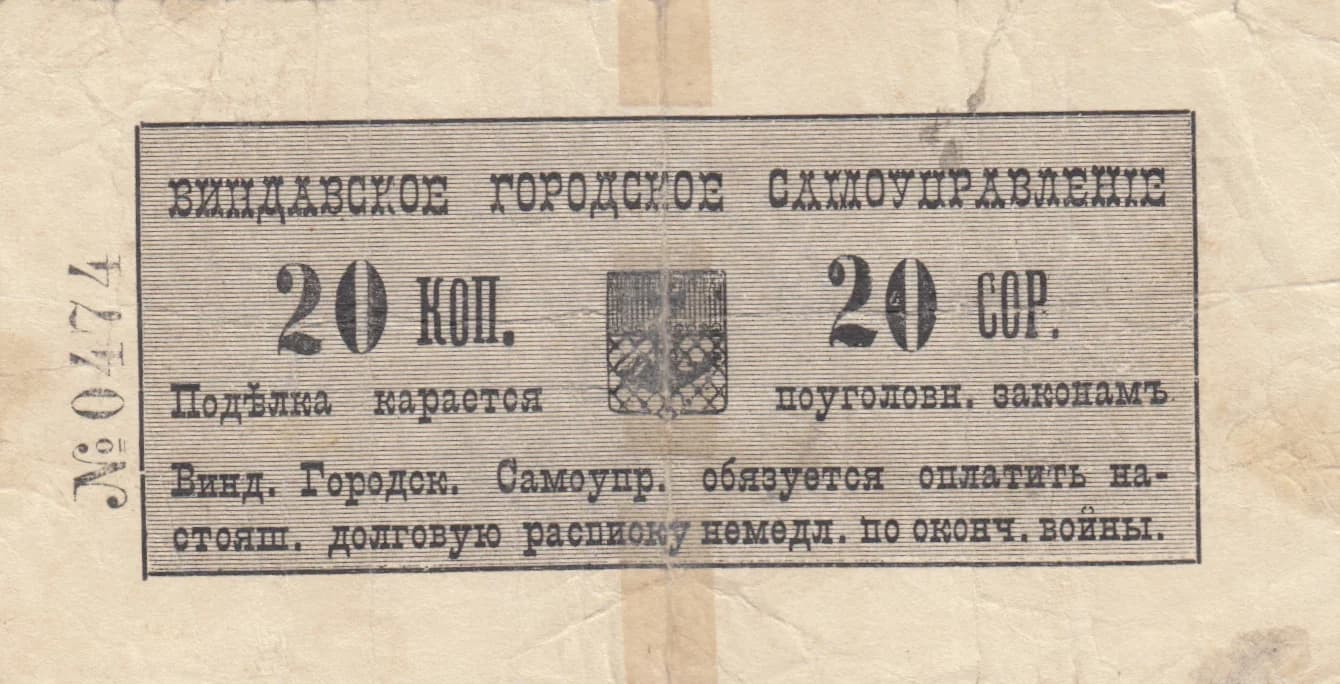
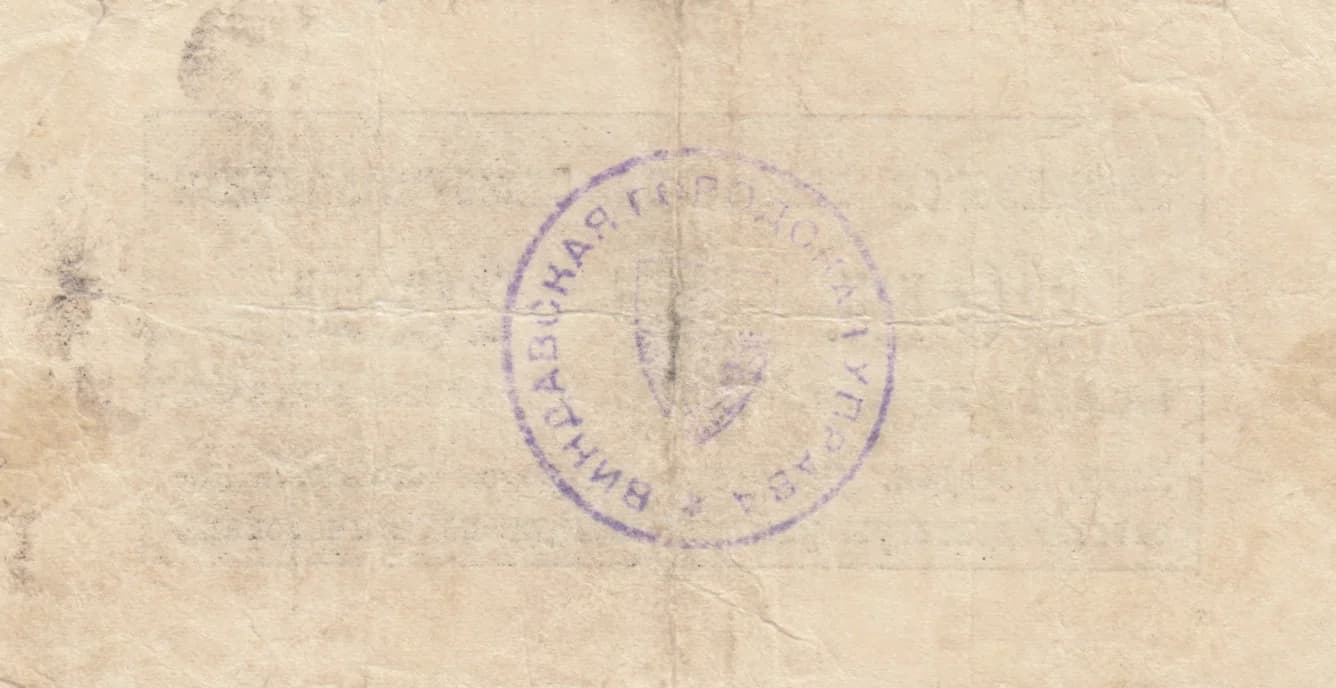
This is a Windau City Municipality 20 kopeks emergency currency note from 1915, issued during World War I when regular currency was scarce. The note features Russian Cyrillic text on aged, cream-colored paper with significant foxing consistent with its century-old age. An official circular seal in purple ink on the reverse and a heraldic coat of arms on the obverse authenticate this municipal self-government issue, with the note in VF condition showing expected wear and creasing from historical circulation.
Common. Windau issued emergency currency during WWI due to standard currency shortages affecting the entire Russian Empire, and multiple denominations were produced. Municipal emergency notes from this period were typically printed in moderate quantities to serve local commercial needs. The denomination (20 kopeks) was a useful everyday value, suggesting substantial circulation during its validity period. Unless specific documentation indicates a limited print run for this exact issue, wartime municipal emergency notes of this type are generally available to collectors.
Windau (modern-day Ventspils, Latvia) was a Baltic port city under Russian administration during World War I, when the Imperial government's currency shortage prompted municipalities to issue emergency notes. The inscriptions in Russian reflect the area's status within the Russian Empire at the time. The text references the city's self-government authority and promises redemption of the note upon the war's conclusion, a common clause in temporary emergency currency of the period.
The note is a text-based emergency currency certificate rather than a traditional illustrated banknote. The obverse features the issuer's name prominently displayed in Russian, the denomination in both kopeks notations, and a small heraldic coat of arms symbol representing Windau's municipal authority. The reverse bears an official circular seal or stamp in purple/violet ink, serving as the authentication mark for the municipal government. The entire design employs the serif typography and horizontal line screening typical of early 20th-century municipal printing, with no portraits or detailed landmarks but rather emphasizing official institutional legitimacy through heraldic symbolism and official seals.
Obverse: 'ВИНДАВСКОЕ ГОРОДСКОЕ САМОУПРАВЛЕНИЕ' (Windau City Self-Government); '20 КОП.' / '20 СОР.' (20 Kopeks); 'Подтверждаю скрепленными собственнич. законаме' (Confirmed by sealed proprietary laws); 'Вид, Городск. Самоупр. обязуются отпустить на-стояния, домговую распласку немедл. по окончc. войны.' (The City Self-Government is obligated to provide immediate settlement upon the conclusion of the war). Reverse: Official circular seal with text (legibility unclear in image analysis).
Letterpress printing with serif fonts and line-screen halftoning, typical of municipal printing facilities circa 1915. The note was likely produced by a local or regional Russian printer capable of executing official documents. The purple ink used for the reverse seal suggests professional official document production rather than hastily improvised wartime printing.
Specific variety identification would require examination of the circular seal text on the reverse (which remains unclear in the visual analysis) and any date or signature variations present on the note. Windau may have issued multiple printings of this denomination with variations in seal designs or authentication marks. Without clear visibility of serial numbers or printer marks in the provided images, the precise variety cannot be definitively determined, but this represents a standard municipal government issue rather than an emergency overprint variant.