Libau 1 & 5 kopeek 1915
About This Note
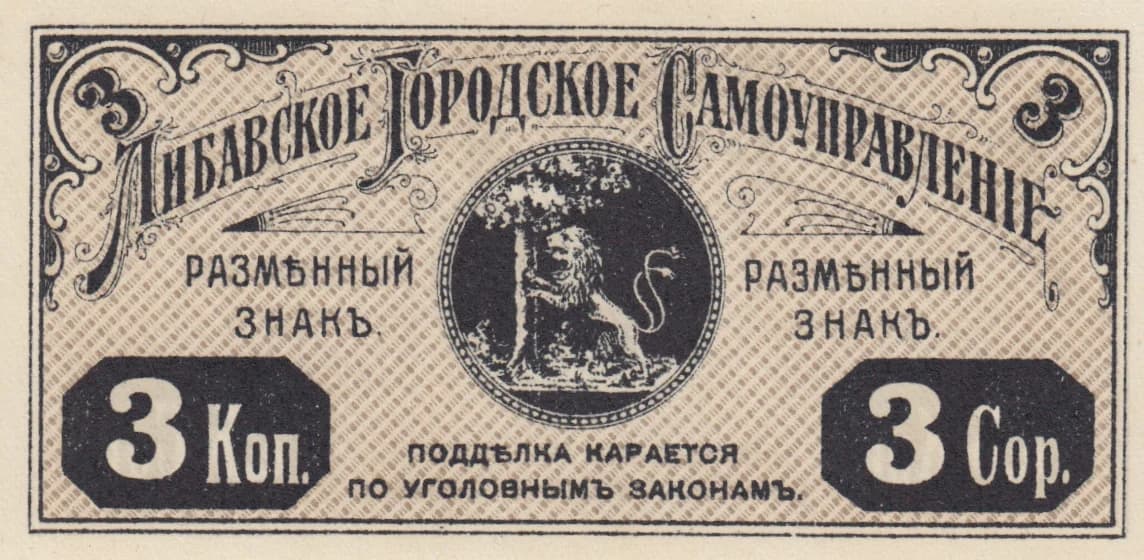
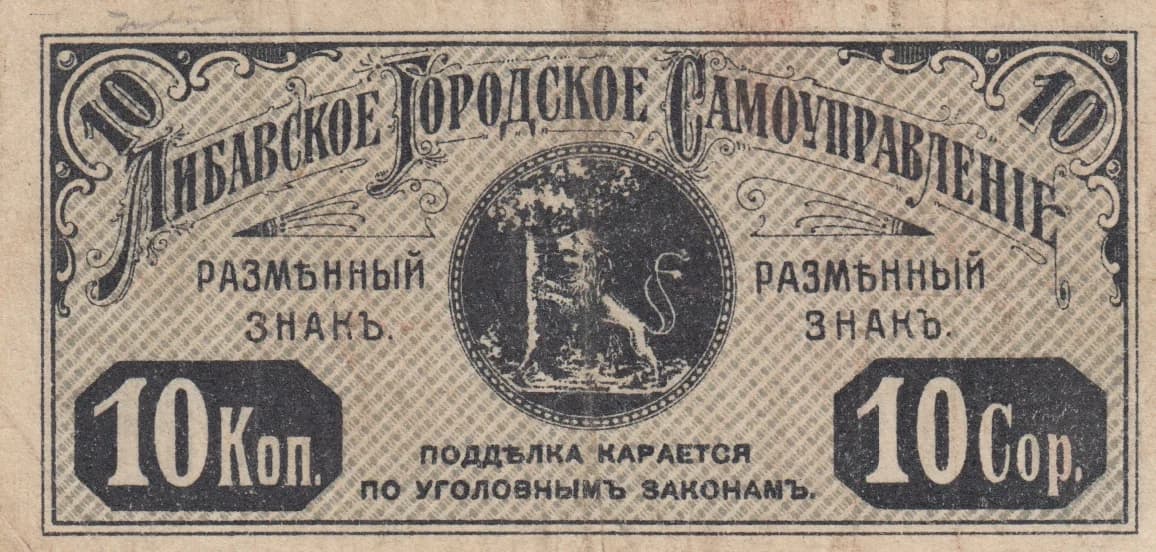
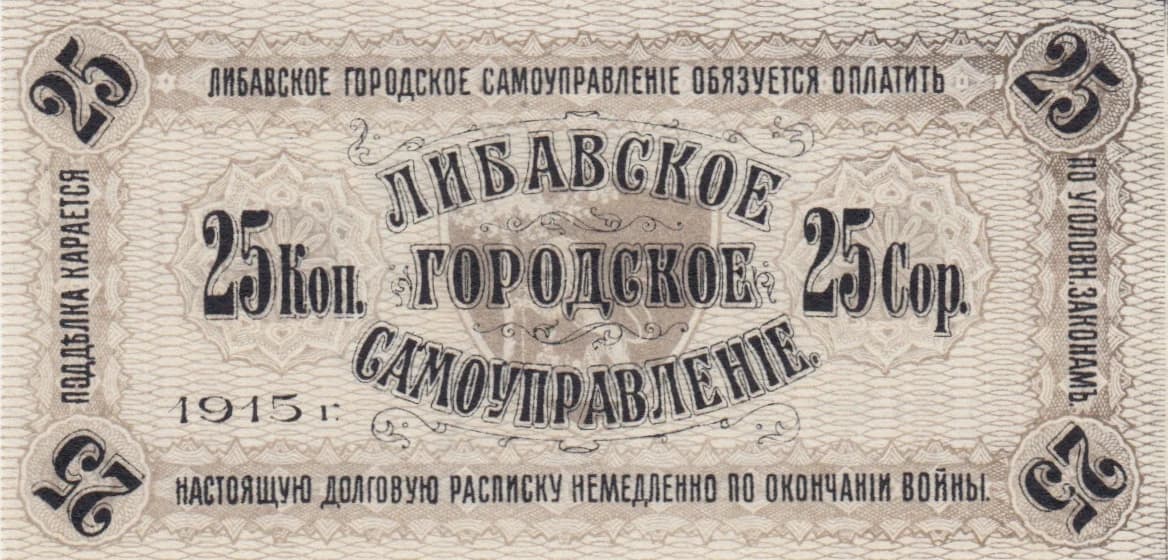
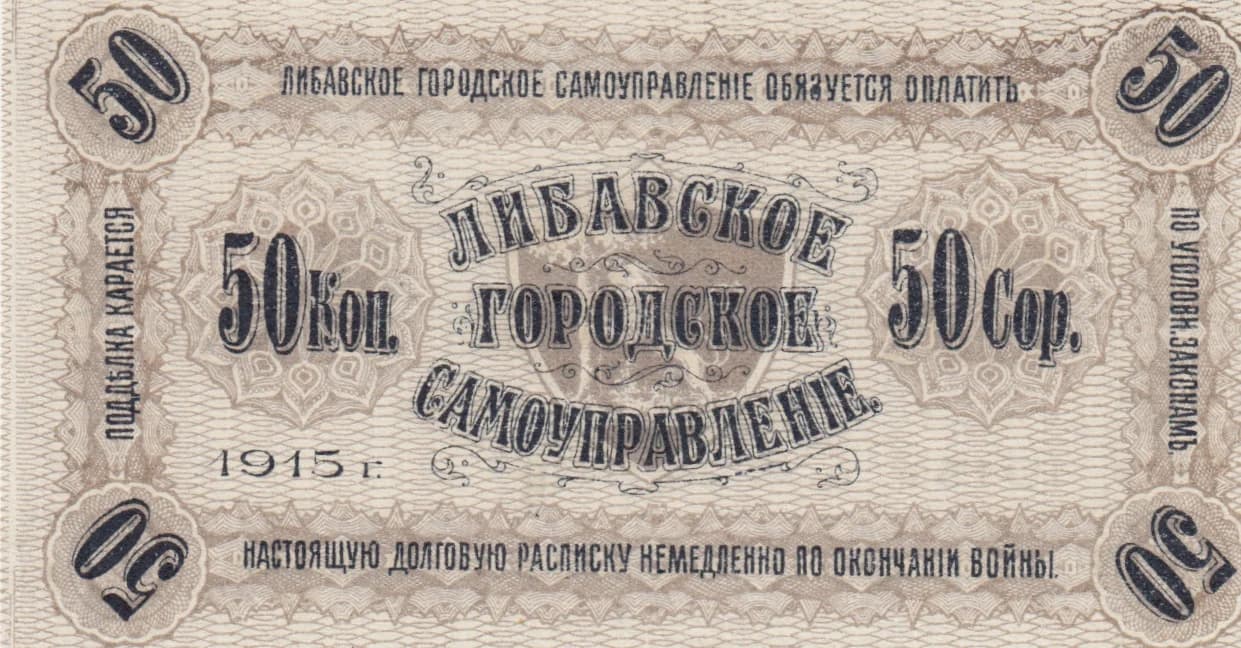
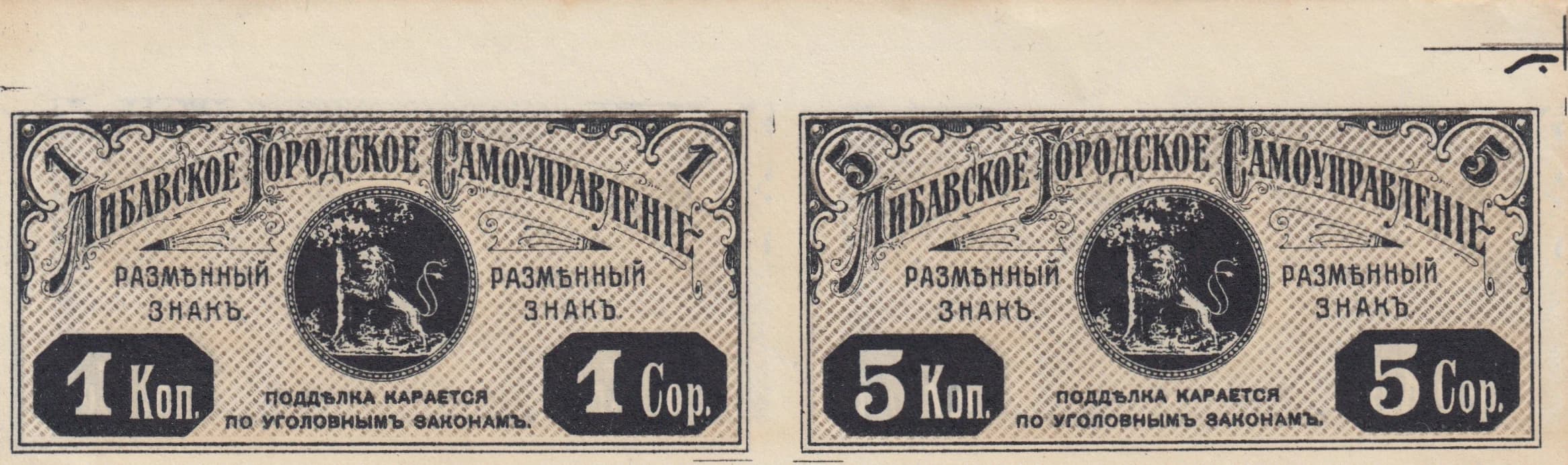
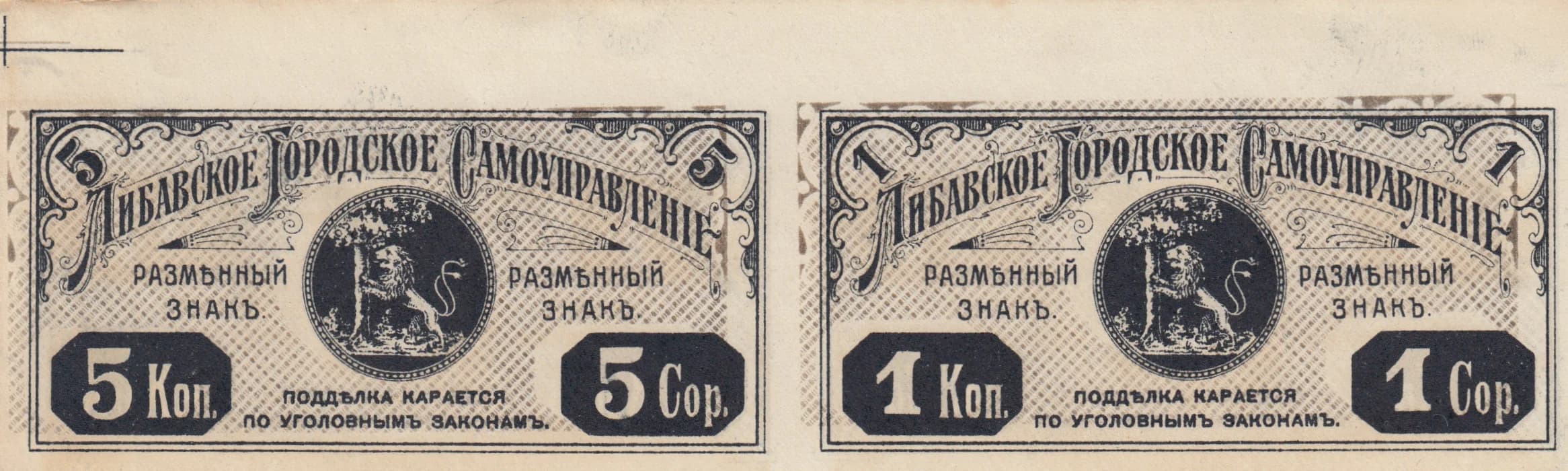
This is a scarce pair of Libau City Municipality emergency exchange tokens from 1915, comprising both the 1 Kopeck and 5 Kopeck denominations. Both notes are presented in exceptional uncirculated condition with sharp printing, clean cream/beige backgrounds, and crisp black ink throughout. The centerpiece lion medallion and ornamental corner scrollwork are hallmarks of these Baltic municipal emergency issues, making this a notable example of Russian Empire-era local currency from the turbulent World War I period.
Uncommon to Scarce. Libau municipal tokens from 1915 exist in limited quantities today; they represent a specific short-lived issuance by a single city municipality during a chaotic wartime period. Print runs for such local emergency issues were typically modest (likely in the tens or low hundreds of thousands), and survival rates are modest due to the temporary nature of emergency currency and wartime attrition. The pair offered here in uncirculated condition is particularly desirable. While not extreme rarities, these notes command collector interest and are substantially scarcer than national issues of the same era.
These notes were issued by the Libau (modern-day Liepāja, Latvia) City Municipality during World War I, when the Russian Empire faced severe currency shortages and municipal authorities issued emergency tokens to facilitate local commerce. The Russian Cyrillic inscriptions and the designation 'РАЗМЕННЫЙ ЗНАК' (Exchange Token) reflect Libau's status as part of the Russian Empire in 1915. The warning against counterfeiting ('поддёлка карается по уголовным законам') underscores the official nature of these municipal issues and the chaos of wartime currency circulation.
Both notes feature an identical ornamental design centered on a heraldic seated lion figure in profile (facing left) within a circular medallion frame—this lion represents the coat of arms of Libau/Liepāja, a Baltic port city. The design employs ornate corner scrollwork and decorative vine/leaf patterns in all four corners, typical of Belle Époque-era municipal currency design. Denomination values are prominently displayed in dark rectangular boxes on the left and right sides of each note. The background incorporates a fine crosshatch security pattern throughout, and all elements are rendered in black ink on a light cream/beige base stock. The dual-language inscription ('Коп' and 'Сор.') reflects the bilingual administrative practices of the Russian Baltic territories.
Front (Both denominations): ЛИБАВСКОЕ ГОРОДСКОЕ САМОУПРАВЛЕНИЕ = 'Libau City Self-Government'; РАЗМЕННЫЙ ЗНАК = 'Exchange Token'; поддёлка карается по уголовным законам = 'Counterfeiting is punishable by criminal law.' The 1 Kopeck note displays: '1 Коп' and '1 Сор.' (1 Kopeck / 1 Sor.). The 5 Kopeck note displays: '5 Коп.' and '5 Сор.' (5 Kopecks / 5 Sor.). All inscriptions are in Russian Cyrillic script.
Letterpress printing on paper stock with applied security measures. The fine crosshatch pattern throughout the background suggests the use of halftone or detailed line-work screening techniques to prevent counterfeiting. The sharp, clean impression and uniform ink coverage across both notes indicate professional municipal or state printing house production, consistent with Russian Empire printing standards for official currency issues of the period.
The primary variety distinction is the denomination: this cataloging represents two separate issues (1 Kopeck and 5 Kopeck denominations). No visible serial numbers, date variations, or printer markings are evident in the visual analysis that would identify sub-varieties within each denomination. Both notes appear to derive from the same printing series based on identical ornamental design, typography, and background security pattern. Individual notes in this series may vary by specific serial numbers or minor printing variations, but the visual analysis does not provide sufficient detail to identify such sub-varieties.