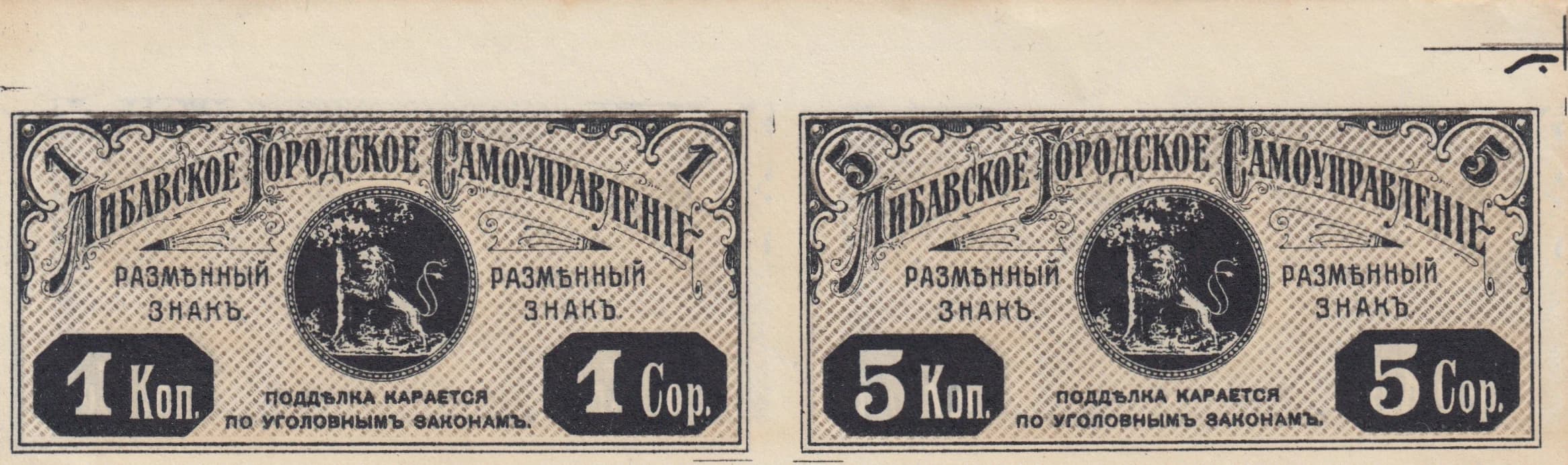
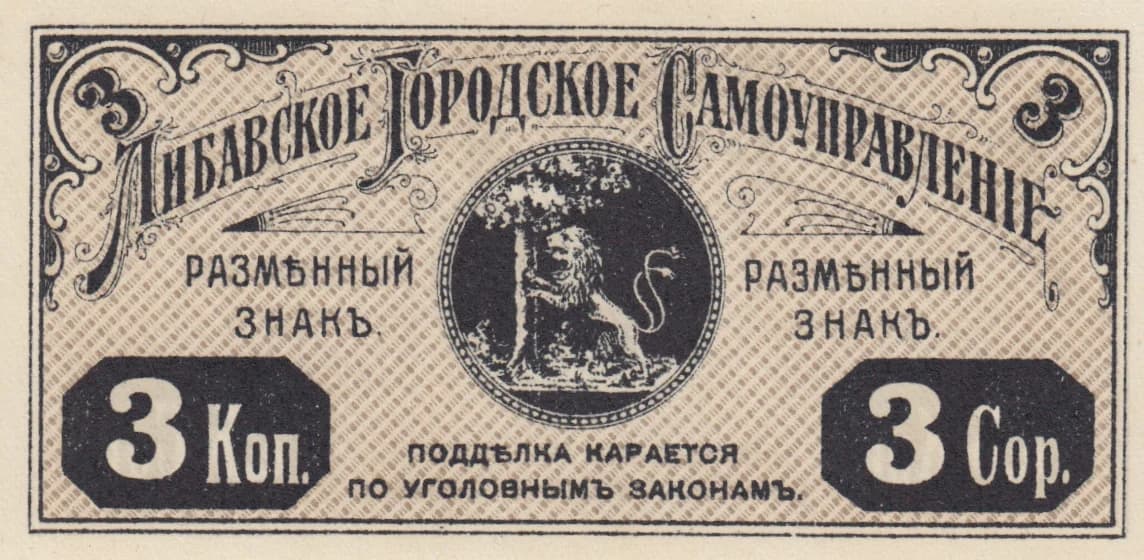
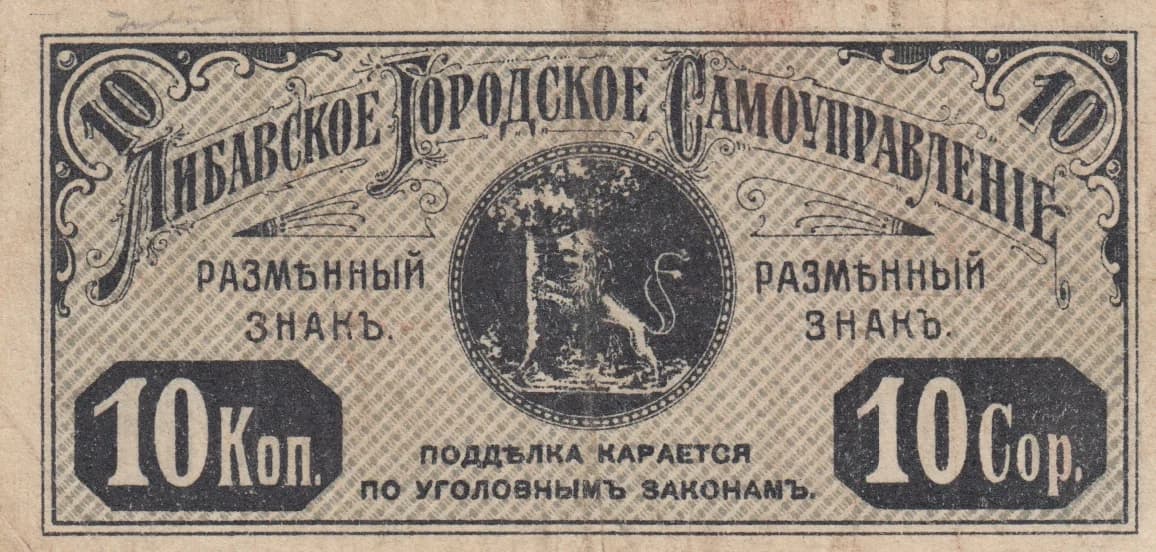
Libau 25 kopeek 1915
About This Note
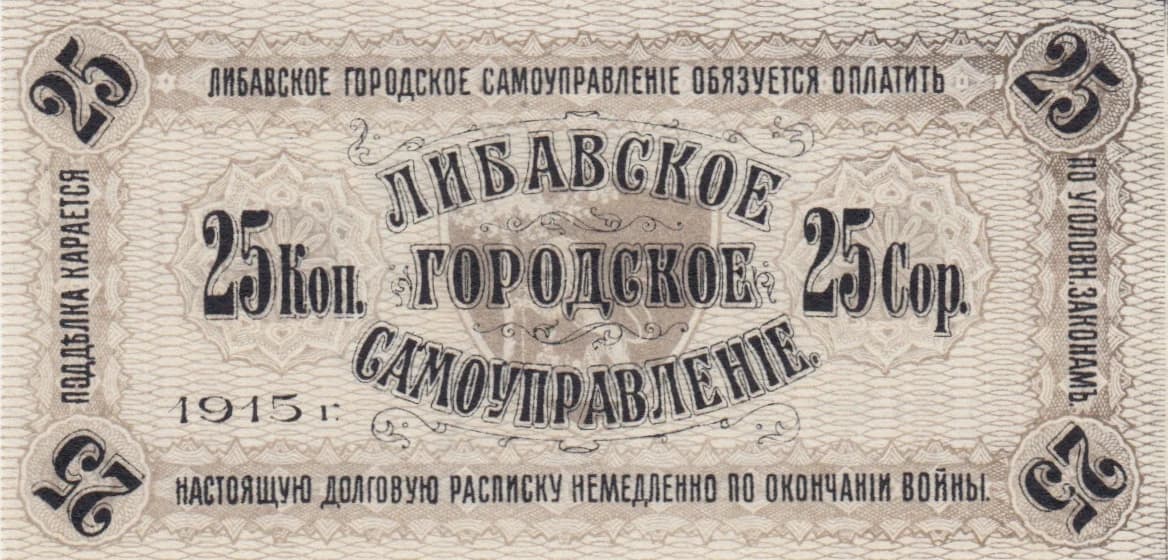
This is a Libau City Municipality 25 kopeck emergency currency note from 1915, issued during World War I when regular coinage became scarce in the Baltic region. The note displays exceptional condition (UNC) with crisp, clear printing and minimal aging on the beige paper stock, featuring ornate decorative borders and symmetrical corner numerals that are characteristic of early 20th-century municipal emergency notes. The prominent Russian Cyrillic text and formal layout reflect Libau's status as part of the Russian Empire during this period, making it a significant example of WWI-era emergency currency.
Common. Libau municipal notes from 1915 were issued in substantial quantities to facilitate wartime commerce in this major Baltic port city. The survival rate of emergency currency from this period is relatively good due to the formal, bond-like nature of these notes which encouraged preservation. While individual notes remain readily available to collectors, the UNC grade in this observed example is less common than circulated examples, though such pristine specimens appear with reasonable frequency in the market.
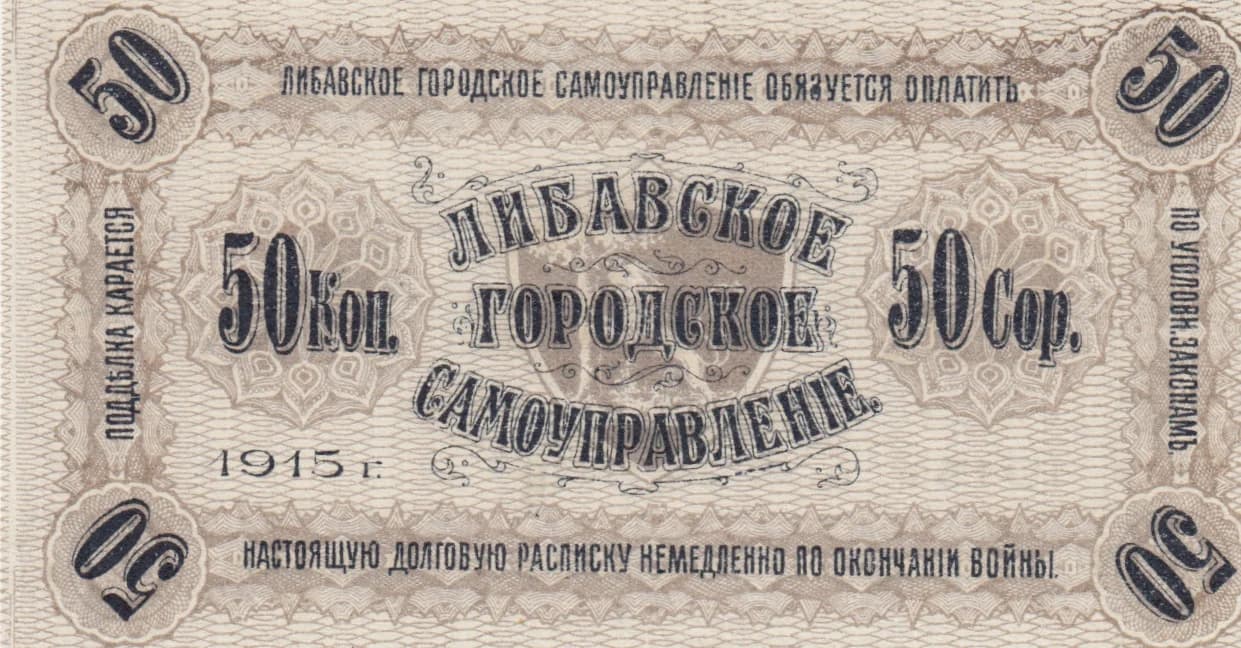
Libau (modern-day Liepāja), a major Baltic port city, issued this emergency currency during World War I when metal coinage was requisitioned for military purposes, a common practice across the Russian Empire. The text promising repayment 'immediately upon conclusion of war' reflects the temporary nature of these municipal obligations and the widespread expectation that the conflict would be brief. These notes were issued by local municipal governments to maintain commerce and facilitate trade when traditional currency became unavailable, representing an important chapter in Baltic numismatic history.
The note employs a classical municipal bond aesthetic typical of Baltic city notes from this period. The front features an ornate double-line border with elaborate scrollwork and floral filigree patterns in the corners, with the denomination '25' prominently displayed in decorative numeral styling in all four corners. The central field contains symmetrically arranged Russian Cyrillic text in a formal, serif typeface, presenting the issuing authority's promise to pay. The color scheme of beige/tan paper with black text and decorative elements was economical and practical for emergency municipal printing. No portraits or specific landmarks appear on this design; instead, the ornamental borders serve as both aesthetic and security elements. The symmetrical layout and formal typography emphasize the official nature of this municipal obligation.
FRONT: 'Либавское городское самоуправление обязуется оплатить' (Libau City Self-Government Undertakes to Pay) / 'Либавское городское самоуправление' (Libau City Self-Government) / '25' (denomination) / 'Коп.' (Kopeks) / '1915 г.' (1915) / 'Настоящую долговую расписку немедленно по окончании войны.' (This Debt Note Immediately Upon Conclusion of War) / 'Подписи нарочетов' (Signatures of Officials) / 'Подпись: бургомистра' (Signature of Burgomaster). The note represents a formal municipal debt obligation redeemable after the conclusion of World War I.
The note was produced using letterpress printing, evidenced by the sharp, clean impression of the text and decorative borders visible in the visual analysis. The consistent ink coverage, crisp serif typography, and well-defined ornamental patterns indicate professional printing by an established press, likely a Russian or Baltic printing house capable of handling municipal bond production. The technique would have involved metal type and engraved ornamental borders, typical of early 20th-century emergency currency production in the region.
This note represents the standard 1915 Libau 25 kopeck issue. Without visible serial numbers, signature varieties, or overprints evident in the visual analysis, this appears to be from the main printing. Libau municipal notes from this series can show signature variety based on which municipal officials signed the obligation, though the visual analysis does not provide sufficient signature detail to determine specific signatory varieties. The formal '1915 г.' (1915) designation indicates this is from the original issue year rather than any later reprint.