Libau 10 kopeek 1915
About This Note
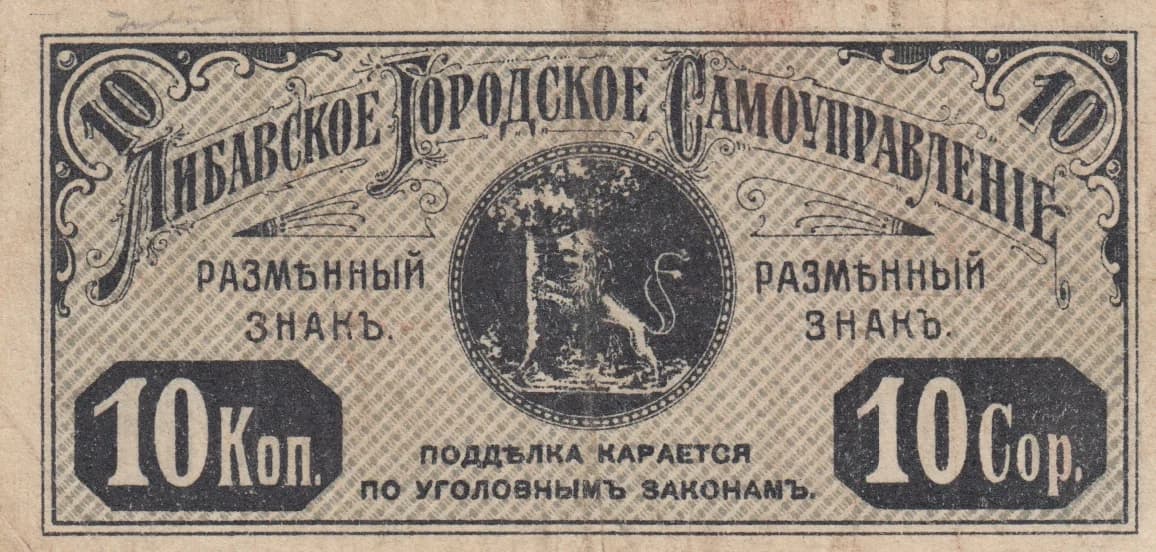
This Libau 10 Kopeck note from 1915 is an excellent example of municipal emergency currency issued during WWI, featuring a striking heraldic lion in an oval medallion at its center. The note exhibits the aged patina expected of a 109-year-old specimen, with visible foxing and discoloration throughout the beige paper, consistent with a VF grade that reflects both its historical significance and the passage of time.
Common. Libau city municipality issued these emergency tokens in substantial quantities to facilitate local commerce during WWI, and multiple denominations and date variants were produced. No evidence of low print runs, recalls, or exceptional scarcity for this specific denomination exists in numismatic literature.
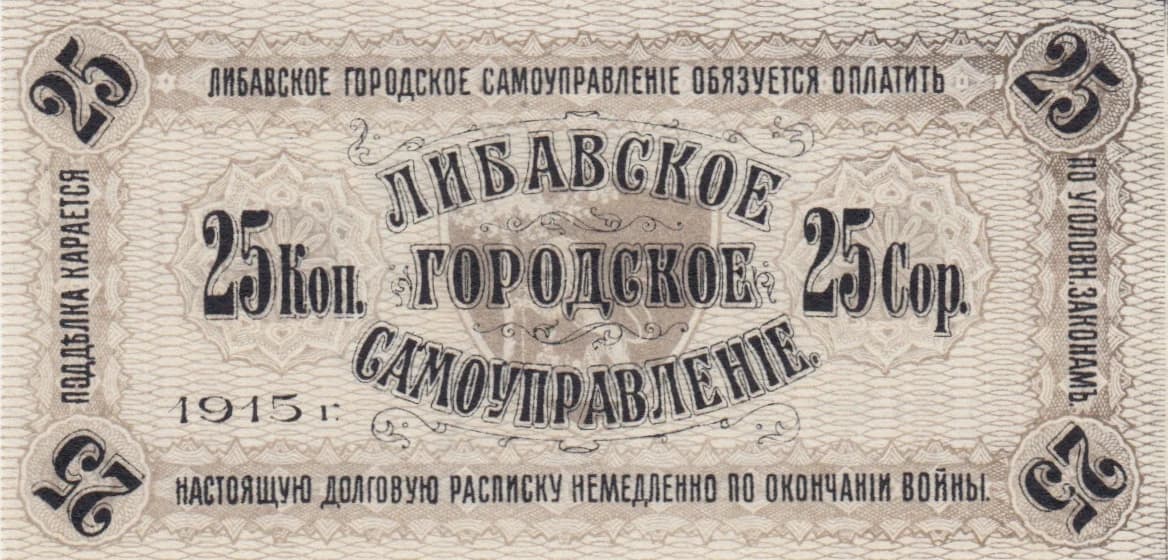
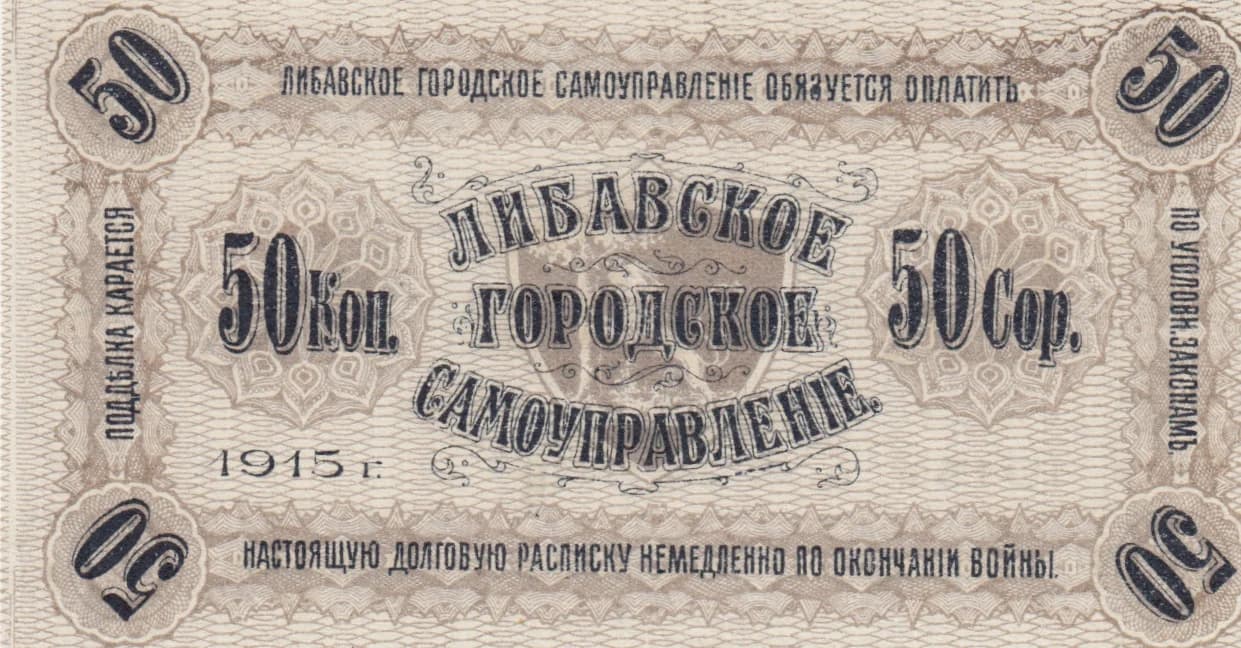
Libau (modern-day Liepāja, Latvia) issued this municipal emergency currency when Russia's monetary system was strained during World War I. The Russian-language inscriptions and heraldic lion reflect Libau's status as an important Baltic port city within the Russian Empire at the time. The denomination in both 'Коп.' (kopeks) and 'Сор.' (a dialectal variant) underscores the practical nature of these exchange tokens for local commerce during wartime disruptions.
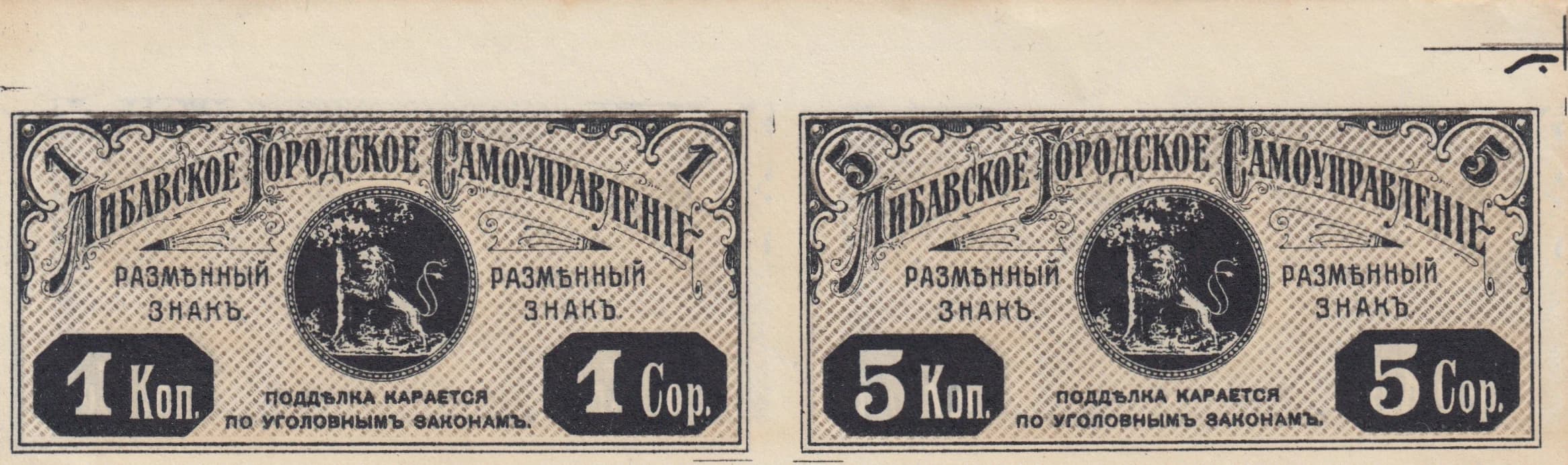
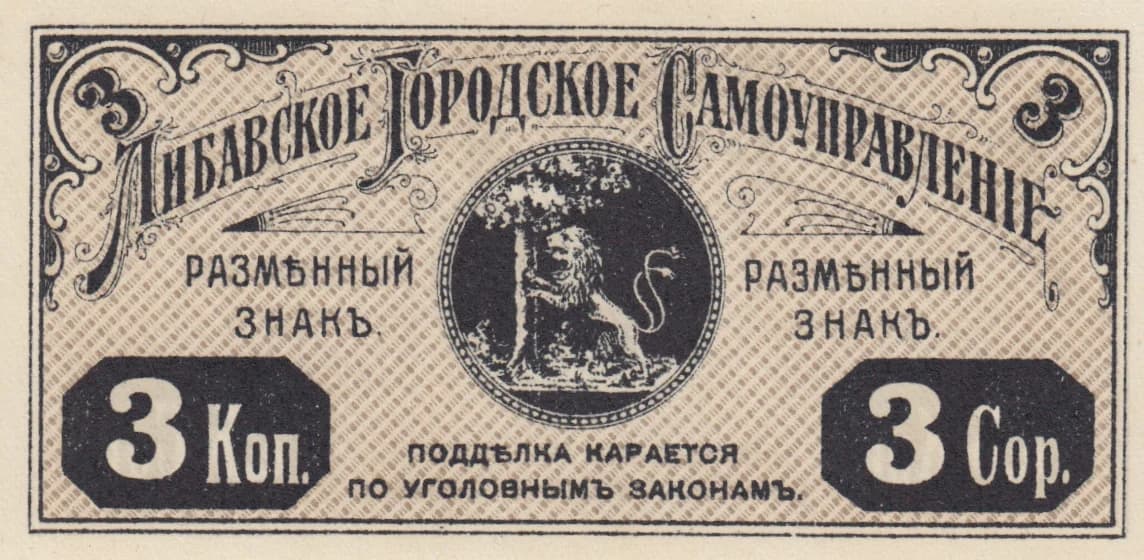
The note features a symmetrical layout with ornamental decorative flourishes and scroll designs in the four corners, each incorporating circular medallion elements. The central focus is an oval medallion containing a heraldic lion depicted in profile, representing Libau's civic identity. The denomination appears twice for bilingual or dual-standard recognition. The composition uses a restrained two-color printing scheme of black text and imagery on a beige/tan background, typical of emergency municipal issues of this era.
Front side inscriptions: 'Либавское Городское Самоуправление' (Libau Municipal Self-Government) at top; 'РАЗМЕННЫЙ ЗНАК' (Exchange Token) in center; '10 Коп.' and '10 Сор.' (10 Kopeks) on left and right sides respectively; 'ПОДДЕЛКА КАРАЕТСЯ ПО УГОЛОВНЫМ ЗАКОНАМ.' (Counterfeiting is punishable under criminal law) at bottom. All text appears in Russian Cyrillic script.
This note was produced using letterpress printing, the standard method for municipal emergency currency of the 1915 period. The sharp contrast between black ink and beige paper, combined with the precise registration of decorative borders and the central heraldic medallion, indicates professional printing from metal type and engraved plates. The printer's identity is not evident from the visible inscriptions.
This note is identified as the standard 1915 issue with Cyrillic inscriptions. Possible varieties may include different print runs or minor typographic variations, but the visual analysis does not reveal signature lines, serial numbers, or other distinguishing variety markers that would differentiate this specimen from other examples of the same denomination and year.