Libau 3 kopeek 1915
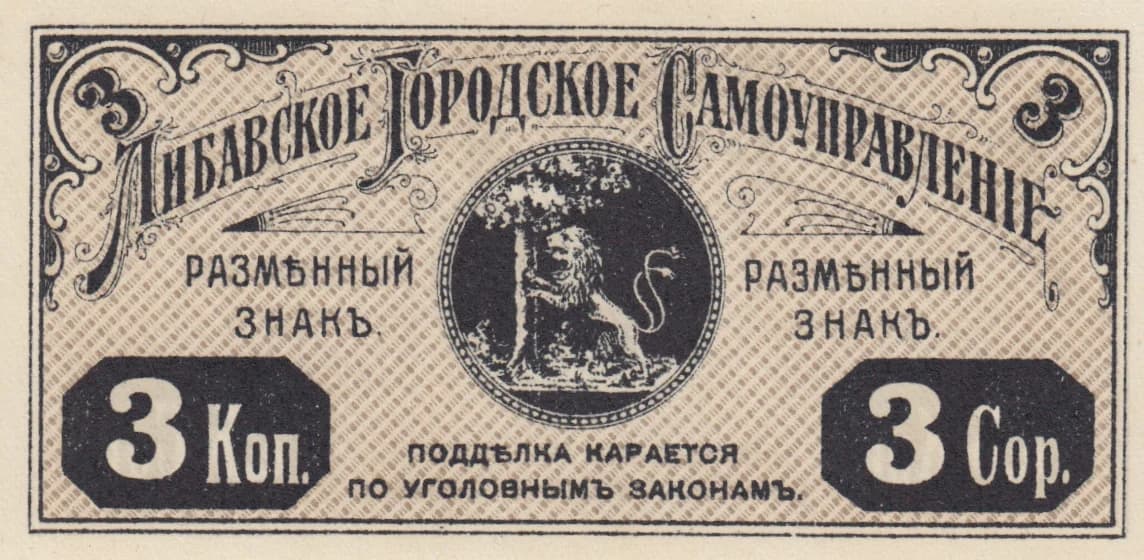
About This Note
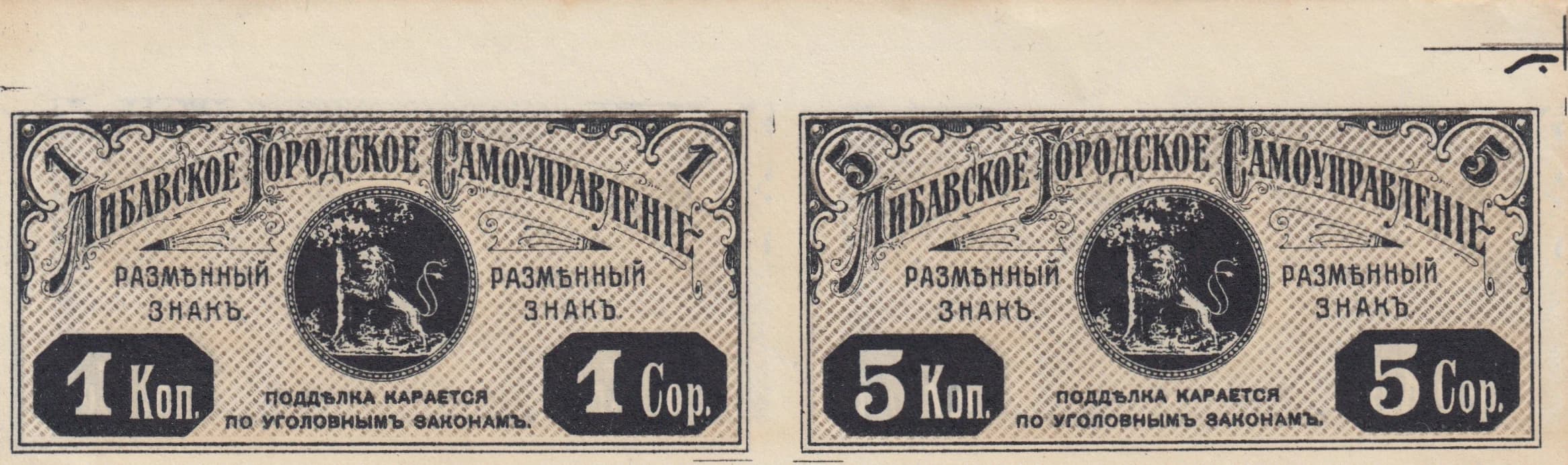
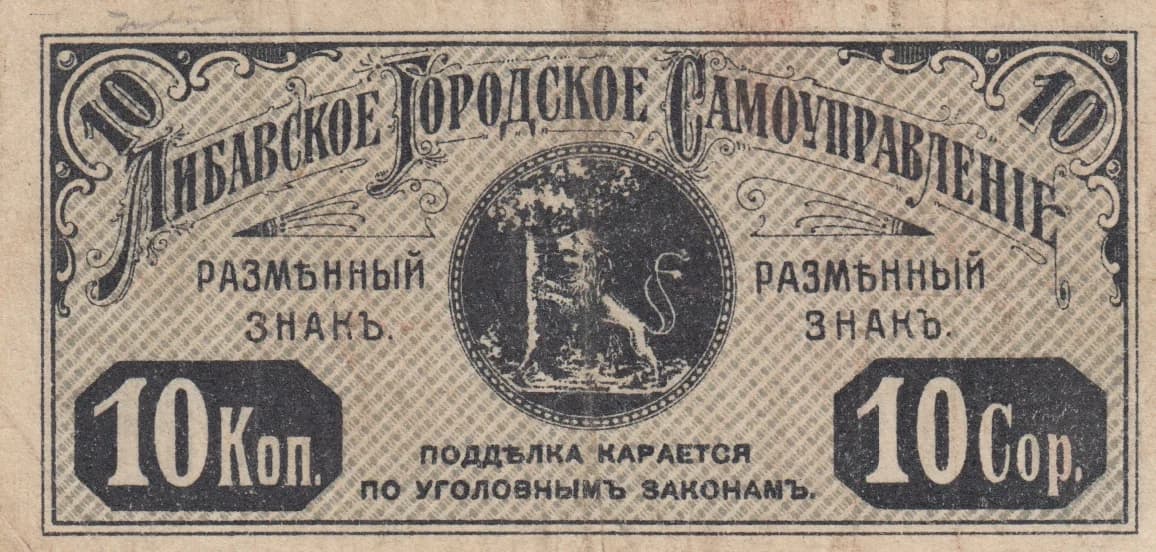
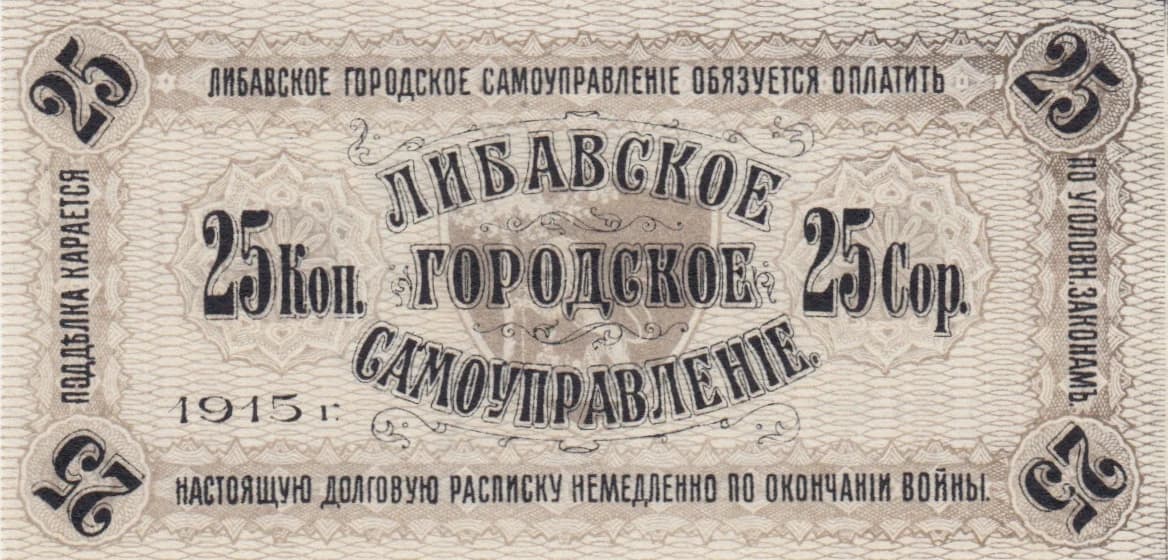
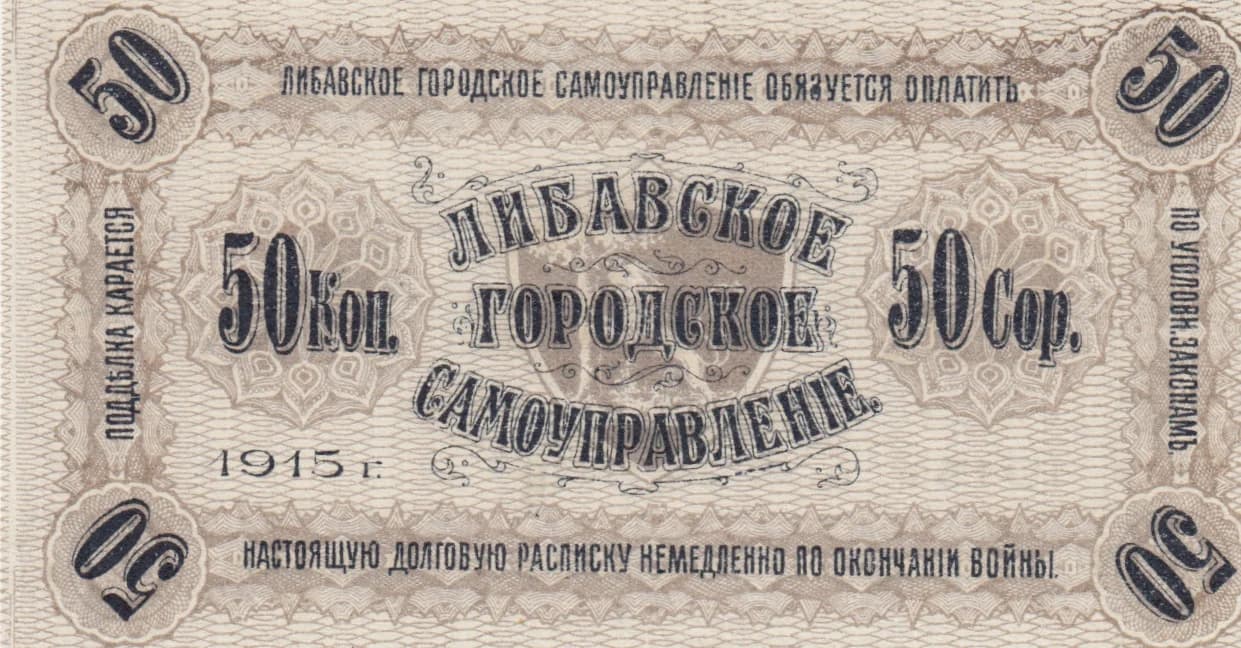
This is a 3 Kopek fractional note issued by the Libau City Municipality in 1915, rendered in black ink on cream-colored paper with fine engraved detailing. The note features a prominent heraldic lion in a central circular medallion surrounded by ornamental scrollwork and decorative borders, with Cyrillic text identifying it as an official exchange mark. While showing age-related patina consistent with its 1915 origin, the note displays minimal damage and preserves the crisp detail of its fine line engraving, making it an attractive example of this rarely encountered Baltic municipal issue.
Scarce. Libau municipal notes from 1915 are encountered infrequently in the market, as these were temporary wartime expedients with limited circulation and significant attrition over the subsequent century. The 3 Kopek denomination in particular appears less commonly than larger denominations. The UNC condition grade further enhances scarcity, as most surviving examples show greater wear. However, these notes were not recalled in vast quantities and represent a specialized collector category rather than an inherently rare issue.
This note was issued during World War I by the Libau (now Liepāja) City Municipality, reflecting the period when local authorities in the Russian Empire issued fractional currency to address wartime coinage shortages. The use of Cyrillic script and Russian language inscriptions reflects Libau's status within the Russian Empire at that time, while the heraldic lion symbolizes the city's civic authority and historical significance as a major Baltic port. Such municipal issues were temporary measures that became obsolete following the Russian Revolution and Latvia's subsequent independence in 1918.
The note employs a classical engraved banknote design centered on a heraldic lion figure displayed in profile within a circular medallion at the note's center, serving as Libau's civic emblem and primary design focus. The composition is framed by elaborate ornamental scrollwork and floral flourishes positioned at all four corners, each featuring the denomination numeral '3' in decorative cartouches. The entire surface is secured with a fine crosshatch background pattern serving as an anti-counterfeiting measure. The design reflects early 20th-century municipal banknote aesthetics, with balanced symmetrical layout and restrained use of black ink on the pale cream paper stock, emphasizing the engraved quality of the lion medallion and border details.
Front Side: 'ЛИБАВСКОЕ ГОРОДСКОЕ САМОУПРАВЛЕНИЕ' (Libau City Self-Government) - header text; '3 Коп.' (3 Kopeks) - denomination marking on left and right sides; 'РАЗМѢННЫЙ ЗНАК' (Exchange mark/Fractional note) - descriptive text appearing twice; 'ПОДДѢЛКА КАРАЕТСЯ ПО УГОЛОВНЫМЪ ЗАКОНАМЪ.' (Counterfeiting is punished under criminal law) - warning text at bottom. All text is rendered in pre-1918 Russian Cyrillic orthography with the historical hard sign (ъ) and other period-appropriate characters.
This note was produced using traditional intaglio (line engraving) printing, evidenced by the fine, precise line work visible in the circular medallion, ornamental borders, and crosshatch security pattern. The crisp detail preservation in the observed specimen indicates professional security printing standards typical of authorized municipal currency issues from the Russian Empire. The specific printer for Libau municipal notes of this series is not definitively identified in standard references, though such issues were typically contracted to established Russian security printers of the period.
No specific Pick catalog number is listed in the provided data. Standard variety markers for this issue would include: presence or absence of city seal impressions, variations in date placement (if any), and specific printer marks or signatures of authorization officials. The observed specimen shows no visible date within the main design field, which is typical for Libau's municipal issues. Without access to comprehensive Pick catalog documentation for this specific issuer, definitive variety classification cannot be established; collectors should cross-reference specialized Baltic numismatic references for documented varieties of Libau municipal currency.