20 latu 1936
Market Prices
7 salesAbout This Note
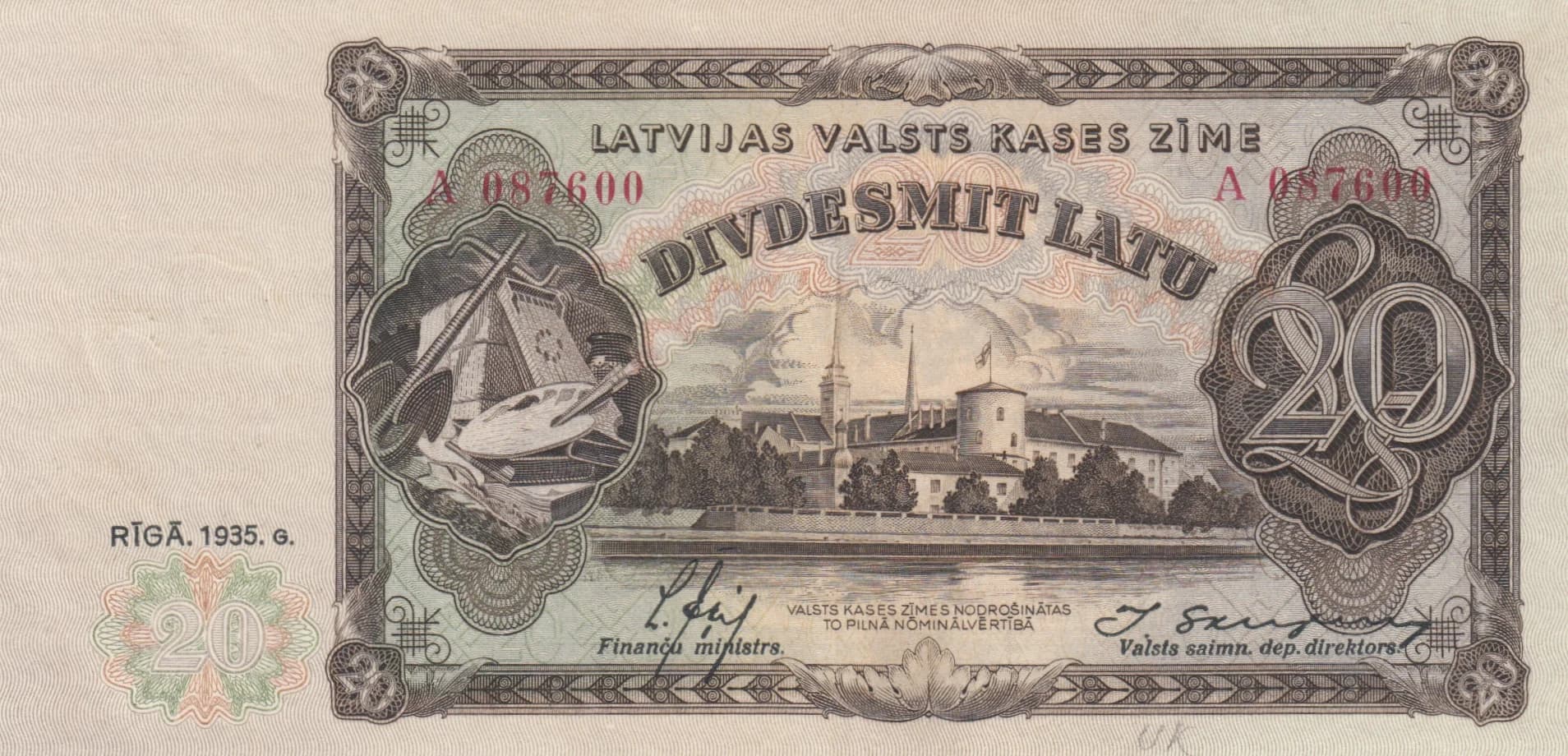
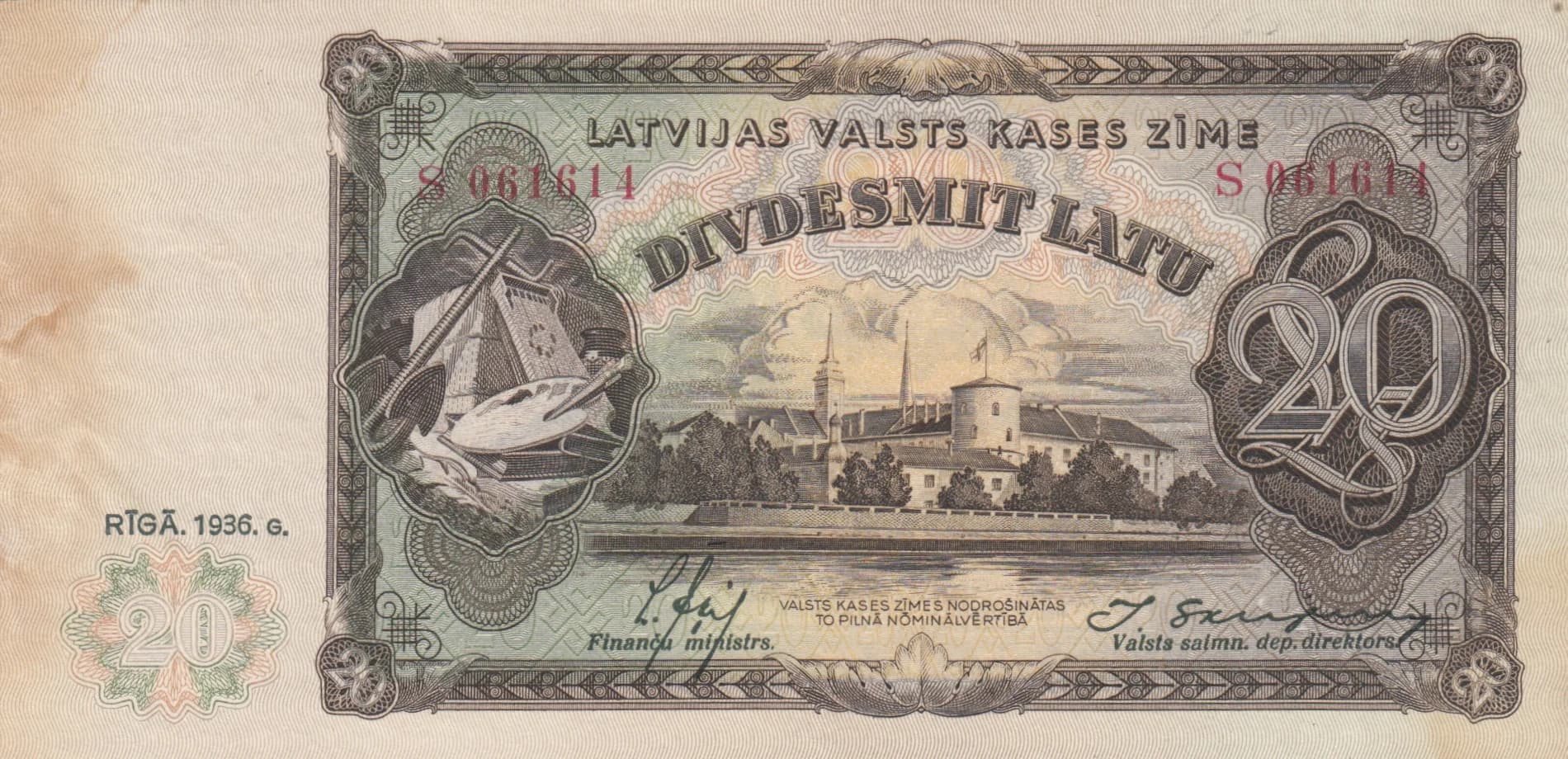
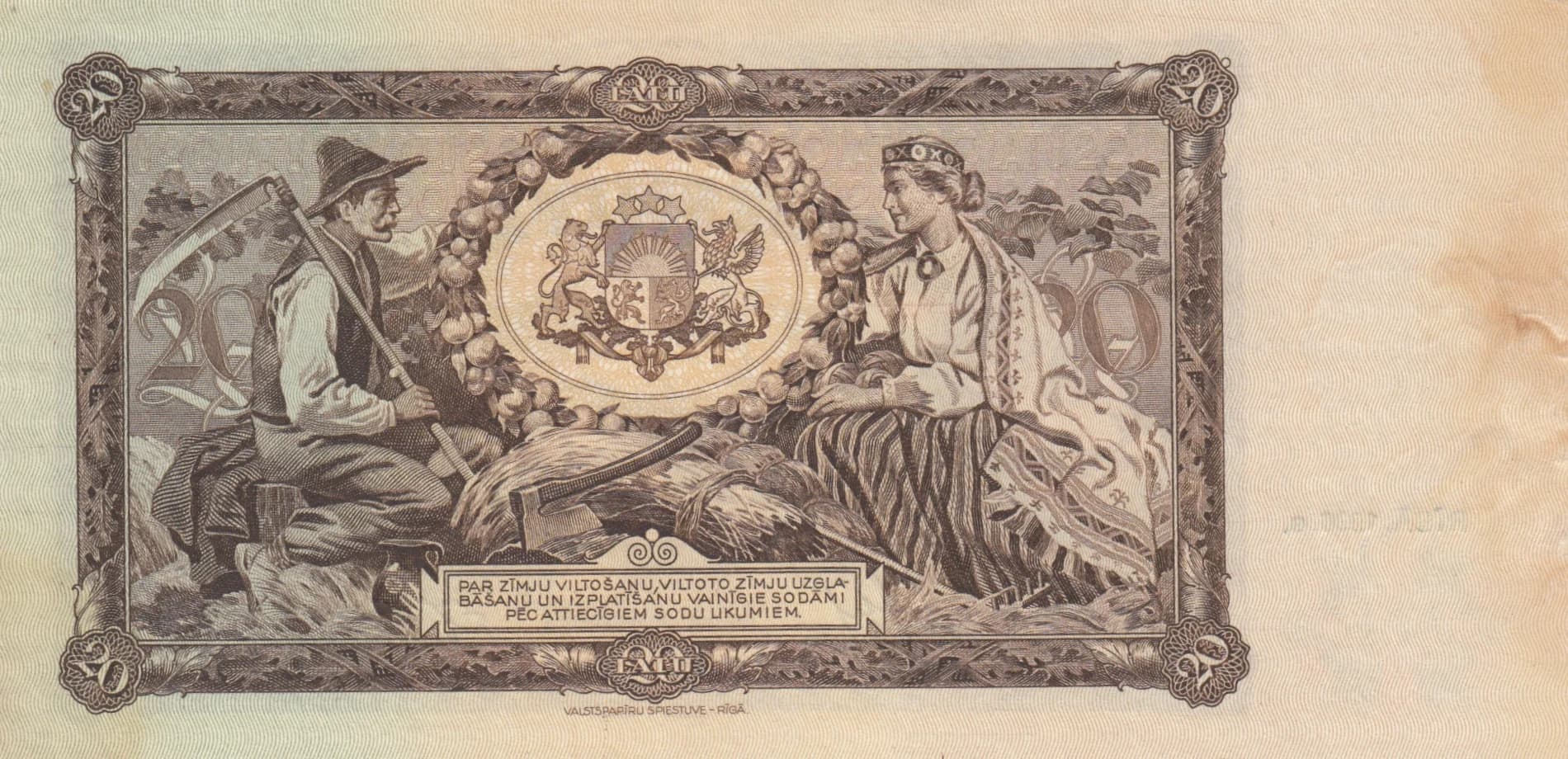
An excellent example of Latvia's inter-war currency, this 20 Latu note from 1936 showcases the refined engraving style characteristic of Latvian Treasury notes. The EF-graded note displays crisp detail in both the portrait medallion and architectural vignette on the obverse, with only moderate age-related toning and handling marks consistent with careful circulation. The reverse presents an impressive allegorical design featuring classical figures flanking the Latvian coat of arms, making this a visually striking representation of 1930s Baltic numismatics.
Common. The 20 Latu 1936 (P-30b) was issued in substantial quantities during Latvia's inter-war period and remains relatively available in the collector market. eBay transaction data shows consistent sales activity across multiple grade levels, with EF examples selling for $63 (2016) and graded specimens (PMG 64–66) achieving prices ranging from approximately $122–$358, indicating steady collector demand but no scarcity premium. Print run data and market availability both point to this as a standard circulation issue rather than a rare variety.
Issued during Latvia's independence period (1918–1940), this note reflects the nation's establishment of sovereign monetary authority following World War I and the withdrawal of Russian imperial currency. The front features what appears to be a Latvian castle or fortified structure symbolizing national heritage, while the reverse's allegorical peasant couple and agricultural implements emphasize the agrarian economy central to Latvia's identity during this era. The prominence of the state coat of arms and treasury ministry signatures underscores the young nation's commitment to financial stability and institutional legitimacy.
The obverse features a classical composition with an elegant profile portrait of a woman in a decorative medallion on the left side, alongside a detailed landscape vignette depicting a fortified castle with multiple towers positioned near water—likely representing a significant Latvian historical or architectural landmark. Fine ornamental borders with owl or eagle head motifs frame the design. The reverse presents an allegorical representation of Latvia's agrarian character: a male figure on the left holding agricultural implements (symbolizing labor and productivity) and a female figure on the right in traditional dress (representing national identity and culture), both flanking an ornate coat of arms supported by heraldic lions. A grape vine and fruit garland motif connects these figures, reinforcing prosperity and natural abundance. The predominantly green, brown, and beige color palette on the obverse transitions to warmer brown and cream tones on the reverse, with intricate line work throughout.
FRONT: 'LATVIJAS VALSTS KASES ZIME' (Latvia State Treasury Note) / 'DIVDESMIT LATU' (Twenty Latu) / 'RIGA, 1936, G.' (Riga, 1936) / 'Finanču ministrs' (Finance Minister) / 'Valsts salknn. dep. direktors' (State Treasury Department Director) / 'VALSTS KASES ZIMES NODROŠINATAS TO PILNA NOMINALVERTIBA' (State Treasury Notes are secured to their full nominal value) / Serial number 'S 066414' / Denomination '20'. BACK: 'VALTSPARIRU SPIEDTUVE - RIGA' (State Printing House - Riga) / Regulatory text concerning penalties and regulations / Denomination '20' in corners.
Steel plate intaglio engraving, executed by Valsts Papīru Spiestuve (State Printing House) in Riga. The complex fine-line engraving is evident throughout both sides, with particular sophistication in the portrait medallion, landscape vignette, and allegorical figures. The multiple signature lines and detailed ornamental borders required precision engraving typical of central bank currency production of this era.
Pick identifies two variants for this base number: P-30a and P-30b. The present example is catalogued as P-30b. Varieties typically relate to signature combinations, date variants (1935 vs. 1936 issues), or printer's marks. The serial number 'S 066414' and the 1936 date mark this as a later-issue example. No significant overprints or extraordinary identifying features are apparent from the visual analysis that would distinguish this as a notable sub-variety within P-30b.