20 latu 1935
Market Prices
19 salesAbout This Note
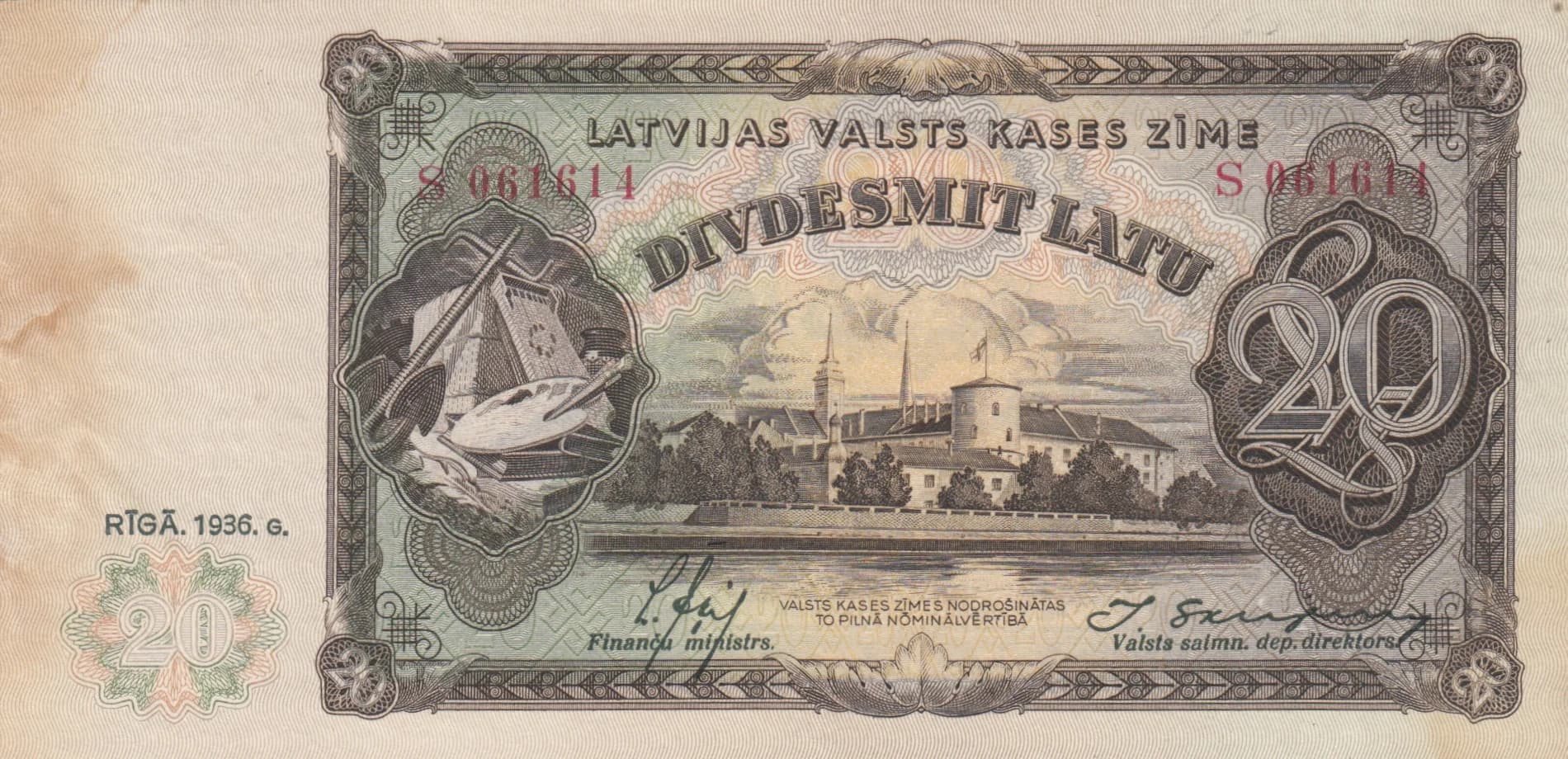
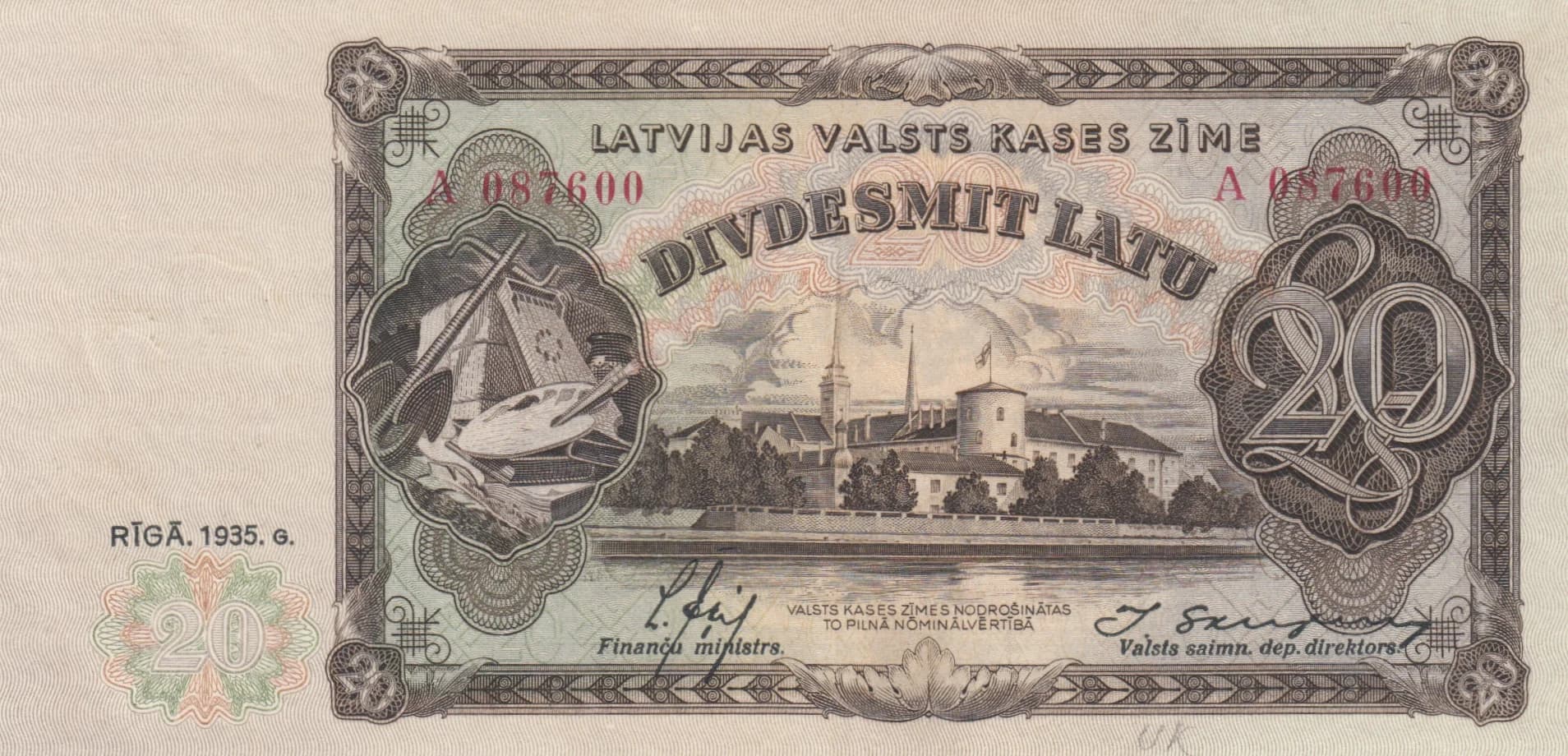
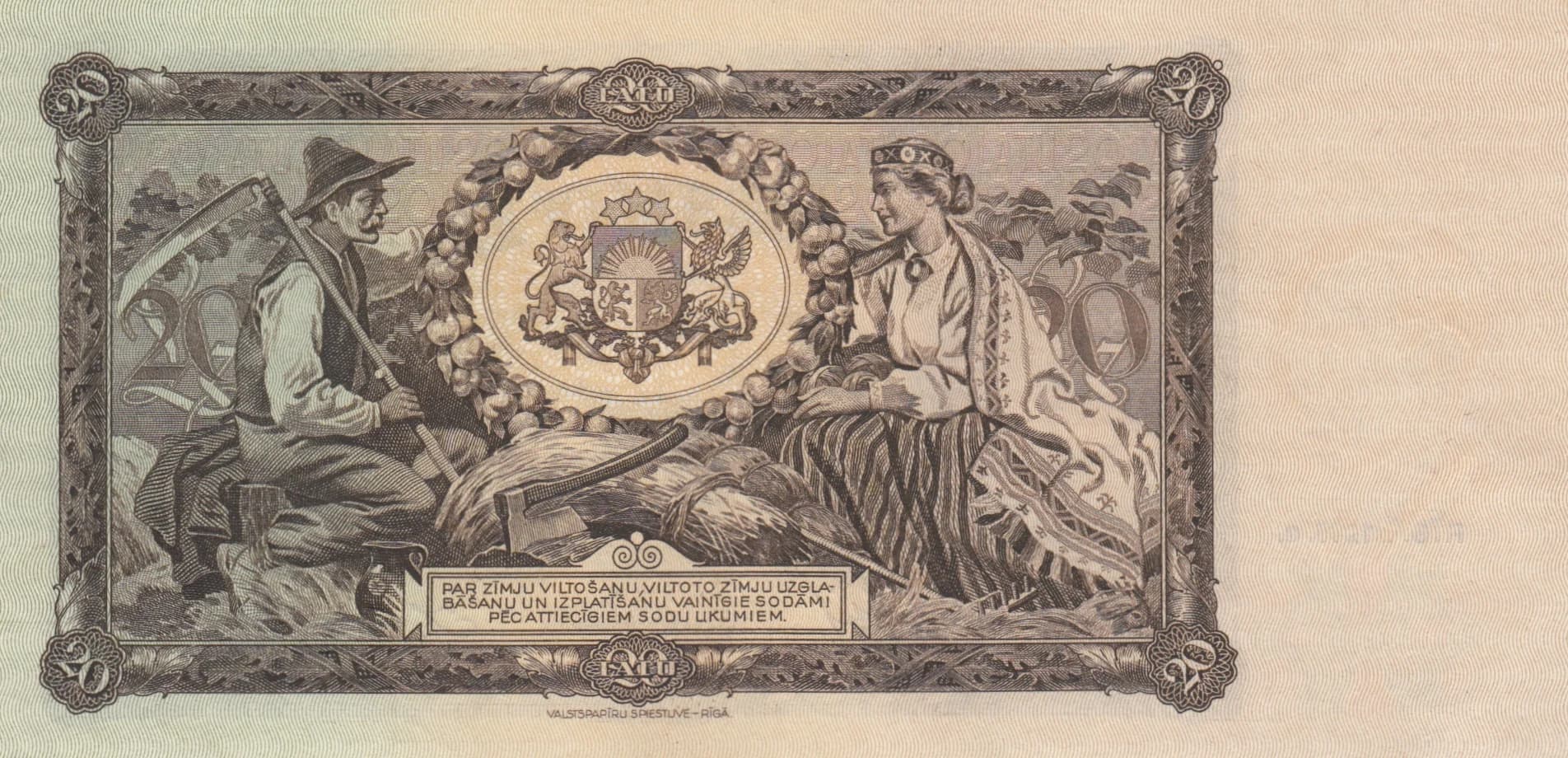
This is a handsome example of Latvia's 1935 20 latu note in Extremely Fine condition, showcasing the classical allegorical imagery characteristic of interwar Baltic currency design. The note displays sharp, crisp printing with no visible wear, tears, or creases, featuring an elegant riverside castle vignette on the obverse and an impressive dual-figure allegorical composition with the Latvian coat of arms on the reverse. This particular note represents a well-preserved specimen of Latvia's pre-WWII currency, notable for its sophisticated engraving work and historical significance as a product of independent Latvia's brief interwar period.
Common. The eBay price history provided shows consistent sales in the $15–$51 range over an eight-year period, with F and VF grades routinely selling for $15–$35, indicating robust collector demand but adequate supply. The 2016 catalog values (VF: $225) have not materialized in typical market sales, suggesting the note is readily obtainable at lower real-market prices. The note was issued in 1935 with presumably substantial print runs to support Latvian commerce, and no historical evidence suggests extreme scarcity or recall. An EF specimen should command a modest premium over Fine examples but remains within the common category for this denomination.
Issued during Latvia's first period of independence (1918–1940), this 1935 banknote reflects the young nation's efforts to establish a stable, internationally credible currency. The imagery—featuring a riverside fortification (likely referencing Riga's historical significance as a major Baltic trading center) and allegorical figures representing agriculture and nationhood—underscores Latvia's identity as a modern European state grounded in agrarian heritage. The note was produced by Valsts Papīru Spiestuve (the Latvian State Printing Office) in Riga, emphasizing national self-sufficiency and institutional authority during a period of relative economic stability before the Soviet occupation of 1940.
The obverse features a neoclassical design centered on a riverside castle or fortification—likely Riga Castle, a historical seat of authority—with a prominent church spire in the background, surrounded by landscaped grounds and vegetation along the waterfront. To the left is an oval frame containing an allegorical female figure representing agriculture or harvest, depicted with agricultural implements, symbolizing Latvia's agrarian foundation. Large denomination numerals '20' appear on both left and right margins. The reverse displays a more elaborate allegorical composition with a farmer or tradesman (male figure) on the left holding agricultural tools and a classically draped female figure on the right, flanking a central Latvian coat of arms surrounded by a wreath of hops or flowers. Heraldic lions support the shield, with an eagle or heraldic bird positioned above. The entire design employs decorative rosettes, ornamental borders, and fine geometric framing typical of high-security banknote design of the 1930s.
FRONT: 'LATVIJAS VALSTS KASES ZĪME' (Treasury Note of the Latvian State); 'DIVDESMIT LATU' (Twenty Latu); 'RĪGĀ, 1935. g.' (Riga, 1935); 'VALSTS KASES ZĪMES NODROŠINĀTAS TO PILNĀ NOMIĀLVĒRTĪBĀ' (Treasury notes are secured by their full nominal value); 'Finanču ministrs' (Minister of Finance); 'Valsts saimn. dep. direktors' (State Economy Department Director). BACK: 'PAR ZIMU VILTOS ANU VILTOTO ZIMJU UZSLA-BASANU UN IZPLATISANU VAINIGE SO DAMI PEC ATTIECIGIEM SODU LIKUMIEM' (For counterfeiting or circulating counterfeit marks, the guilty parties are punished according to the respective penal laws); 'VALSTS SPIEDIENE. RIGA' (State Printing. Riga).
Intaglio (steel engraving), as evidenced by the fine line work, intricate shading, and crisp detail visible throughout the note. The complex border designs, allegorical compositions, and heraldic elements display the characteristic clarity and precision of classical banknote engraving. Printed by Valsts Papīru Spiestuve (Latvian State Printing Office) in Riga, utilizing the sophisticated security printing techniques standard for European central bank currency of the 1930s.
Pick catalog identifies this as P-30a, with a known variant P-30b also cataloged. The specific serial number prefixes visible on the examined notes (A 084600, A 076600) are consistent with the 1935 Riga issue. No date varieties, signature variants, or overprints are apparent on this specimen. The note appears to represent the standard P-30a variety without special printing anomalies or identifying marks that would distinguish it as a rare sub-variety.