100rubli 1919
“serie U”
Market Prices
1 saleAbout This Note
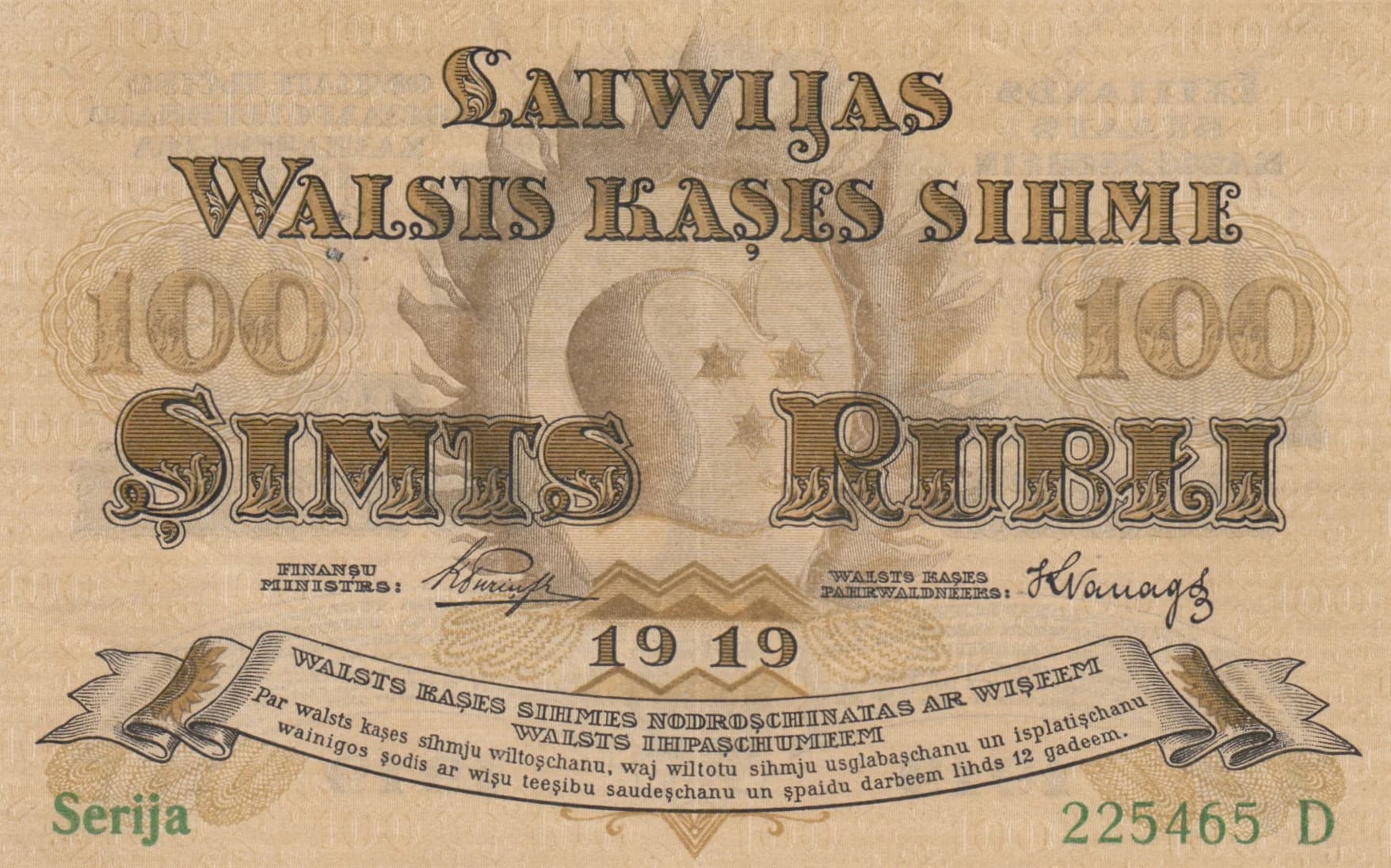
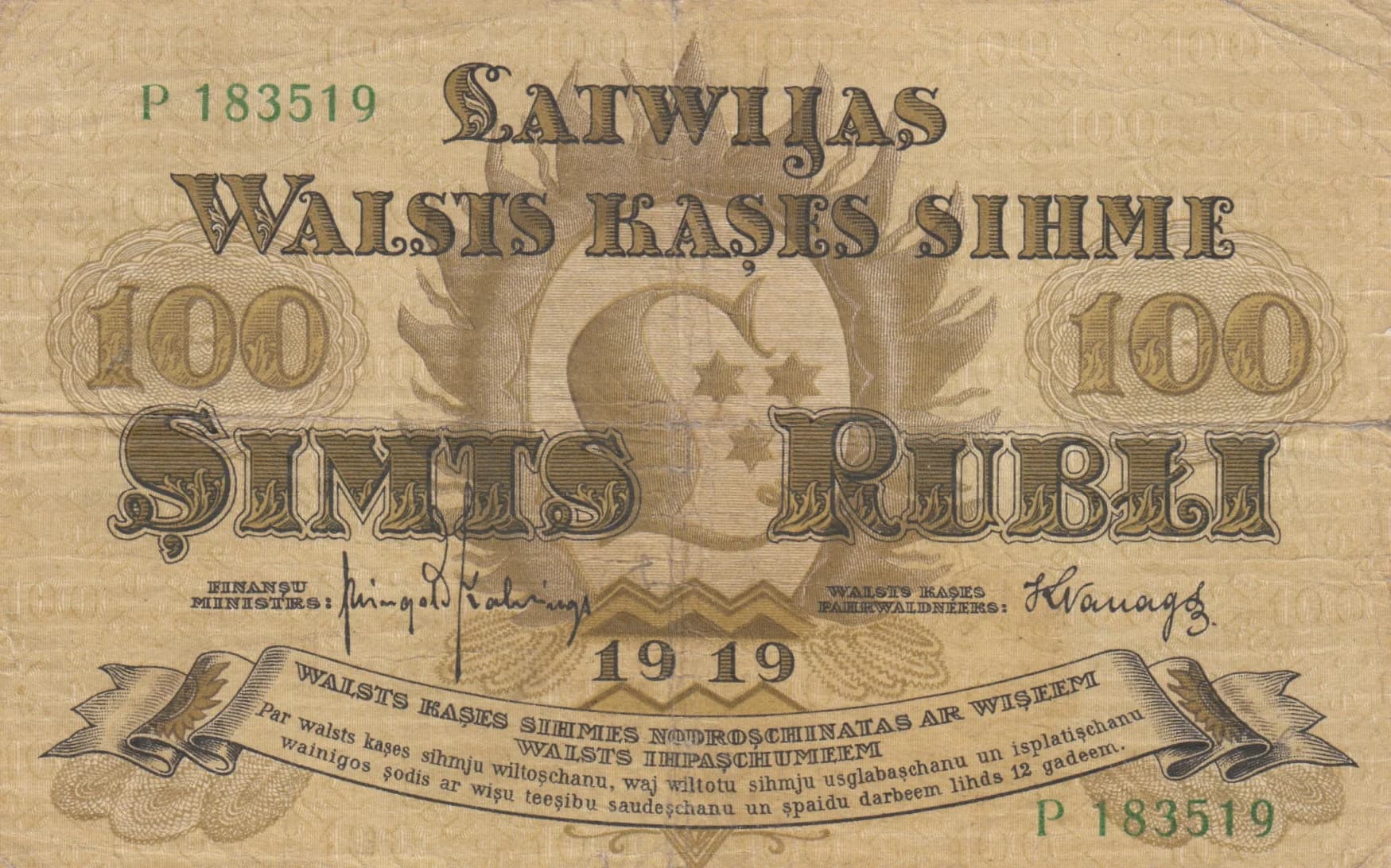
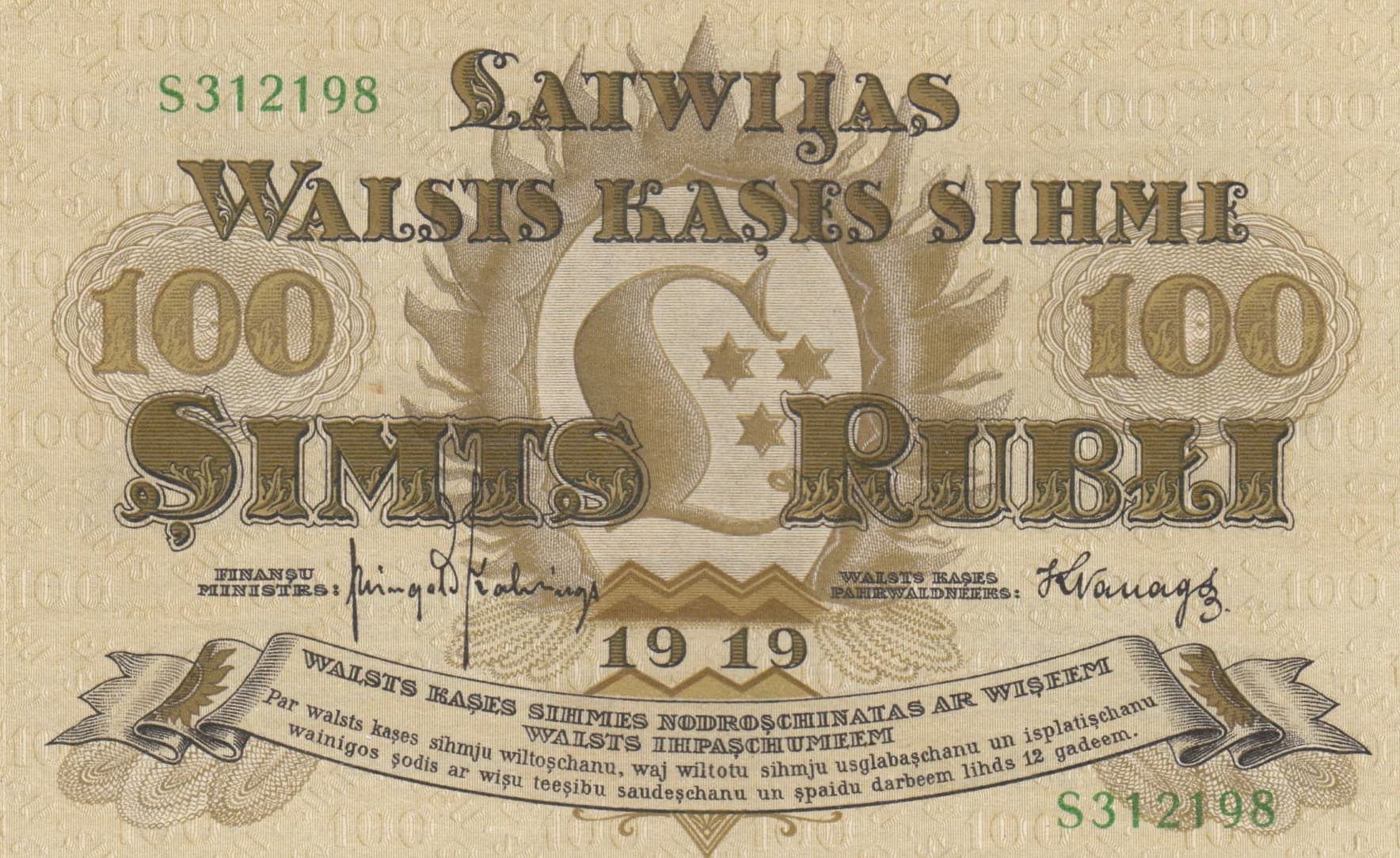
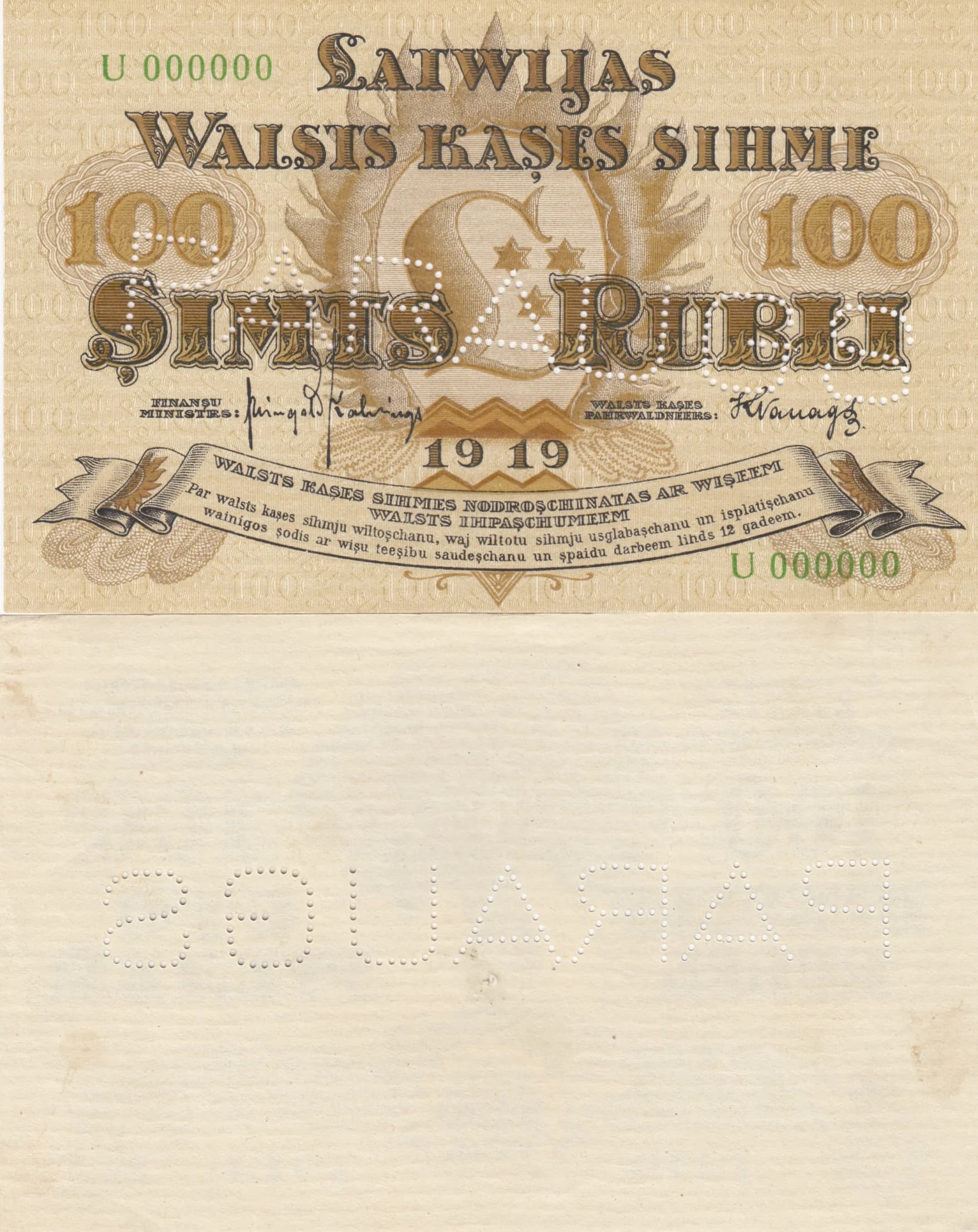
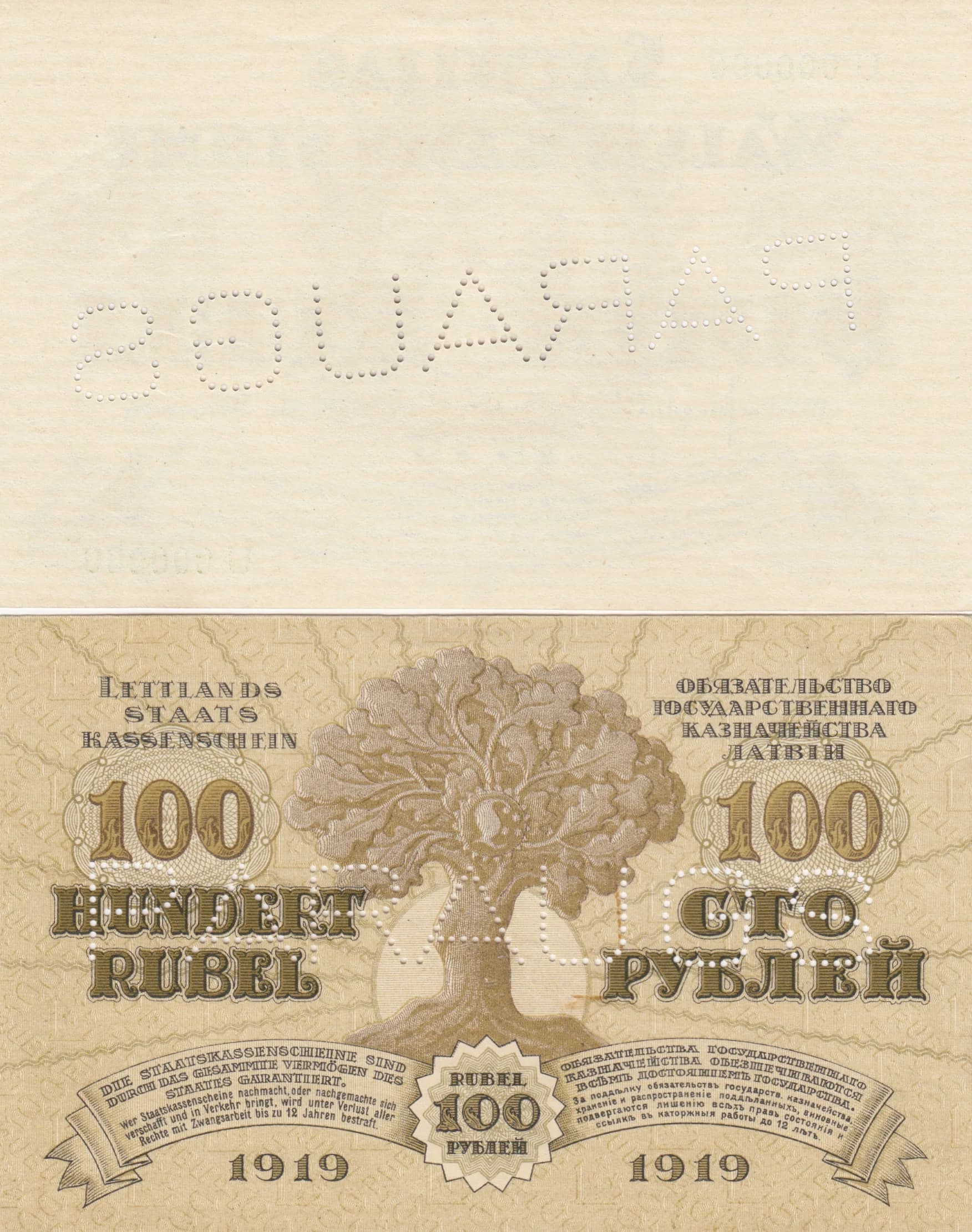
This is an exceptional UNC specimen example of Latvia's 1919 100 Rubli note (Pick P-7fs), displaying the characteristic tan and brown color palette with crisp, detailed engraving throughout. The note features a striking two-headed eagle heraldic symbol on the obverse and a prominent oak tree on the reverse, both rendered in fine line work typical of early 20th-century currency design. The 'U' series designation and specimen markings (U 000000) indicate this is a special presentation or proof note rather than a circulation issue, making it a particularly desirable collector specimen.
Common. While the P-7fs designation indicates a specimen or proof variety (distinguished by the 'fs' suffix and 'U' series marking), the base Pick number P-7 (100 Rubli 1919) is a regular issue note from Latvia's early independence period. Catalog values from 2016 show UNC examples at $300, and eBay sales data shows circulated examples trading at modest levels ($23.50 for an F grade in 2013), indicating adequate supply in the market. The specimen designation may add modest collector appeal, but this denomination was widely issued and remains accessible to collectors.
Issued during Latvia's tumultuous first year of independence from the Russian Empire, this note represents the Latvian Government's assertion of monetary sovereignty through the State Treasury (Valsts Kases). The trilingual inscriptions in Latvian, German, and Russian reflect the complex linguistic landscape of the newly formed nation and the transition from Tsarist currency. The heraldic eagle and oak tree symbolism emphasize both Latvian nationalism and the connection to Baltic heritage during this critical period of state formation.
The obverse features a formal heraldic composition centered on a two-headed eagle rendered in classical style, flanked by decorative stars and ornamental circular medallions. The eagle represents the Latvian state seal and symbolizes sovereignty. Surrounding this central symbol are baroque-style scrollwork, geometric borders, and fine engraved flourishes typical of security currency design. The reverse showcases a detailed botanical illustration of an oak tree in full foliage as the dominant central element—the oak being a symbol of strength and Latvian national identity. Both sides incorporate intricate ornamental borders and multiple language texts positioned symmetrically to frame the primary design elements. The consistent use of tan and brown inks creates visual harmony across the design.
FRONT: 'LATVIJAS VALSTS KASES SIHME' (Latvia's State Treasury Note), 'SIMTS RUBLI' (One Hundred Rubles), '1919', 'FINANSU MINISTERS' (Finance Minister), 'VALSTS KASES PARVALDNIEKS' (State Treasury Administrator). BACK: 'LETTLANDS STAATS KASSENSCHEIN' (Germany: Latvia's State Treasury Note), 'HUNDERT RUBEL' (One Hundred Rubles), '1919', 'ОБЯЗАТЕЛЬСТВО ГОСУДАРСТВЕННОГО КАЗНАЧЕЙСТВА ЛАТВИИ' (Russian: Obligation of the State Treasury of Latvia), '100 РУБЛЕЙ' (One Hundred Rubles).
Intaglio engraving (copperplate/steel plate printing), evidenced by the fine line work, intricate detail in the heraldic eagle and tree foliage, and the crisp, sharp inscription rendering visible throughout both sides. The depth of impression and precision of the ornamental border work are characteristic of security printing performed by a specialized currency printer. The security features including fine-line engraving patterns and the complexity of the multi-language design integration are consistent with European security printing standards of 1919.
This is the P-7fs variety, identified by the 'fs' suffix indicating a specimen or proof note and the 'U' series designation (U 000000 repeated in corner positions). PMG has catalogued multiple variants of P-7 (P-7a, P-7b, P-7f noted in population data), with the primary distinguishing feature being the watermark type (light lines visible on this note). The specimen nature, 'U' series designation, and the '000000' serial number pattern distinguish this from regular circulation notes. This particular specimen represents a formal presentation or proof striking rather than a currency intended for circulation.