100rubli 1919
“serie P”
Market Prices
5 salesAbout This Note
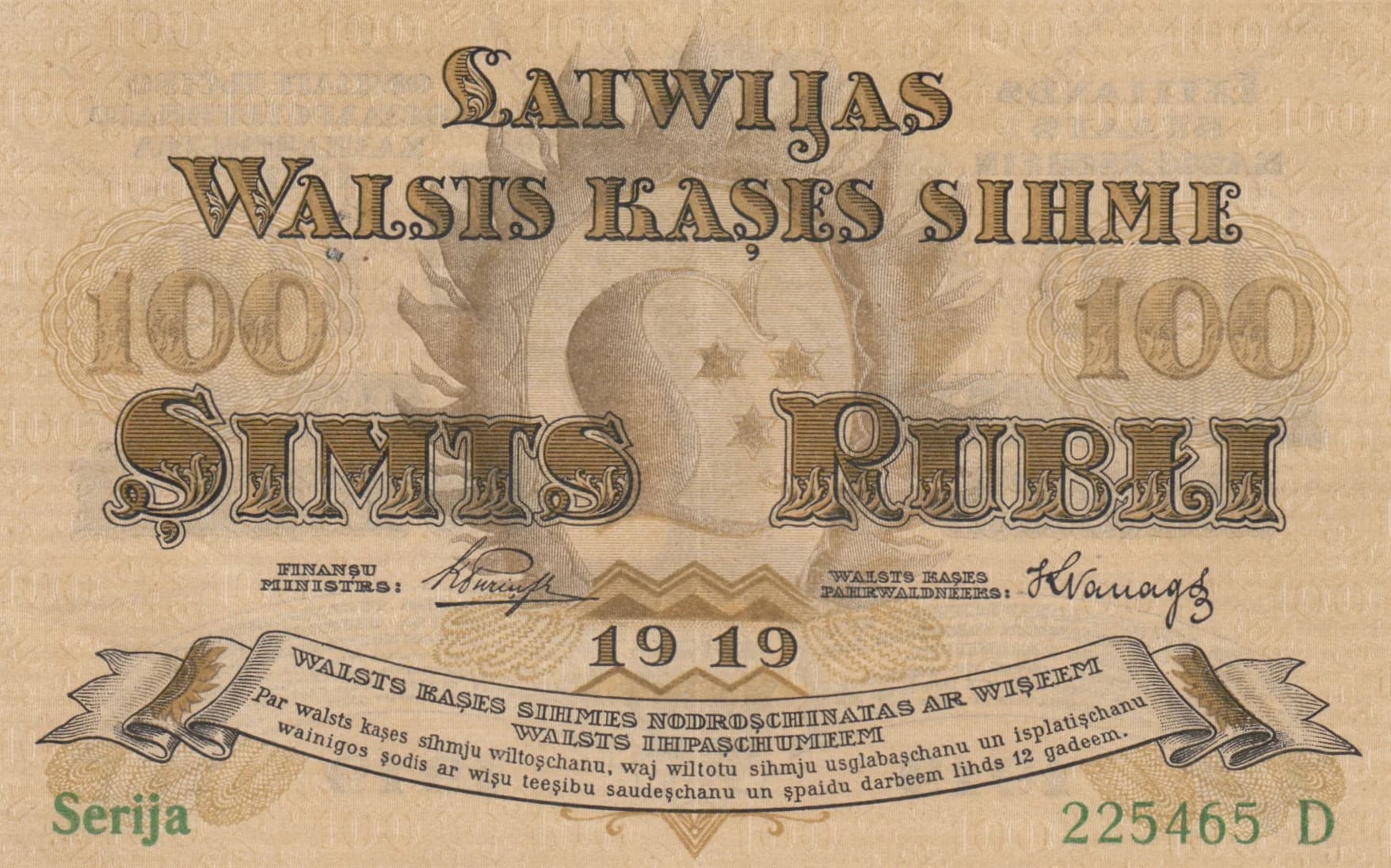
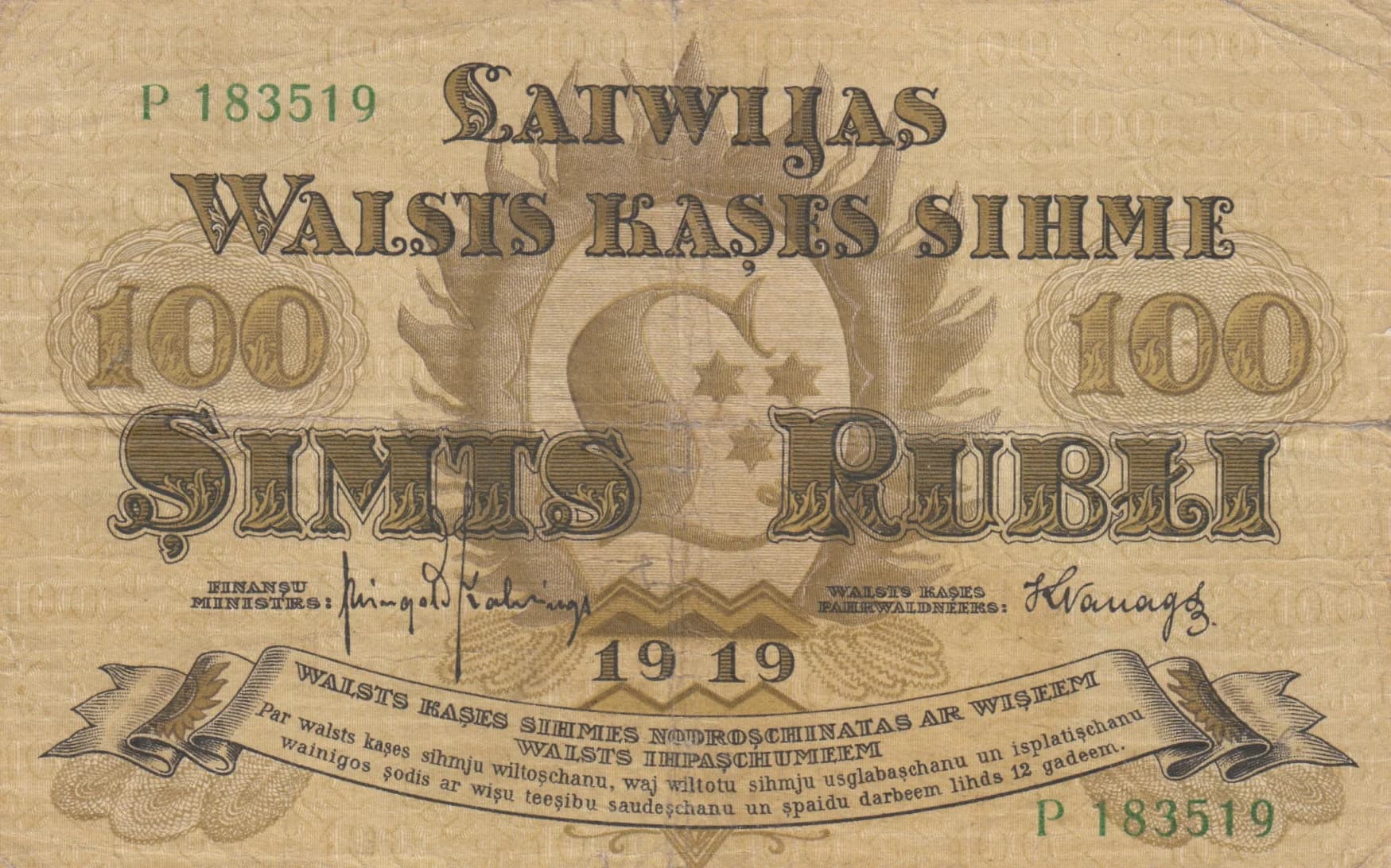
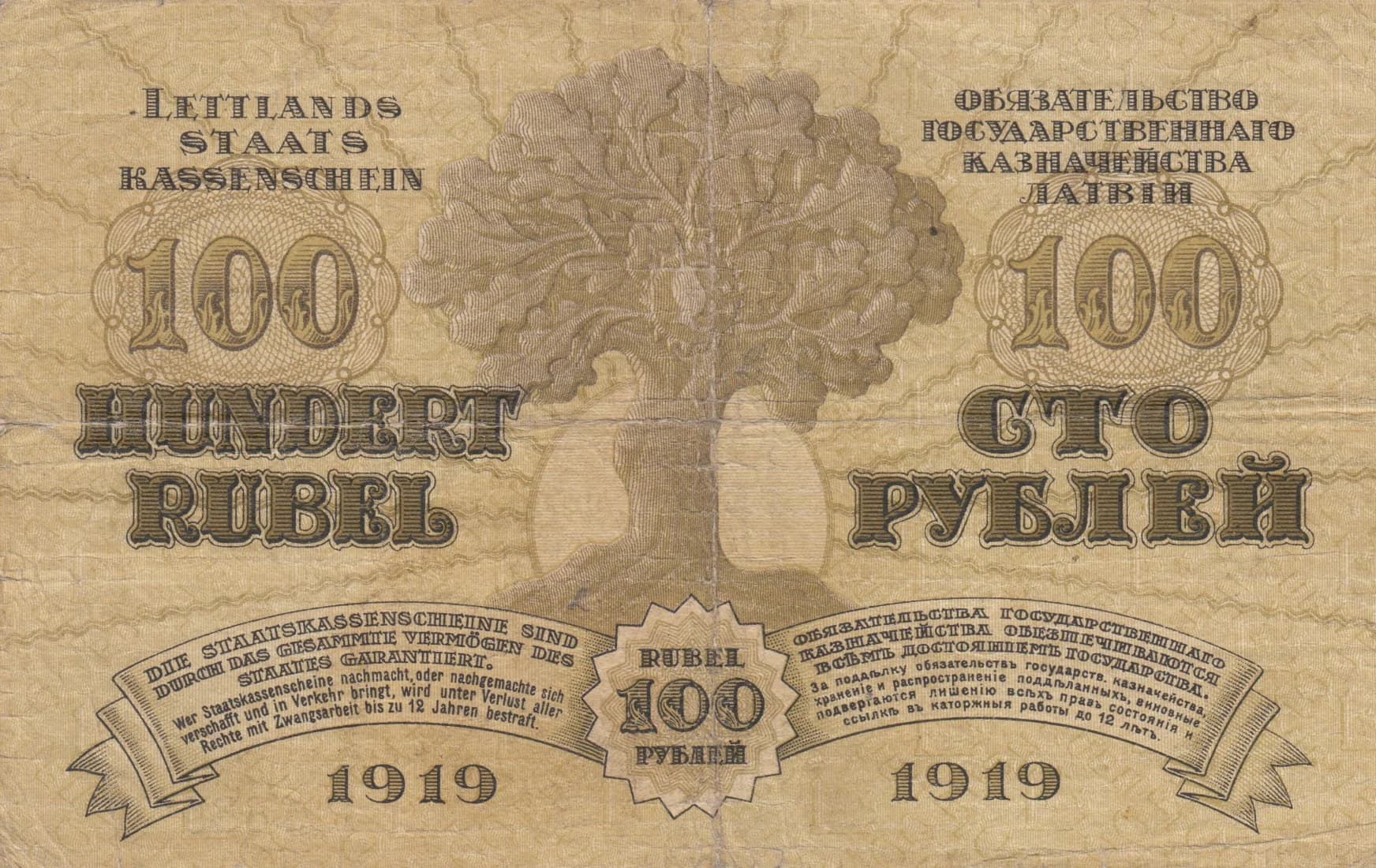
This is a VF-graded 100 Rubli banknote from Latvia's 1919 initial currency issue, featuring series P with serial number P 183519. The note displays the classic design elements of early Latvian currency: a portrait in classical engraving style on the obverse and a prominent oak tree on the reverse, both rendered in tan and brown tones. Despite significant aging with visible creasing, foxing, and circulation wear consistent with its century-old provenance, the note retains excellent eye appeal and strong definition in its intricate engraving work, making it a desirable example of Latvia's transitional currency period.
Common. While this is an early issue from Latvia's brief period of Rubli circulation (1919 before the Lats introduction), eBay market data shows VF examples selling consistently in the $79-90 range, with catalog values at $90 VF and $200 UNC as of 2016. Regular circulation examples in F grade have traded for $17.50-$77 in recent years (2013-2019). Print runs for this series P variant appear to have been substantial enough to maintain steady availability in the collector market. The series P designation is well-documented and represents a standard printing variant, not a scarce issue.
Issued during Latvia's first year of independence following the collapse of the Russian Empire, this 100 Rubli note represents the young nation's establishment of sovereign monetary authority. The multilingual inscriptions—in Latvian, German, and Russian—reflect the complex ethnic composition and geopolitical context of post-WWI Latvia, while the oak tree symbolism on the reverse references Baltic heritage and national identity. The 'Latvijas Valsts Kases' (State Treasury of Latvia) issuer attribution confirms this as an official government issue during the transitional period before the adoption of the Lats as the national currency.
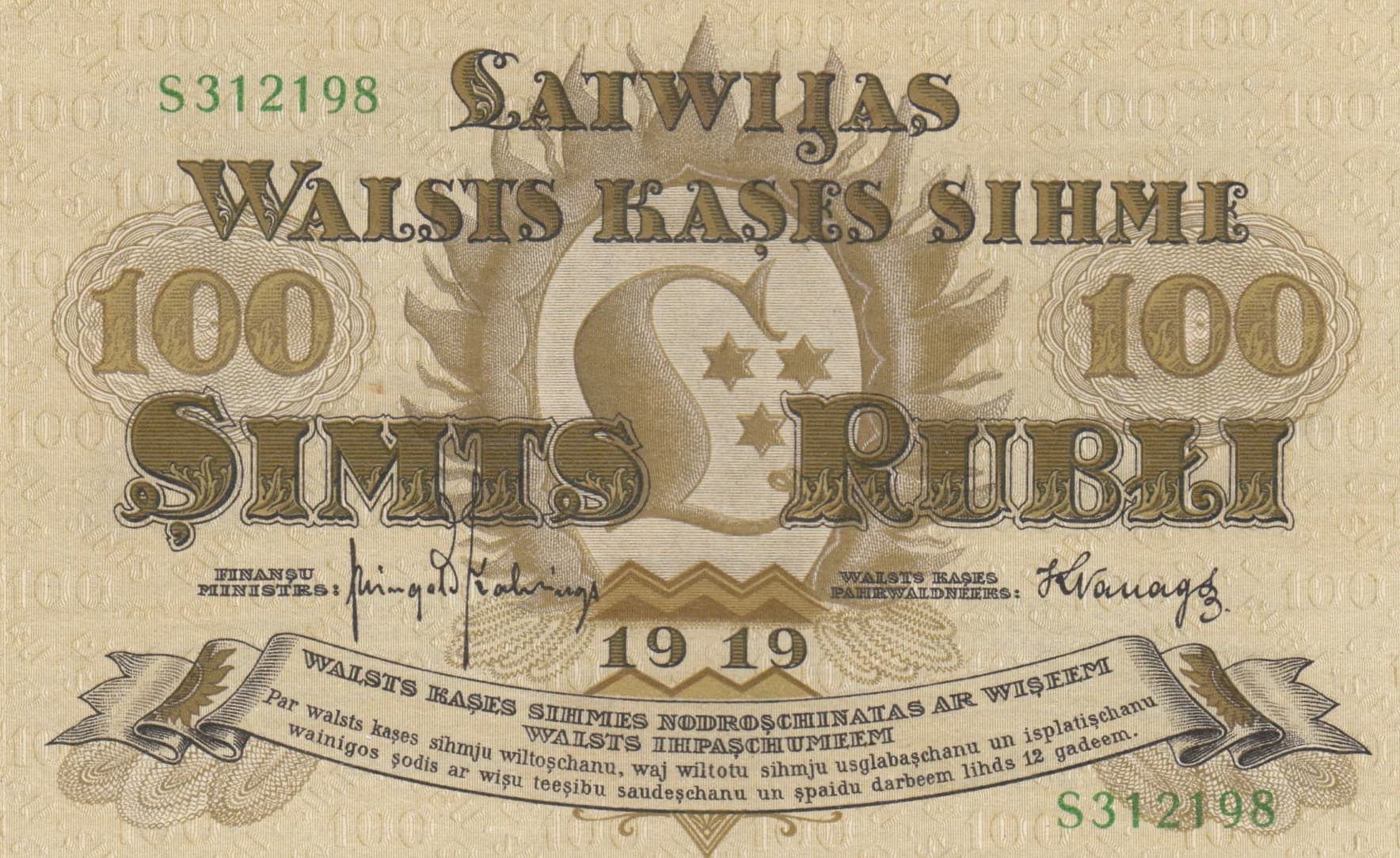
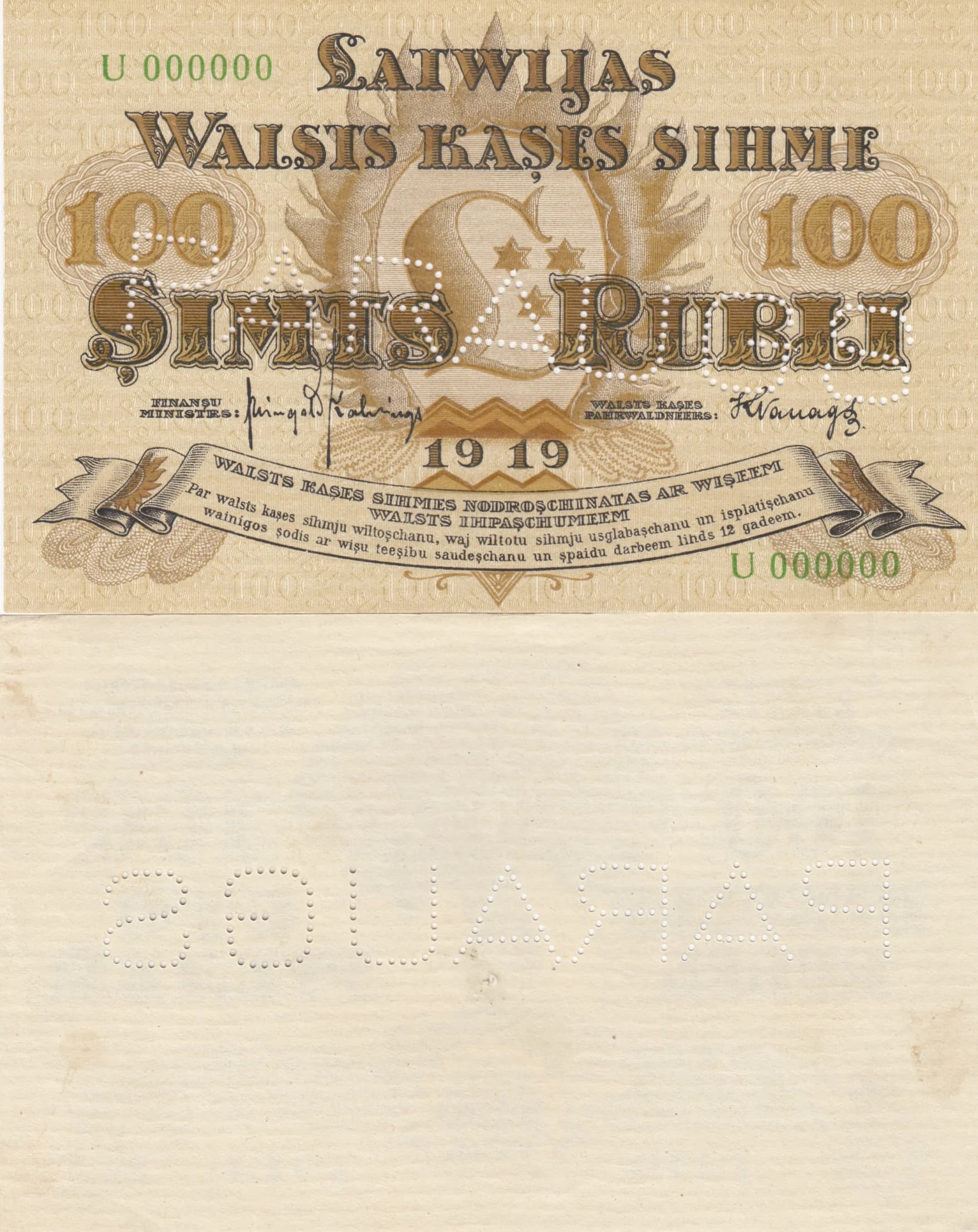
The obverse features a classical left-facing profile portrait in the center, surrounded by ornate floral wreaths and decorative foliage typical of early 20th-century European engraving style. Stars appear in the background behind the portrait, adding to the ceremonial character. Ornate frames containing the denomination '100' flank both sides of the obverse. The reverse showcases a large, intricately detailed oak tree as the central design element, symbolizing Latvian national identity and permanence. The tree displays prominent branching structure and detailed foliage rendering. A circular seal or medallion with surrounding text is positioned centrally near the tree base. Matching decorative corner designs on both sides maintain visual continuity with the obverse, and a star motif is visible within the tree foliage. The uniform tan/beige base color with brown printing throughout creates a cohesive, classical appearance.
OBVERSE (Front): 'LATVIJAS VALSTS KASES SIHME' (Latvian State Treasury Note) | 'SIMTS RUBĻI' (One Hundred Rubles) | '100' (denomination) | '1919' (year of issue) | 'FINANSU MINISTRS' (Finance Minister) | 'VALSTS KASES PARVALDNIEKS' (State Treasury Administrator) | Serial number: P 183519. REVERSE (Back): 'LETHLANDS STAATS KASSENSCHEIN' (German: Lettland State Treasury Note) | 'HUNDERT RUBEL' (German: One Hundred Rubles) | 'ОБЯЗАТЕЛЬСТВО ГОСУДАРСТВЕННОГО КАЗНАЧЕЙСТВА ЛАТВИИ' (Russian: Obligation of the State Treasury of Latvia) | '100 СТО РУБЛЕЙ' (Russian: 100 One Hundred Rubles) | '1919' (year) | Additional denominations in German ('RUBEL') and Russian ('РУБЛЯМИ' — in rubles).
Intaglio engraving (recess printing), evidenced by the fine line work, intricate decorative patterns, and high-relief detail visible throughout both sides. The security features employed include elaborate engraving patterns, ornate typography rendered in multiple scripts, and complex border designs—all characteristic of intaglio production by a European security printer of the period. The exceptional detail in both the portrait and oak tree rendering confirms professional-grade engraving work typical of state treasury note production.
This note is identified as Pick-7f, series P, representing one of at least three documented variants (P-7a, P-7b, P-7f) cataloged by PMG. The series letter 'P' is clearly visible in the serial number prefix (P 183519). The watermark description indicates 'light lines,' consistent with standard production for this issue. No overprints, signatures variants, or other distinguishing marks are evident in the visual analysis that would indicate a rarer sub-variety. This represents a straightforward example of the P-7f standard printing variant.