100 latu 1939
Market Prices
21 salesAbout This Note
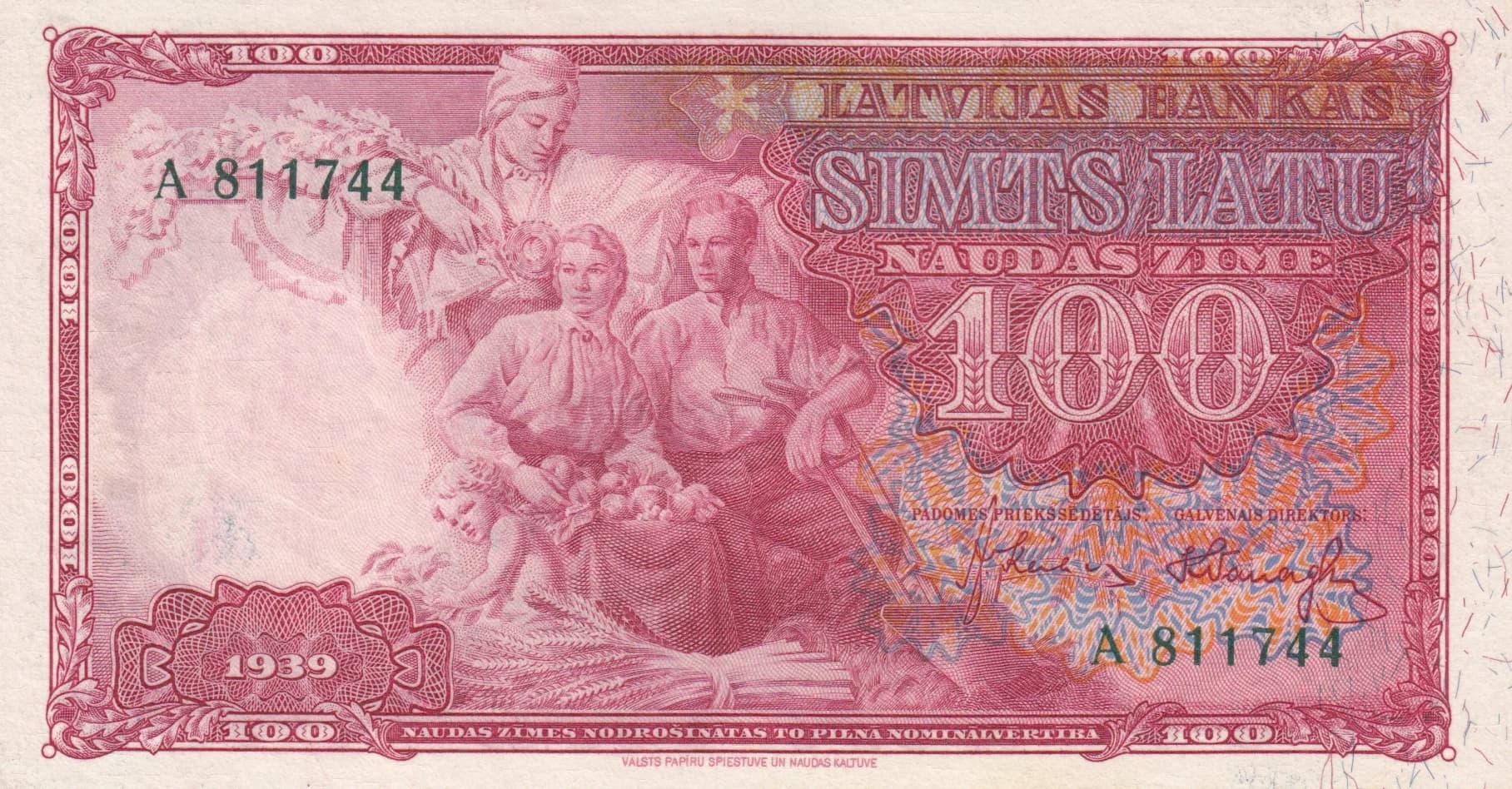
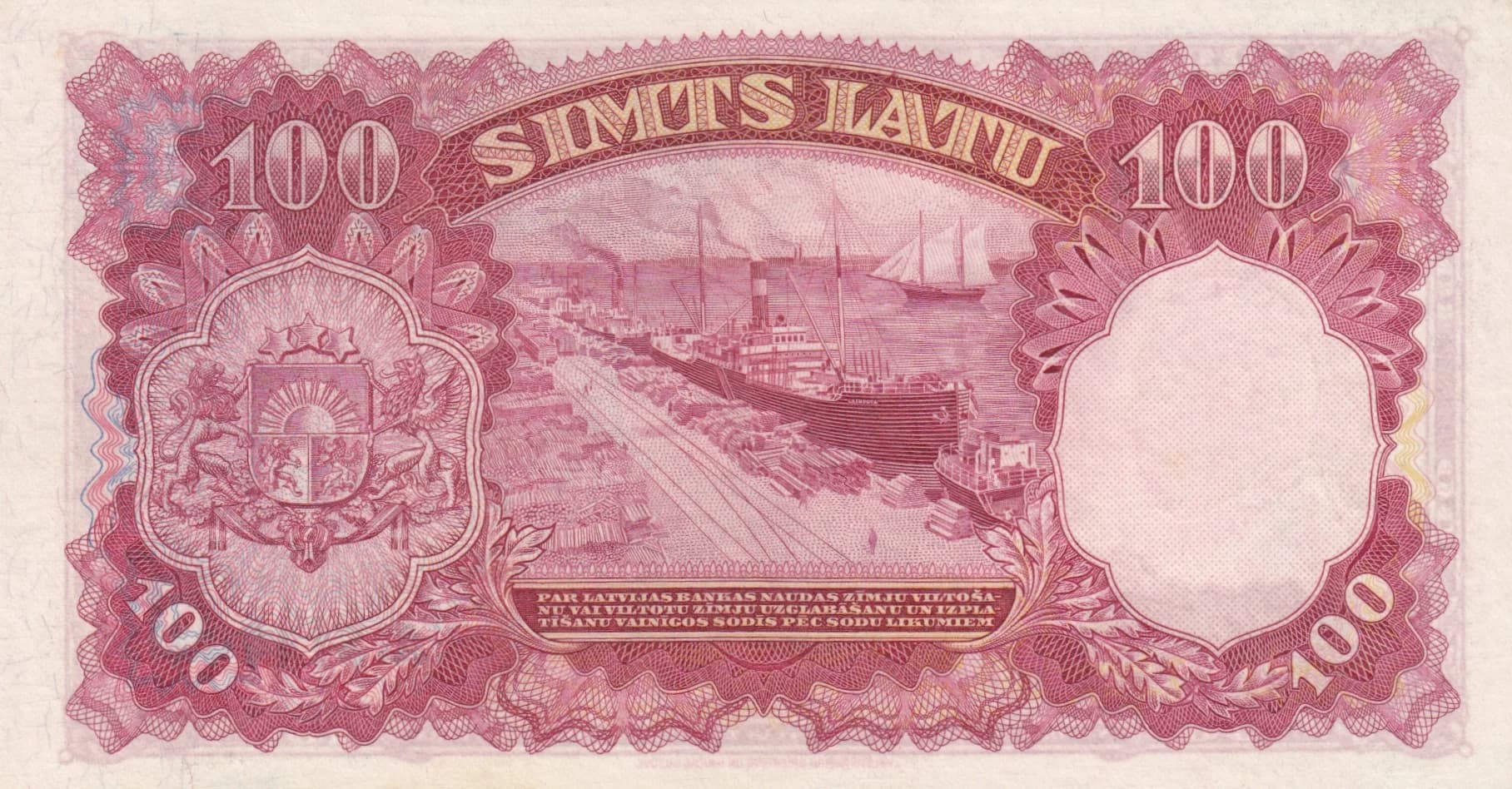
This 1939 100 Latu note from Latvijas Banka exemplifies the classical engraved style characteristic of interwar Latvian currency. The obverse features allegorical figures representing Latvia in burgundy and pink tones, while the reverse depicts a harbor scene with shipping vessels and the Latvian coat of arms, reflecting the nation's maritime commerce. Despite visible circulation wear including creases and foxing, the fine engraving details remain sharp and distinct, representing a well-preserved example of Latvia's pre-Soviet numismatic heritage.
Common. eBay sales data spanning 2009-2024 demonstrates consistent availability at modest prices, with UNC examples selling for $128-150 and most circulated examples trading for $30-70. The note does not appear in PMG's population reports with significant restriction, and multiple examples surface regularly on the secondary market. No evidence of limited print runs or recall status exists for this Pick number.
Issued in 1939, this note represents the final year of Latvia's independence before Soviet occupation in 1940, making it a significant artifact of the interwar period. The harbor scene on the reverse symbolizes Latvia's economic importance as a Baltic trading nation, while the classical allegorical figures on the obverse reflect the Latvian state's aspirations to cultural sophistication and European modernity during the authoritarian regime of Kārlis Ulmanis.
The obverse presents an allegorical composition with classical female and male figures representing Latvia's identity and virtues, accompanied by a cherub figure in the lower left, arranged within an ornate engraved frame with elaborate scrollwork and architectural elements in all four corners. The reverse showcases a detailed harbor scene depicting the port of Riga with merchant vessels under sail, fortified structures, and waterfront buildings, accompanied by the Latvian coat of arms (featuring heraldic lions and shields) mounted in an ornate rectangular cartouche on the left side. Both sides employ burgundy/maroon and pink coloration against a cream/white background, with denomination numerals prominently displayed. The decorative borders feature classical scrollwork, floral motifs, and corner ornaments consistent with European security printing standards of the 1930s.
Front Side: '100' (denomination in Arabic numerals), 'LATVIJAS BANKAS' (Bank of Latvia), 'SIMTS LATU' (One Hundred Latu), '1939' (year of issue), 'A 811744' (serial number), 'PADOMS PRIEKŠSEDTAUS UN GALVENAIS DIREKTORS' (Chairman of the Board and Chief Director), 'NAUDAS ZĪMES NODROŠINĀTAS TO PILNA NOMINĀLVĒRTĪBĀ' (Currency notes are secured at full nominal value), 'VALSTS PAPIRU SPIESTUVE UN NAUDAS KALTUVE' (State Paper Printing and Currency Minting Works). Back Side: '100' and 'SIMTS LATU' (denomination markings), 'PAR LATVIJAS BANKAS NAUDAS ZĪMJU UZGLABĀŠANU UN UZRAUDZĪBU ATBILDĪGI UZRAUGSITĀ VALSTĪBAS SODIS PEC SODU LIESUMIEM' (For the storage and supervision of the Bank of Latvia's currency notes, responsible officials are subject to state punishment according to law).
Intaglio engraving (line engraving), executed by Valsts Papiru Spiestuve un Naudas Kaltuve (State Paper Printing and Currency Minting Works), Riga. The fine line work, complex border patterns, sharp detail preservation, and security features visible in both the allegorical figures and harbor landscape are characteristic of high-quality intaglio production. Security elements include the engraved serial number and intricate decorative patterns designed to prevent counterfeiting.
The observed specimen bears serial number 'A 811744' and represents Pick-22a per PMG cataloging. No overprints, date variations, or signature variants are evident in this example. The serial number prefix 'A' is consistent with standard Latvijas Banka issue practice. No rare varieties or printing errors are apparent in the visual analysis.