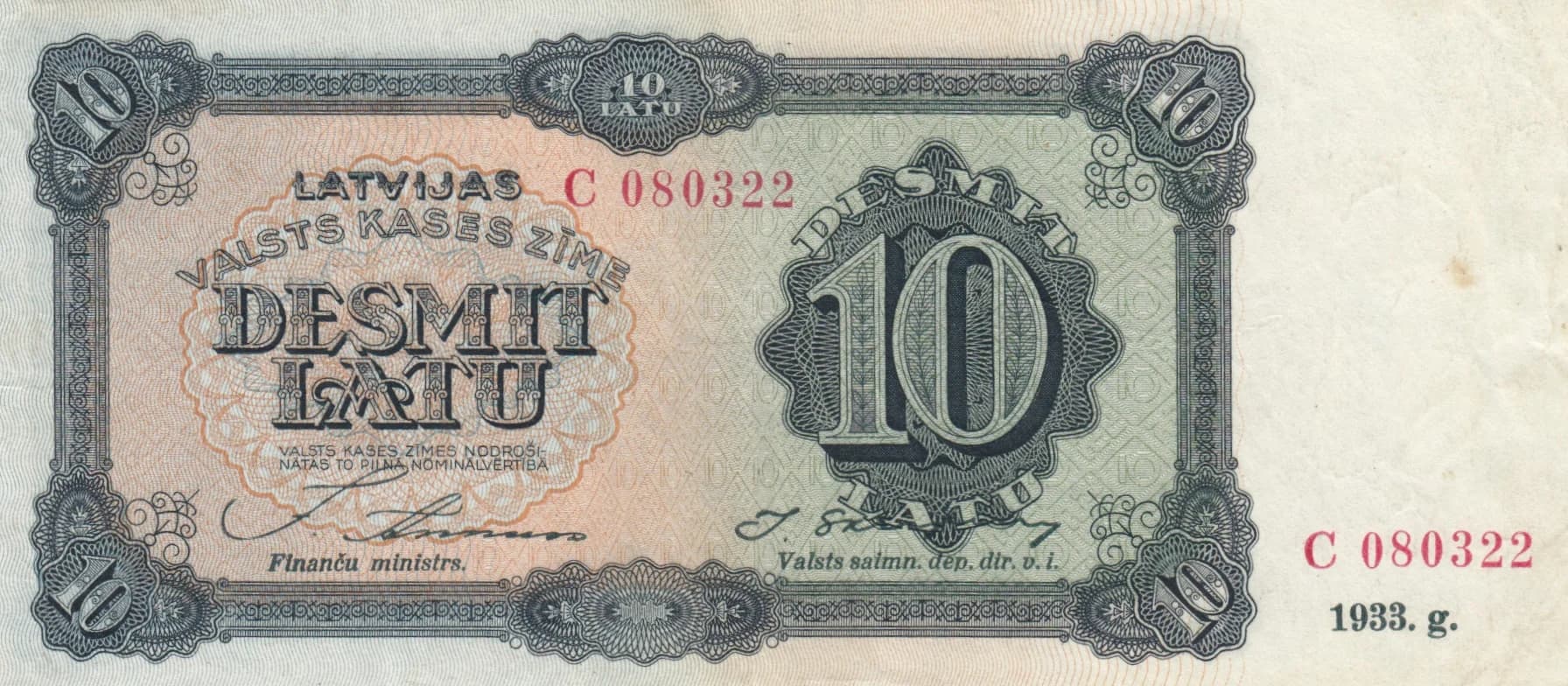
10 latu 1934
“serie AE”
Market Prices
2 salesAbout This Note
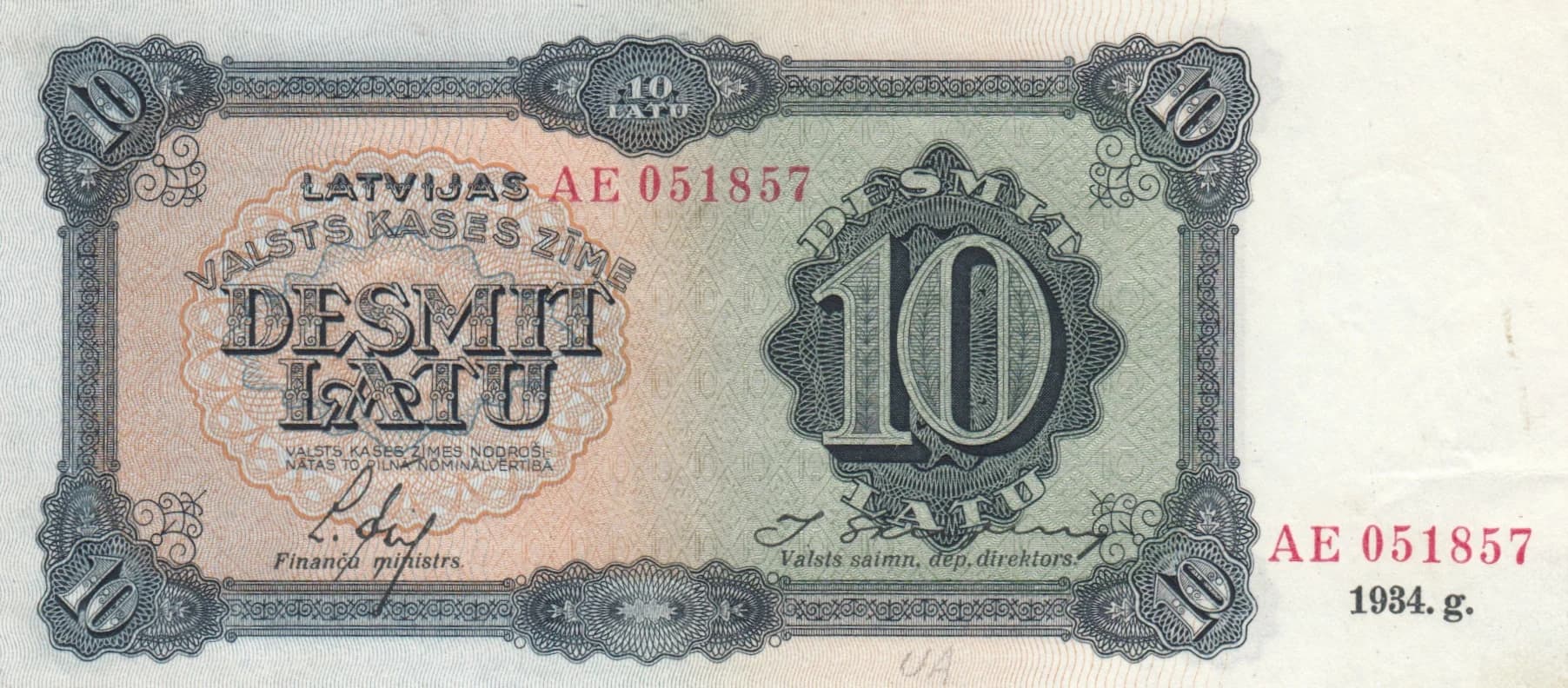
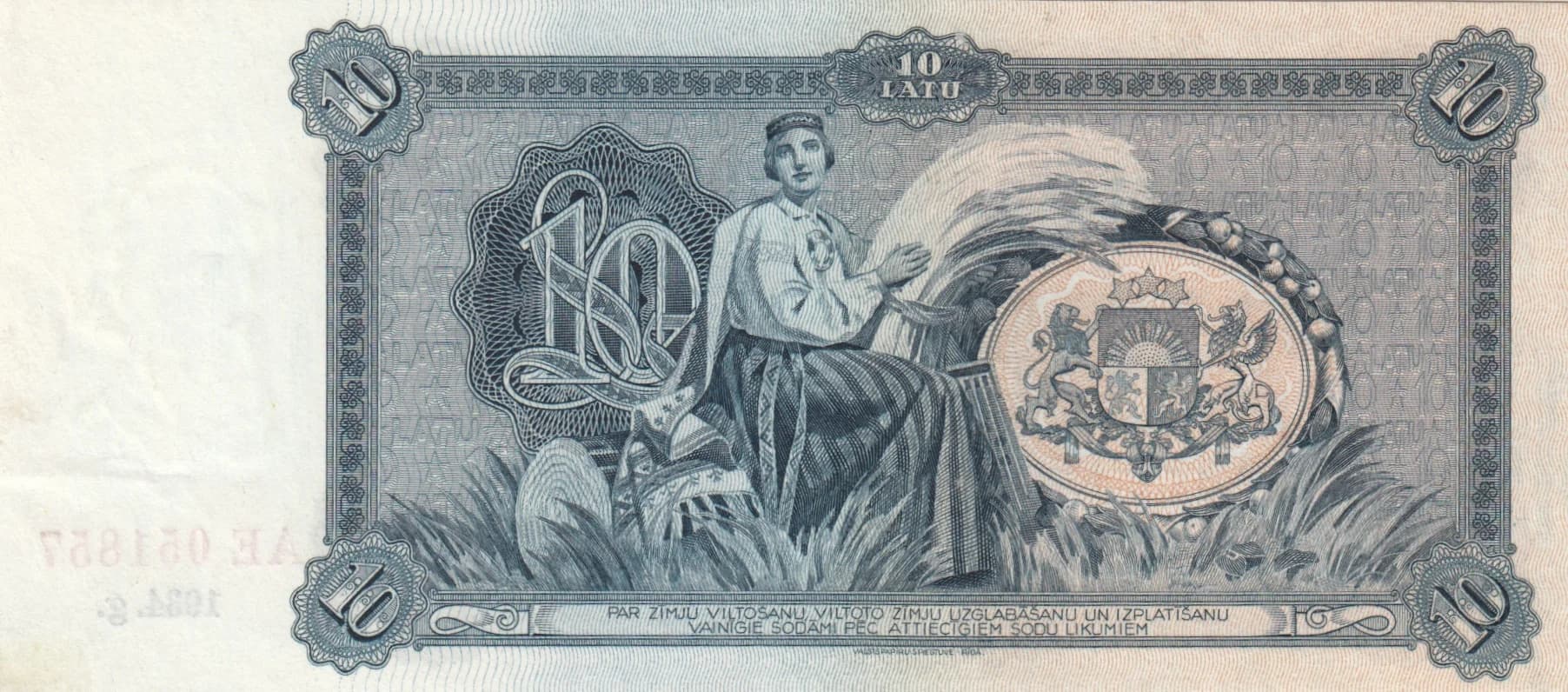
This is an AU-graded 10 Latu note from Latvia's 1934 issue (Pick P-25f), displaying the characteristic two-tone design with peach/salmon and pale green coloring typical of interwar Latvian currency. The note exhibits exceptional condition with vibrant colors, crisp engraving, and no visible circulation wear, making it an attractive example of Latvia's pre-independence monetary system. The allegorical reverse featuring a seated female personification of Latvia with the national coat of arms represents the nationalist imagery favored during this period of Latvian sovereignty.
Common. The 1934 10 Latu note was part of a standard circulation issue by the Latvian Government for the established currency system. While Latvian banknotes from the independence period (1918-1940) have historical significance, they were issued in substantial quantities for everyday commerce. The AU condition grade is desirable but not exceptionally rare for this denomination, and the serial number prefix 'AE' represents a standard production series with no known special rarity. Notes from this issue appear regularly in the collector market at modest prices, indicating healthy supply relative to collector demand.
Issued in 1934 during Latvia's independence period (1918-1940), this banknote reflects the nation's consolidation of sovereignty through its own currency system under the Latvian Government. The allegorical female figure on the reverse symbolizes the newly independent Latvian state, while the prominent display of the national coat of arms with heraldic lions and sun motifs reinforces national identity during the interwar period. The inscriptions in Latvian and the formal designation as 'Valsts Kases Zime' (State Treasury Note) underscore Latvia's assertion of financial independence before its occupation in 1940.
The front features a formal administrative design with two-tone coloring: the left section in peach/salmon contains the primary inscriptions and official titles, while the pale green right section provides visual balance. Ornate scalloped rosette patterns adorn all four corners with decorative cartouches housing the denomination '10' in both upper and lower positions. The reverse presents an allegorical composition with a classical female figure (personification of Latvia/Latvija Māte) seated in draped garments, symbolizing the nation's sovereignty. To her right is an elaborate cartouche displaying the Latvian coat of arms featuring the characteristic heraldic shield with lions and solar symbolism. The background includes naturalistic landscape elements with vegetation, and throughout both sides fine line engraving with intricate guilloche patterns and scrollwork provide security and aesthetic sophistication typical of 1930s European banknote design.
FRONT SIDE: 'LATVIJAS VALSTS KASES ZIME' (Latvia's State Treasury Note), 'DESMIT LATU' (Ten Latu), 'FINANCA ĢENERĀLIS' (Finance Minister), 'VALSTS SAIMN. DEP. DIREKTORS' (State Economy Department Director), 'VALSTS KASES ZIMES NODROSE' (State Treasury Note Provision), Serial number: AE 051857, Denomination: 10. BACK SIDE: '10 LATU' (Ten Latu), 'PAR ZIMUL UZGLABAJUSANU UN IZPLATISANU' (For the preservation, storage and circulation of notes), Additional legal authority text regarding warrant and authorization for the note's issue.
Intaglio engraving (line engraving and steel plate engraving), the standard security printing method for European banknotes of this period. The fine line work, detailed guilloche patterns, cross-hatching, intricate filigree borders, and crisp definition of the allegorical portrait are characteristic of high-quality intaglio production. Based on Pick P-25f designation and Latvian currency production standards of the era, this note was likely produced by a major European security printer, though specific printer attribution would require additional documentation.
Series AE noted in collector documentation. The serial number AE 051857 places this note within the AE series range typical of 1934 production. The Pick P-25f designation indicates this is a later printing variety of the 10 Latu denomination from the 1934 issue. No overprints, date variations, or known signature variants are evident from the visual analysis of this specific example. Standard production varieties for this Pick number would relate to different serial number prefixes and subsequent printing runs, but AE represents a documented series for this issue.