10 kapeikas 1920
Market Prices
16 salesAbout This Note
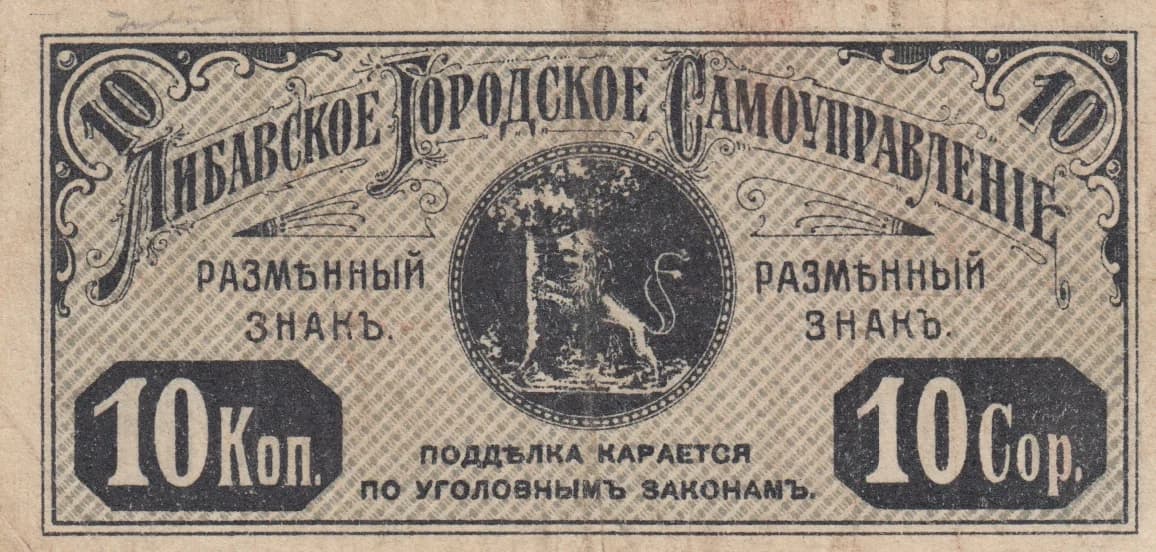
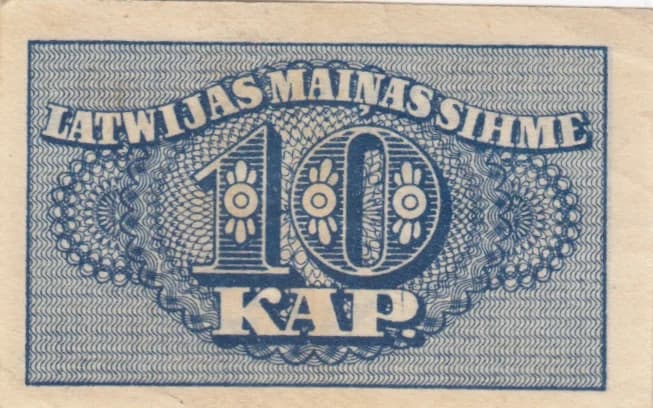
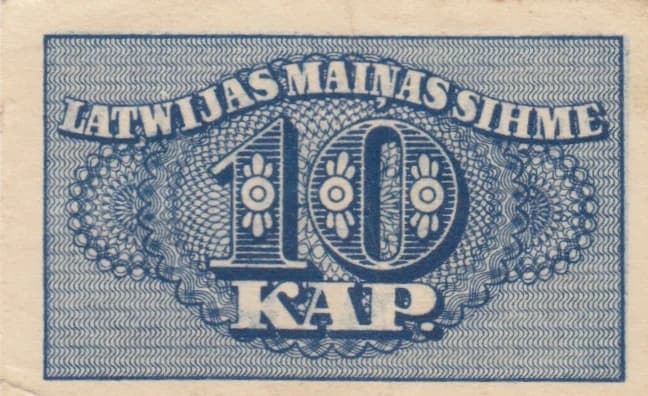
This Latvia 10 Kapeikas note from 1920 presents an exceptional example of early Latvian currency design, featuring a prominent central numeral '10' flanked by three radiating sun symbols—a distinctive motif representing Latvia's national symbolism. The note displays the characteristic aging and foxing typical of century-old paper currency, with an EF condition grade indicating well-preserved structure despite significant patina, making it a desirable specimen for collectors of Baltic numismatics and early 20th-century Eastern European currencies.
Common. The eBay market data provided shows consistent sales activity with prices ranging from $1.79 to $36, with most EF-graded examples selling in the $3-$13 range and average prices clustering well below $20. The 2016 catalogue value for VF condition ($10) further supports common classification. The regular issue designation and absence of any indication of limited print runs or recall status confirm this as a routinely available note in the collector market.
Issued during Latvia's transition to independence following World War I and the Russian Revolution, this 1920 note represents the Latvian government's establishment of sovereign currency authority after centuries under Russian control. The three radiating sun symbols on the note reflect traditional Latvian national iconography, while the formal Cyrillic-influenced typography and classical border designs demonstrate the influence of both Russian monetary traditions and European design aesthetics during this formative period of Latvian statehood.
The 10 Kapeikas note features a geometric and symbolic design centered on the large numeral '10' serving as the dominant focal point. Three circular sun symbols with radiating lines—a recurring motif in Latvian heraldry and folk art—are arranged symmetrically around the numeral, emphasizing the note's denomination. The entire design is enclosed within ornate decorative borders featuring intricate geometric patterns, floral elements, and wave-like framing devices that create a formal, classical appearance. The color scheme of blue on white/cream demonstrates the monochromatic printing typical of emergency and early-issue currency of the period. No portraits or identifiable landmarks appear on the note, focusing instead on abstract decorative and symbolic elements.
Front/Obverse: 'LATVIJAS MAINAS SIHME' (Latvian State Currency/Latvian Monetary Note), '10' (denomination), 'KAP' (Kapeikas, the currency unit). The inscriptions are rendered in Latvian using period-appropriate typography, confirming the sovereign Latvian government as the issuing authority.
The note exhibits characteristics of intaglio printing, evidenced by the fine line work, intricate geometric borders, and detailed floral patterns visible in the visual analysis. The complexity of the decorative elements and the precision of the geometric designs are consistent with engraved plate printing, a standard security measure of the era. The printer for this issue is not definitively documented in available references, though early Latvian currency was produced by various European security printers contracted by the Latvian government during its initial monetary establishment.
The PMG population report indicates two catalogued variants: P-10a and P-10s, likely representing standard and specimen versions respectively. The visual analysis does not reveal serial numbers, signatures, or other distinguishing details sufficient to determine the specific variety of this EF-graded example. Collectors should verify serial number prefixes and any overprints against the P-10a and P-10s variant specifications in detailed Pick catalogue references to confirm exact variety classification.