50 kip 1968
Market Prices
18 salesAbout This Note
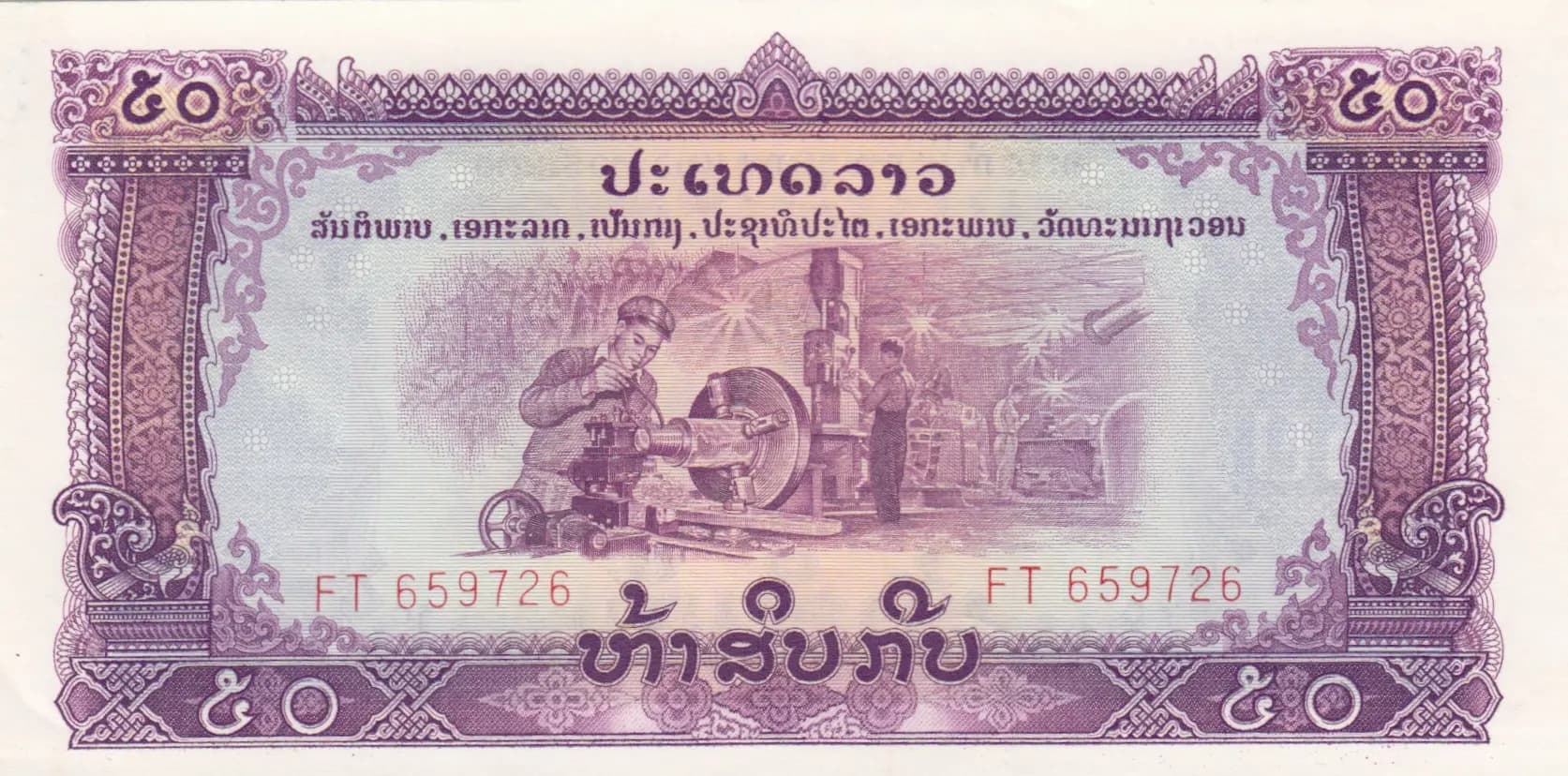
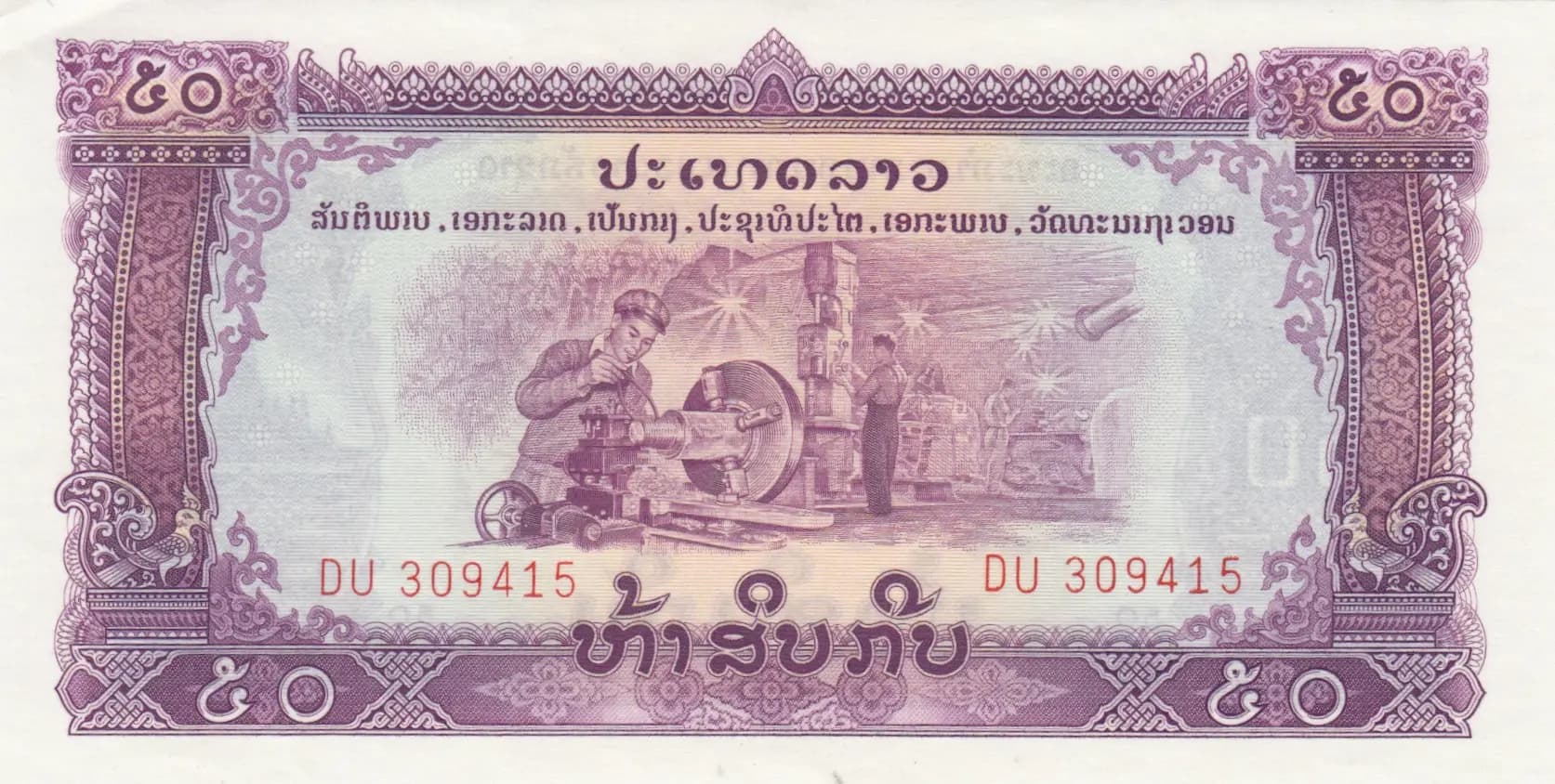
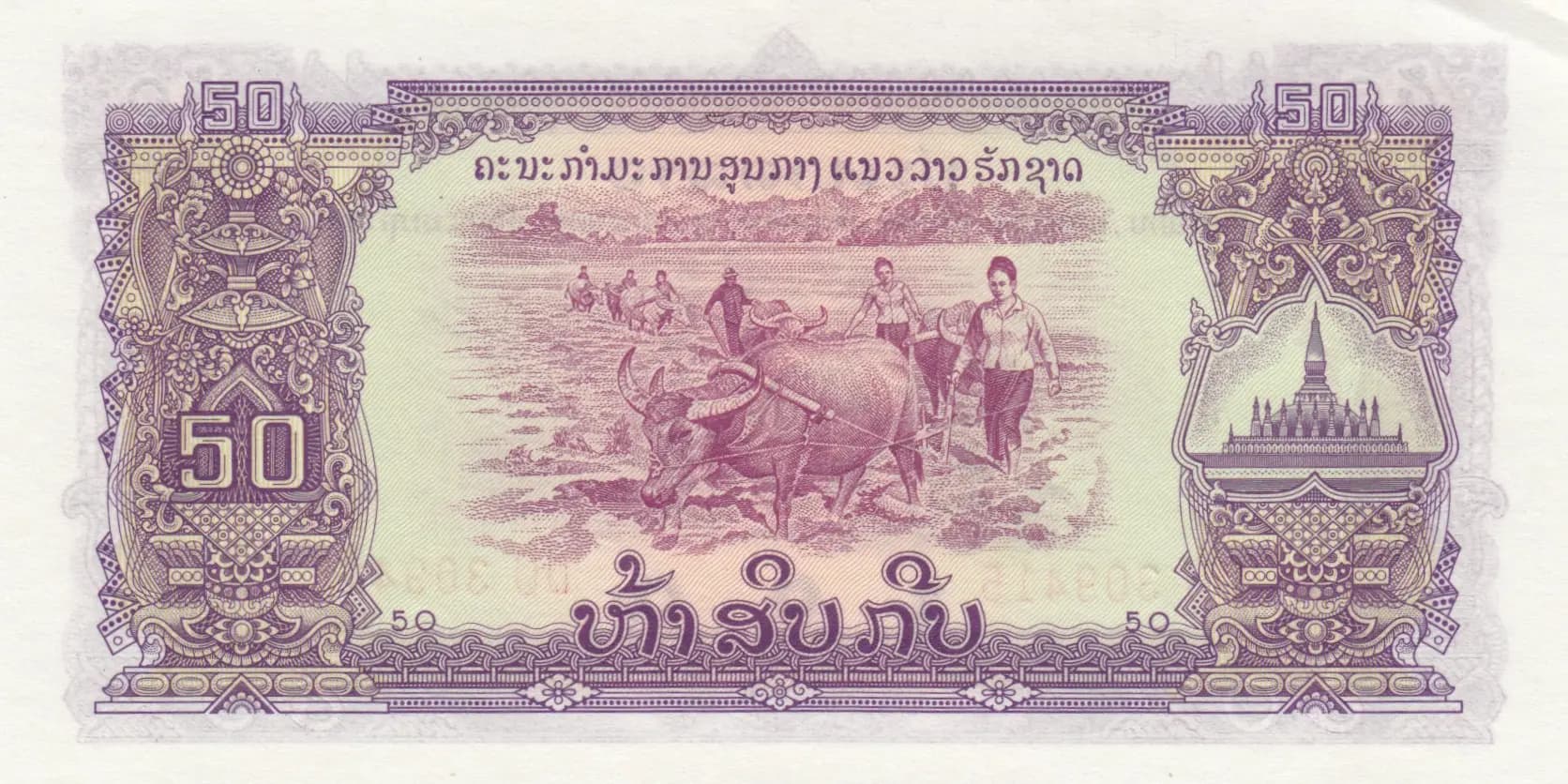
This is an exceptional UNC example of the Laos 50 kip from 1968 (Pick-22b), issued by the Lao Central National Committee. The note displays vibrant purple, pink, and cream coloring with crisp, well-preserved paper and no visible wear, creases, or damage. The design combines industrial and agricultural imagery with traditional Lao decorative elements, representing the economic themes of the era, and remains highly desirable among collectors of Southeast Asian currency.
Common. This issue remains readily available in the collector market, with multiple examples graded and sold through auction channels. eBay sales data shows UNC examples consistently selling in the $3–$5 range historically, with even recent PMG-66 graded specimens selling for $9–$16. The catalog value for UNC specimens is listed as $2, and the note was issued in sufficient quantities to circulate widely across Pathet Lao territories before becoming national currency in 1975.
Issued during a transitional period in Laos, this 50 kip note was printed in the People's Republic of China and circulated in Pathet Lao-controlled areas before becoming official legal tender throughout the country following the 1975 revolution. The front's depiction of factory workers operating machinery and the reverse's agricultural scene with oxen plowing reflect the socialist-oriented economic values of the period. The inclusion of the Buddhist temple (Pha That Luang) on the reverse demonstrates how even revolutionary currency maintained cultural and religious symbolism central to Lao identity.
The obverse features an ornate purple and pink border with traditional Thai-Lao decorative scrollwork and corner flourishes surrounding a central industrial vignette. Two factory workers are depicted operating machinery—prominently a lathe or grinding wheel—with industrial structures visible in the background, set against a radiating sunburst design. The reverse mirrors the ornamental border styling and depicts an agricultural scene of multiple farm workers guiding oxen (water buffalo) in a rice field, symbolizing traditional agrarian labor. A Buddhist temple (Pha That Luang pagoda of Vientiane, a national monument) is illustrated in the upper right corner within a decorative frame, representing cultural and spiritual continuity. Both sides feature intricate line engraving with fine parallel line background patterns characteristic of high-quality banknote production.
FRONT: Text in Lao script reads 'ประเทศลาว' (Laos) at the top, with a motto translating to 'Development, Independence, Liberty, Democratic Republic, Peace, Sovereignty and Well-being.' Serial number 'DU 309415' appears in red at bottom center. Denomination shown in Lao numerals as '๕๐' (50). BACK: Text reads 'ລະບົບປະຊາທິປະໄຕ ຍຸກຕາ່ແບ່ວວາງລັກສາຕ' (Democratic People's Republic) across the top. Denomination displayed as both Arabic numerals '50' and Lao numerals '๕๐' in decorative frames on left and right sides, with 'ຣຕກີບຕີ' (Kip) indicating the currency unit.
Intaglio engraving (steel plate printing), confirmed by the visual analysis noting intricate line engraving throughout border designs, fine parallel line background patterns in central vignettes, and detailed engraving in the temple illustration. This note was printed in the People's Republic of China, likely at a Chinese state security printer, as documented in catalog references.
This note is cataloged as Pick-22b, with at least two other variants (P-22a and P-22s) known to exist according to PMG population data. The 'b' variety designation typically indicates a specific signature combination or printing difference; the visual analysis shows a serial number prefix 'DU' which may be relevant to variety identification. The red serial number and specific serial number formatting visible (DU 309415) should be cross-referenced against known variety characteristics if more detailed comparative analysis is required.