100 kip 1957
Market Prices
100 salesAbout This Note
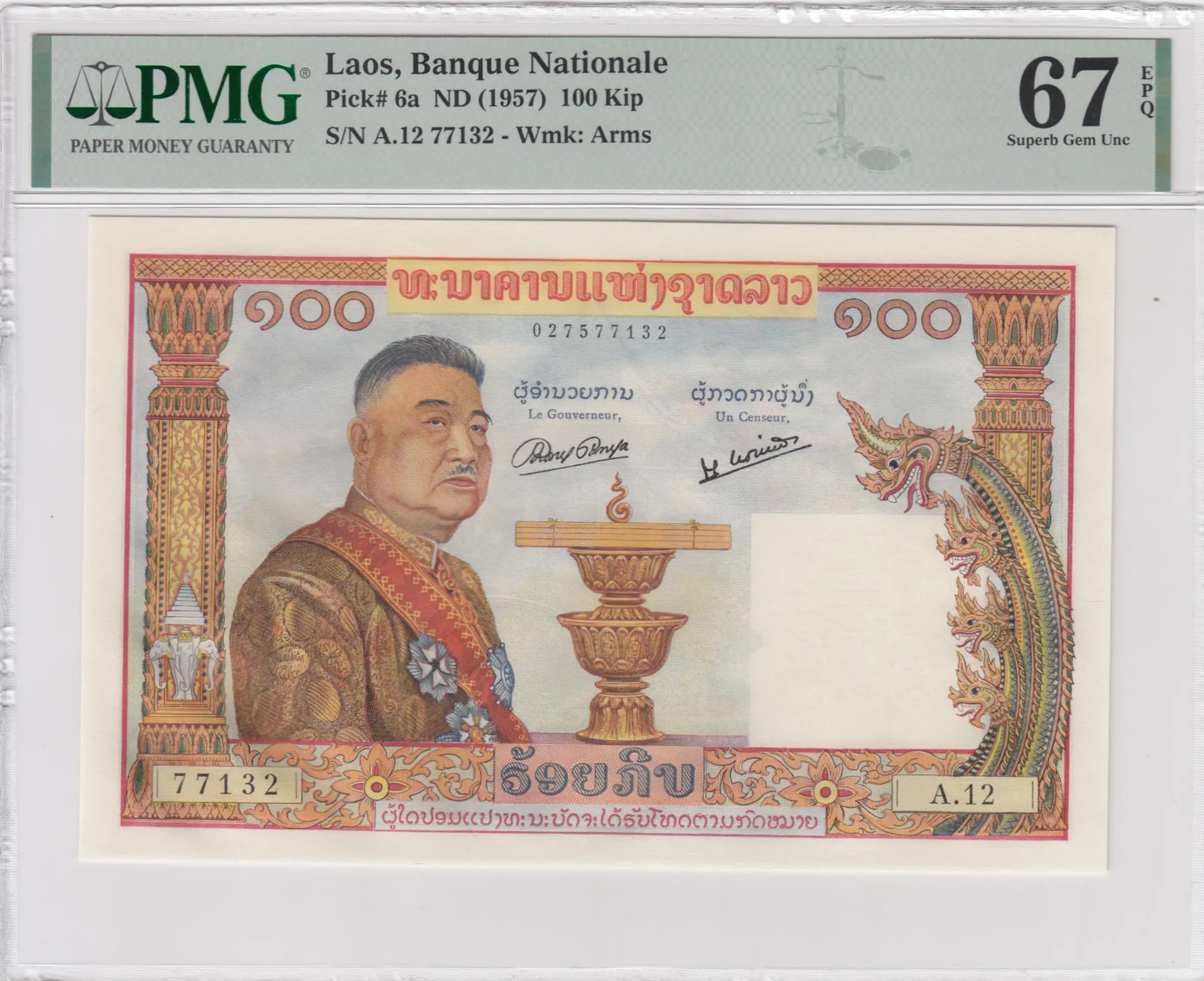
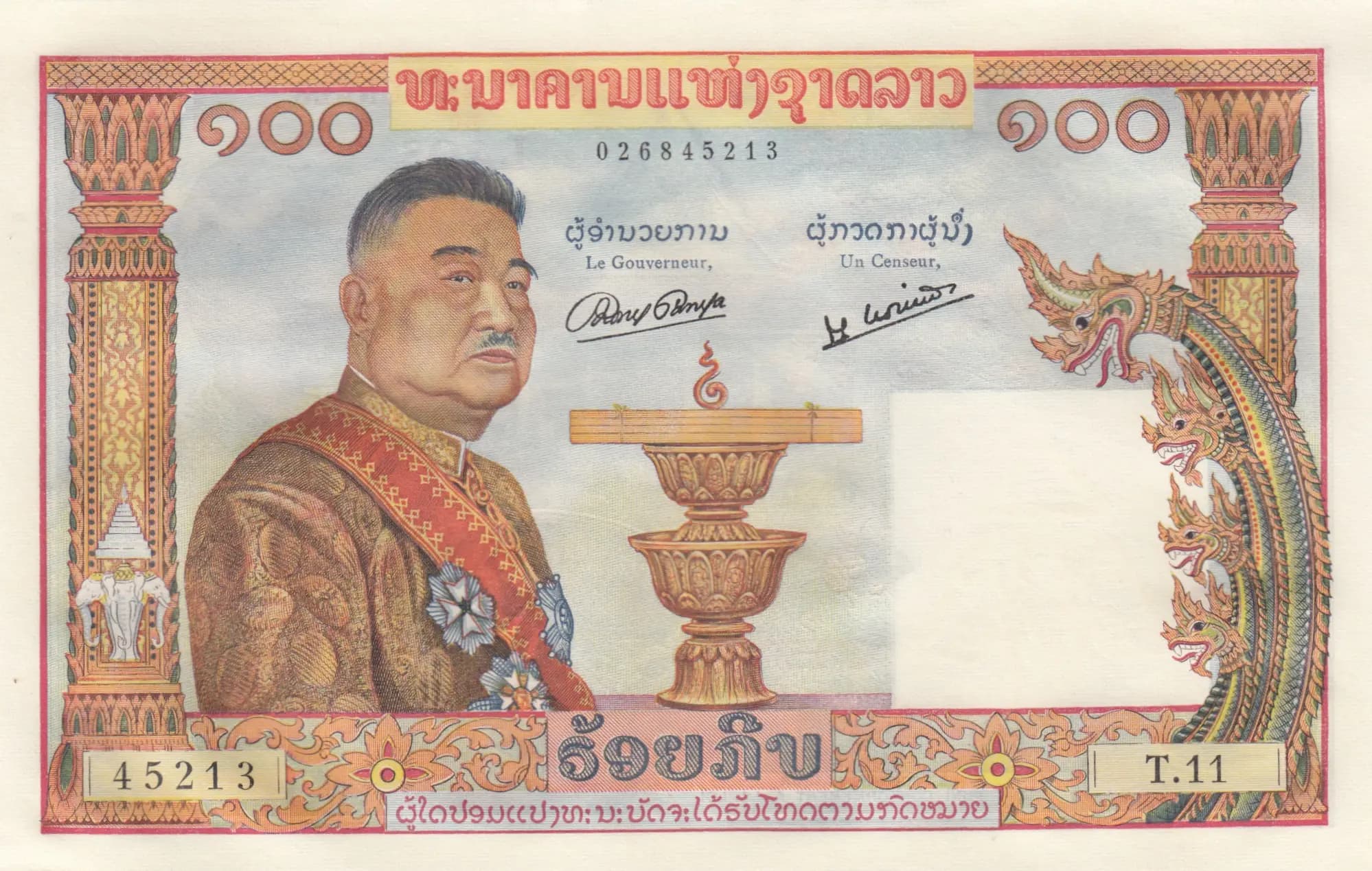
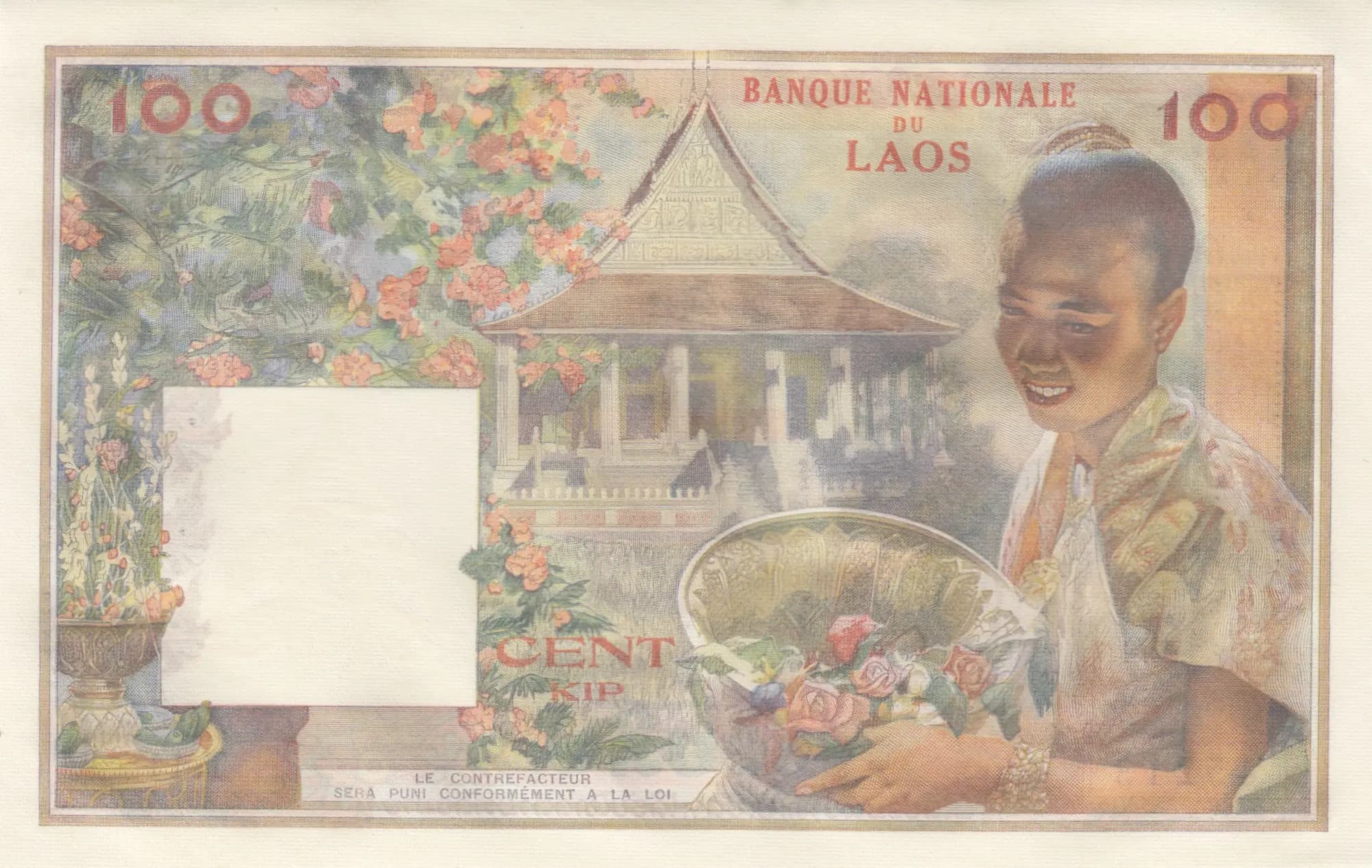
This 1957 Banque Nationale du Laos 100 kip note (Pick P-6) presents a splendid example of early Laotian currency in uncirculated condition. The obverse features a dignified portrait of King Sisavang Vong in traditional ceremonial dress with ornate decorative vessels and dragon motifs rendered in warm cream, gold, brown, and red tones. The reverse depicts a Buddhist monk holding a flower bowl before the iconic Ho Phra Keo temple in Vientiane, embodying the cultural and religious heritage of Laos. The sharp printing, vibrant colors, and complete absence of wear mark this as a premium specimen.
Common. Despite its age and historical significance, auction house records from realbanknotes.com indicate consistent availability with robust eBay market activity spanning decades (2011–2026). UNC examples regularly sell for $20–$35, with PMG-graded specimens (particularly 65–67 grades) commanding $40–$75. The consistent supply of examples across all grades and the sustained moderate price range typical of early post-colonial issues from established printing centers (Bank of France) indicate substantial original mintage. This note is neither scarce nor rare in the numismatic sense.
Issued in 1957 during the early years of the Kingdom of Laos following French Indochina's dissolution, this note reflects the nation's transition to independence and establishment of its central bank. King Sisavang Vong, depicted in traditional dress with formal regalia, represents the monarchy's stabilizing role during this formative period. The reverse's depiction of Ho Phra Keo temple and a Buddhist monk underscores the deep integration of Theravada Buddhism in Laotian national identity and governance during the nascent royal period.
The obverse showcases King Sisavang Vong, the reigning monarch of Laos during 1957, positioned in three-quarter profile on the left wearing a formal brown tunic adorned with blue and red decorative elements, a red sash with military insignia or medals across the chest. Central to the composition is an ornate golden ceremonial vessel (representing the Constitution or state regalia) depicted on a pedestal, flanked by decorative borders containing traditional Laotian temple architectural motifs and dragon head designs in gold filigree. The reverse presents a young Buddhist monk in light robes holding a decorative bowl brimming with roses and flowers, positioned before the Ho Phra Keo temple—one of Vientiane's most revered Buddhist monuments, distinguished by its multi-tiered peaked roof architecture characteristic of Laotian temple design. The left side of the reverse features a complementary floral arrangement in an ornamental vase, creating a balanced composition that celebrates the nation's Buddhist heritage and cultural identity.
FRONT: 'ປະເທດລາວ' (Laos) | '100' (denomination) | 'Le Gouverneur' (The Governor) | 'Un Censeur' (A Censor) | 'ຜູ້ລາຍງານການ' (The Governor in Lao) | 'ຜູ້ວາງຕາງໍ່' (A Censor in Lao) | Serial number '02684521 3' and '45213' | 'T.11' (printer/series designation) | 'ຣີບບ້ານສະຫະປະຊາທິປະໄຕປະຊາຊົນລາວ' (Democratic People's Republic of Laos designation). BACK: 'BANQUE NATIONALE DU LAOS' (National Bank of Laos) | '100 CENT' (One Hundred) | 'LE CONTREFACTEUR SERA PUNI CONFORMÉMENT À LA LOI' (The Counterfeiter Will Be Punished According to the Law - anti-counterfeiting notice).
Intaglio/engraved line printing, executed by the Bank of France without imprint mark, a characteristic of French-produced colonial and early post-colonial currency for Southeast Asian nations. The process produced the fine line work visible in the detailed borders, temple architecture, and facial features. Multiple color passes in cream, gold, brown, red, blue, and green demonstrate the sophisticated multi-color intaglio technique employed. Security features include dual serial numbers, signature lines, and intricate geometric patterns integrated into the design.
Pick P-6a is catalogued as the primary variant by PMG. Observable details from the visual specimen include serial number '02684521 3' with segment '45213' and designation 'T.11', consistent with Bank of France production protocols. No overprints, date variants, or signature varieties are apparent in this UNC example. Early printing techniques and the long span between issue date and modern grading mean minor printing variations exist, but such variations are typical of the issue and do not substantially affect classification or value.