50 kip 1968
Market Prices
15 salesAbout This Note
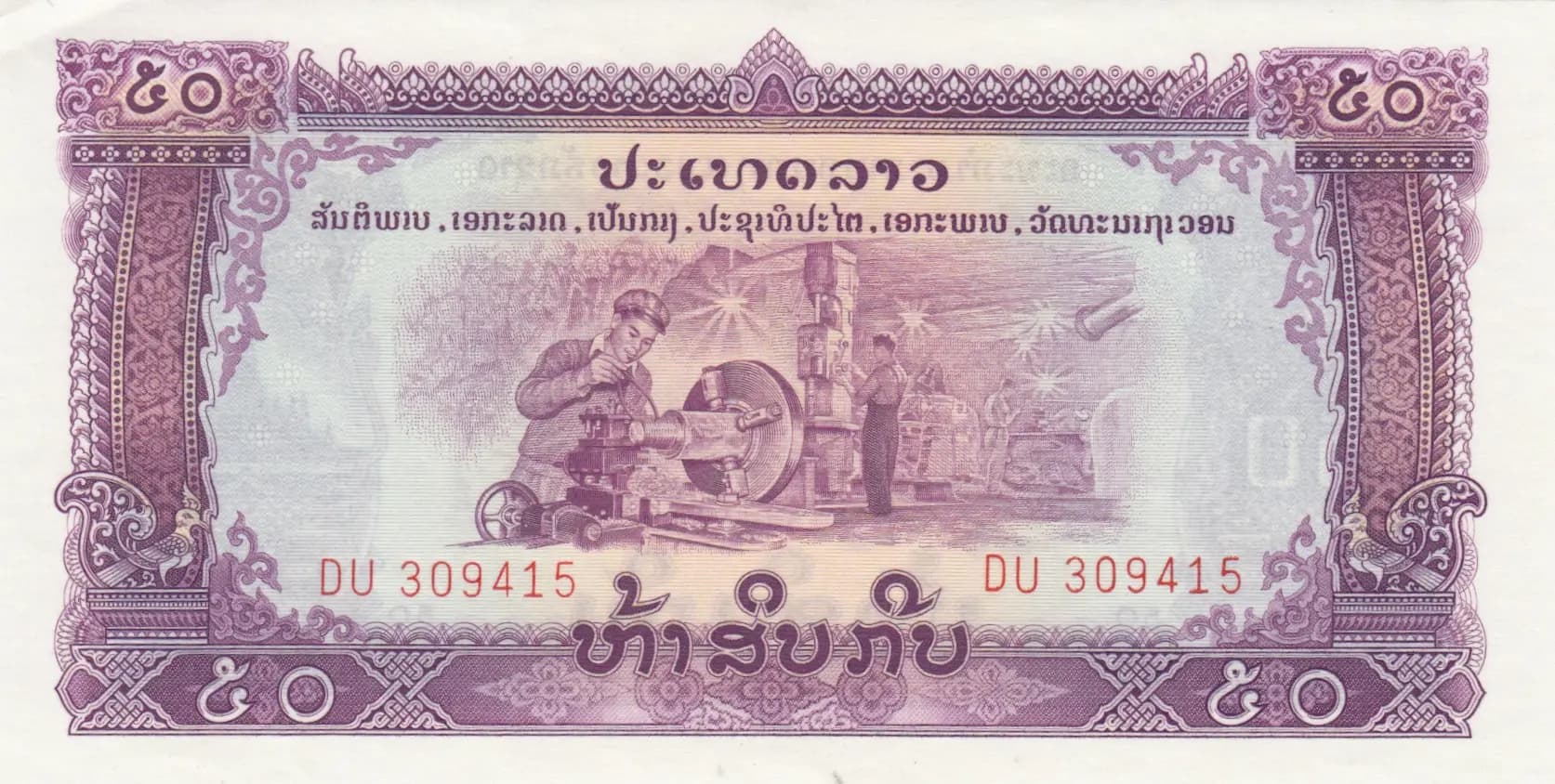
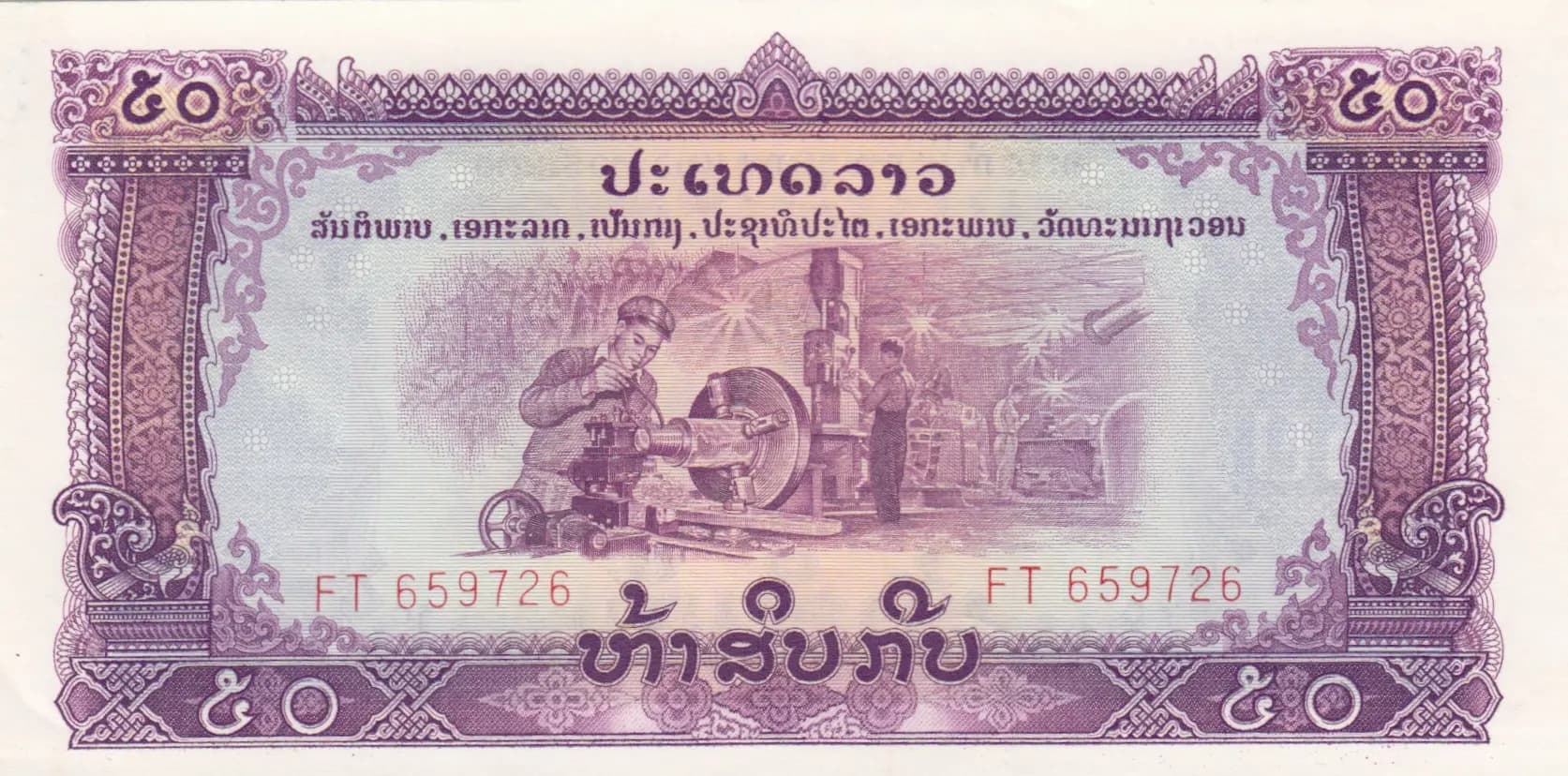
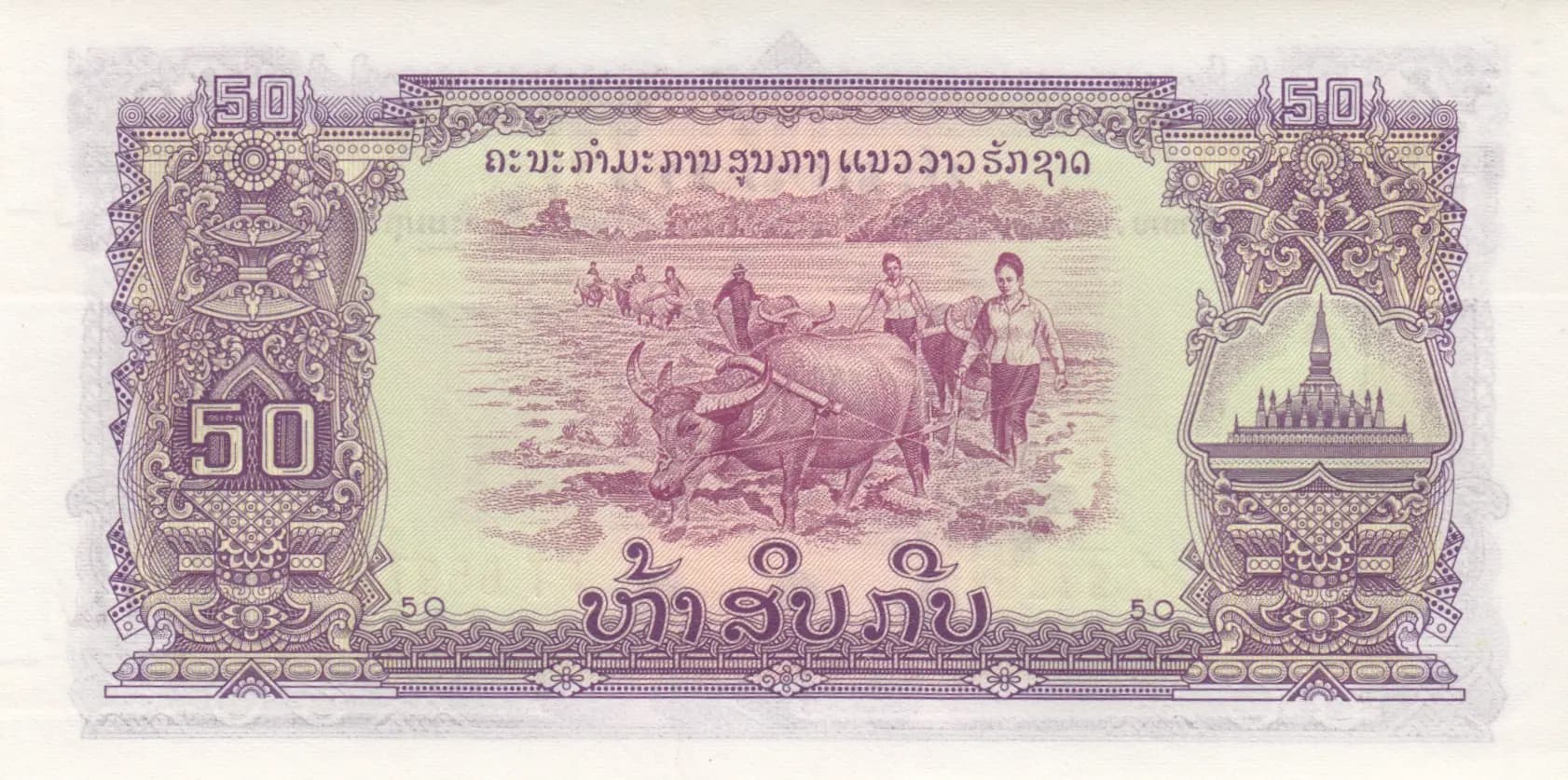
This Laotian 50 kip note from 1968 (Pick P-22a) is an exceptional example of UNC condition, displaying crisp purple and mauve tones with pristine paper quality and no visible wear. The note features striking socialist-realist imagery on both sides—industrial workers on the front and agricultural laborers with oxen on the reverse—reflecting the ideological priorities of the Pathet Lao regime that issued this currency in communist-controlled areas before national reunification in 1975. The elaborate ornamental borders and fine line engraving showcase skilled craftsmanship typical of Chinese-printed Lao notes from this politically significant period.
Common. This is a regular-issue banknote from the Pathet Lao period (1968-1975) that was circulated widely throughout communist-controlled areas and subsequently throughout the entire nation after 1975. eBay market data shows consistent sales in the $3-$32 range across multiple condition grades (UNC to PMG 67), with UNC examples typically selling for $3-$16, indicating steady demand but no scarcity premium. The note does not appear in scarce or rare categories in numismatic literature, and there is no evidence of limited print runs or recall status that would elevate its rarity classification.
This note was issued by the Lao Central National Committee during the Indochina War period, when Pathet Lao forces controlled significant territory in northeastern Laos. The deliberate choice of imagery—modern industrial workers on the obverse and agricultural laborers with traditional oxen on the reverse—reflects the revolutionary government's ideological emphasis on both modernization and peasant-based communist ideology. After the communist victory and national reunification in 1975, these Pathet Lao-issued notes became the accepted legal tender throughout the entire country, making them historically significant artifacts of Laos's transition to communist rule.
The obverse depicts an industrial manufacturing scene representing socialist labor ideology, with multiple workers operating machinery including what appears to be a large grinding wheel or lathe mechanism, symbolizing the revolutionary government's commitment to modernization and industrial development. Factory buildings with industrial architecture occupy the background. The reverse presents a complementary agrarian scene showing peasant farmers in traditional dress working with oxen in flooded rice paddies, emphasizing the Pathet Lao's peasant-based communist ideology and connection to rural Laotian society. A stylized representation of Pha That Luang (the golden stupa in Vientiane, Laos's most sacred Buddhist monument) appears in an ornate decorative cartouche on the right side of the reverse, subtly incorporating national Buddhist heritage into the revolutionary imagery. Both sides feature elaborate ornamental borders with geometric and floral motifs characteristic of traditional Thai and Lao artistic design, executed in fine line engraving.
FRONT SIDE: ປະເທດລາວ (Pathet Lao / Land of Laos); ສັມພັນນ, ເອກະລາດ, ປະຊາທິປະໄຕ, ປະຊາຊົນ, ເອກະນາມ, ວັດທະນະທຳເວົ້າ (Peace, Independence, Democracy, People, Unity, Culture/Civilization); ຫ້າສິບກີບ (Fifty kip); ໕໐ (50 in Lao numerals); FT 659726 (serial number). BACK SIDE: ໕໐ (50 in Lao numerals); ຫ້າສິບກີບ (Fifty kip, appears twice on left and right decorative panels).
Intaglio engraving (fine line engraving) on multicolored underprint, typical of currency production from the period. The note was printed in the People's Republic of China, as documented in contemporary sources, indicating collaboration between the Chinese communist government and the Pathet Lao. The multi-layered decorative design and fine detail visible throughout the note reflects professional security printing standards of Chinese state printers.
This example is identified as Pick P-22a, one of three catalogued variants for the 50 kip denomination from this period (P-22a, P-22b, and P-22s also exist in PMG records). The serial number FT 659726 is visible on the front. Varieties within this series typically relate to signature variations, printer marks, or minor design modifications, though specific distinguishing characteristics between P-22a and other variants would require direct comparison with reference examples. The 'a' designation in P-22a suggests this is the standard first variety of this denomination.