20 kip 1968
Market Prices
16 salesAbout This Note
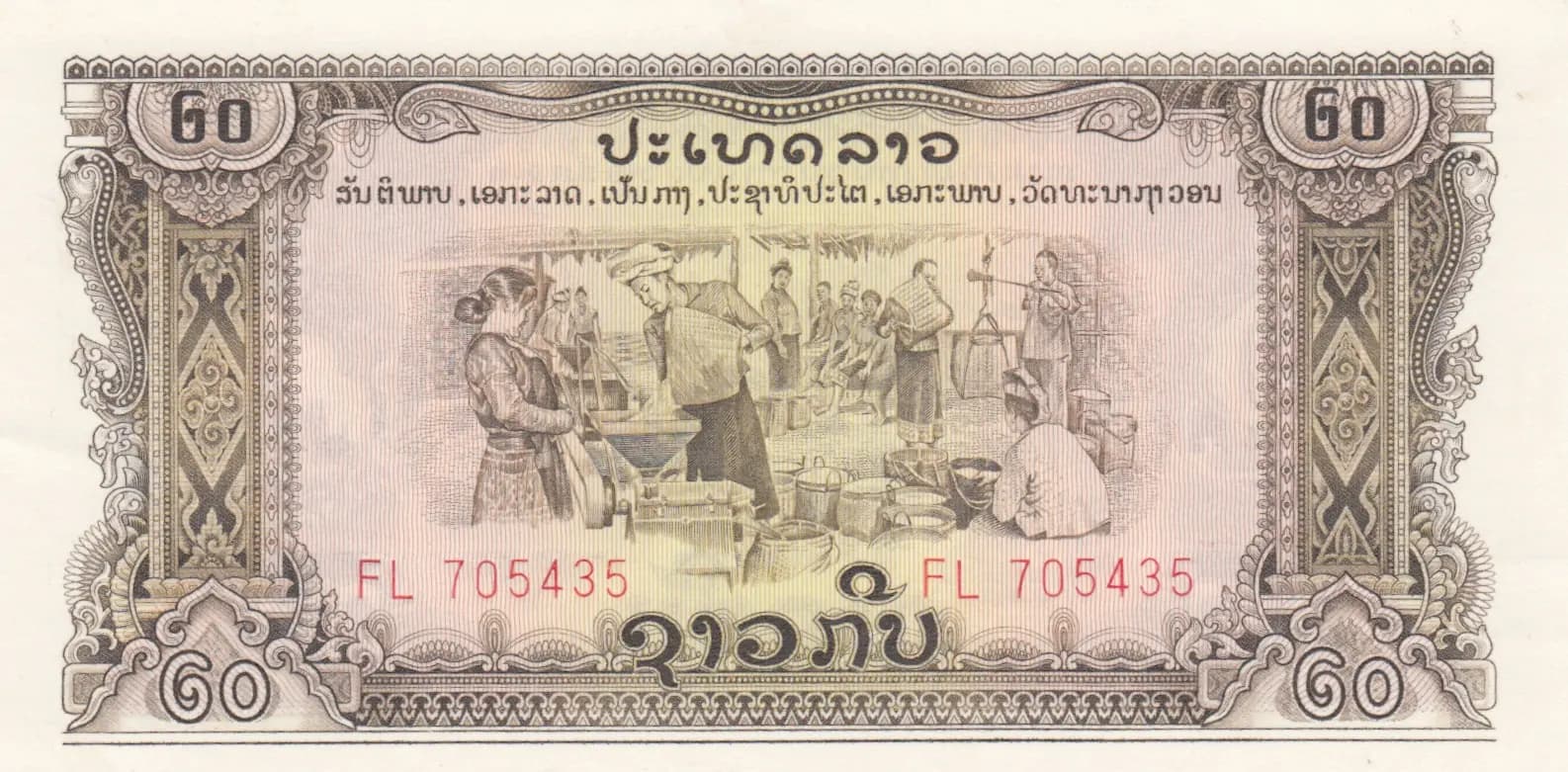
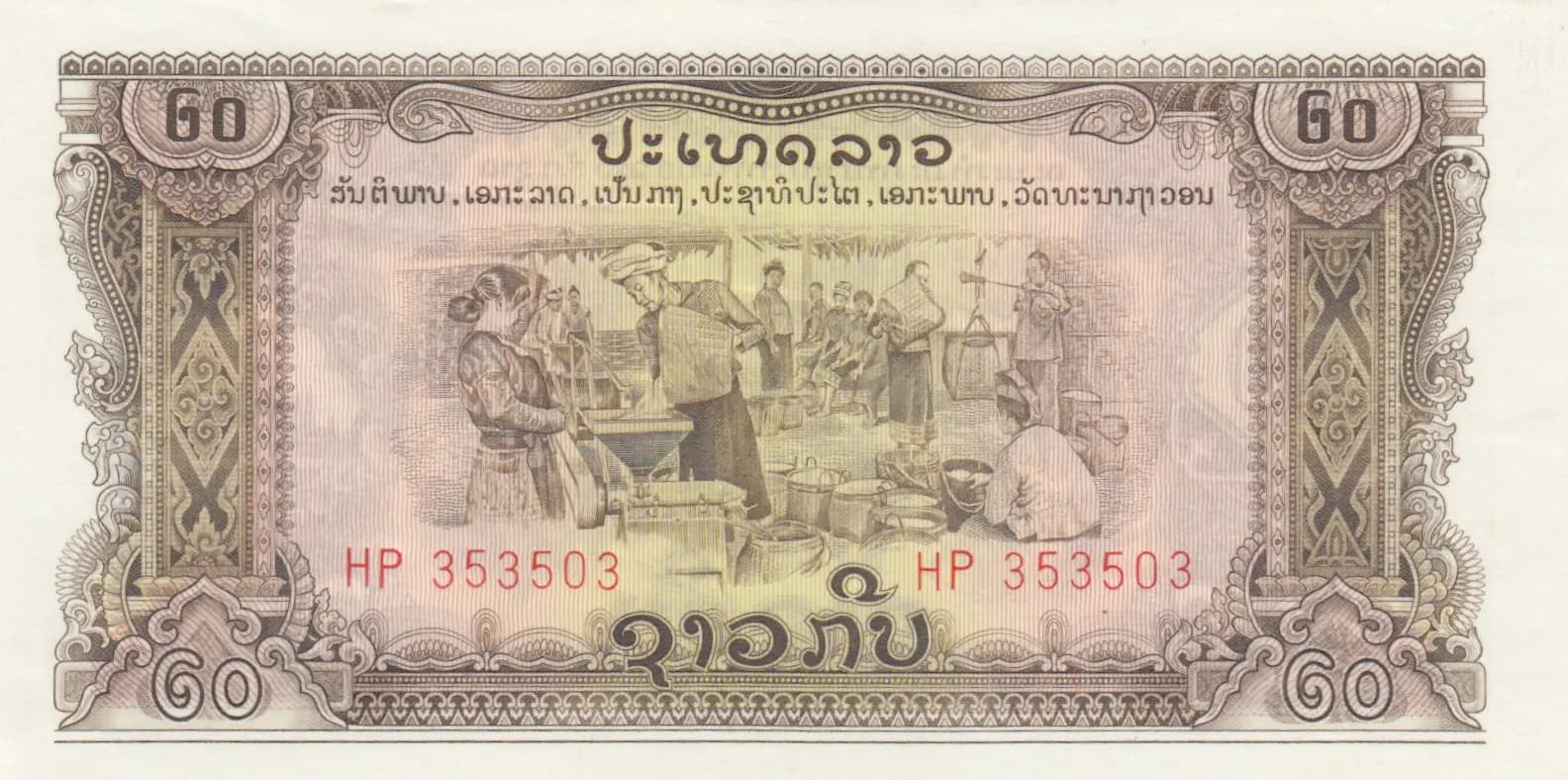
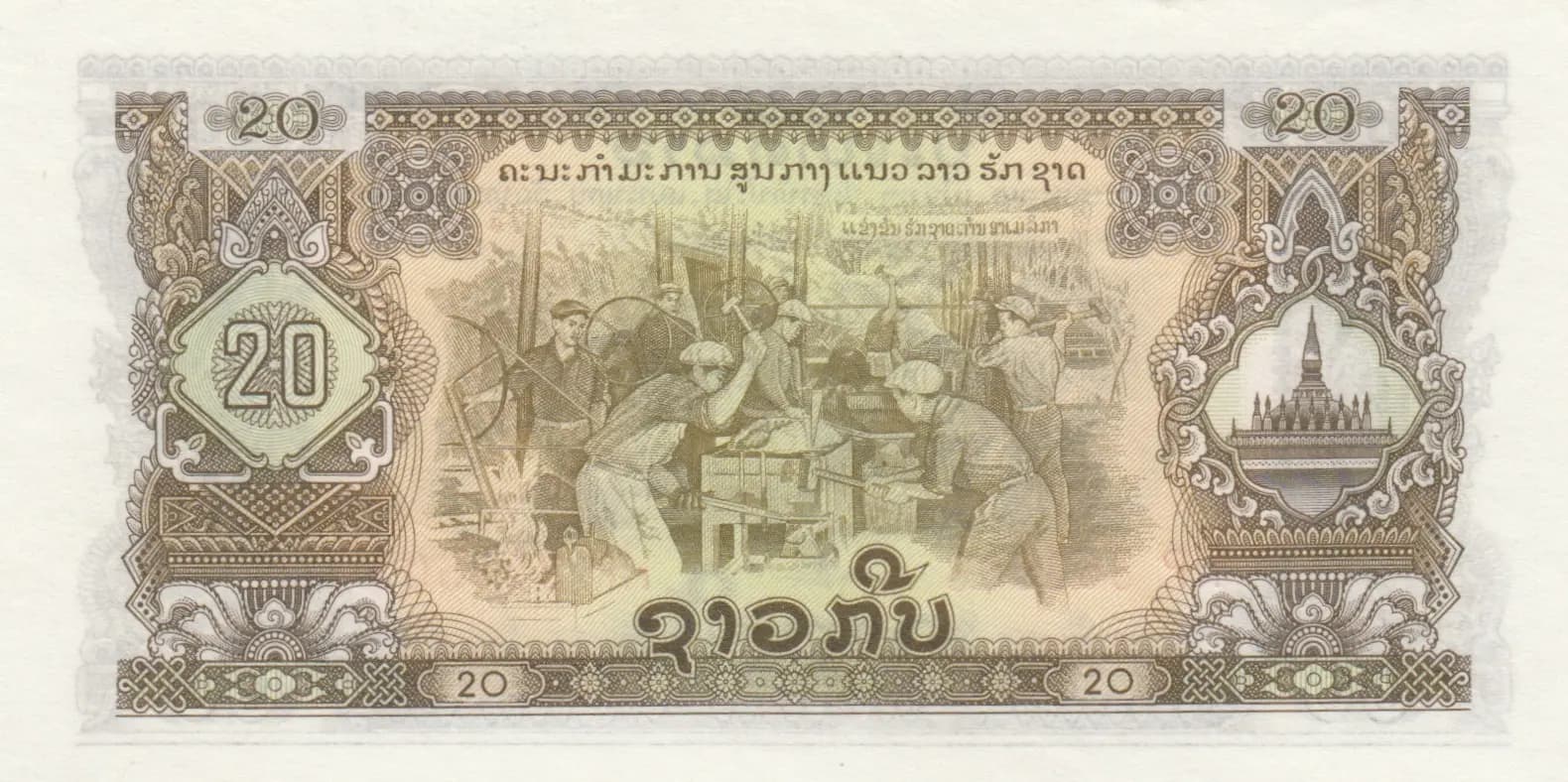
This is a Laos 20 kip banknote from 1968, graded UNC (Uncirculated), representing an important transitional currency of the Pathet Lao period. The note displays excellent preservation with no visible wear, crisp paper quality, and vibrant brown, pink, and cream coloration throughout. The detailed engraving work and ornate decorative borders are characteristic of this historically significant issue, which later became legal tender nationwide in 1975 following the communist victory.
Common. Secondary market data shows these notes regularly sold on eBay between 2015-2023, with UNC and near-UNC examples typically realizing $3-$31 depending on PMG grade achieved. The catalog value for UNC condition is listed as $2 (2019), confirming broad circulation and availability. The note was printed in substantial quantities and circulated widely after 1975 legitimization, making it readily available to collectors.
Issued by the Lao Central National Committee during the Pathet Lao period, this 1968 note was printed in the People's Republic of China and circulated in areas under Pathet Lao control before the organization's 1975 victory unified the country. The front vignette depicting rice distribution reflects the agrarian socialist ideology of the movement, while the reverse showing forge workers alongside the sacred Pha That Luang pagoda in Vientiane symbolizes the blend of traditional Lao culture with revolutionary labor values that characterized the transitional period.
The obverse features a central vignette depicting rice distribution, with multiple figures in traditional Lao dress engaged in agricultural activities, reflecting the socialist emphasis on agrarian production and collective welfare. The reverse displays forge workers performing metalwork or craft labor, positioned alongside a temple structure (Pha That Luang pagoda) rendered in a decorative circular medallion on the right side, combining revolutionary labor imagery with Laos's most sacred Buddhist monument. Both sides are framed by ornate geometric and floral borders featuring intricate scrollwork, fine line engraving, and decorative corner elements typical of mid-20th century Asian currency design. The color palette of brown, pink, cream, and tan tones provides excellent contrast and security against counterfeiting.
Front side: The note displays '60' (denomination numerals in corners), 'ປະເທດລາວ' (Laos), and 'ລາວ' (Lao), along with institutional text describing national symbols and values, plus serial number 'HP 353503' printed in red. Back side: Denomination '20' appears in circular frames in lower corners, with institutional inscriptions in Lao script identifying the issuing authority ('ຄະນະມາກາມາາມາສືບສາງແມ່ອາວາຣ໋ານ້ອຍ' - Lao Central National Committee) and 'ລາວ' (Lao). Note: Visual analysis shows discrepancy between denomination shown in images (60/20) and catalog listing (20 kip).
Intaglio engraving (recess printing), characteristic of high-security banknote production. The note was printed in the People's Republic of China, as noted in historical records. Fine line work, detailed vignettes, and ornate borders are all consistent with professional security printing standards of the 1960s.
This note is cataloged as P-21b per Pick's standard. The PMG population report indicates at least two other variants exist (P-21a and P-21s), suggesting differences in serial number styles, signatures, or printer marks. The serial number visible on this example is 'HP 353503' printed in red ink. Without additional detailed examination of signature varieties and date variations, the specific distinguishing characteristics of the P-21b designation relative to other variants cannot be determined from the visual analysis alone, though this appears to be a standard circulation issue from the confirmed 1968 printing.