20 kip 1968
Market Prices
20 salesAbout This Note
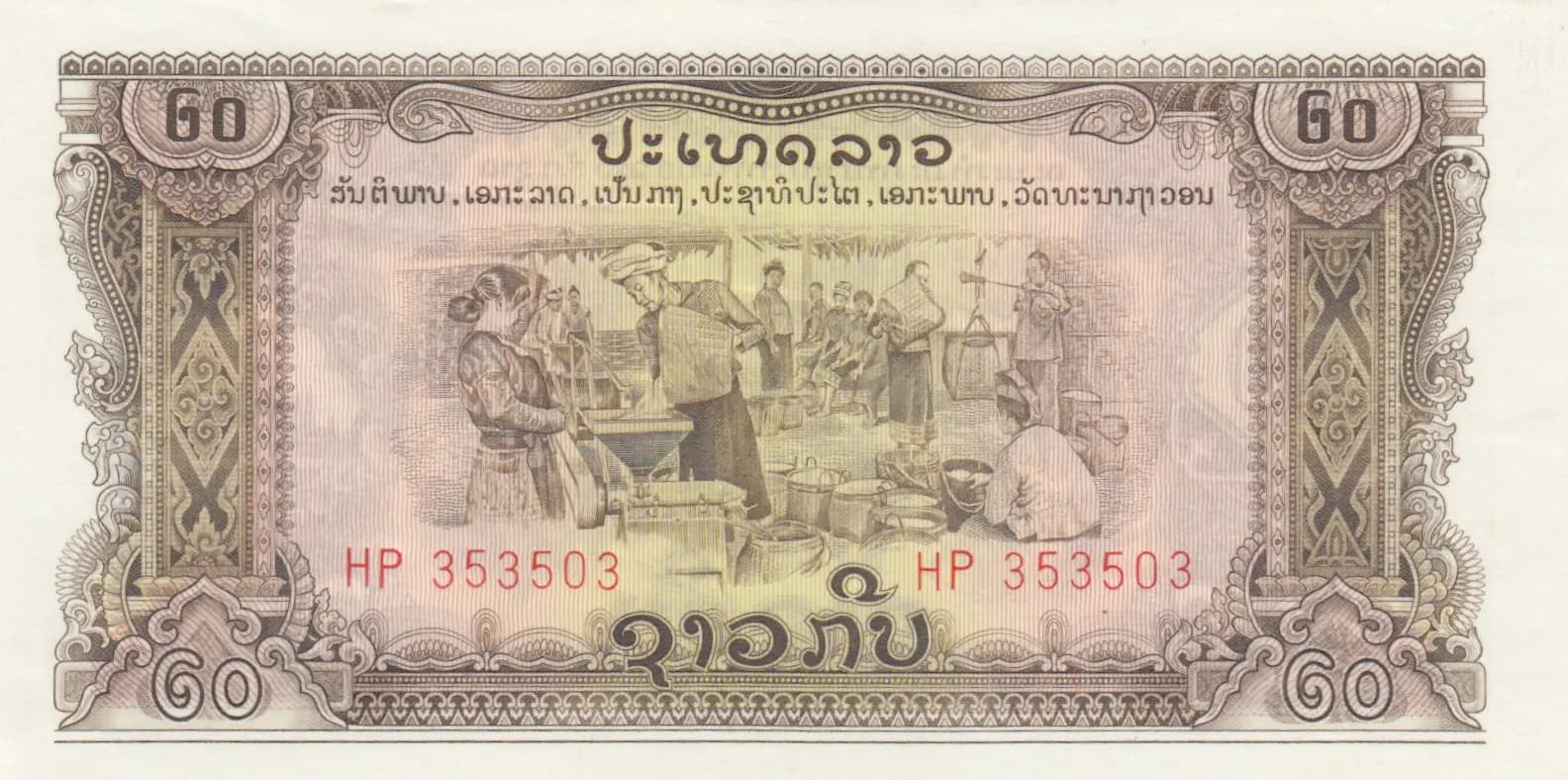
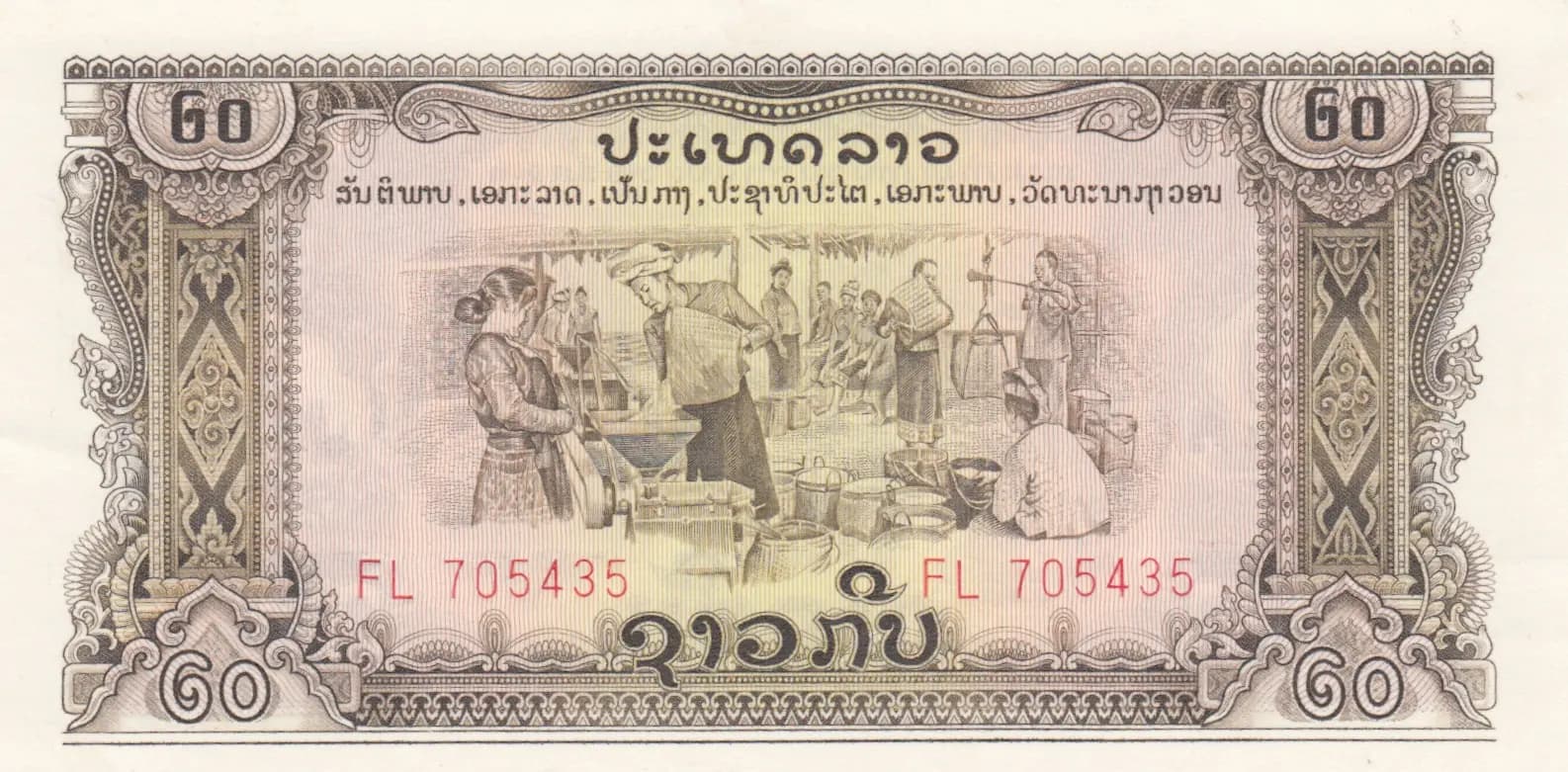
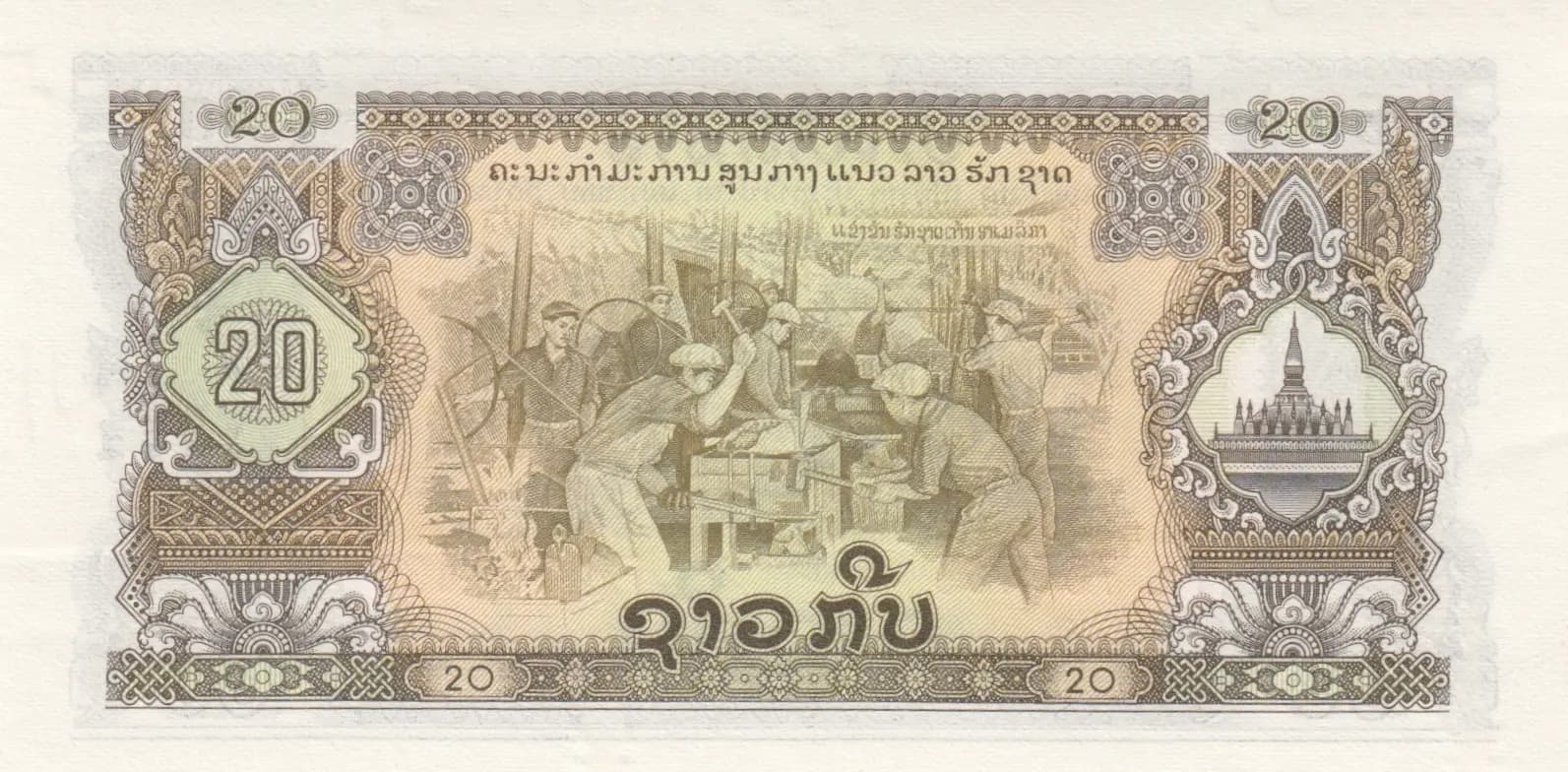
This is a Lao Central National Committee 20 Kip note from 1968 (Pick P-21a) in uncirculated condition, featuring exceptional preservation with crisp edges and no visible wear. The note displays two distinctive vignettes: a rice distribution scene on the obverse and forge workers with the iconic Pha That Luang pagoda on the reverse, rendered in warm brown and sepia tones with intricate security engraving. This note is historically significant as it was printed in China and circulated in Pathet Lao-controlled areas before becoming legal tender nationwide following the 1975 communist victory.
Common. This note is widely available in the collector market, with eBay sales data showing regular transactions at modest prices ($2–$4 for UNC examples as recently as 2022). The catalog value for UNC examples is listed at $3 (2019), and the extensive price history shows no significant premiums or scarcity indicators. While these notes have historical importance as Pathet Lao currency, large quantities were printed and circulated, and they remain abundant in the secondary market.
Issued by the Lao Central National Committee during the period of political division in Laos, this 20 Kip note represents the parallel currency system used by the Pathet Lao communist movement in their controlled territories. The depicted imagery—rice distribution and forge workers—reflects the revolutionary ideology's emphasis on agricultural and industrial labor as the foundation of the socialist state. The inclusion of Pha That Luang, Laos's most sacred Buddhist monument, on the reverse demonstrates how the new regime sought to blend revolutionary symbolism with Lao national identity and cultural continuity.
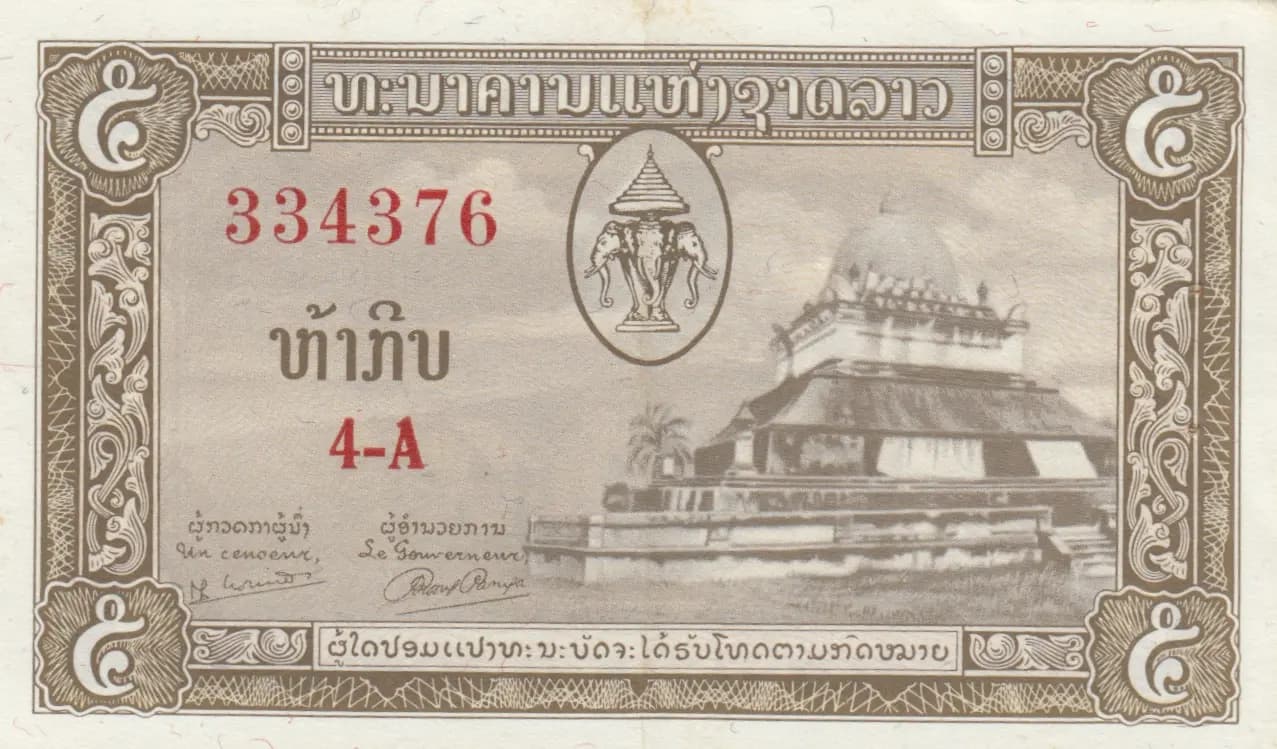
The obverse depicts a rice distribution scene characteristic of mid-20th century Laotian revolutionary art, showing multiple figures in traditional dress engaged in food preparation and distribution activities around cooking vessels in a traditional communal setting. The reverse presents forge workers engaged in manual labor, representing industrial productivity, alongside a prominent circular medallion containing the Pha That Luang (That Luang) pagoda—Vientiane's most important Buddhist monument, featuring its characteristic multiple spires and golden stupa design. Both sides are framed with ornate geometric and floral border patterns rendered in fine-line engraving, executed in brown and sepia tones on a light pink and olive-brown underprint. Decorative corner elements and central ornamental designs throughout enhance the security and aesthetic qualities of the note.
Front: '60' (denomination in Arabic numerals, appears to be erroneous or misread—should be 20), 'ປະເທດລາວ' (Laos), 'ກີບ' (Kip), serial number 'FL 705435'. Back: '20' (denomination), 'ກີບ' (Kip), 'ແຫ່ງ ລາວ ສາກົນ' (National of Laos/Lao National). Additional Lao script text is present on both sides but too small in the visual analysis to reliably transcribe with certainty; appears to contain standard banknote authentication text and institutional references.
This note was produced by intaglio (engraved) printing in the People's Republic of China, as documented in historical records. The fine-line engraving visible throughout the design, the intricate border patterns, and the precise vignette work are characteristic of high-security intaglio production. The underprint in light pink and olive-brown indicates a multi-color printing process, consistent with security printing practices of the era.
Pick P-21a is the standard variety for this issue. The PMG population report indicates two cataloged variants (P-21a and P-21s), with P-21s likely representing a specimen or special printing variant. The observed serial number FL 705435 falls within the normal distribution range for this note type. No overprints, date variations, or signature variants are evident in this specimen, indicating it represents the standard production run of 1968.