1 dinar 1975
Market Prices
8 salesAbout This Note
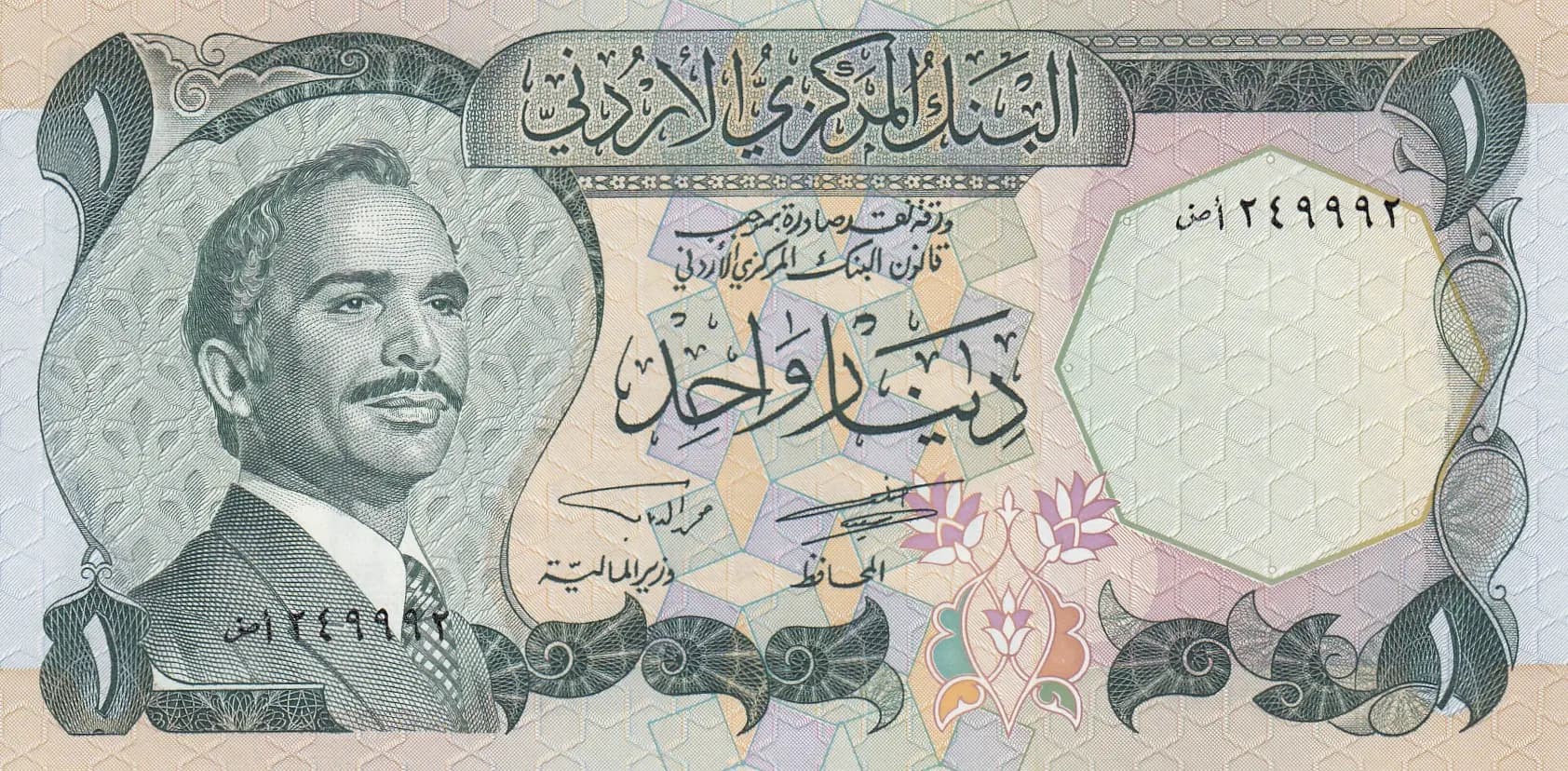
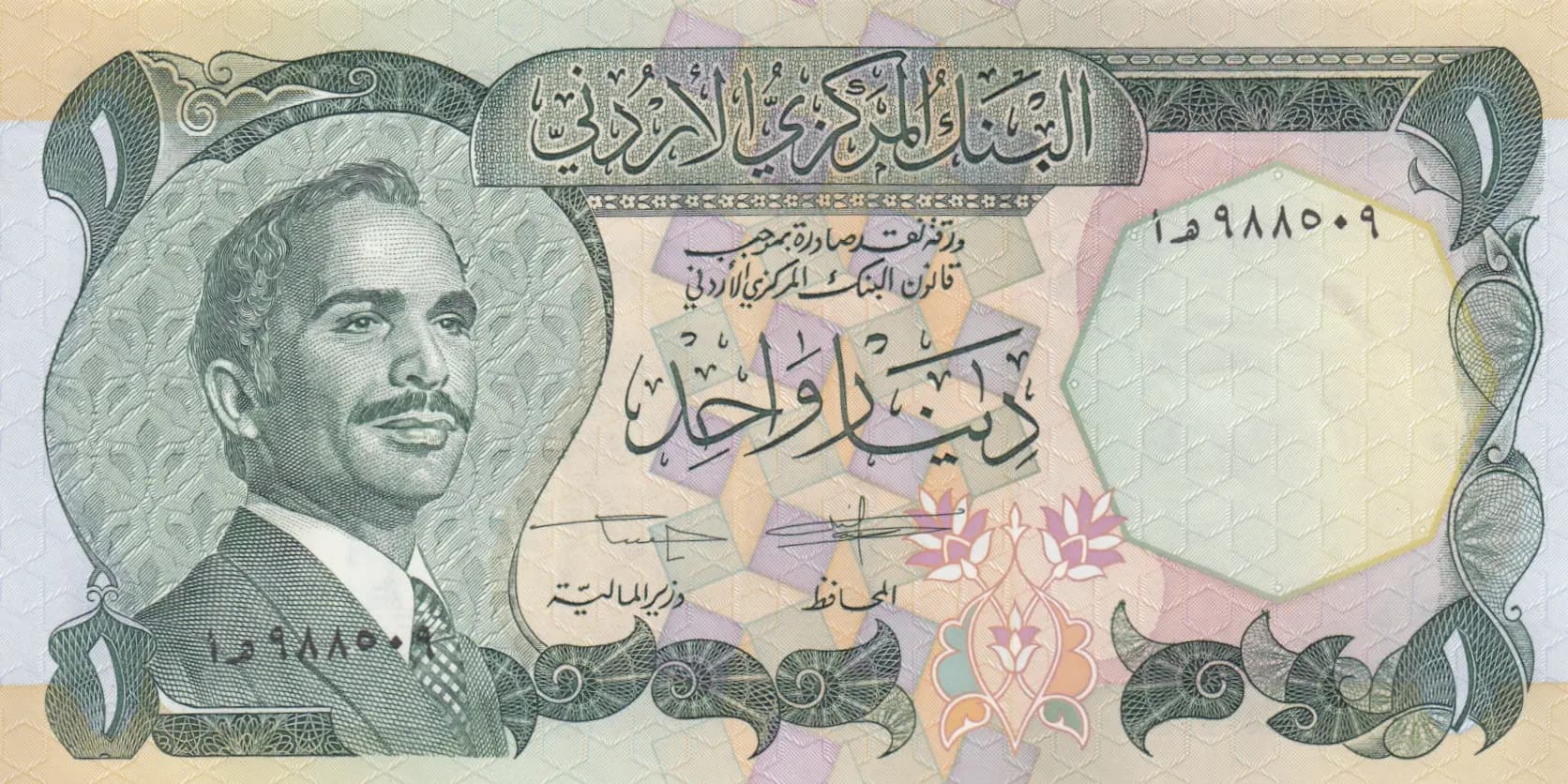
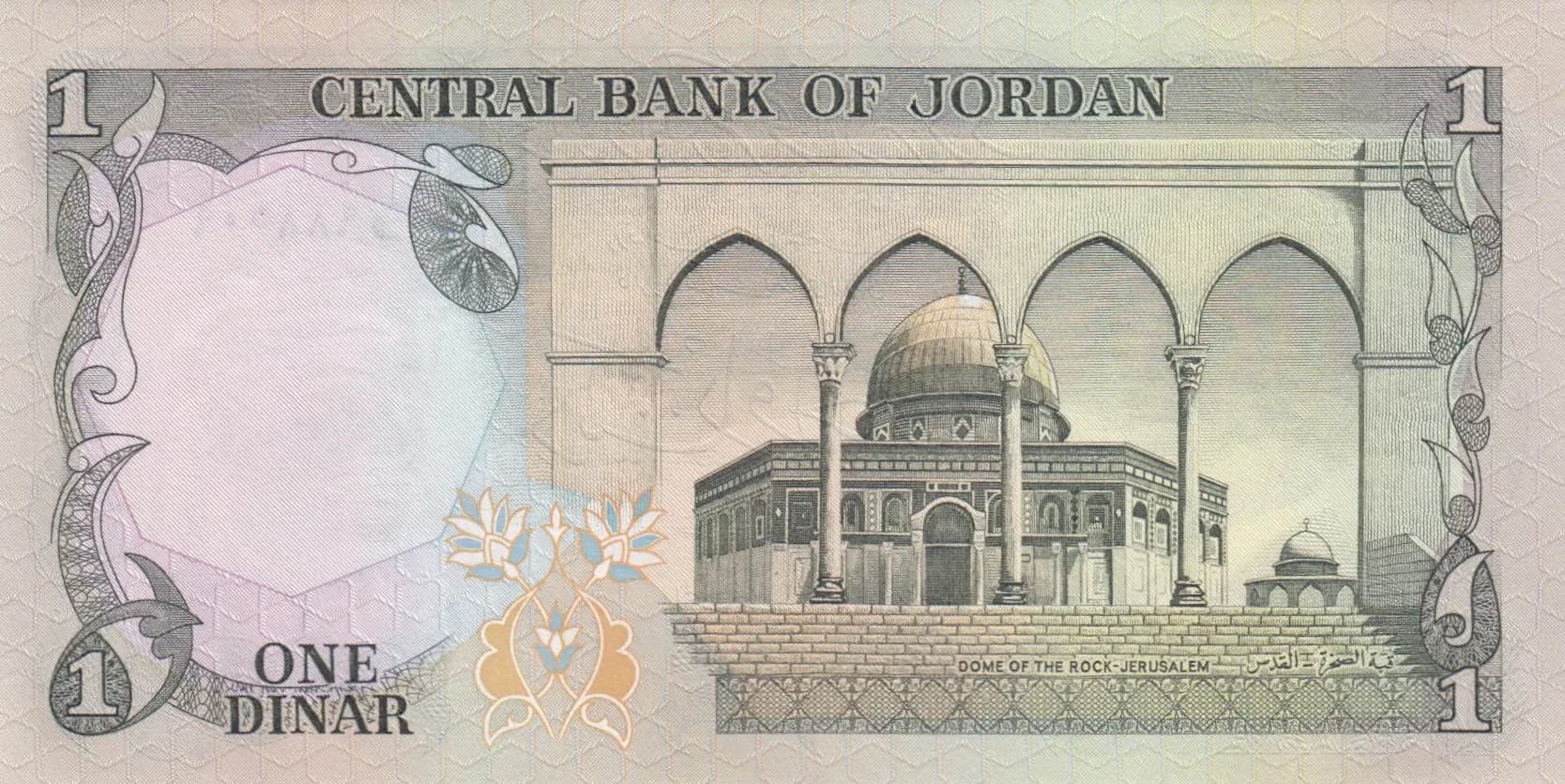
This is a pristine, uncirculated 1975 Jordan 1 Dinar note (Pick P-18f) displaying exceptional clarity and condition. The obverse features a finely engraved portrait of King Hussein in formal attire on the left, with intricate geometric and floral patterns in green dominating the design, while the reverse showcases a detailed architectural rendering of the Dome of the Rock in Jerusalem. As an early issue from Jordan's Central Bank with catalog values around $10 in UNC condition, this note represents a desirable example of mid-1970s Middle Eastern numismatics with strong historical and religious iconography.
Common. This is a regular issue from a major Central Bank with a substantial print run spanning 1975-1992. Secondary market data confirms common circulation patterns: eBay sales records show multiple UNC examples selling in the $4–$10 range across 2013–2022, with even PMG-graded specimens (PMG 67) achieving only $37. Catalog values list this note at approximately $10 in UNC condition, consistent with common banknote pricing. The note is neither scarce nor difficult to acquire for collectors.
Issued in 1975 during King Hussein II's reign, this banknote reflects Jordan's national identity through its dual iconography: the portrait of the reigning monarch on the obverse and the Dome of the Rock—one of Islam's holiest sites located in Jerusalem—on the reverse. This design choice underscores Jordan's historical and religious significance in the region, particularly the nation's custodianship of Islamic and Christian holy sites. The formal, classical engraving style and bilingual (Arabic/English) inscriptions represent the sophisticated monetary policy of Jordan's Central Bank during this period.
The obverse features a left-aligned portrait of King Hussein II, depicted as a bearded gentleman in formal Western business attire with suit and tie, symbolizing his role as a modern Arab leader. The central design incorporates an ornate cream-colored oval cartouche containing Arabic denomination text, flanked by elaborate geometric lattice work and floral scrollwork in green with pink/orange decorative medallions. The reverse showcases the iconic Dome of the Rock in Jerusalem as the dominant central element, rendered in fine detail with its characteristic golden dome, ornate colonnaded structure with multiple arched bays, and intricate architectural ornamentation. Decorative vine and floral scroll borders frame both vertical edges of the reverse, while English and Arabic text identify the monument and issuing authority. The overall color palette emphasizes greens, creams, and subtle earth tones, creating a dignified and culturally significant design.
OBVERSE: 'البنك المركزى الاردنى' (Central Bank of Jordan) | 'دينار واحد' (One Dinar) | 'وزير المالية' (Minister of Finance) | 'المحافظ' (Governor) | Serial number: 9885009. REVERSE: 'CENTRAL BANK OF JORDAN' (English) | 'ONE DINAR' (English) | 'DOME OF THE ROCK-JERUSALEM' (English) | 'قبة الصخرة-القدس' (Arabic: Dome of the Rock-Jerusalem) | Denomination '1' in both bottom corners.
Intaglio (engraving) printing, characteristic of high-security banknote production. The fine line engraving visible throughout—particularly in the facial features of King Hussein, the intricate geometric patterns, the detailed architectural rendering of the Dome of the Rock, and the complex decorative borders—confirms the use of traditional steel plate engraving. The printer for this variety (P-18f) is identified as TDLR (Thomas de la Rue), a renowned security printer, evidenced by the catalog designation and the professional quality of execution visible in the photographic analysis.
Identified as Pick P-18f, printed by TDLR (Thomas de la Rue). The PMG population report indicates seven cataloged variants for the 1 Dinar base Pick number (P-18cts, P-18e, P-18f, P-18s1, P-18s2, P-18s3, P-18s5), with variants distinguished primarily by printer and watermark details. This particular example appears to match the P-18f specification with TDLR printing. Serial number 9885009 and the absence of visible overprints or special markings indicate this is a standard circulation variety from the primary print run.