50 yen 1946
Market Prices
29 salesAbout This Note
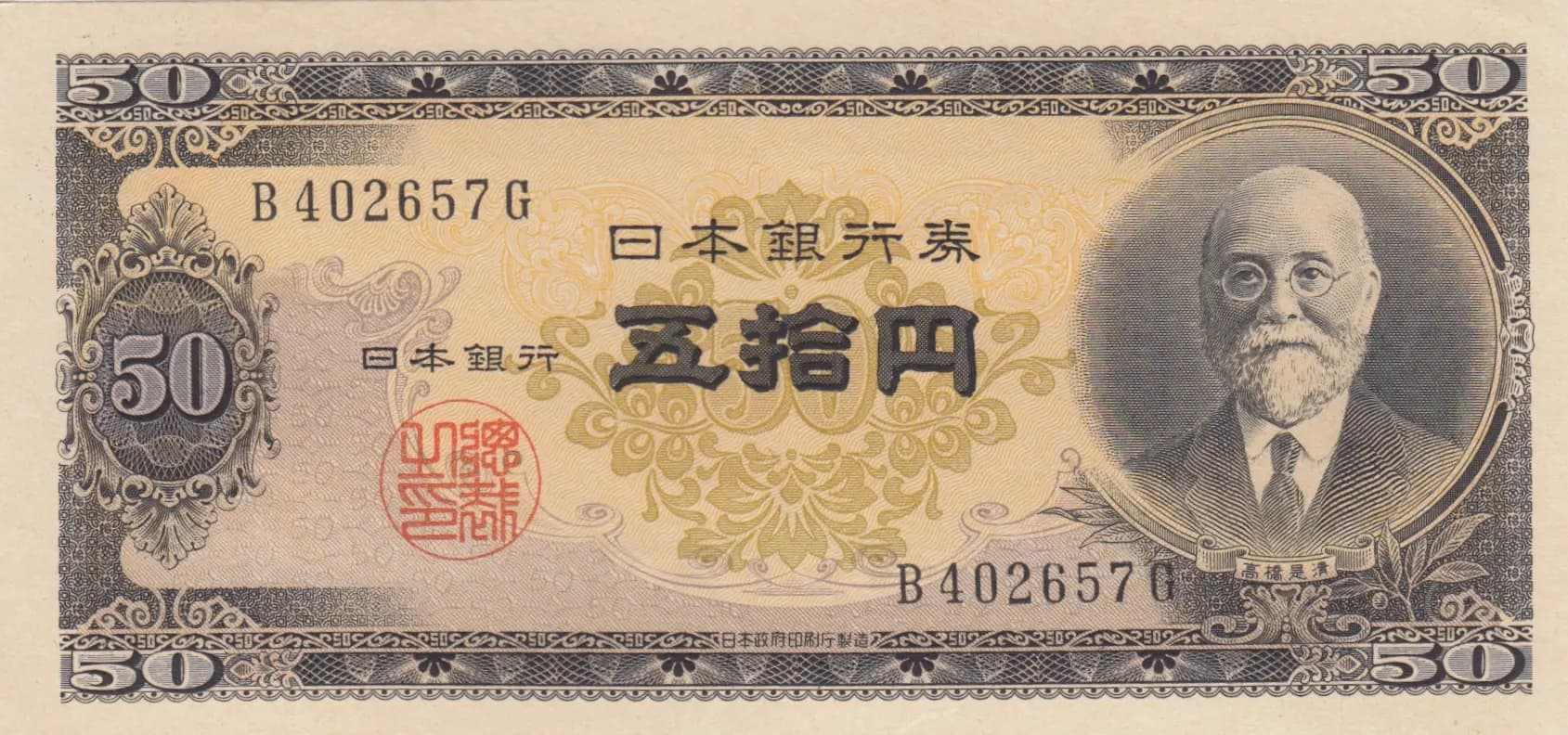
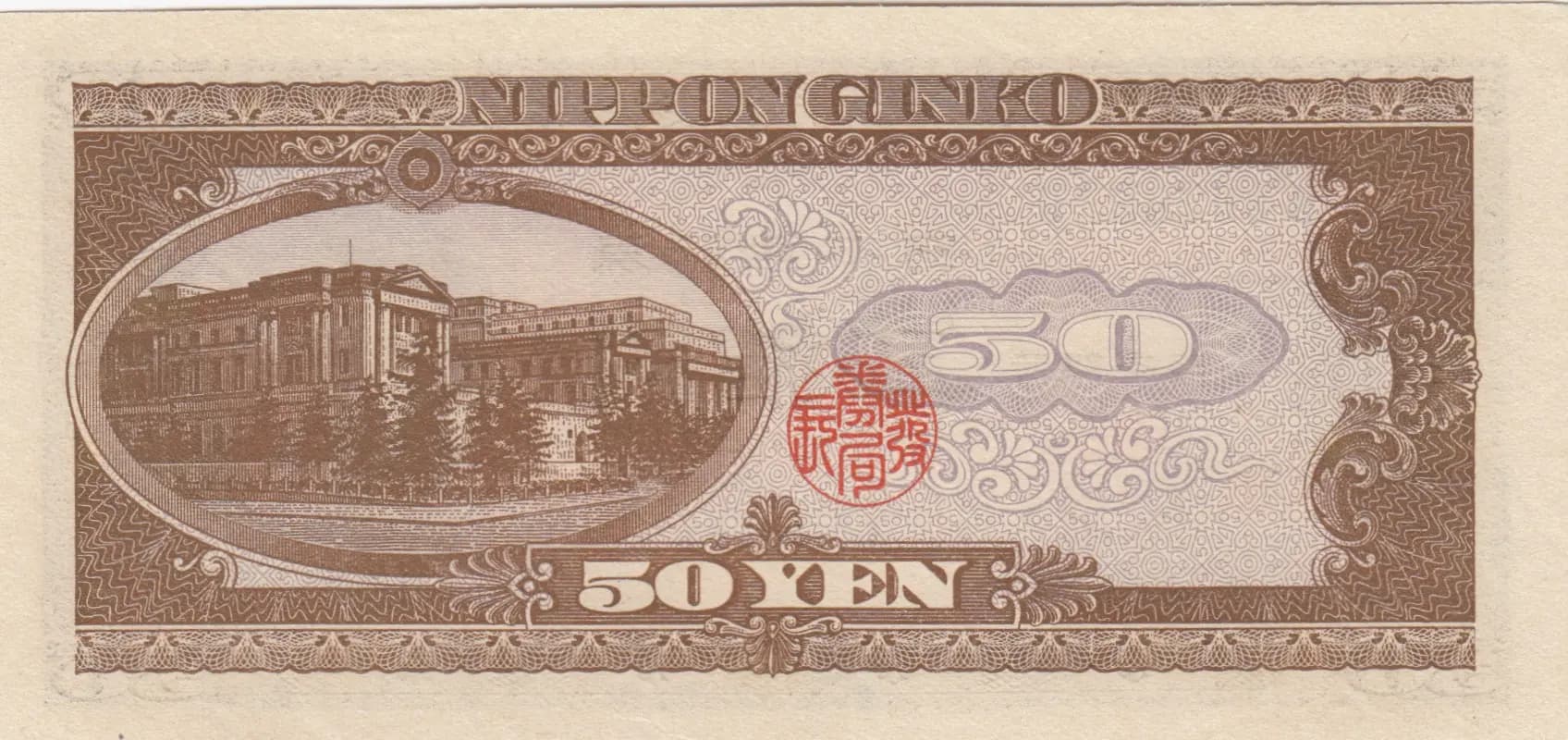
This is a well-preserved example of Japan's 1946 50 yen note (Pick P-88), graded AU, featuring a portrait of Takahashi Korekiyo on the obverse and the Bank of Japan building on the reverse. The note displays the characteristic beige and brown color scheme with ornate geometric borders and red seal stamps typical of postwar Japanese currency, and shows no visible signs of wear, creases, or handling despite its age.
Common. While this is a postwar issue from 1946, the 50 yen denomination from this series was produced in substantial quantities. eBay market data shows consistent availability with regular sales ranging from under $5 in lower grades to $30-$112 for higher grades (PMG-graded examples), indicating a well-supplied collector market. The AU grade specimen observed is more desirable than lower grades but remains readily obtainable.
Issued during Japan's immediate postwar period under Allied occupation, this 50 yen note represents the early monetary reconstruction efforts by the Bank of Japan (Nippon Ginko). The portrait of Takahashi Korekiyo, a pre-war Finance Minister and advocate of monetary expansion, reflects Japan's attempt to restore economic stability; the Bank of Japan building depicted on the reverse symbolized the institution's role in rebuilding the nation's financial system during the 1946-1951 occupation period.
The obverse features a formal portrait of Takahashi Korekiyo (1854-1936), a bearded statesman wearing Western-style formal attire with glasses, positioned within a circular frame on the right side of the note. The reverse displays the Bank of Japan's main building in Tokyo depicted in an oval frame on the left side, rendered in a classical Western architectural style. Both sides are framed with intricate ornamental borders featuring geometric patterns and shell or fan motifs in the corners, with fine-line engraving creating complex background designs throughout. The color scheme consists of beige/cream with brown tones and red official seals.
Front: '五十円' (50 yen), '日本銀行券' (Bank of Japan Note), '日本銀行' (Bank of Japan), Serial number 'B402657G'. Back: 'NIPPON GINKO' (Bank of Japan in romanized form), '50', '50 YEN' (denomination in English). Red seal stamps with Japanese characters appear on both sides.
Intaglio (engraved) printing on banknote paper, characteristic of Japanese government currency of this era. The fine line engraving visible in the background patterns, ornamental borders, and portrait detail are consistent with high-security intaglio production methods employed by the Bank of Japan. The complex geometric designs and security features reflect the advanced engraving techniques used during the postwar reconstruction period.
Serial number B402657G is visible on this example. The note exhibits the standard design for Pick P-88 with no apparent overprints or unusual printing variants. The red seal stamp and all inscriptions appear consistent with the regular issue. Collectors should note that signature varieties and subtle printing variations exist within this series, with later 1951 reissues sometimes confused with the original 1946 release, though catalog data suggests this specific note is from the 1946 emission.