1 yen 1899 specimen
Market Prices
About This Note
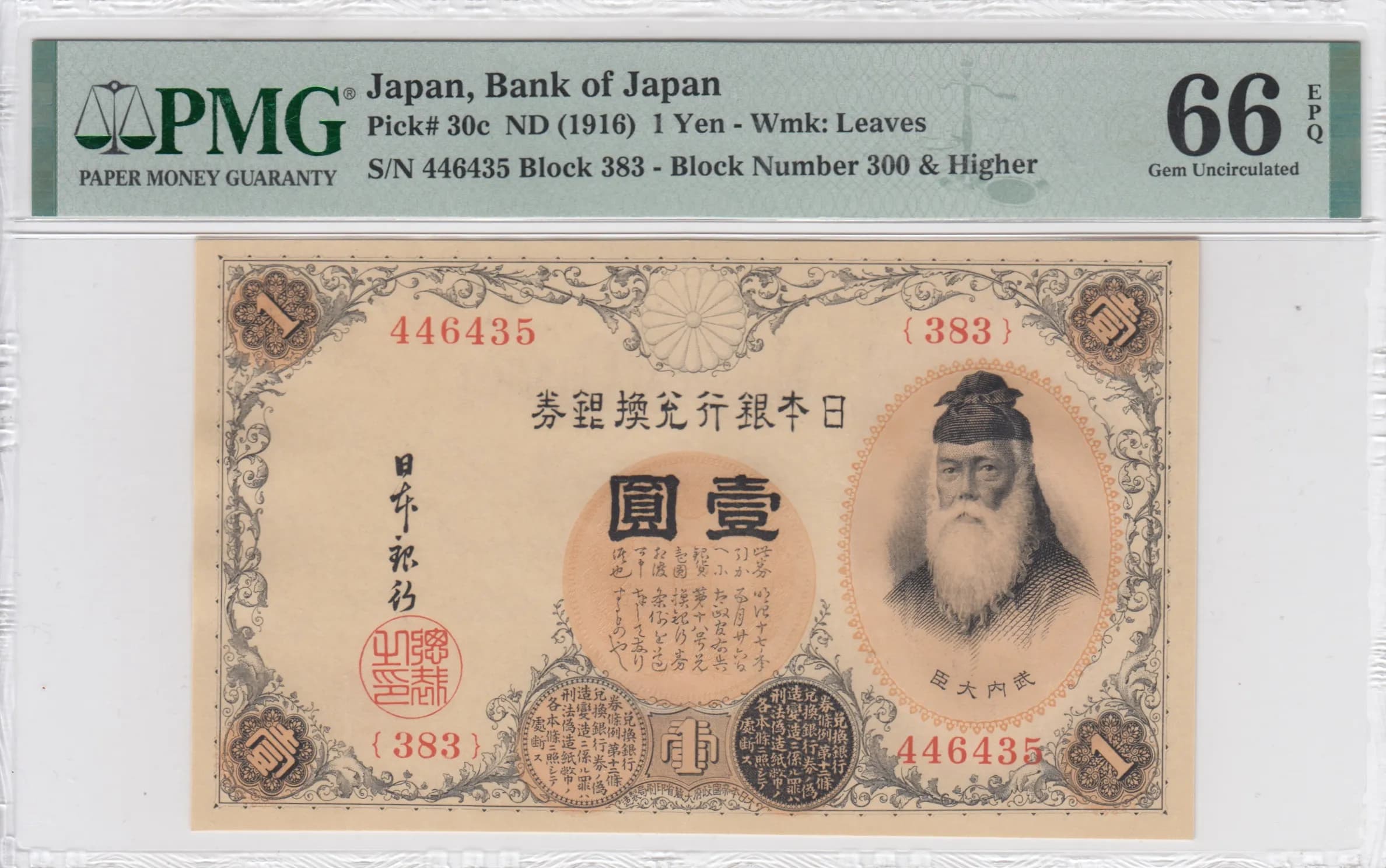
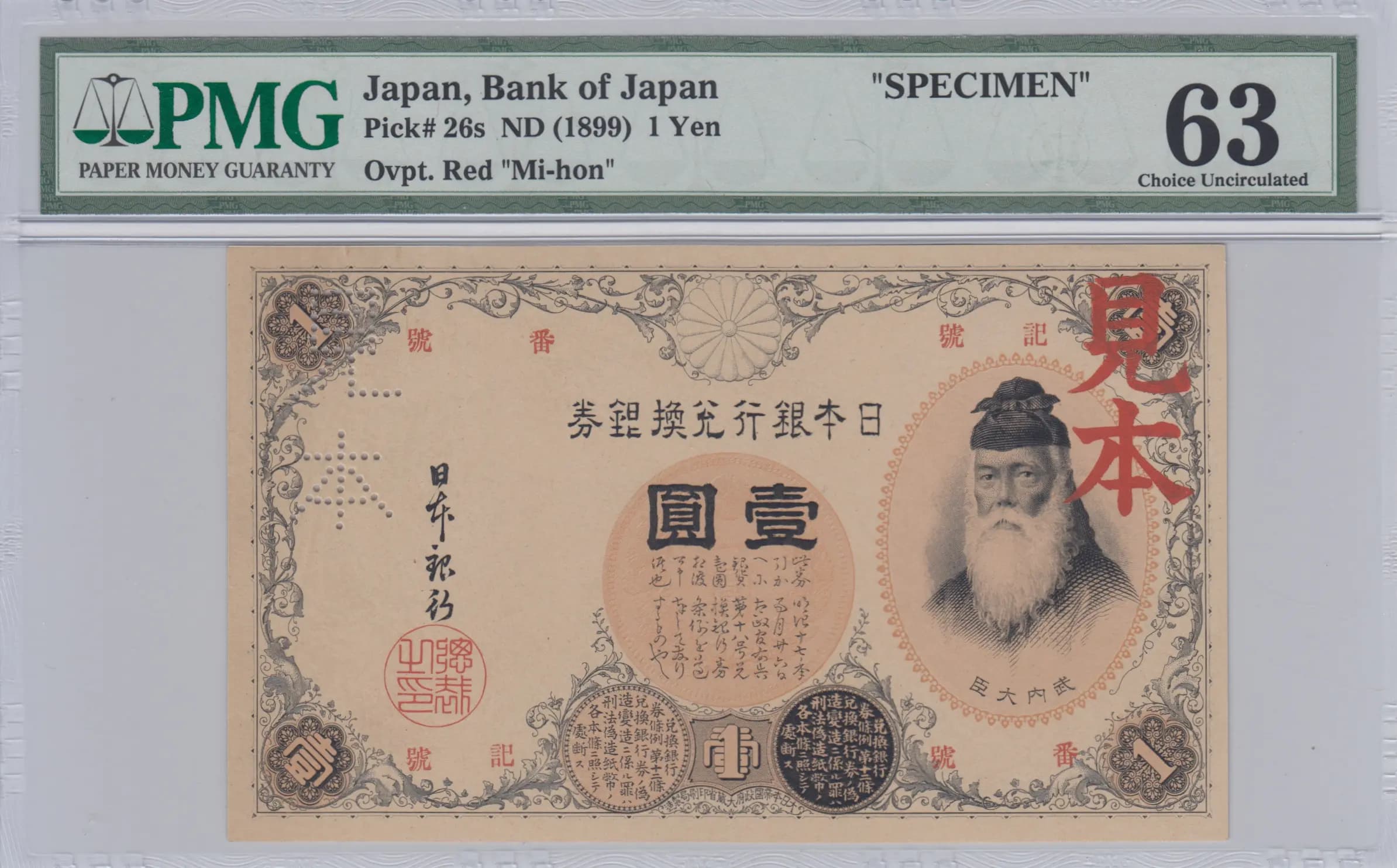
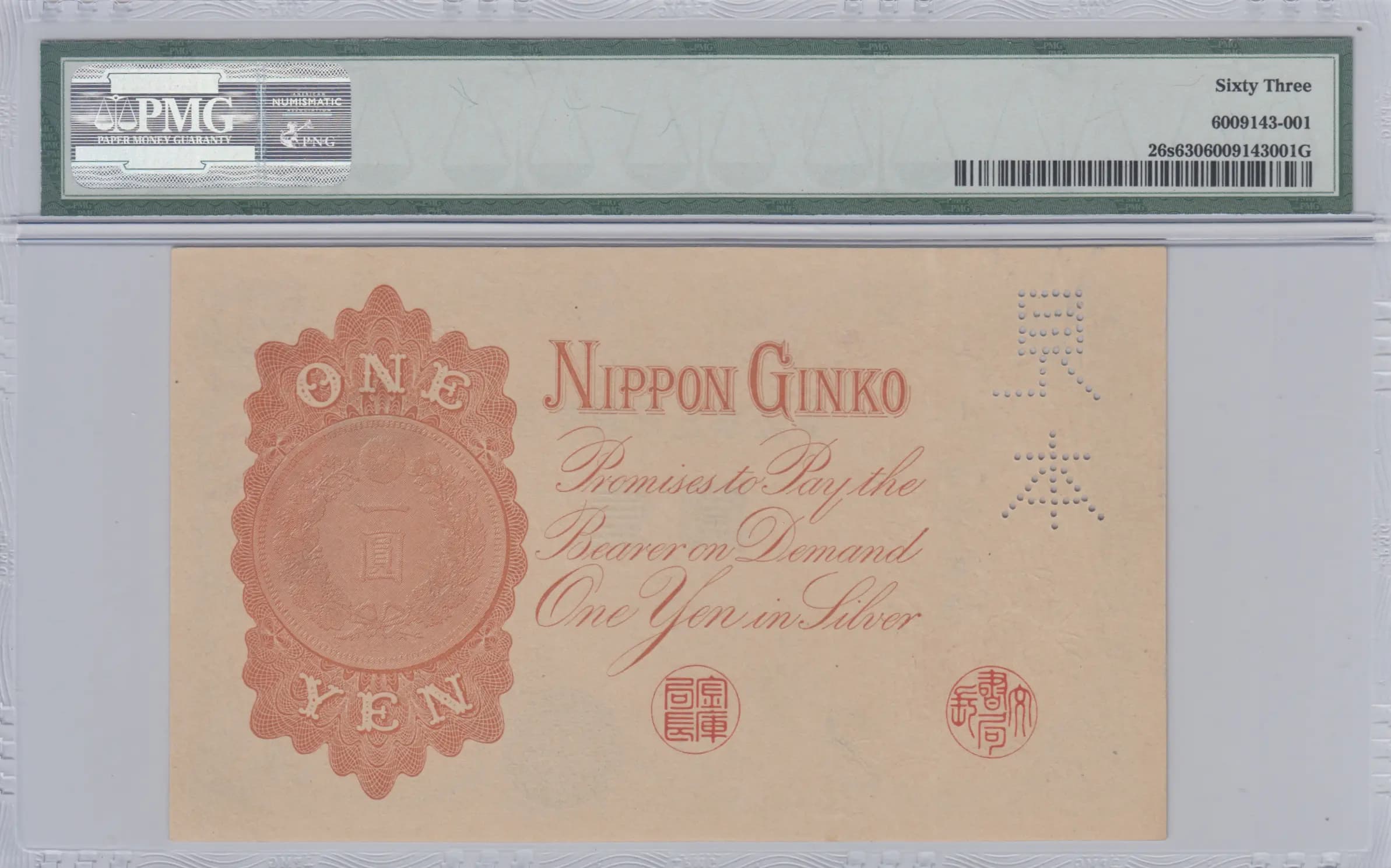
This is a Japanese 1 Yen specimen note from 1899 (Pick P-26s), professionally graded PMG 63 Choice Uncirculated. The note features an ornate design with a portrait of Takeuchi Sukune on the right side, elaborate decorative borders, multiple official seals in red, and the English promise to pay "One Yen in Silver" on the reverse. As a specimen note marked with 'SPECIMEN' overprint, this example is pristine and uncirculated, displaying vibrant cream, black, red, and sepia tones with no signs of handling or wear.
Common. The eBay market data shows highly variable pricing ($9.00 to $439.99 USD) with multiple sales at modest price points, indicating adequate supply in the collector market. The 2016 catalogue values for this note type are modest ($50-$300 depending on grade), and the PMG population report indicates established grading populations for this Pick number. While specimen notes are less common than regular issues, this particular piece does not appear to be exceptionally scarce based on available market evidence and catalog data.
Issued by the Nippon Ginko (Bank of Japan) during the Meiji era, this convertible silver note represents Japan's modernization period and the establishment of a Western-style central banking system. The bilingual design (Japanese characters and English text) reflects Japan's effort to integrate into international commerce during the 1889-1899 period. The portrait of Takeuchi Sukune, a legendary Nara-period statesman, symbolizes Japan's connection to its classical heritage while adopting modern monetary practices.
The obverse features a three-quarter profile portrait of Takeuchi Sukune (legendary statesman), positioned on the right side with radiating halo lines creating depth. The central design contains an ornate circular medallion with Japanese characters and numerical designations. Multiple official seals are present: red square seals in the upper right corner, red circular seals on the left, red rectangular seals in the lower left, and a black circular seal at the lower center. Decorative mon (family crests) appear in corners with intricate geometric and floral border patterns in black. The reverse displays a large ornate rosette/flower-shaped cartouche on the left containing the yen symbol (圓), with the English promise clause 'Promises to Pay the Bearer on Demand One Yen in Silver' positioned in the upper right, and 'NIPPON GINKO' as the issuing authority. Red and pink circular seal stamps are visible on the reverse.
FRONT: 日本銀行 (Nippon Ginko - Bank of Japan); 日本帝国 (Japanese Empire); 圓壹 (One Yen); 券銀換充弐号 (Note designation/convertible silver note number); SPECIMEN (English marking indicating specimen status). BACK: NIPPON GINKO (Bank of Japan in English); 'Promises to Pay the Bearer on Demand One Yen in Silver' (English promise clause); 圓 (Yen symbol in Japanese). Serial numbers appear in both Japanese characters on front and Western numerals on reverse.
Engraved intaglio printing on cream/beige colored paper stock. The note exhibits fine line work, intricate border details, and complex geometric patterns characteristic of 1890s Japanese currency production. The multicolor printing combines black ink for primary designs and text with red/pink accents for seals and ornamental elements. Fine engraving throughout demonstrates the technical sophistication of the Bank of Japan's security printing capabilities during this period.
This is catalogued as P-26s, where the 's' designation indicates a specimen note (overprinted with 'SPECIMEN' as observed in the visual analysis). The front features Japanese character serials, while the reverse includes Western numerals (6009143-001 visible in PMG holder). The referenced external catalog mentions a similar later note with Western serial numbers as P-30, suggesting this P-26s variety is the earlier Japanese serial version. The note is confirmed as issued in 1899 (per catalog) or 1889 (per alternative sources), representing the convertible silver note series before later modifications.