5 yen 1930
Market Prices
15 salesAbout This Note
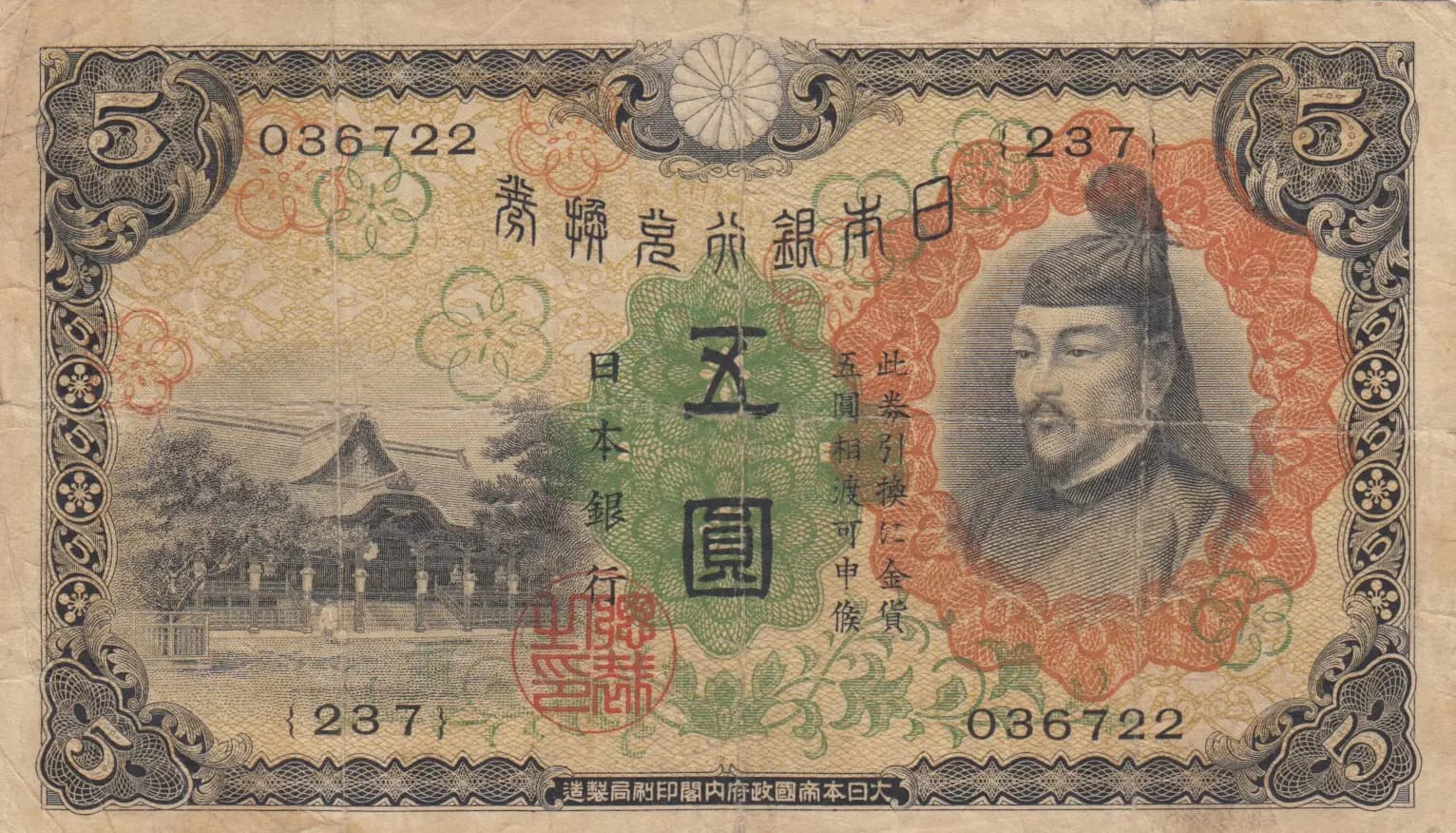
This is a Japanese Imperial 5 Yen note from 1930 (Pick P-39), graded in Fine condition, displaying the characteristic ornate design of the period with a portrait of Sugawara Michizane on the right and Kitano Shrine depicted on the left. The note shows authentic age-related patina with light yellowing and oxidation in the green inks, consistent with circulation during the early Showa period, and represents a standard issue from Japan's pre-war banking era.
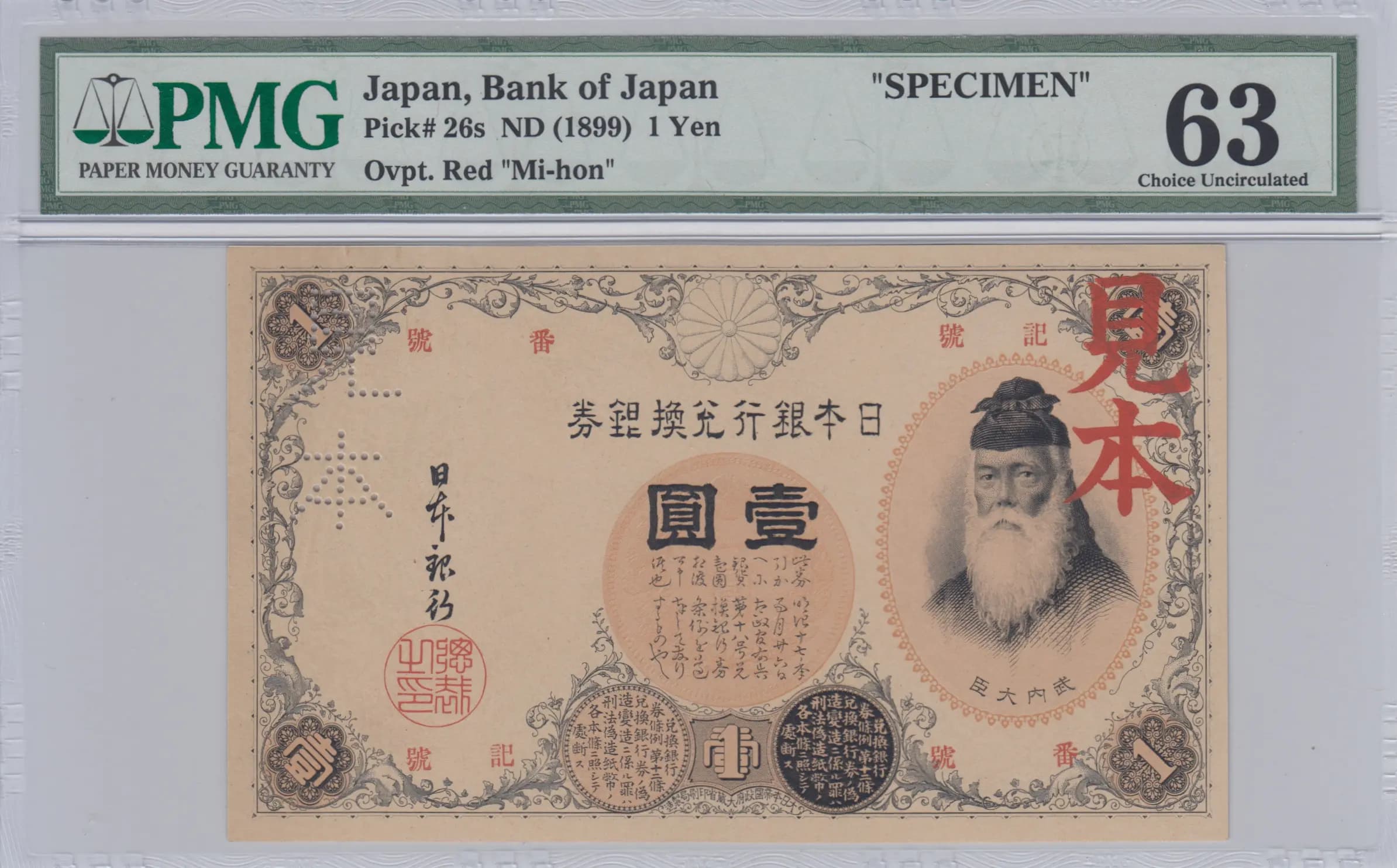
Common. The eBay market data provided shows regular sales activity with prices consistently ranging from $2-$7 for notes in Fine condition (matching this note's grade), with occasional higher sales for premium grades (VF $14.50-$19.49, PMG 63 graded at $56). The 2016 catalog value for Fine grade is approximately $3, and the consistent volume of sales across multiple years with modest pricing indicates this is a standard circulated issue with healthy supply in the collector market. This Pick number represents a regular issue with no indication of short print runs or rarity.
Issued by the Bank of Japan (Nippon Ginko) during the Showa era (1930), this note commemorates Sugawara Michizane, the deified Heian period scholar and court official, whose Kitano Shrine is prominently featured on the obverse. The ornate design reflects the sophisticated engraving standards of Japanese Imperial banknotes and the cultural reverence paid to historical figures in early 20th-century Japanese currency design.
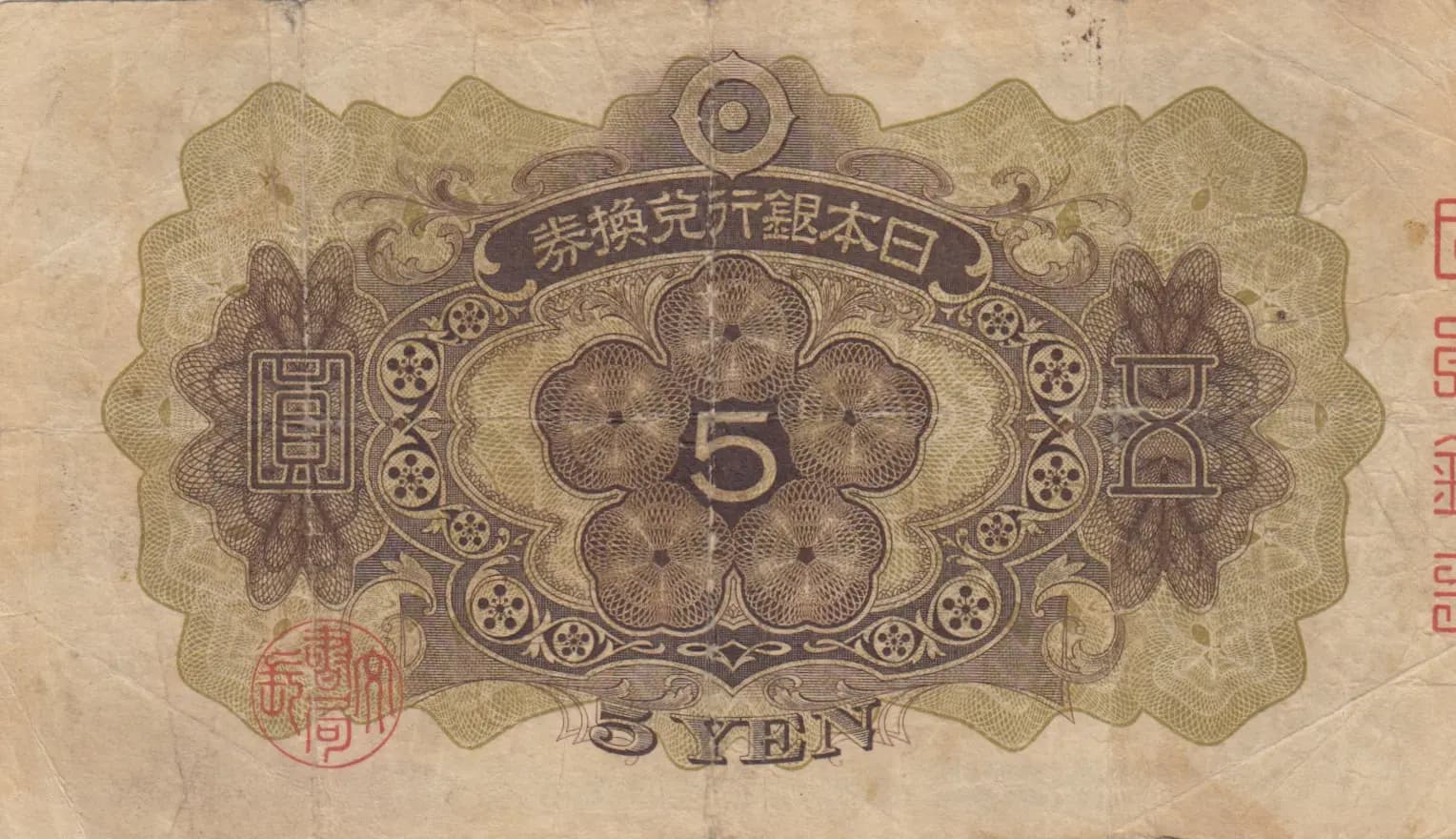
The obverse features an elaborate ornamental border with fine scrollwork and floral patterns in tan, black, and green inks. The portrait on the right depicts Sugawara Michizane (道真) in traditional Heian court dress with characteristic beard and formal headpiece. The left side displays Kitano Shrine (北野天満宮) rendered with architectural detail showing the shrine's distinctive curved rooflines, railings, and surrounding vegetation. A large green oval cartouche occupies the center, flanked by decorative elements including shell motifs and red circular seals. The reverse features an elaborate, highly symmetrical plum blossom or chrysanthemum flower design dominating the composition, with the denomination '5' and '五圓' prominently displayed within ornamental frames. Fine decorative borders and corner ornaments frame both designs.
Front side: '大日本帝國銀行券' (Great Japan Imperial Bank Note), '五圓' (Five Yen), serial numbers '0367222' and '237', and manufacturing attribution text. Back side: '大日本帝國銀行券' (Great Japan Imperial Bank Note), '五圓' (Five Yen), '5 YEN' (English denomination), and the large numeral '5' incorporated into the central floral design. Red seals/stamps appear on both sides as issuing authority marks.
Intaglio (engraved steel plate) printing, as evidenced by the fine, precise line work and detailed shading visible throughout both sides. The high-quality engraving, intricate guilloché patterns in the center, and crisp impression of the floral designs on the reverse are characteristic of security printing employed by the Bank of Japan. The consistent depth and detail in the fine lines suggest printing by the Bank of Japan's internal security printing department or contracted Imperial Japanese security printers of the period.
PMG catalogues one known variant for Pick P-39 (designated P-39s2). This note displays serial numbers '0367222' and '237'/'287' visible on the obverse. Without access to specialized Japanese Imperial banknote references, the specific variety classification (signature variety, printer's mark, or overprint variety) cannot be definitively confirmed from the visual analysis alone, but the note appears to be a standard circulation specimen from the main printing of this denomination.