10 sen 1872
Market Prices
9 salesAbout This Note
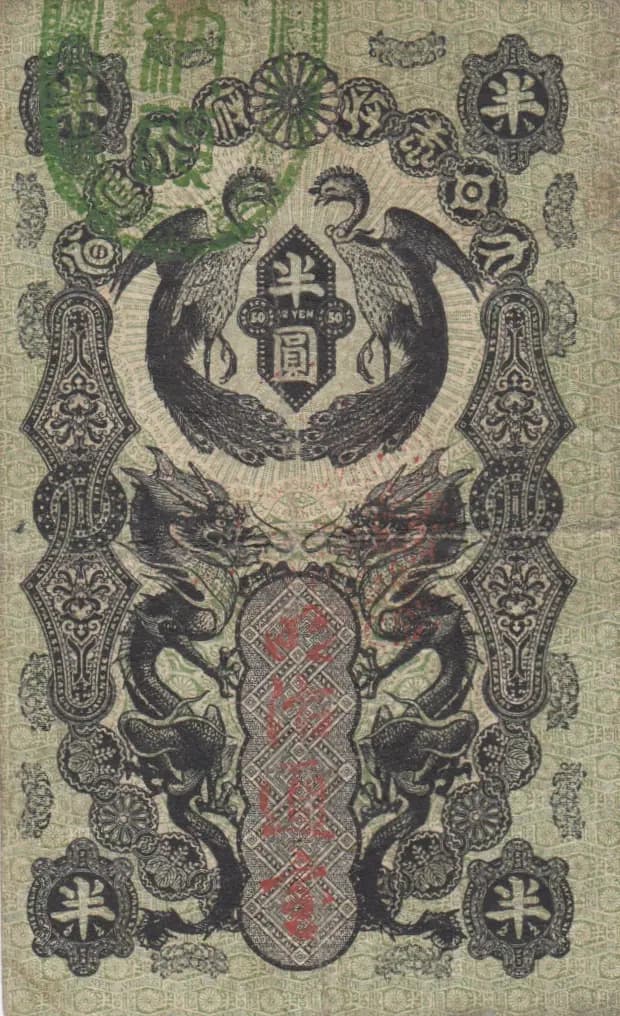
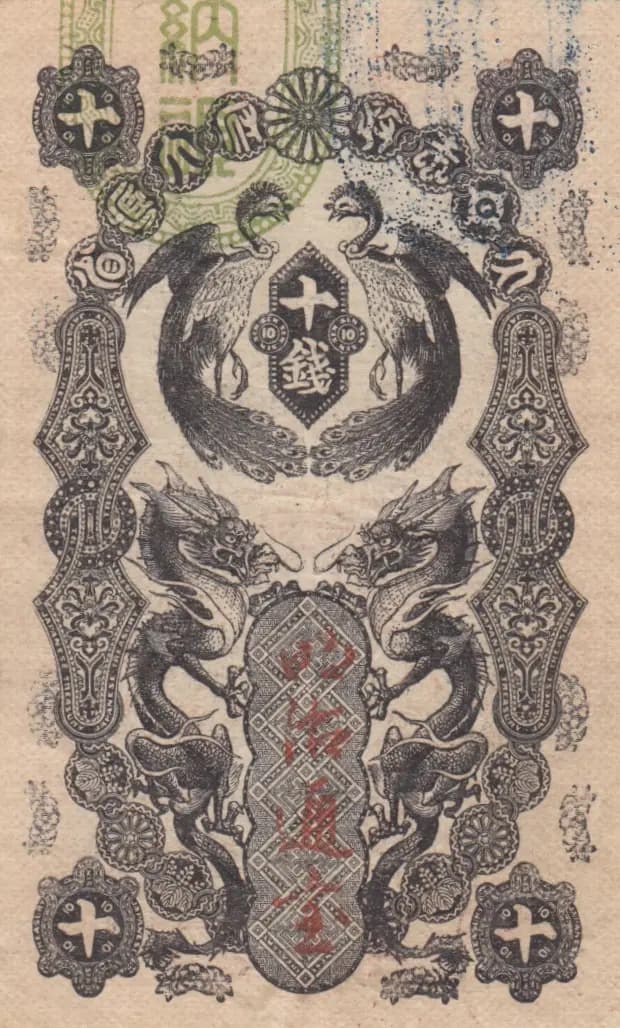
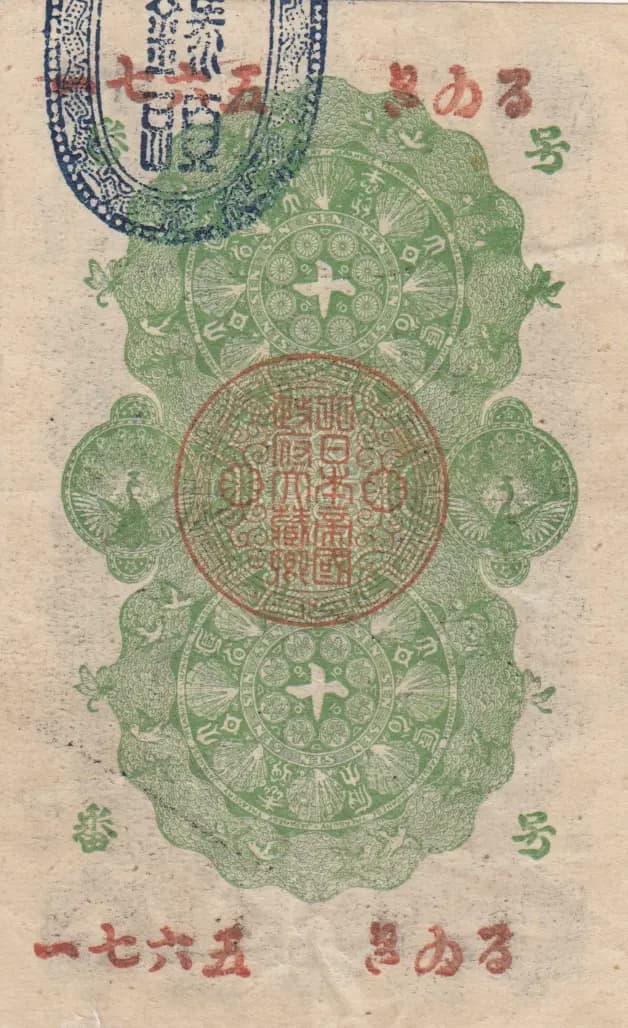
This is the iconic first Japanese government banknote, the 10 Sen from 1872 (Pick-1), representing the early Meiji era's modernization of Japan's currency system. The note features an ornate combination of traditional Japanese and Western design elements, with dragons and celestial figures rendered in fine engraved detail on aged cream-colored paper. In VF condition, this note shows expected aging with foxing and yellowing, along with official stamp impressions, making it a historically significant example of Japan's transition to modern currency.
Common. eBay market data shows consistent sales activity across multiple condition grades, with recent 2025 sales of PMG 64 examples at $356.88 and historical sales of VF examples at $44.99 (2009) and lower grades at $11-$35. The 2016 catalogue value for VF is $70, and the current specimen graded VF falls within normal pricing expectations. This was a regular issue with substantial print quantities for the denomination, and PMG population data indicates multiple variants exist, suggesting adequate survivor population.
Issued by the Dai Nippon Seifu Okurasho (Great Japanese Government Ministry of Finance) in 1872, this note marks Japan's early attempt to establish a modern, centralized currency system during the Meiji Restoration. The design combines traditional Japanese mythology—represented by the dragons and winged celestial figures—with Western artistic conventions, reflecting Japan's strategic modernization while maintaining cultural identity. The foreign printing by Dondorf and Naumann of Frankfurt underscores Japan's reliance on Western expertise during this transformative period.
The obverse (front) features a formal composition with three ornate circular medallions arranged vertically, each framed in elaborate green scrollwork with scalloped edges and floral embellishments. The top and bottom roundels display radiating geometric patterns with central cross symbols, while the larger middle roundel contains a red circular seal with traditional Japanese characters. The reverse (back) presents a symmetrical mythological scene: two winged celestial figures (divine beings or kami-inspired cherubs) occupy the upper portion flanking a central vertical cross within a diamond shape, while two opposing dragon figures are positioned below, flanking a red-patterned diamond. The entire composition is bordered by elaborate vine-like decorative scrollwork, with ornamental crosses within circular medallions in each corner. This design synthesizes Confucian and Buddhist symbolism with Western heraldic traditions.
Front: Red Japanese characters visible at top and bottom edges indicating official government issuing authority and denomination (10 Sen); central circular seal contains red text in traditional Japanese character arrangement. Back: No clearly legible inscriptions visible in the provided visual analysis. The note contains official stamps and overlay marks consistent with government authorization and currency control measures of the Meiji period. Due to image quality and historical aging, precise character-by-character translation cannot be reliably provided, though the overall inscriptions denote 'Meiji Tsuho-Satsu' (Meiji Treasury Note).
Intaglio engraving on colored paper stock, executed by the renowned Frankfurt security printer Dondorf and Naumann. The note employs multi-color printing with black line work on a pink/cream base underprint, green overprinting on the obverse, and selective red color application for official seals and ceremonial elements. The complexity and fineness of the engraved line work, combined with the color separation techniques, represents the highest standards of mid-19th century security printing technology imported specifically to establish Japan's modern currency credibility.
Pick-1 represents the base catalog number for the 10 Sen 1872 issue. The visual analysis indicates this is likely the standard variety produced by Dondorf and Naumann. PMG population reports show 14 variants catalogued under this base Pick number, suggesting potential differences in printer marks, seal types, or other identifying characteristics. Without visible serial numbers or signature variants clearly discernible in the provided images, the specific sub-variety cannot be definitively assigned, though the Dondorf and Naumann attribution is confirmed. Further examination of any signature marks, seal variations, or printer identification marks would be required to determine the precise variety designation.