5 yen 1915
Market Prices
1 saleAbout This Note
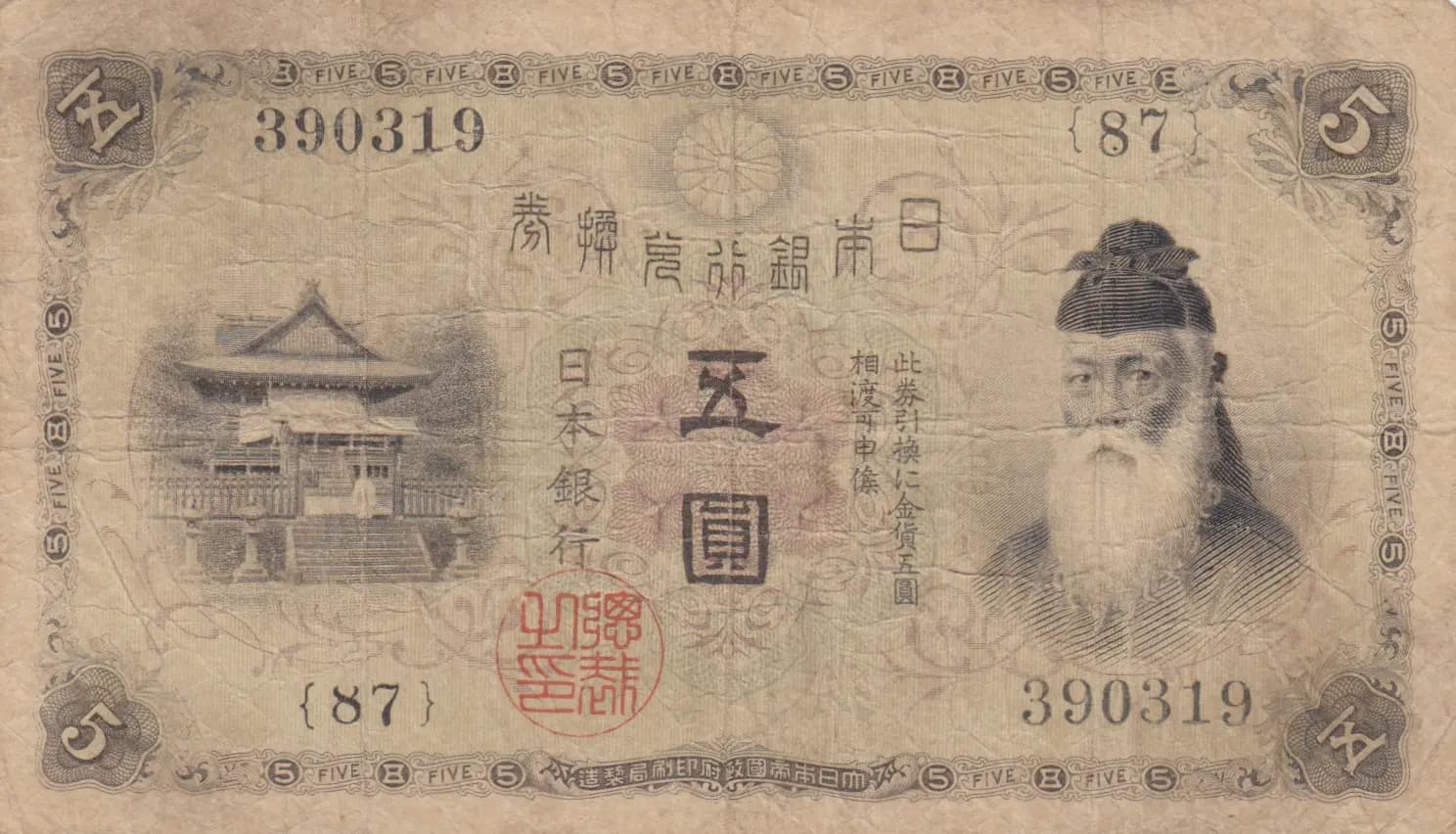
This is a VG-graded 1915 Japanese 5 Yen gold note (Pick P-35), a convertible gold certificate issued by the Bank of Japan during the Meiji/Taisho period. The note features fine engraving with a portrait of Takeuchi Sukune on the right and the Ube Shrine on the left, printed in tan and brown tones with red seals. Despite visible creasing, foxing, and age-related wear consistent with circulation, the designs and text remain legible, making this an interesting example of early Japanese monetary history.
Common. The catalog value data from realbanknotes.com indicates this Pick number sold in the EF grade for approximately $450 in 2022, with F grade valued around $200 and G around $100. These moderate market prices and the availability of sales data suggest this is a regularly encountered note in the collector market. VG grade examples are relatively affordable and not difficult to locate, consistent with what would be expected for a regular-issue note from Japan's major issuer with a substantial original print run.
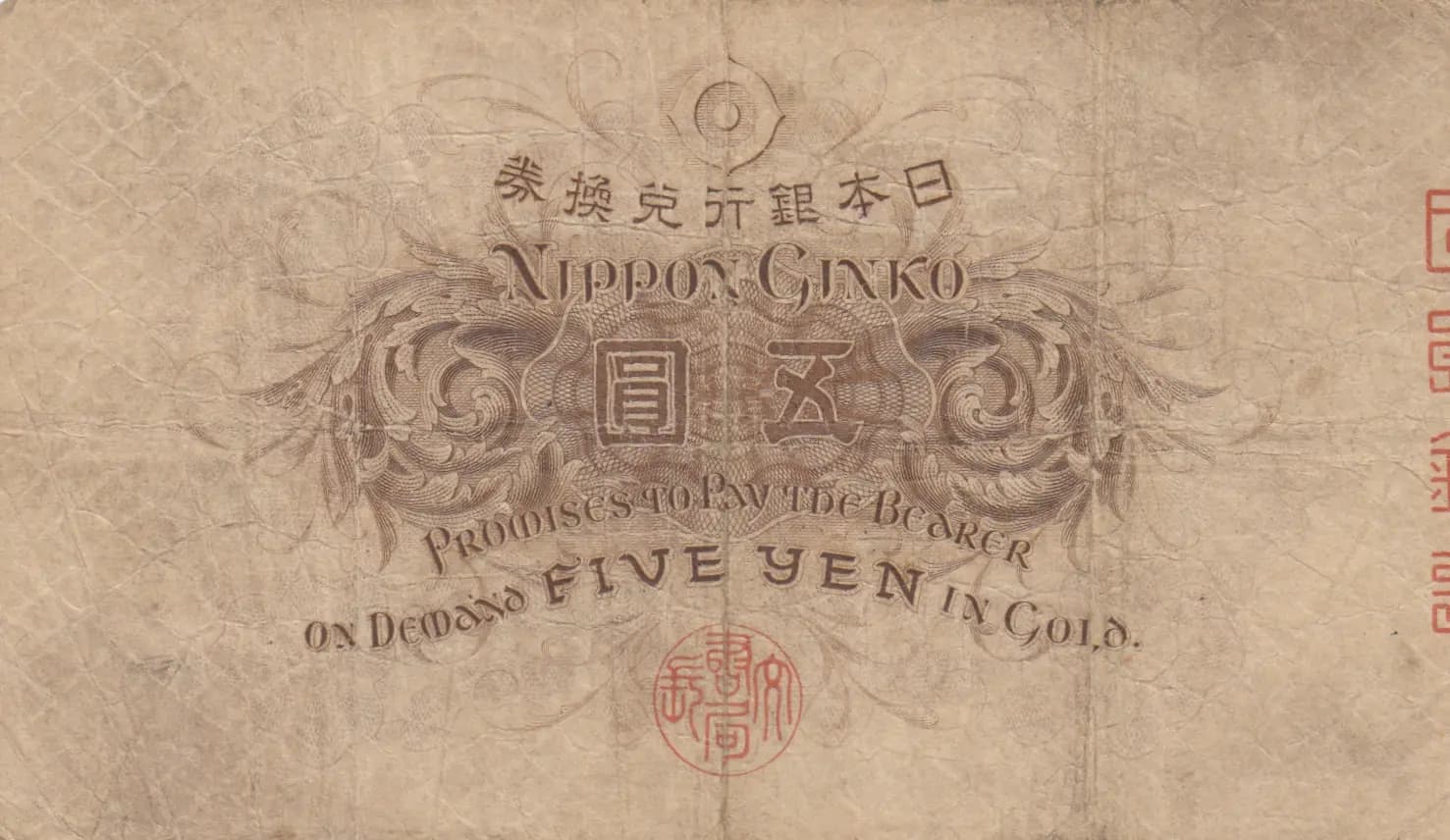
Issued in 1915-1916, this 5 Yen note represents Japan's gold standard currency system during the Taisho era, when the nation was economically ascendant but not yet engaged in major warfare. The explicit promise to exchange for gold currency (visible in both Japanese and English text on the reverse) reflects Japan's commitment to the gold standard and international trade confidence. The inclusion of Takeuchi Sukune, a legendary Nara-period court official, and the Ube Shrine underscores the Japanese government's use of historical and cultural imagery to reinforce national identity and authority.
The obverse features a right-facing profile portrait of Takeuchi Sukune, a legendary Nara-period court official known for his longevity and wisdom, positioned on the right portion of the note. The left side displays the Ube Shrine (Ube Jinja), identifiable by its characteristic curved Japanese architectural style with railings and stairs. The center is anchored by large kanji characters indicating the denomination, with ornamental corner pieces containing the numeral 5 and elaborate decorative borders featuring repeating patterns. The reverse depicts a monumental winged dragon in ornamental style flanking central text, with bilingual inscriptions in both Japanese and English affirming the note's gold-convertible status. A red seal/chop mark appears as a security feature on both sides.
FRONT: '日本銀行券' (Bank of Japan Note) | '五圓' (Five Yen) | '五' (Five, repeated in corners) | '此券ハ兌換証券ニシテ金貨圓ニ換フ可シ' (This note is a convertible note and can be exchanged for gold currency yen) | Serial numbers: 390319 and plate number 87 | 'FIVE' (English). BACK: '日本銀行券' (Bank of Japan Note) | 'NIPPON GINKO' (Japan Bank in romanized form) | '圓五' (Five Yen) | 'PROMISES TO PAY THE BEARER' | 'ON DEMAND FIVE GENIN GOLD' (Five Yen in gold)
This note was produced using fine line engraving, evidenced by the intricate detail in the portrait, shrine architecture, and decorative borders visible in the image. The consistent fine lines, ornamental patterns, and the absence of color separation artifacts suggest intaglio (copperplate) printing, the standard method for high-security currency production in the early 20th century. The precise registration of the red seal/chop mark and the sharpness of text elements confirm professional security printing practices of the Bank of Japan during this period.
The observed serial number 390319 and plate number 87 indicate this is a specific printing of the series. PMG reports one variant cataloged for Pick P-35. Without access to comprehensive Japanese numismatic literature detailing all known plate variations and serial number ranges for this issue, a definitive variety identification cannot be provided based solely on the visible serial numbers. Collectors seeking precise variety classification should consult specialized Japanese currency references or PMG's detailed population data.